English grammar practice Grammar Worksheets for Ages 6-9
3 filtered results
-
From - To
Enhance your child's language skills with our specially designed English Grammar Practice Worksheets for ages 6 to 9. Our engaging and educational worksheets help young learners grasp fundamental grammar rules while having fun. Key areas include parts of speech, sentence structure, punctuation, and verb tenses. Each worksheet is crafted to promote confidence in writing and reading, paving the path for academic success. Perfect for both classroom and home learning, these worksheets are an invaluable resource for parents and educators. Foster a love for language in your child today with these comprehensive, age-appropriate grammar exercises.
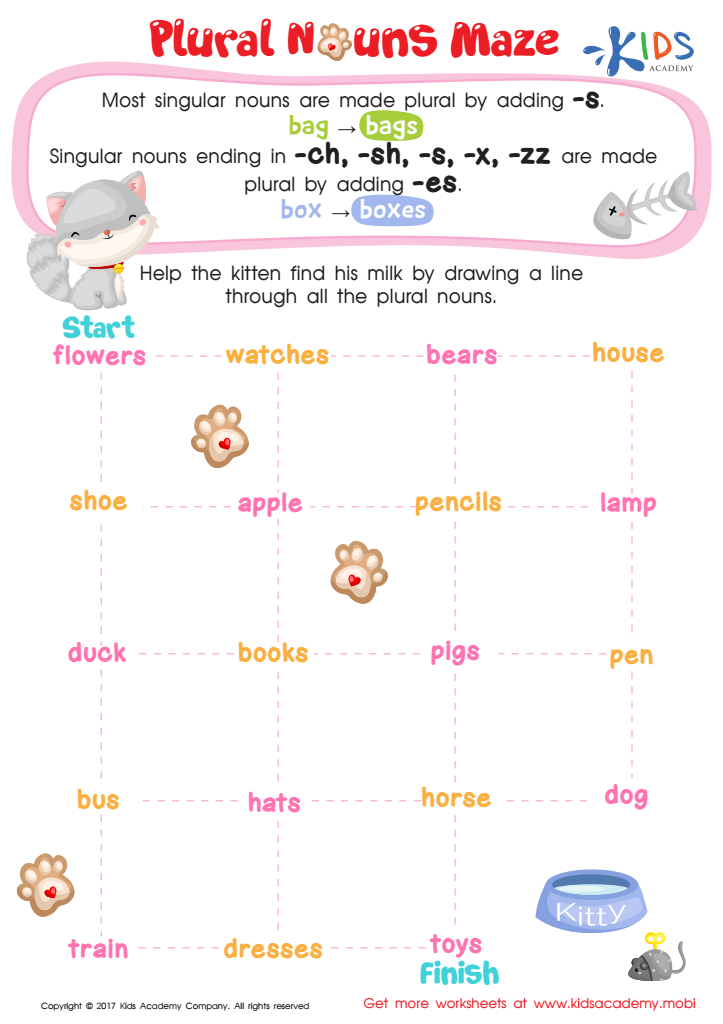
Plural Nouns Maze Worksheet
 Assign to My Students
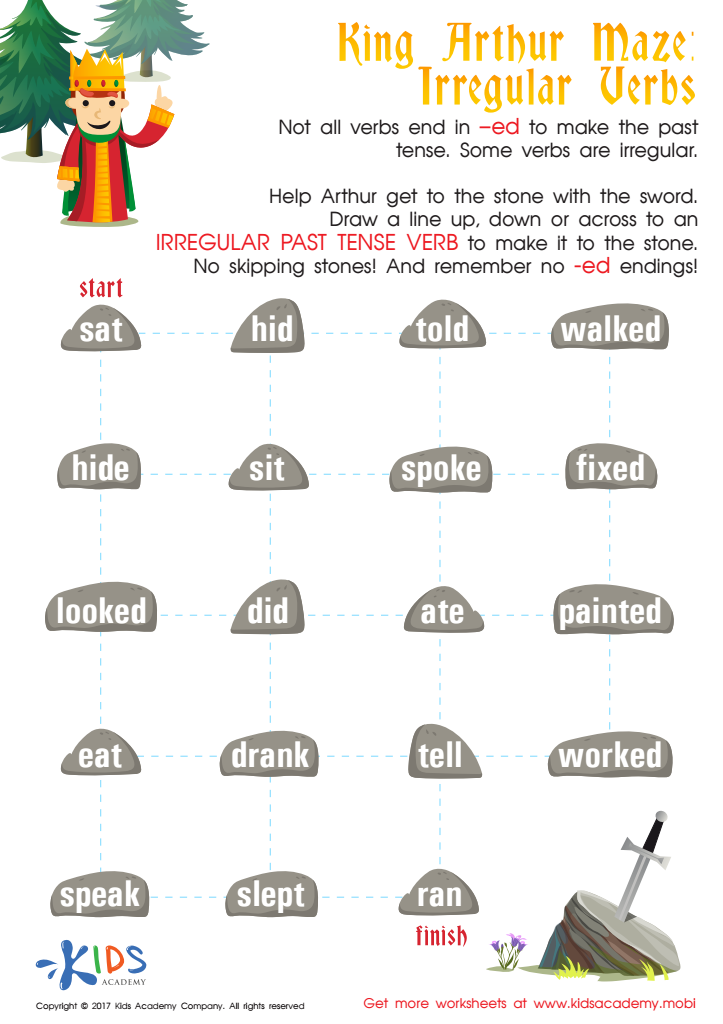
Irregular Verbs: Stones Worksheet
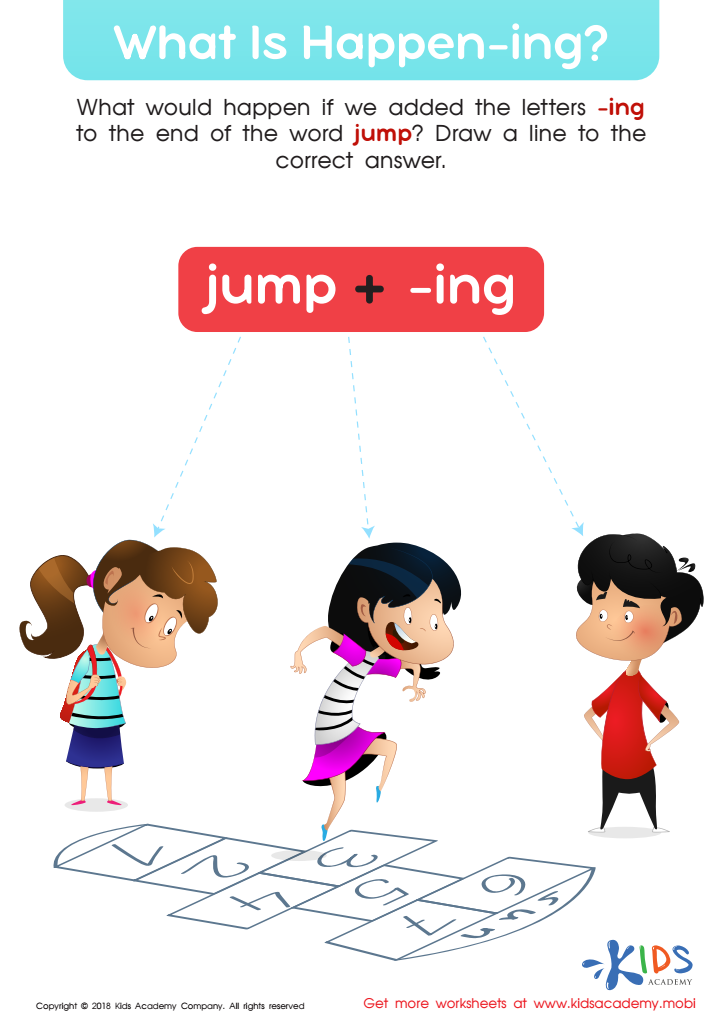
What Is Happen-Ing? Worksheet






.jpg)

Understanding English grammar is foundational for ages 6-9 because it establishes the building blocks for effective communication and academic success. During these formative years, developing a strong grasp of grammar enhances children's reading comprehension and writing skills. It helps them construct clear, coherent sentences and express their thoughts more precisely.
For parents and teachers, promoting grammar practice cultivates an early love for language and learning. It enables children to navigate the rules and structure of English, which are critical as they progress to more complex subjects. Good grammar skills boost children's confidence in their abilities, fostering a positive attitude toward challenging tasks.
Moreover, grammar proficiency is essential in understanding instructions across all subjects, making it easier for kids to excel in their studies. It also enriches their vocabulary and improves their listening and speaking skills, impacting social interactions and personal development.
By caring about grammar practice, parents and teachers equip children with lifelong skills. These skills are vital not only for academic achievements but also for future professional environments where effective communication is key. Investing in grammar at an early age lays a strong foundation for continued learning and success in all aspects of life.








