Noun identification Writing Worksheets for Ages 6-9
9 filtered results
-
From - To
Discover our engaging Noun Identification Writing Worksheets designed for children aged 6-9. These worksheets provide a fun and interactive way for young learners to recognize and understand nouns in various contexts. Each worksheet features colorful illustrations and simple exercises that promote vocabulary development and enhance writing skills. With a mix of activities, including fill-in-the-blanks and matching exercises, children will enjoy identifying nouns in sentences and creating their own. Perfect for homeschoolers, teachers, and parents, our resources make grammar enjoyable and effective. Spark your child's creativity and boost their confidence in writing with these essential noun identification exercises today!
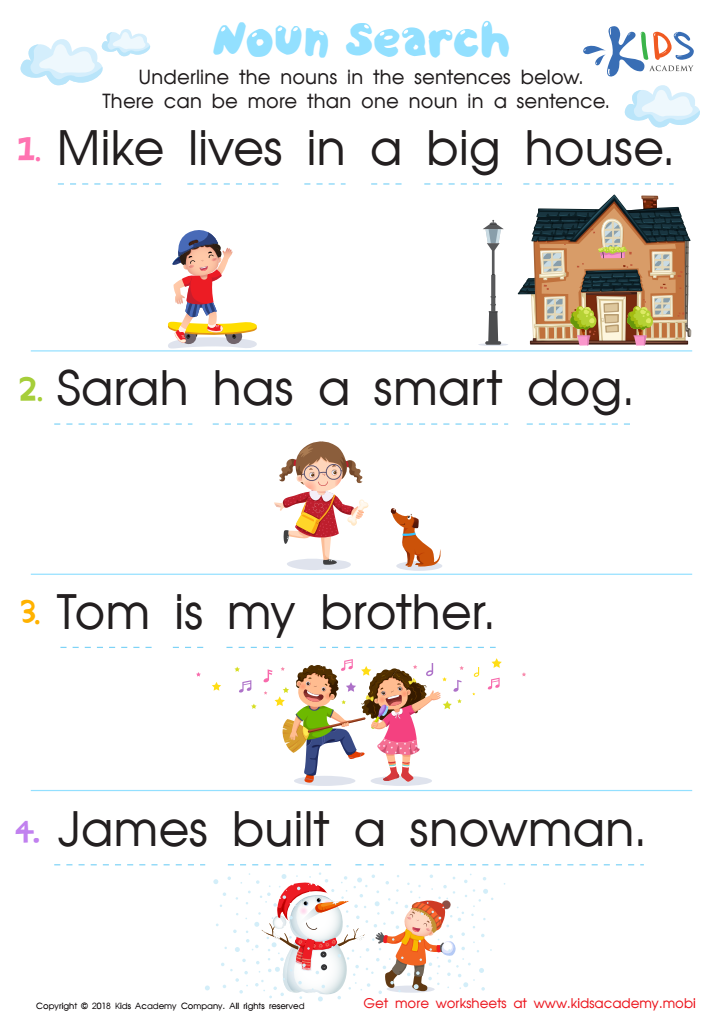
Noun Search Worksheet
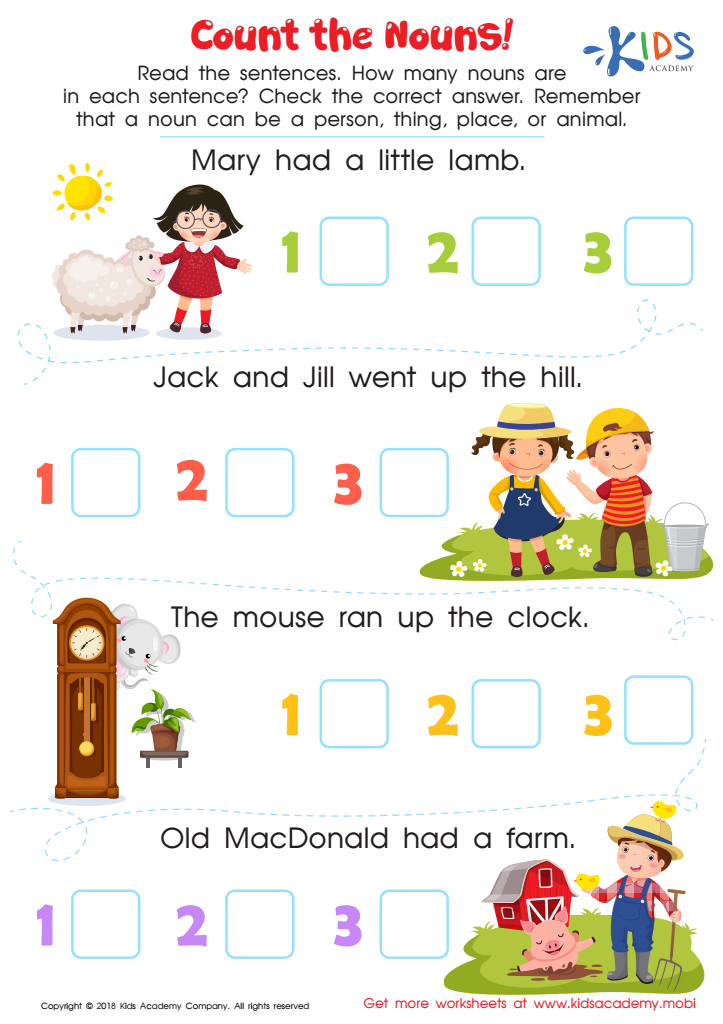
Count the Nouns Worksheet
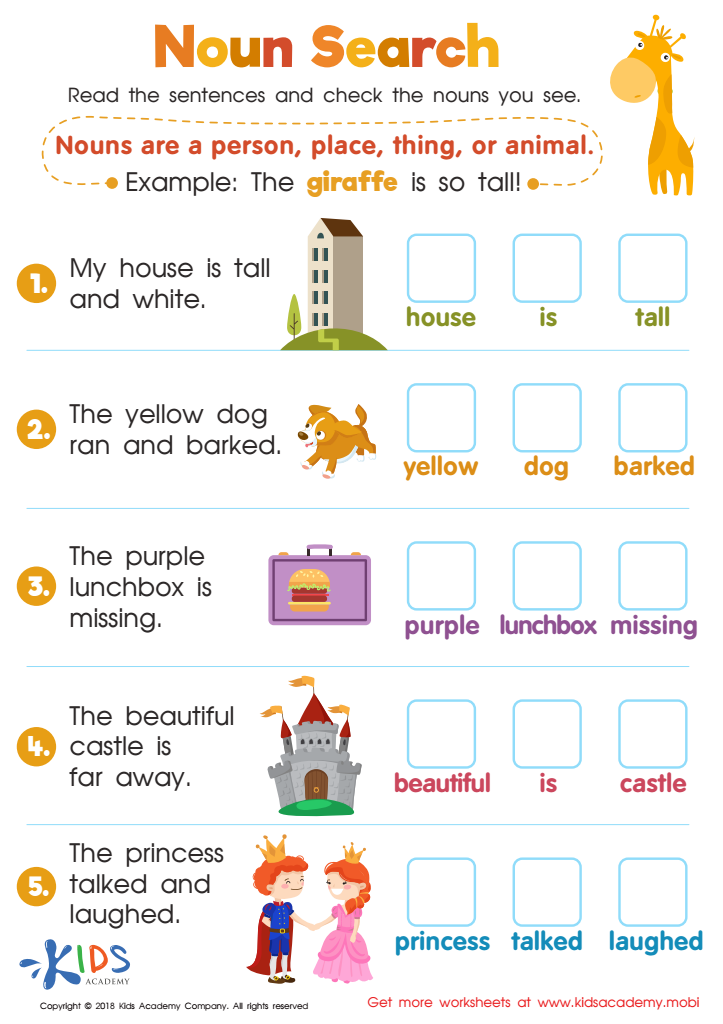
Noun Search Worksheet
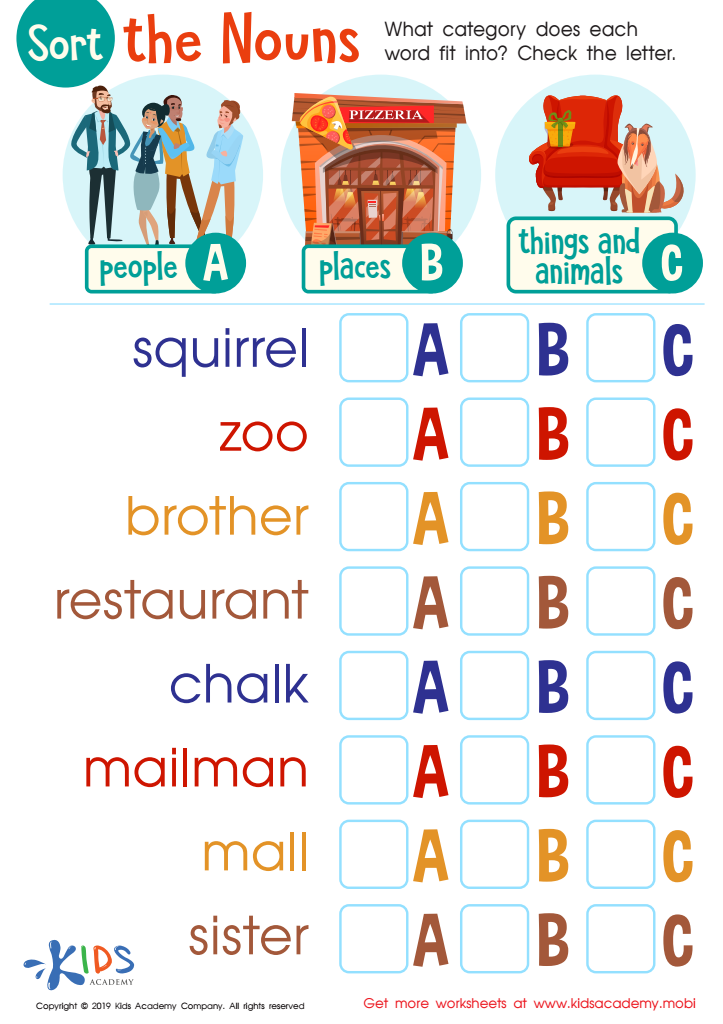
Sort the Nouns Worksheet
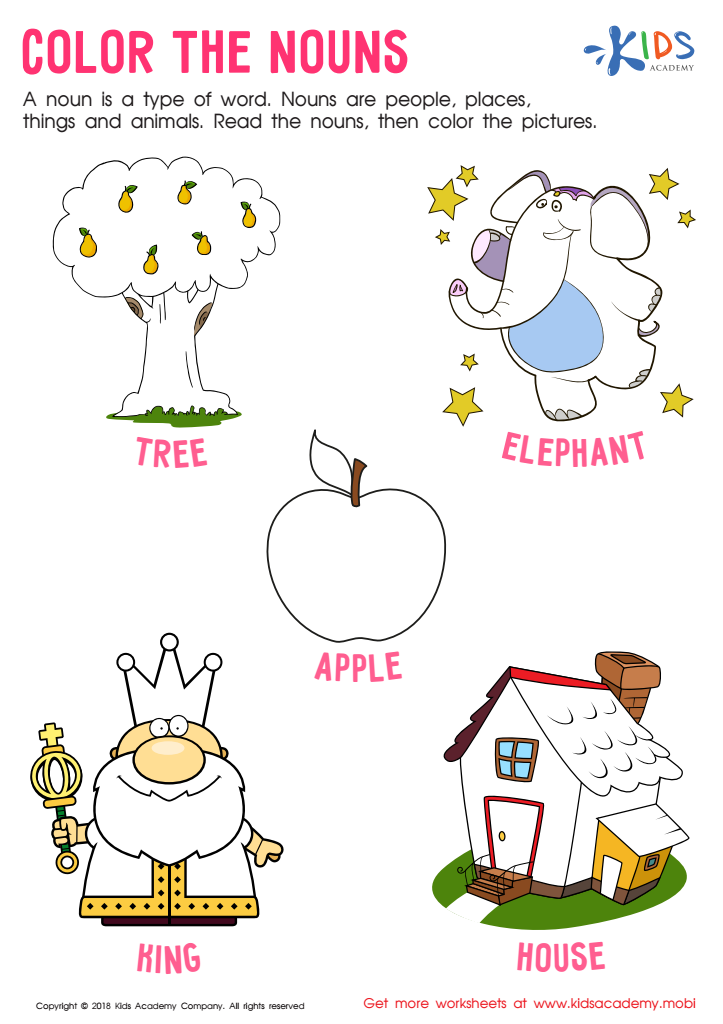
Color the Nouns Worksheet
 Assign to My Students
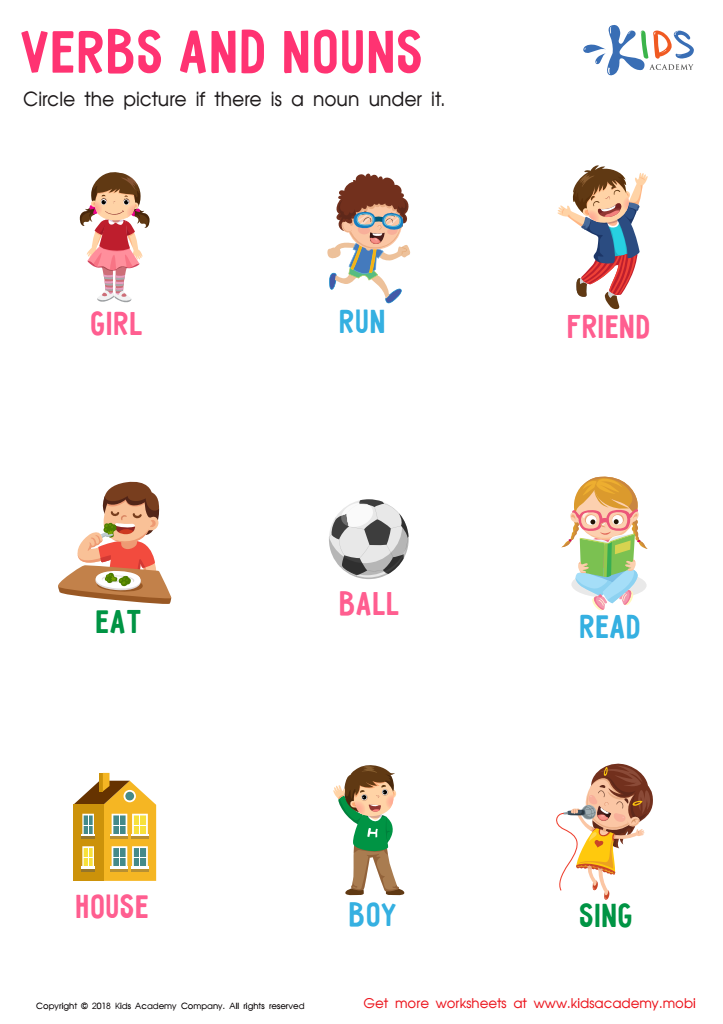
Verbs and Nouns Worksheet
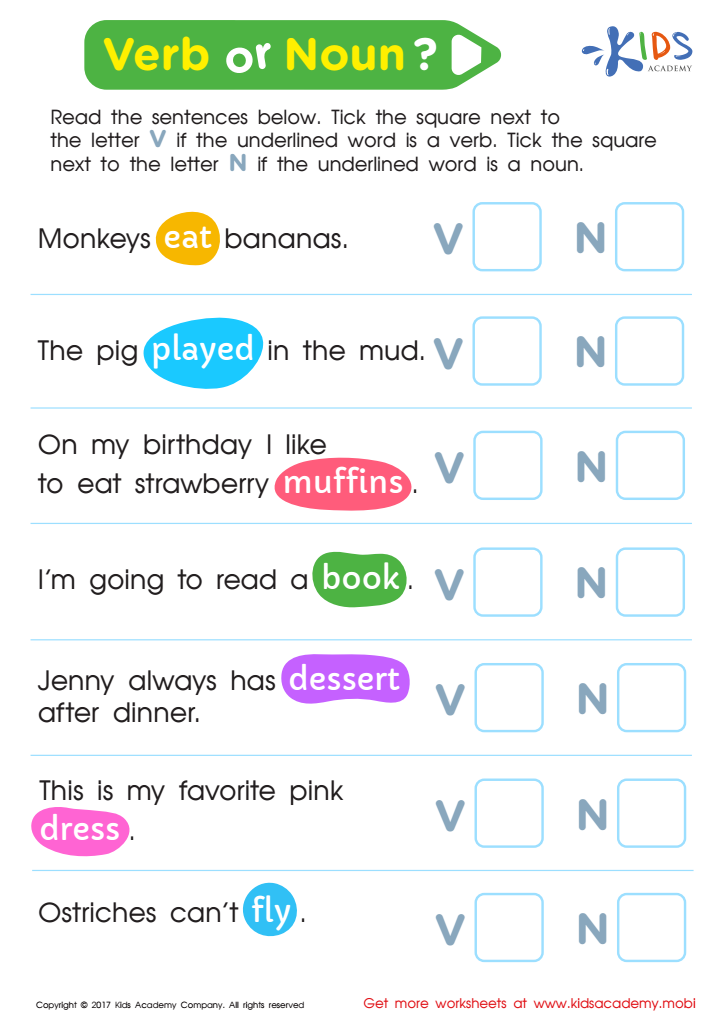
Verb or Noun Worksheet
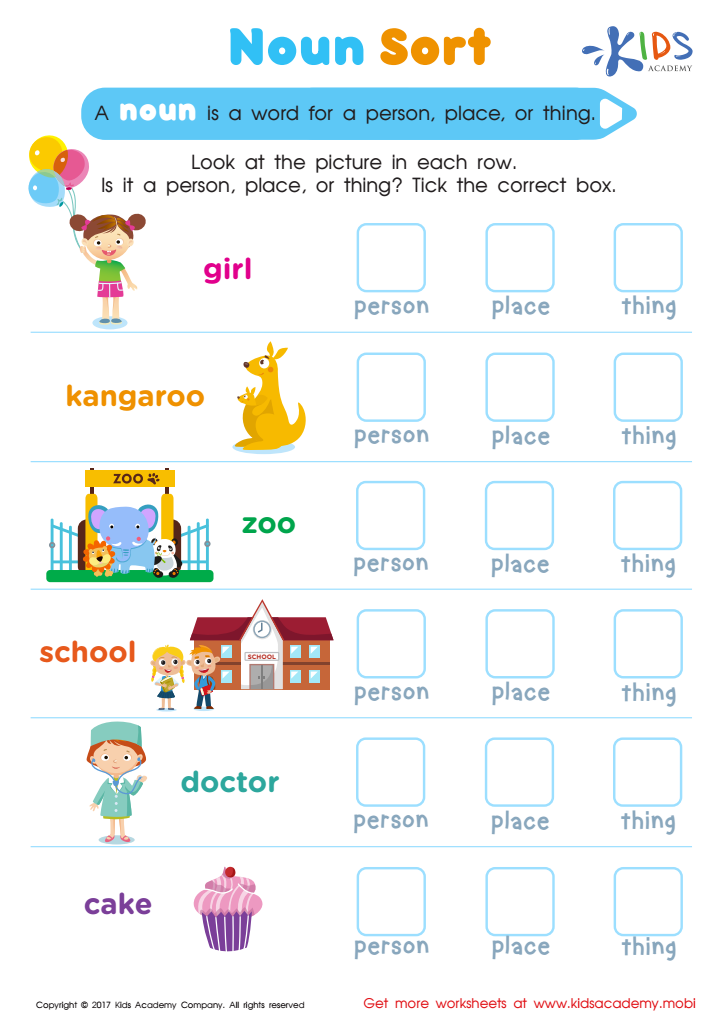
Noun Sort Printable
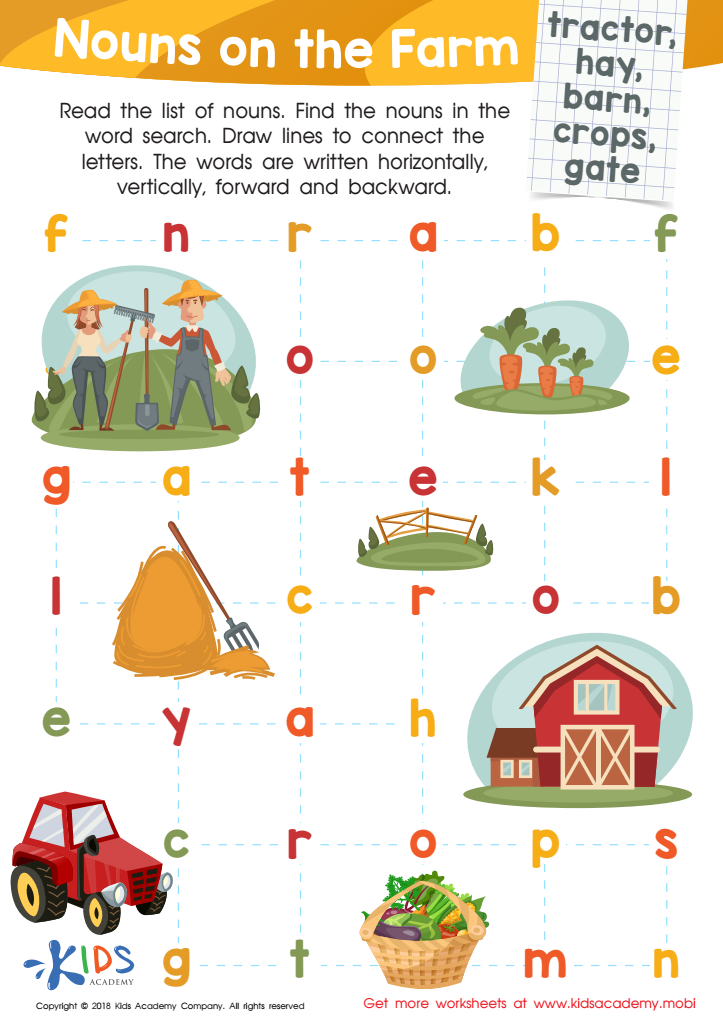
Nouns on the Farm Worksheet






Noun identification is a fundamental skill crucial for the linguistic development of children aged 6-9 years. Recognizing nouns lays the foundation for effective reading and writing, allowing young learners to build sentences and express themselves clearly. These years are pivotal, as children transition from learning to read to reading to learn.
Parents and teachers should prioritize noun identification for several reasons. First, it enhances vocabulary acquisition, helping children understand the names of people, places, things, and ideas, which enriches their ability to communicate. Second, strong noun recognition supports the development of grammar skills; children begin to grasp how nouns function within a sentence, paving the way for complex sentence structures.
Moreover, encouraging noun identification through engaging activities makes learning enjoyable and interactive, fostering a love for language. This skill is also essential for comprehension; as children read, they need to identify nouns to make sense of the text and engage with the story. Lastly, mastering nouns promotes confidence in writing, enabling children to articulate their thoughts and creativity effectively. Thus, active involvement from parents and educators can set the stage for lifelong learning and proficient communication skills in children.








