
Understanding punctuation Writing Worksheets for Ages 6-9
3 filtered results
Difficulty Level
Grade
Age
-
From - To
Subject
Activity
Standards
Discover our "Understanding Punctuation Writing Worksheets for Ages 6-9," designed to enhance young learners’ writing skills. These fun and engaging worksheets make punctuation easy to understand, helping children practice proper use of periods, commas, question marks, and more. Through a variety of interactive activities, kids will improve their grammar and punctuation, enhancing overall writing clarity. Suitable for home and classroom use, these worksheets cater to the learning needs of children aged 6 to 9, fostering their confidence and communication skills. Download today and watch your child's writing ability flourish!
Favorites
With answer key
Interactive
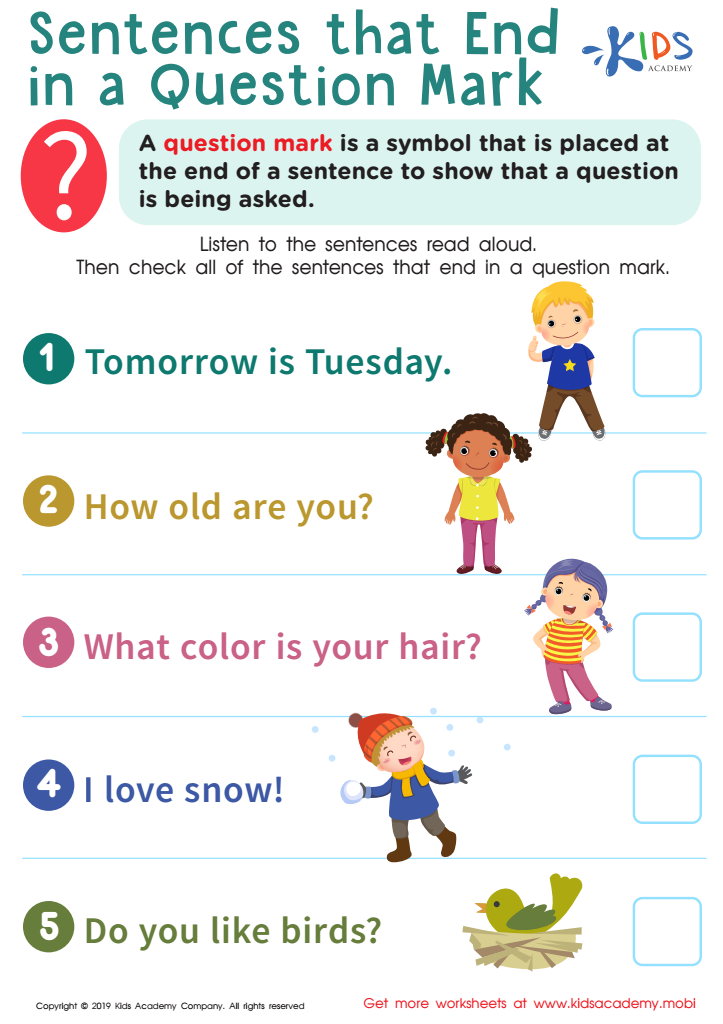
Sentences That End in an Question Mark Worksheet
Teach your students about the four most common punctuation marks - period, comma, question mark, and exclamation mark - with this worksheet. Show them how to use the question mark to indicate a sentence is a question. Then, have them check all sentences that end in a question mark.
 Assign to My Students
Sentences That End in an Question Mark Worksheet
Worksheet
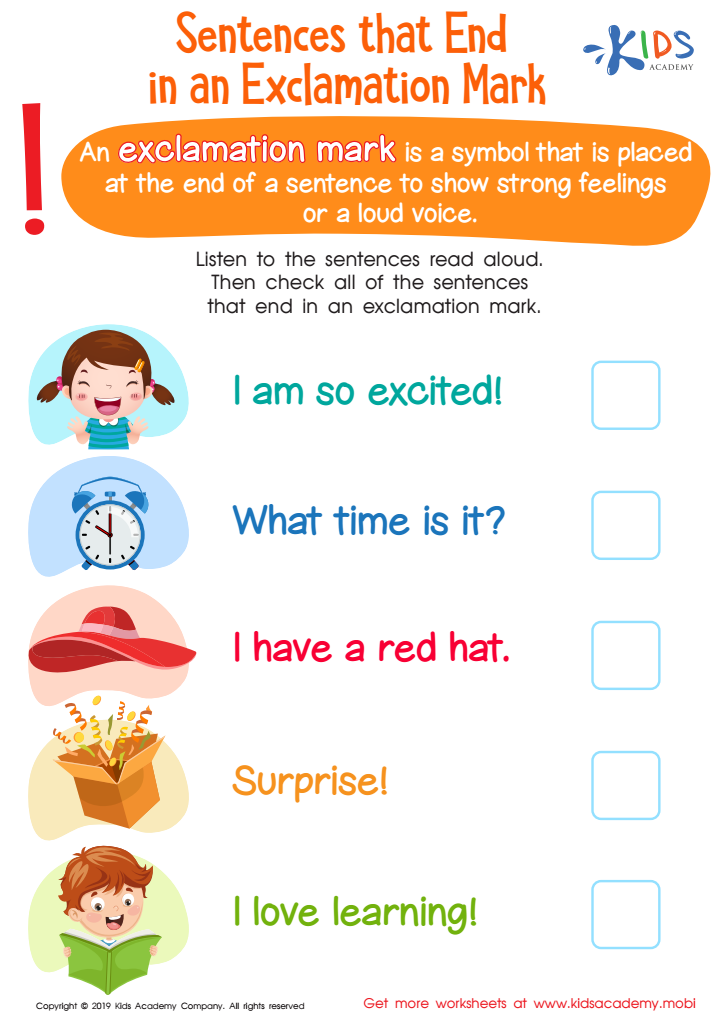
Sentences That End in an Exclamation Mark Worksheet
This worksheet is a great way to brush up kids' punctuation skills. Period, comma, question mark and exclamation mark are the first four punctuation marks they should learn. Exclamation marks show strong emotion or a noise. Use this printout to teach and test kids' understanding of exclamation marks.
Sentences That End in an Exclamation Mark Worksheet
Worksheet
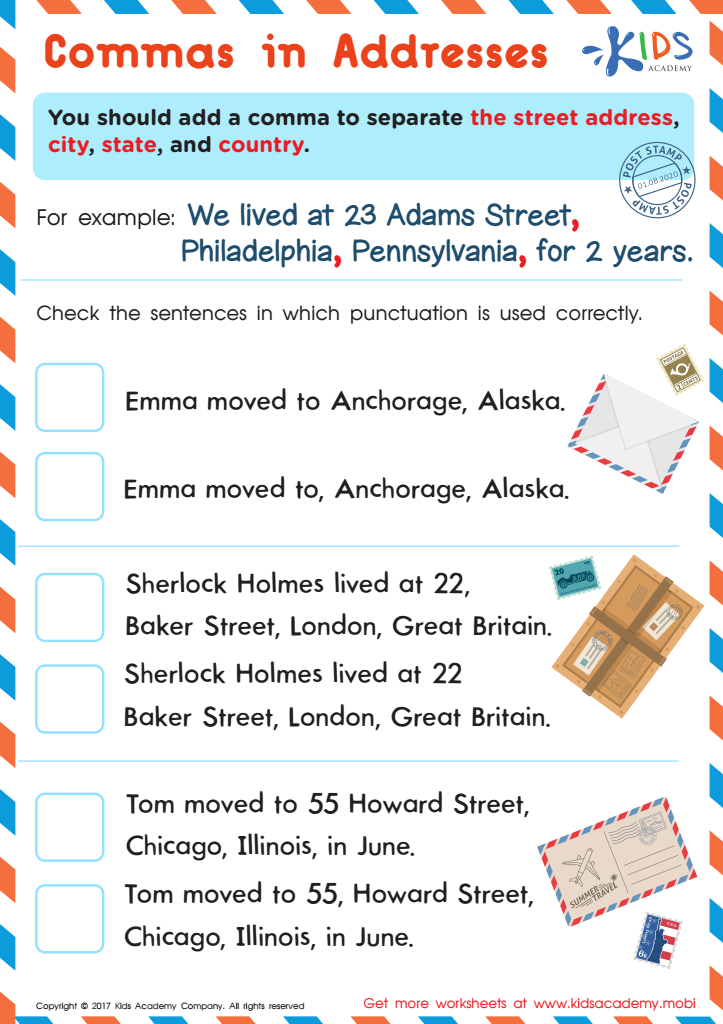
Commas in Addresses Worksheet
Learning comma rules can be tough for kids. Help make it easier with free worksheets, like this fun letter-themed exercise. It'll teach them the rules in isolation and keep them engaged.
Commas in Addresses Worksheet
Worksheet
Join Kids Academy for Free
Who is primarily going to use this learning content?








Understanding punctuation is essential for children ages 6-9 as it forms the foundation for effective communication. At this developmental stage, children are not just learning to read and write; they are learning to express their ideas clearly and understand others. Proper punctuation helps children convey their thoughts with precision, making their writing comprehensible and engaging.
For parents and teachers, emphasizing punctuation is crucial because it instills early grammar skills, critical for academic success. It teaches children where sentences begin and end, which enhances reading fluency and comprehension. When children grasp the use of periods, commas, question marks, and exclamation points, they can better understand the structure and tone of sentences, leading to improved oral and written communication skills.
Moreover, understanding punctuation enhances a child's confidence. Clear writing enables them to share their stories and knowledge effectively, fostering a love for writing and language arts. It also reduces the frustration of being misunderstood, which can empower children to participate more in class discussions and engage with their learning materials.
In a world that relies heavily on written communication, nurturing these skills early on ensures that children are well-prepared for future educational challenges and everyday interactions. Thus, parents and teachers should prioritize teaching punctuation to cultivate proficient, confident, and articulate young writers.








