Vocabulary enhancement Writing Worksheets for Ages 6-9 - Page 4
75 filtered results
-
From - To
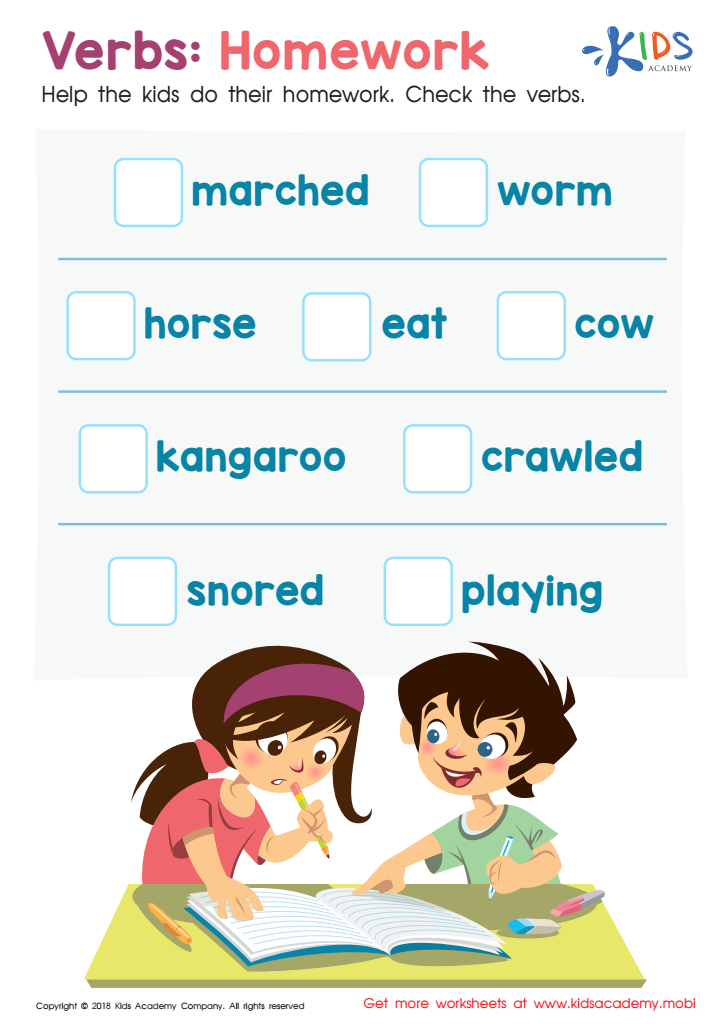
Verbs Homework Worksheet
 Assign to My Students
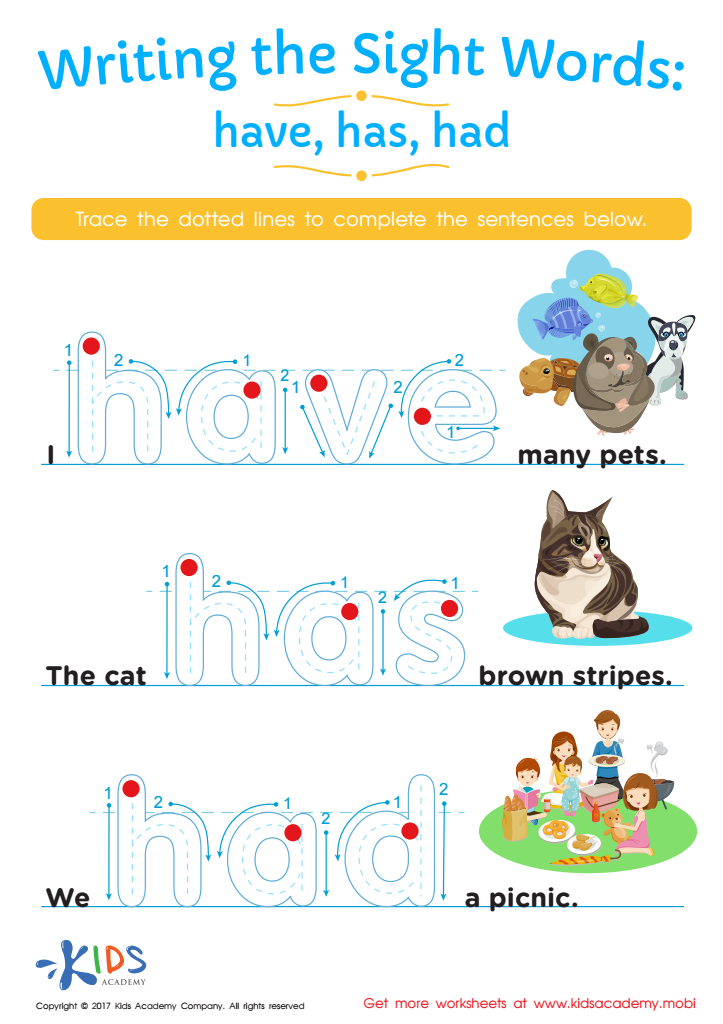
Have, Has, Had Worksheet Sight Words Worksheet
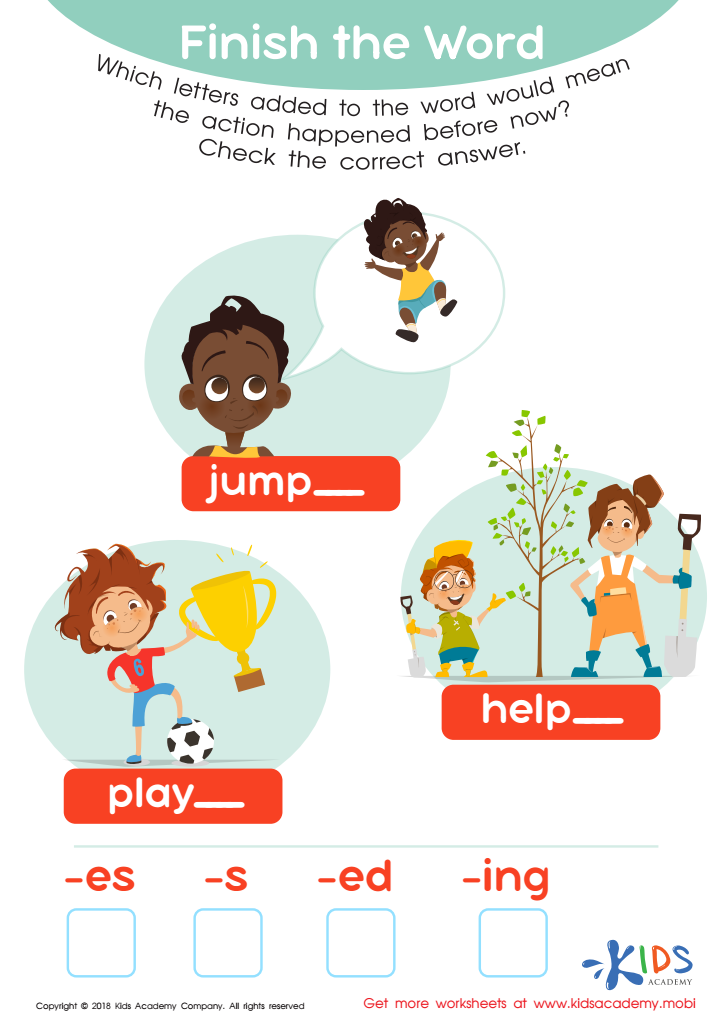
Finish the Word Worksheet








Expertise in vocabulary plays a crucial role in a child's overall communication skills and intellectual development. For children aged 6-9, both teachers and parents should place a significant focus on vocabulary enhancement for several reasons. Firstly, a robust vocabulary is fundamental to reading comprehension. Children with a richer vocabulary can better understand the texts they read, which fosters a love for reading and learning.
Secondly, effective communication is directly linked to the words at a child's disposal. When children are equipped with a diverse vocabulary, they can articulate their thoughts, feelings, and ideas more clearly and confidently. This skill is important not only in academic settings but also in everyday interactions, allowing them to build better relationships with peers and adults.
Moreover, a well-developed vocabulary enhances critical thinking and cognitive abilities. Children learn to categorize, compare, and analyze information more efficiently, which aids in problem-solving and creativity. Finally, early exposure to an expansive vocabulary can have long-lasting educational benefits. It sets a positive groundwork for future learning, easing the transition into more complex subjects as they progress in their educational journey.
Overall, investing time and effort into vocabulary enhancement for children aged 6-9 can yield significant benefits in reading comprehension, communication skills, cognitive development, and lifelong learning enthusiasm.








