Understanding punctuation Punctuation Worksheets for Ages 6-9
3 filtered results
-
From - To
Explore the world of punctuation with our engaging "Understanding Punctuation" worksheets, specifically designed for children ages 6-9. These interactive resources help young learners grasp the essential rules of punctuation, including periods, commas, question marks, and exclamation points. With a plethora of fun exercises and colorful illustrations, kids will enjoy honing their writing skills while gaining confidence in their understanding of how punctuation enhances communication. Perfect for classrooms or at-home learning, our worksheets cater to varying learning styles and promote critical thinking. Dive into the exciting adventure of punctuation and watch your child flourish as a writer!
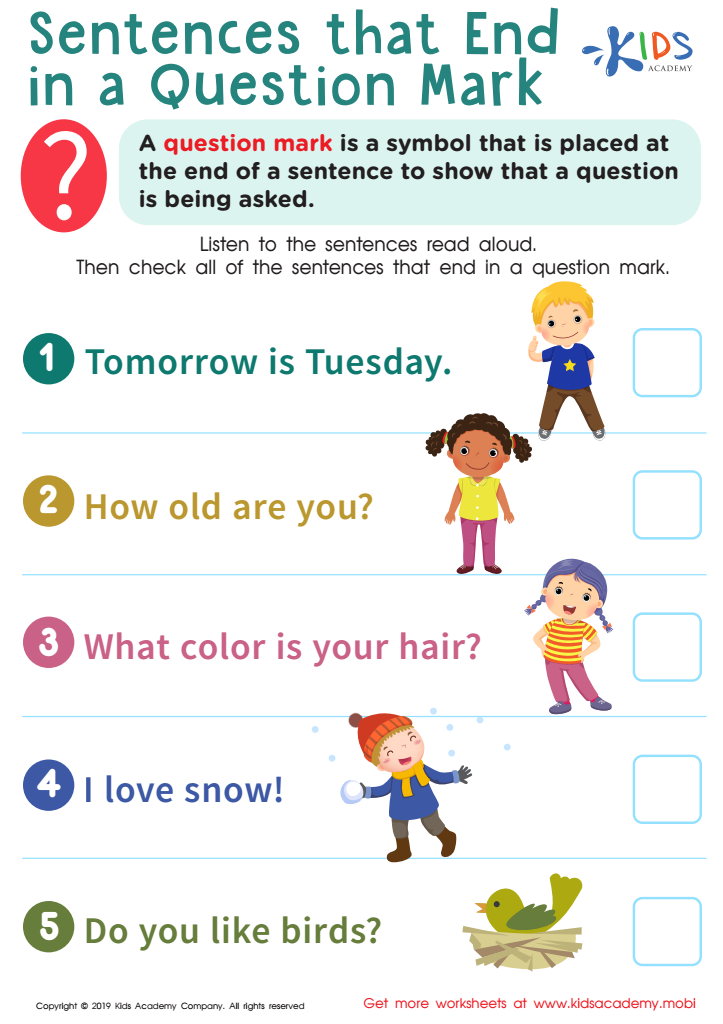
Sentences That End in an Question Mark Worksheet
 Assign to My Students
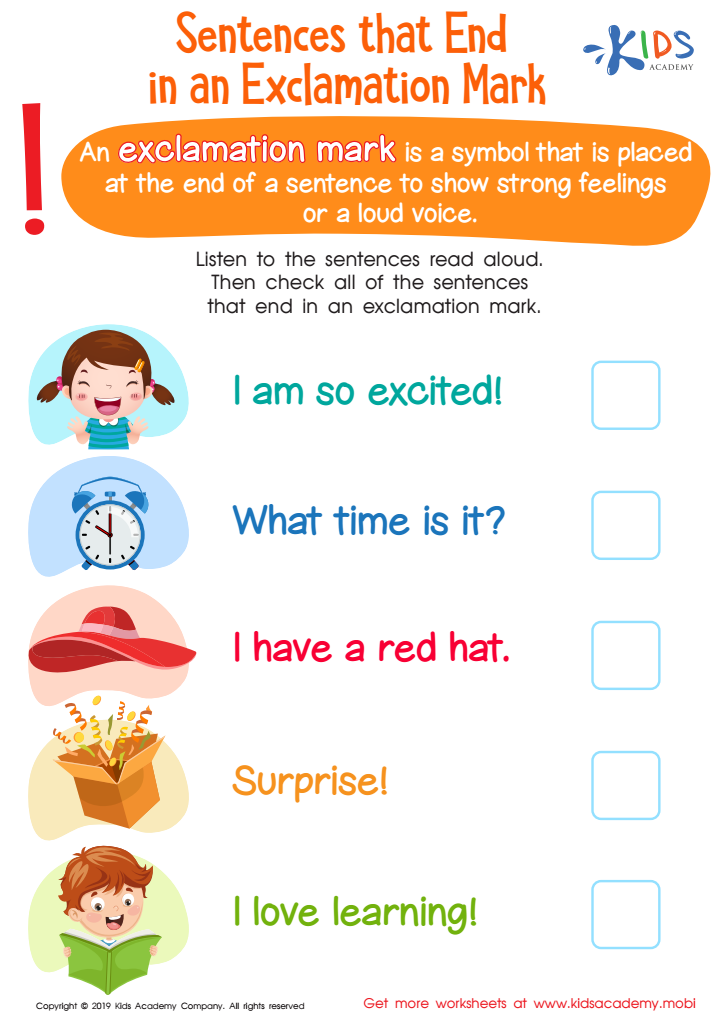
Sentences That End in an Exclamation Mark Worksheet
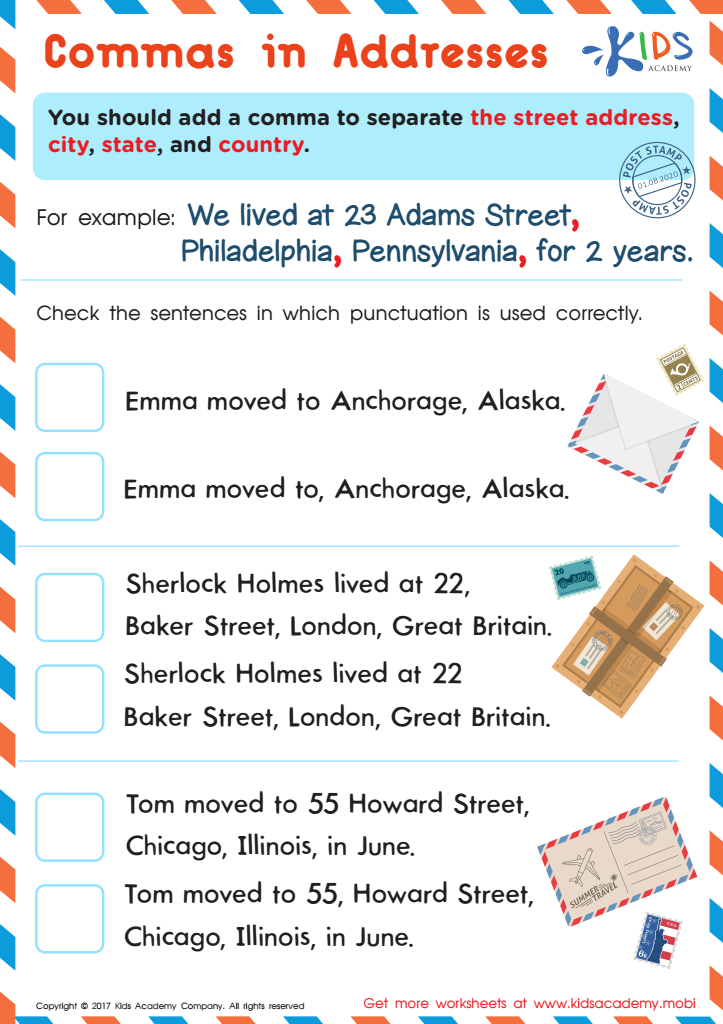
Commas in Addresses Worksheet







Understanding punctuation is crucial for children aged 6-9, as it serves as a foundational element in their literacy development. Parents and teachers should care about teaching punctuation because it enhances reading comprehension and writing clarity. Proper punctuation helps young learners understand the structure of sentences and the intended meaning behind words. For example, a well-placed comma can change the meaning of a sentence entirely, highlighting its importance in effective communication.
Moreover, mastering punctuation promotes confidence in writing. Kids express their thoughts and ideas more clearly when they understand how to use periods, question marks, exclamation points, commas, and quotation marks correctly. This encourages them to engage more in writing activities, fostering creativity and critical thinking skills.
Additionally, as young learners begin to engage with more complex texts, their understanding of punctuation will also support their decoding skills, allowing them to become better readers. By prioritizing punctuation education, parents and teachers not only prepare students for future academic success but also assist them in navigating social and emotional contexts through clear expressions of their thoughts and feelings. Thus, investing time in punctuation literacy helps to build a robust foundation for effective communication throughout a child's education and beyond.








