Letter recognition Elementary Phonics Worksheets for 6-Year-Olds
5 filtered results
-
From - To
Unlock your child's reading potential with our engaging Letter Recognition Worksheets for 6-Year-Olds! These carefully designed elementary phonics worksheets make learning fun while helping kids master the alphabet. Through colorful illustrations and interactive exercises, students will enhance their letter recognition skills, laying a strong foundation for literacy. Each worksheet promotes practice in identifying both uppercase and lowercase letters, fostering confidence and awareness in reading. Perfect for classroom use or at-home learning, our resources cater to young learners’ diverse needs. Join us in making reading enjoyable as your child embarks on an exciting journey through the world of letters and sounds!

Long and Short U Worksheet
 Assign to My Students
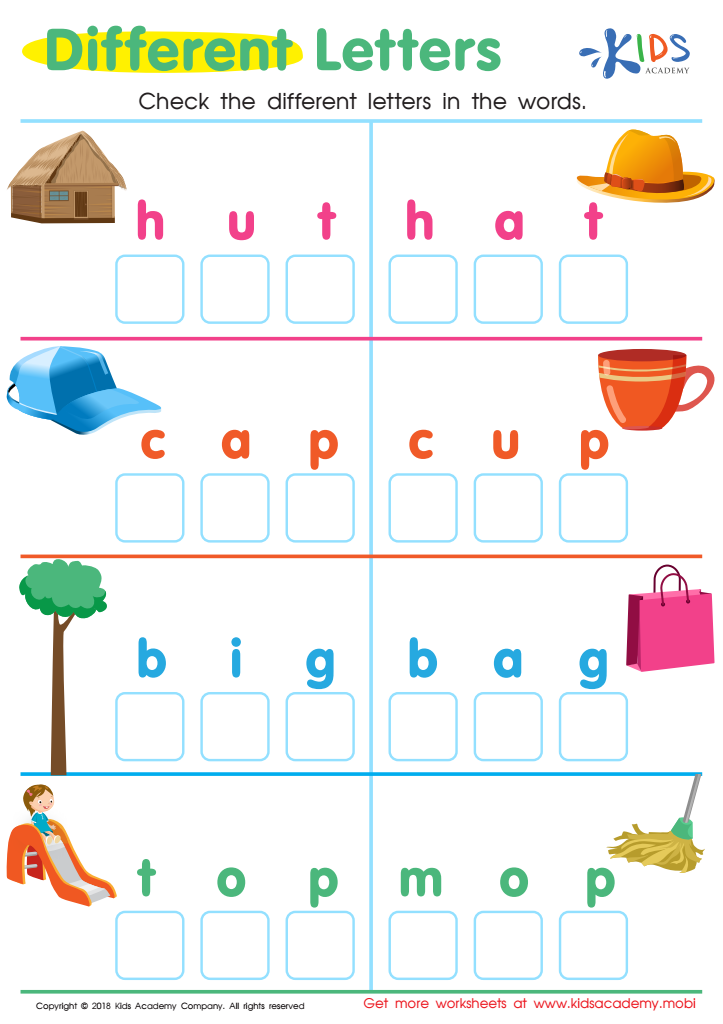
Different Letters Reading Worksheet
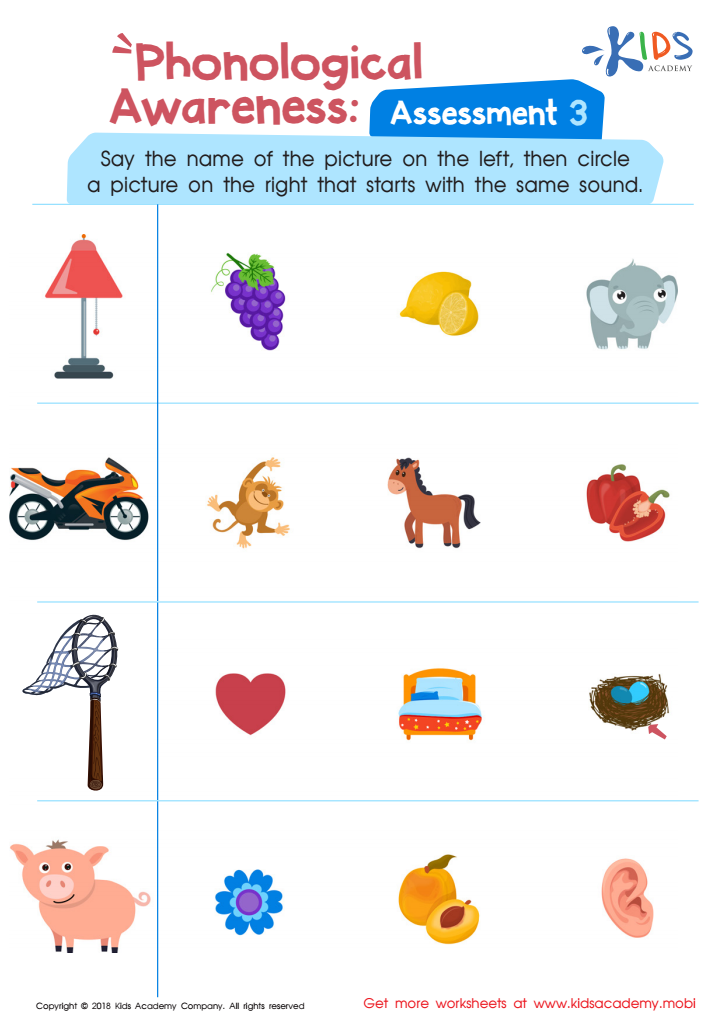
Phonological Awareness: Assessment 3 Worksheet

Long and Short E Worksheet
Assign to My Students
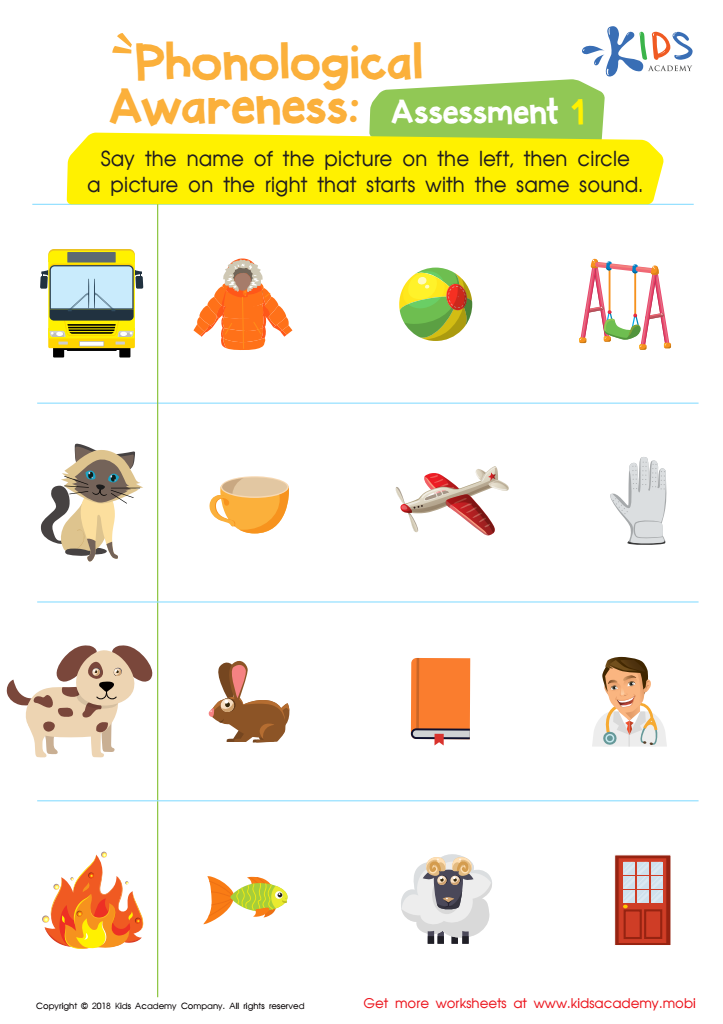
Phonological Awareness: Assessment 1 Worksheet




Letter recognition is a fundamental skill in early literacy development that significantly impacts a child's reading and writing abilities. For 6-year-olds, mastering alphabet recognition is crucial because it lays the groundwork for phonics—the relationship between letters and their sounds. When children can identify letters quickly and confidently, they become better equipped to decipher words, which enhances their reading fluency.
Parents and teachers should be concerned about this skill because strong letter recognition correlates with greater academic success. Children who struggle with this foundational skill often face challenges as they progress to more complex reading tasks and may develop a lack of confidence in their abilities. Early intervention can make a significant difference; engaging children in fun activities—like letter games, songs, and storytelling—can help solidify their understanding.
Moreover, fostering letter recognition nurtures essential cognitive and linguistic skills, enriching a child's vocabulary and comprehension abilities. As children gain proficiency in recognizing letters and phonics, they develop a lifelong love for reading, opening the door to inquiry, knowledge, and creativity. Overall, prioritizing letter recognition not only promotes immediate academic achievement, but also sets the stage for a future where children can confidently explore the world through literacy.







