
Fine motor skills development Alphabet Worksheets for 6-Year-Olds
6 filtered results
Difficulty Level
Grade
Age
-
From - To
Subject
Activity
Standards
Enhance your child's fine motor skills with our engaging Alphabet Worksheets designed specifically for 6-year-olds! These worksheets offer a fun and interactive way for young learners to practice letter recognition while promoting essential hand-eye coordination skills. Each activity encourages the use of crayons, pencils, or scissors to trace, color, and cut out letters, making learning both enjoyable and beneficial. Our thoughtfully crafted exercises are not only perfect for at-home practice but also ideal for teachers seeking effective classroom resources. Build confidence and creativity in your child as they master the alphabet and lay a strong foundation for their reading and writing journey!
Favorites
With answer key
Interactive
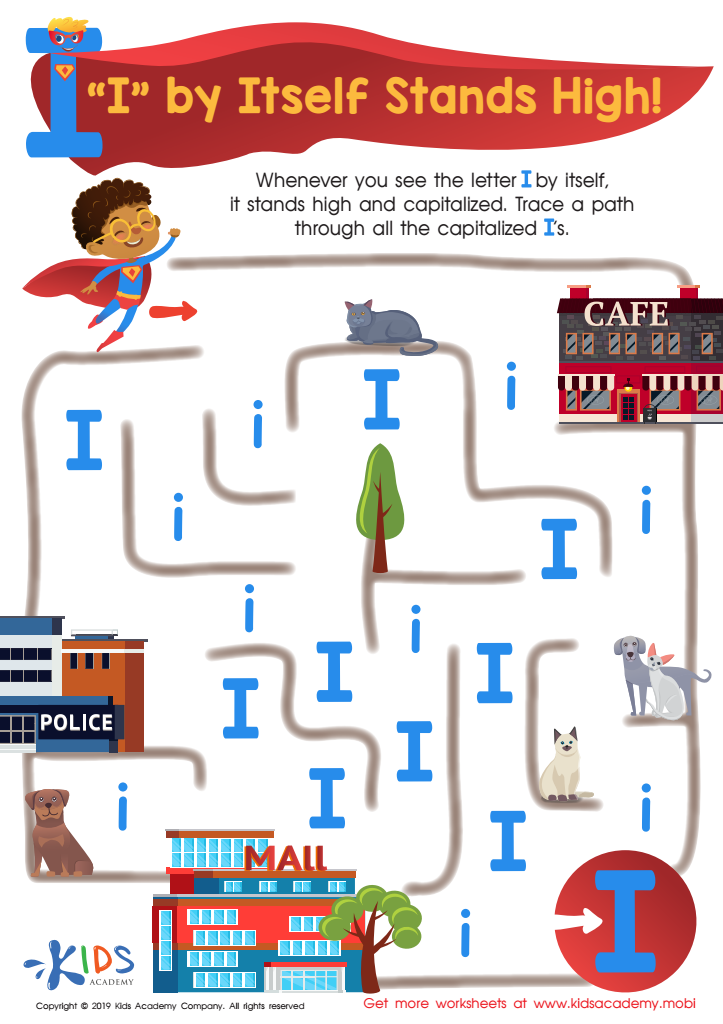
I Stands High Worksheet
Kids can use their imagination to help a superhero find the uppercase 'I's on the 'I By Itself Stands High' worksheet. This helps children learn capitalization, and they can join the superhero in flying over a city of cats, dogs and buildings to locate the needed letters.
I Stands High Worksheet
Worksheet
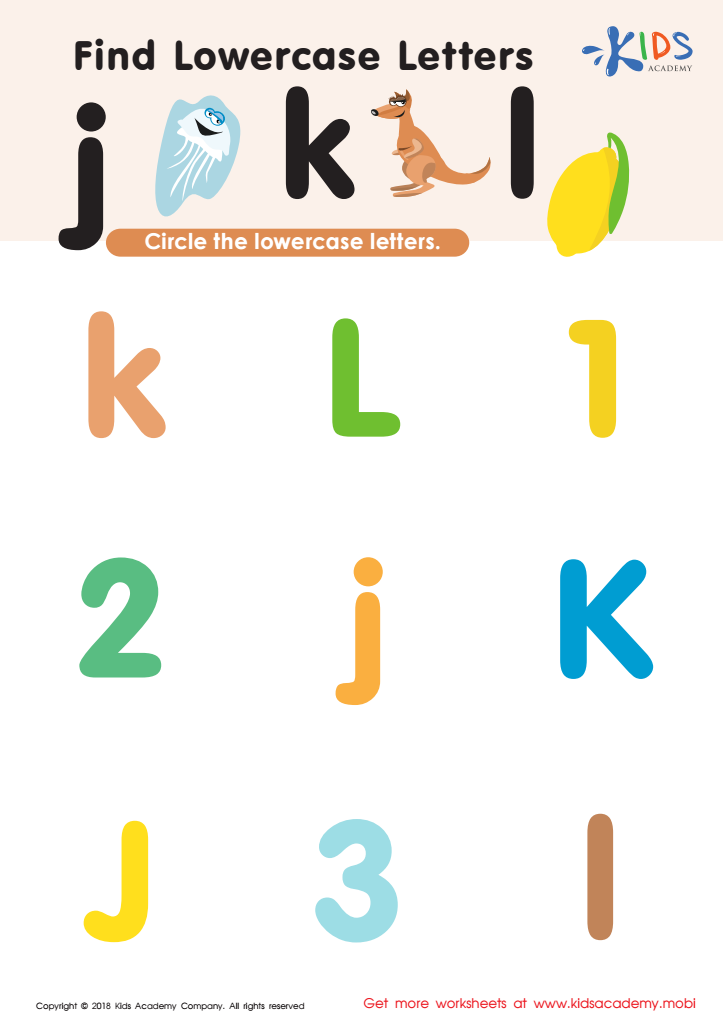
Find Lowercase Letters j k l Worksheet
Help your child's brain develop and have fun at the same time! Find and circle the lowercase letters jkl in the worksheet full of uppercase letters and numbers. Colorful drawings and bright colors make this an engaging learning activity.
Find Lowercase Letters j k l Worksheet
Worksheet
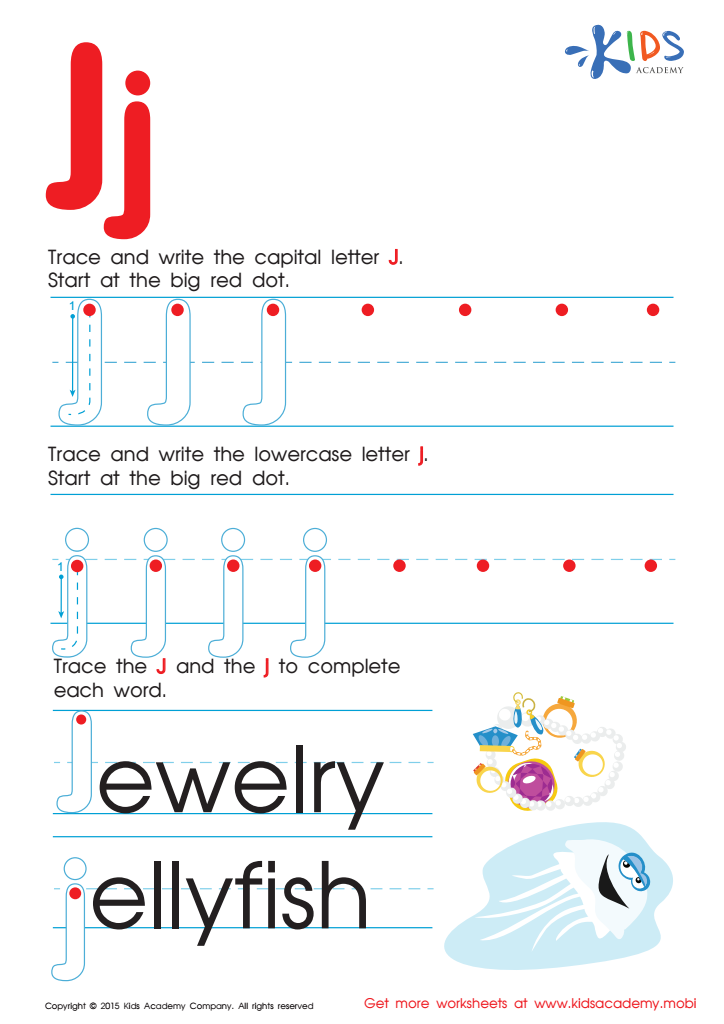
Letter J Tracing Page
Trace and write the letter "J" with our ABC worksheet - start at the big red dot! Have fun completing words like jewelry, jellyfish and more. Check out our kindergarten activities for more alphabet practice.
Letter J Tracing Page
Worksheet
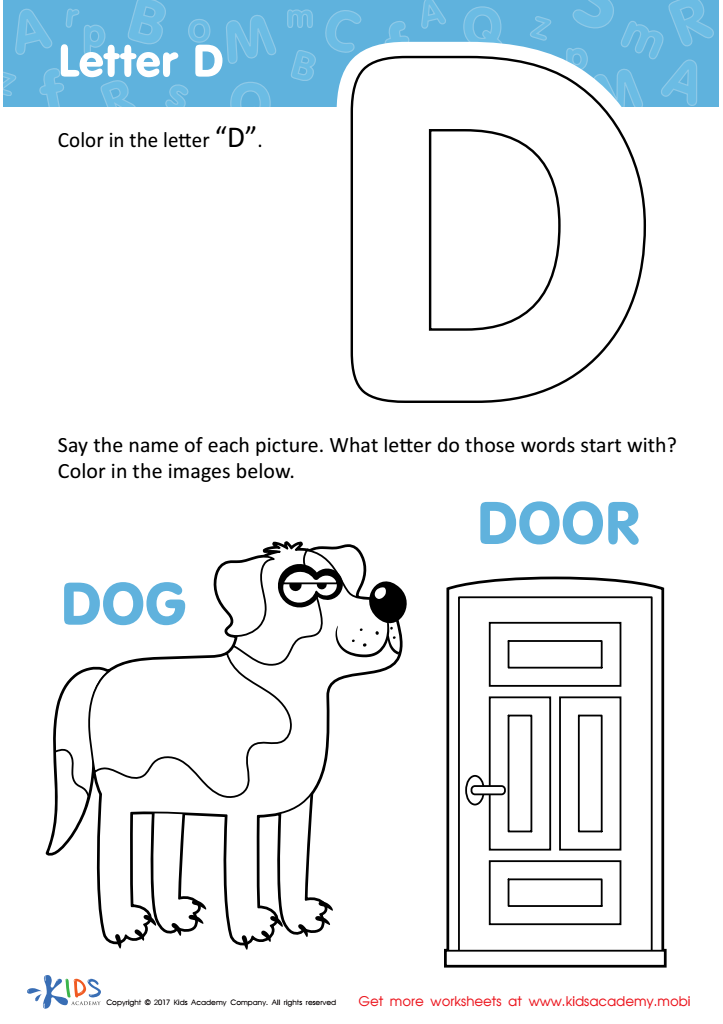
Letter D Coloring Sheet
Coloring with this letter "D" page is a great way to encourage your child's creativity while they learn the letter "D" and its sound. It's a fun activity to stimulate their imagination!
Download (PDF)
 Assign to My Students
Assign to My Students
Letter D Coloring Sheet
Worksheet
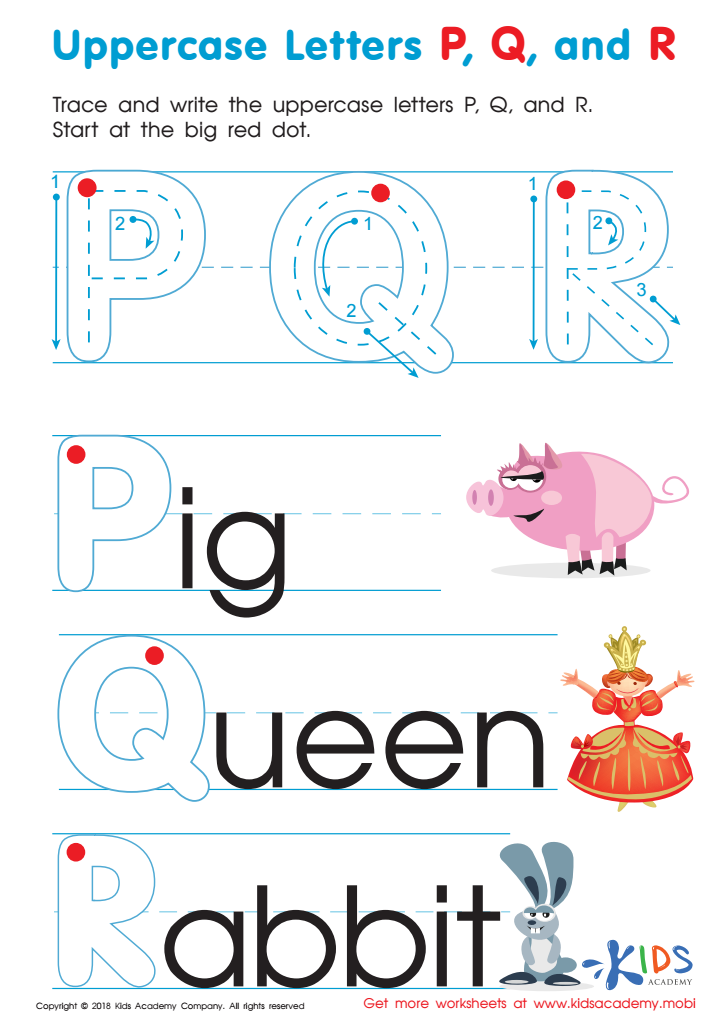
Uppercase Letters P, Q, and R Worksheet
Cute images of a pig, queen and rabbit make it fun to learn letter sounds. Follow the arrows to learn the strokes, then trace each letter from the big red dot. Perfect for kids to learn how to read and write P, Q, and R!
Uppercase Letters P, Q, and R Worksheet
Worksheet
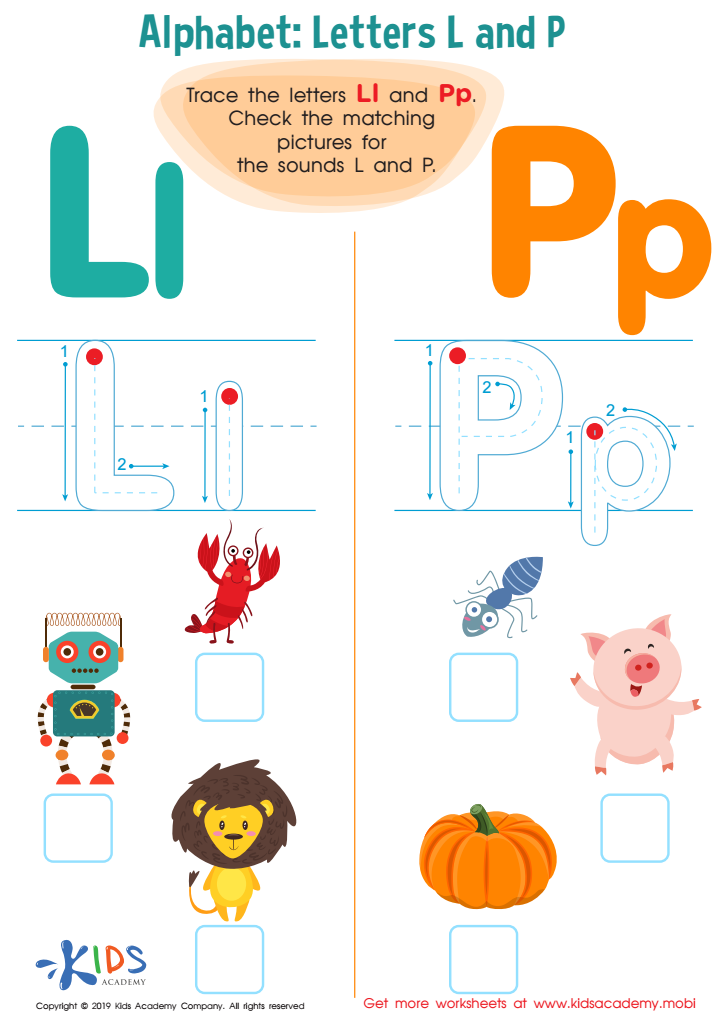
Letter L and P Tracing Worksheet
This traceable worksheet can motivate your students to learn and practice core skills. They'll trace the letters 'L' and 'P' and identify the pictures next to them. With this exercise, they'll unlock their learning abilities and excel in the subject!
Letter L and P Tracing Worksheet
Worksheet
Join Kids Academy for Free
Who is primarily going to use this learning content?






Fine motor skills development is vital for 6-year-olds as it underpins numerous academic and daily life tasks. These skills involve the ability to use smaller muscles for precise movements, which directly impacts a child's capability to write letters, numbers, and eventually full sentences. Mastery of fine motor skills is particularly important when learning the alphabet: being able to grasp pencils properly, control writing instruments, and manipulate paper contributes to the effective learning of letters and sounds.
Teachers and parents should focus on this development because proficient fine motor skills enhance a child's confidence and promote independence. Children who struggle with these skills may experience frustration and reluctance towards school activities, potentially leading to longer-term academic challenges. Additionally, fine motor skills contribute to overall cognitive development, supporting processes like problem-solving and creativity.
Engaging in playful activities like drawing, cutting, and crafting can significantly improve muscle coordination and dexterity. By incorporating fine motor skill practices into both home and classroom settings, adults provide children with essential tools for success—not just in learning the alphabet, but in establishing a strong foundation for lifelong learning and critical daily tasks. Investing time in developing these skills fosters growth in confidence and competence for young learners.







