Letter Tracing Practice Alphabet Worksheets for 6-Year-Olds
6 filtered results
-
From - To
Enhance your child's writing skills with our engaging "Letter Tracing Practice Alphabet Worksheets" specifically designed for 6-year-olds! These vibrant worksheets provide an interactive way for young learners to practice both uppercase and lowercase letters. Each worksheet is crafted to improve fine motor skills and letter recognition, helping children build confidence in their writing abilities. With fun illustrations and various tracing exercises, your child will enjoy hours of creative practice as they master the alphabet. Perfect for at-home learning or classroom activities, these worksheets are a fantastic resource to set your child on the path to literacy success!
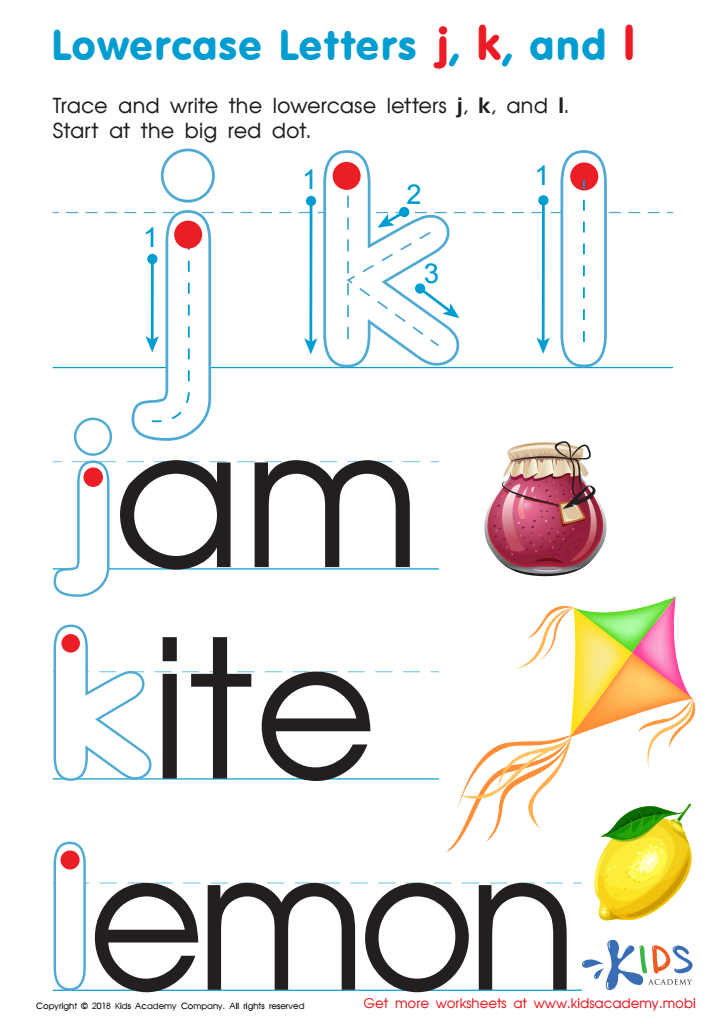
Lowercase Letters j k l Worksheet
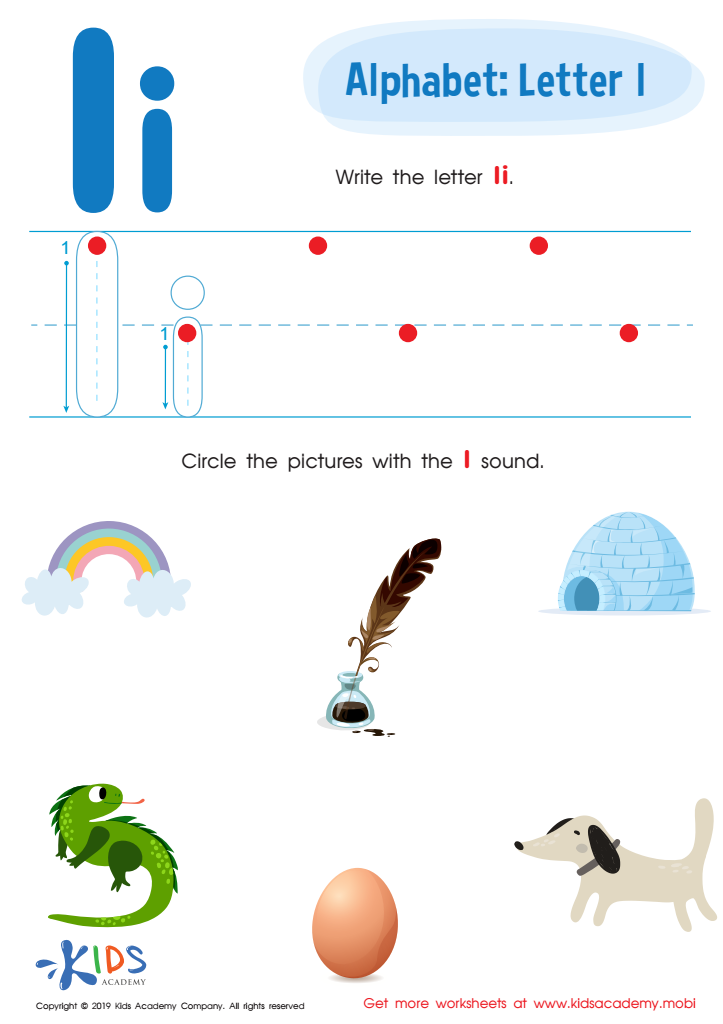
Letter I Tracing Worksheet
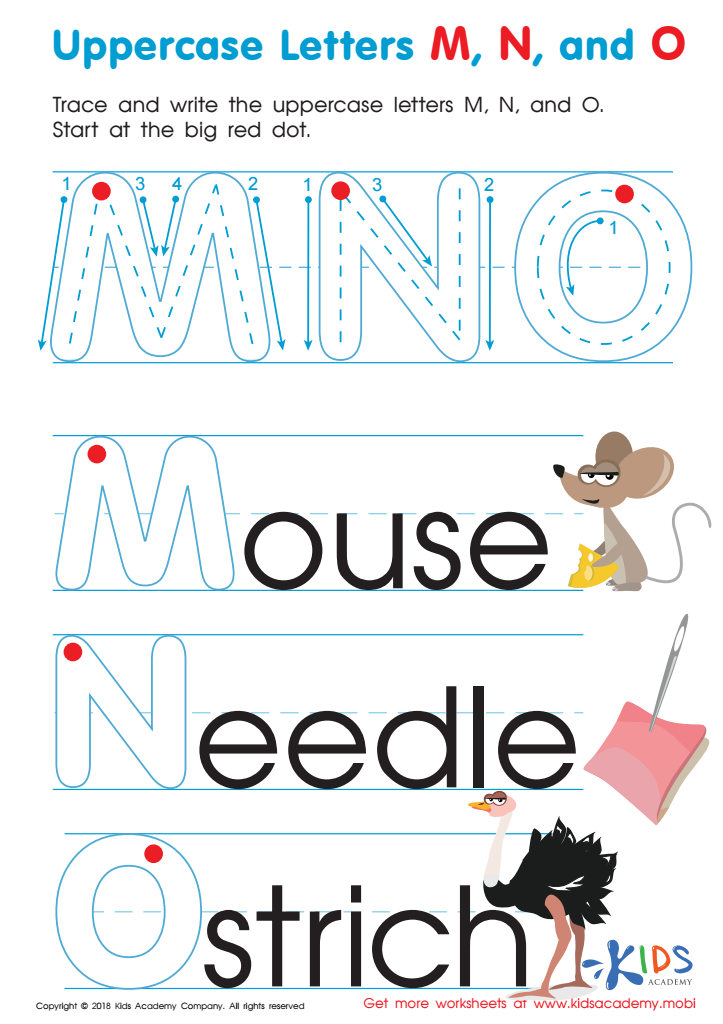
Uppercase Letters M, N, and O Worksheet
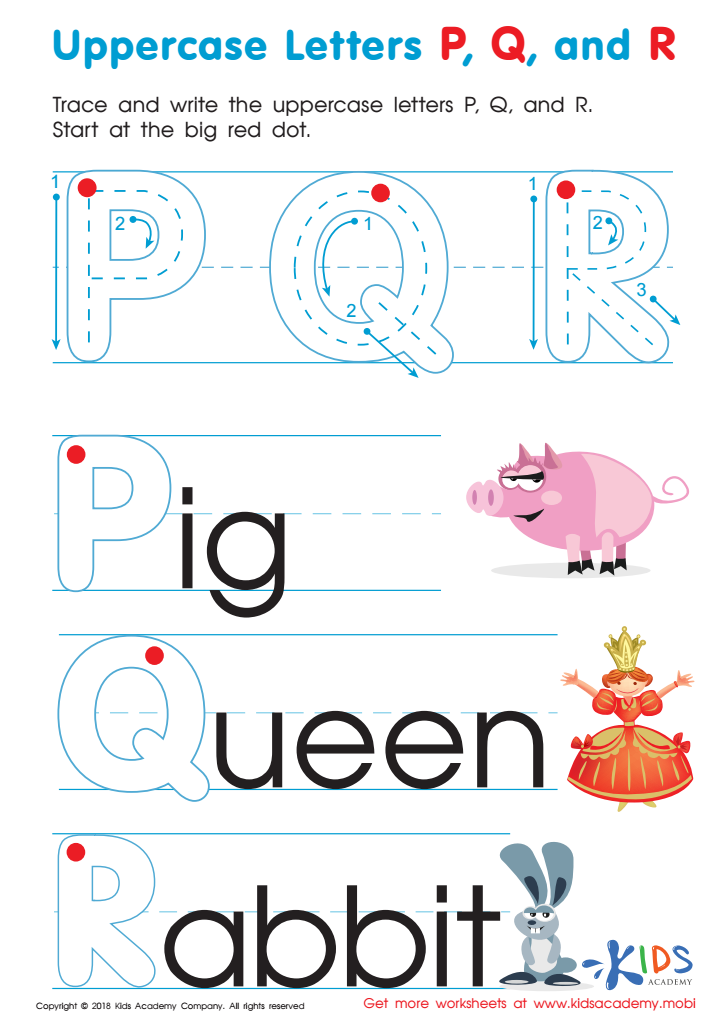
Uppercase Letters P, Q, and R Worksheet

Letter F Coloring Sheet
 Assign to My Students
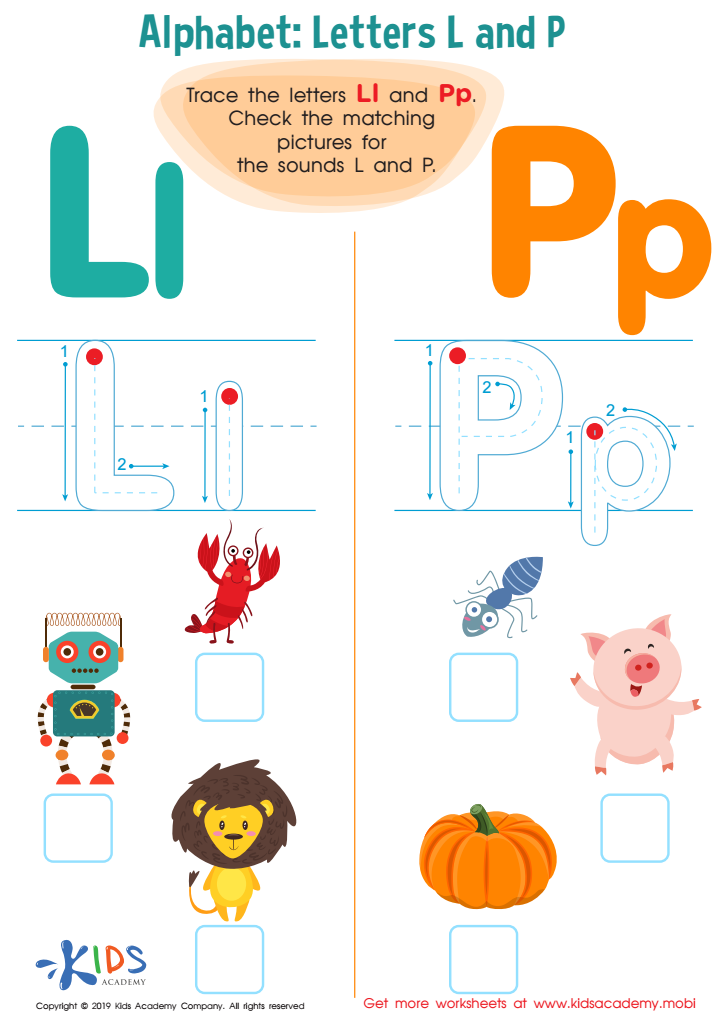
Letter L and P Tracing Worksheet








Parents and teachers should prioritize Letter Tracing Practice for 6-year-olds because it lays the foundation for essential literacy skills. At this age, children are developing fine motor coordination that is crucial for writing. Tracing letters helps them learn how to form each letter accurately, reinforcing the association between written characters and their corresponding sounds, which is vital for reading development.
Engaging in letter tracing also promotes cognitive skills. As children trace letters, they begin to recognize patterns and shapes, enhancing their visual perception and memory. This form of practice introduces them to the foundational aspect of written language, setting the stage for future reading and writing proficiency.
Moreover, letter tracing keeps learning interactive and fun, capturing a child’s attention. It can be incorporated into creative activities, which fosters a positive attitude toward learning. This enjoyment can cultivate a love for literacy that impacts their academic journey.
Lastly, encouraging letter tracing at home or in school provides a supportive learning environment. When parents and teachers actively engage in this practice, it promotes a partnership that can significantly influence a child’s confidence and interest in reading and writing, ultimately fostering lifelong learning habits.







