Word identification Alphabet Worksheets for 6-Year-Olds
3 filtered results
-
From - To
Boost your child's reading skills with our Word Identification Alphabet Worksheets designed specifically for 6-year-olds. These fun and engaging worksheets help young learners recognize and identify letters and words, enhancing their early literacy abilities. Aligned with common core standards, each worksheet combines visuals and activities to make learning enjoyable and effective. Perfect for both classroom and home use, these printable resources support foundational reading development, ensuring your child becomes confident in their word identification skills. Foster a love for learning and reading in your child with Kids Academy’s expertly crafted worksheets.
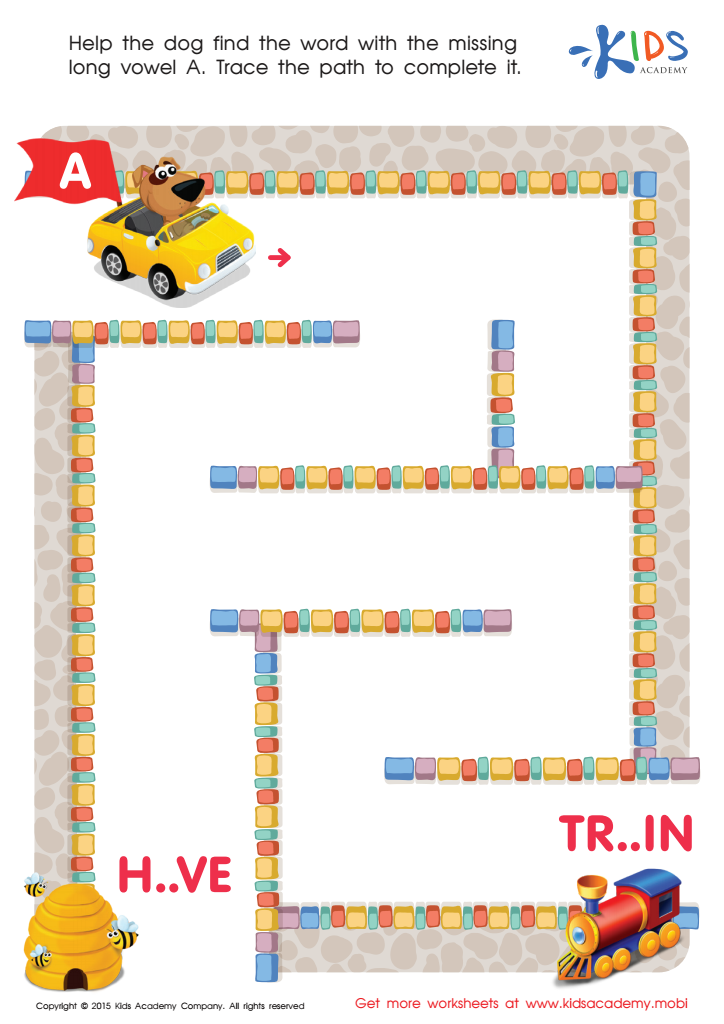
Long Vowel Sound A Worksheet
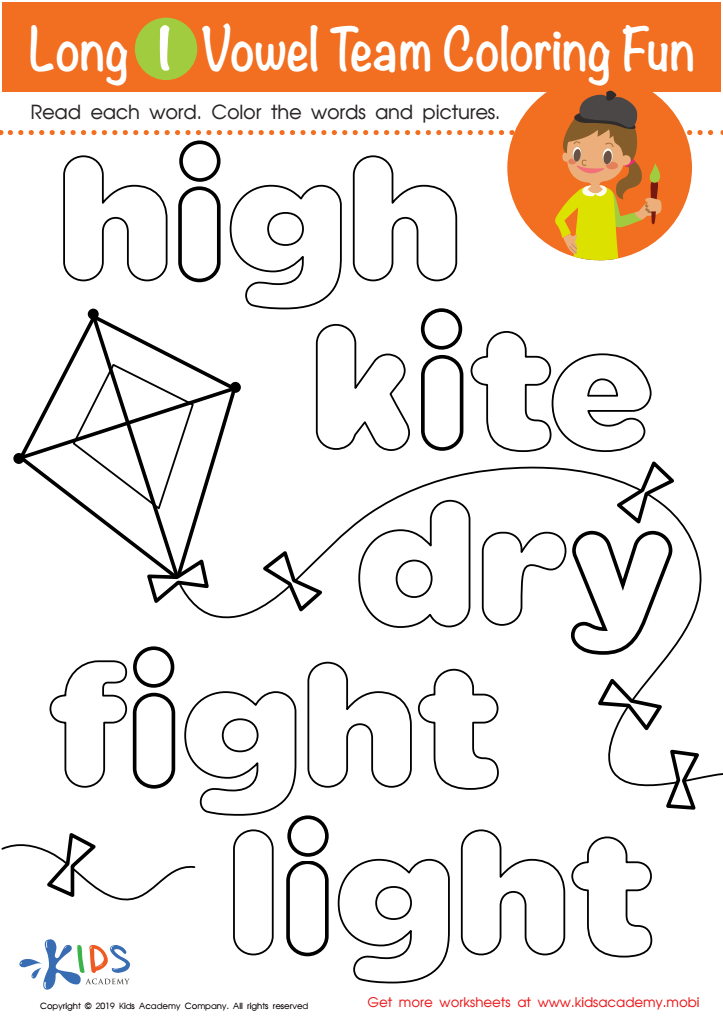
Long I Vowel Team Coloring Worksheet
 Assign to My Students
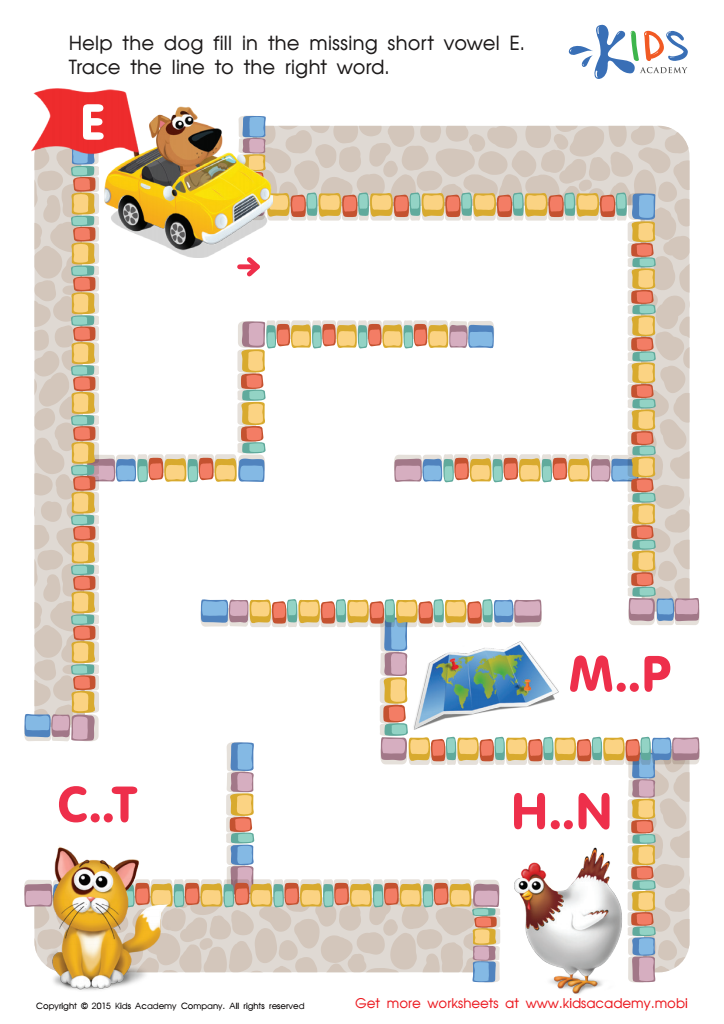
Short Vowel Sound E Worksheet








Parents and teachers should prioritize word identification alphabet activities for 6-year-olds because these foundational skills are critical for future reading success. At the age of six, children are in a crucial developmental stage where their brains are highly receptive to language acquisition. By helping young learners identify letters and associate them with sounds, adults lay the groundwork for decoding words, a primary skill for reading.
Proficient word identification alphabet practices enhance phonemic awareness, allowing children to recognize patterns within words and string together sounds to form coherent reading. This proficiency fosters a smoothly transitioning intent to understand not just how to read, but also how to understand and interpret text, a skill critical for all areas of learning.
Moreover, alphabet activities improve a child's ability to focus and concentrate. Enjoyable, interactive activities like songs, games, and hands-on materials combine learning with play, making the learning experience enjoyable and memorable.
Early mastery of the alphabet and word identification boosts a child's confidence and encourages a love of books and reading. When children possess strong foundational literacy skills from an early age, they are more likely to excel academically, communicate effectively, and develop a lifelong passion for learning. Therefore, parents and teachers should consider these activities essential in shaping a child's educational journey.







