Fine Motor Skills Letter G Worksheets for 6-Year-Olds
3 filtered results
Difficulty Level
Grade
Age
-
From - To
Subject
Activity
Standards
Explore our engaging "Fine Motor Skills Letter G Worksheets" designed specifically for 6-year-olds. These thoughtfully crafted worksheets provide a fun way to help young learners develop their fine motor skills while learning to write the letter G. Through activities like tracing, coloring, and cutting out shapes, children enhance their hand-eye coordination and grip strength. Each worksheet encourages creativity and exploration, making learning enjoyable and effective. Perfect for at-home or classroom use, these resources support early literacy development and prepare kids for future writing tasks. Start your child’s journey with the letter G and watch their skills blossom!
Favorites
With answer key
Interactive
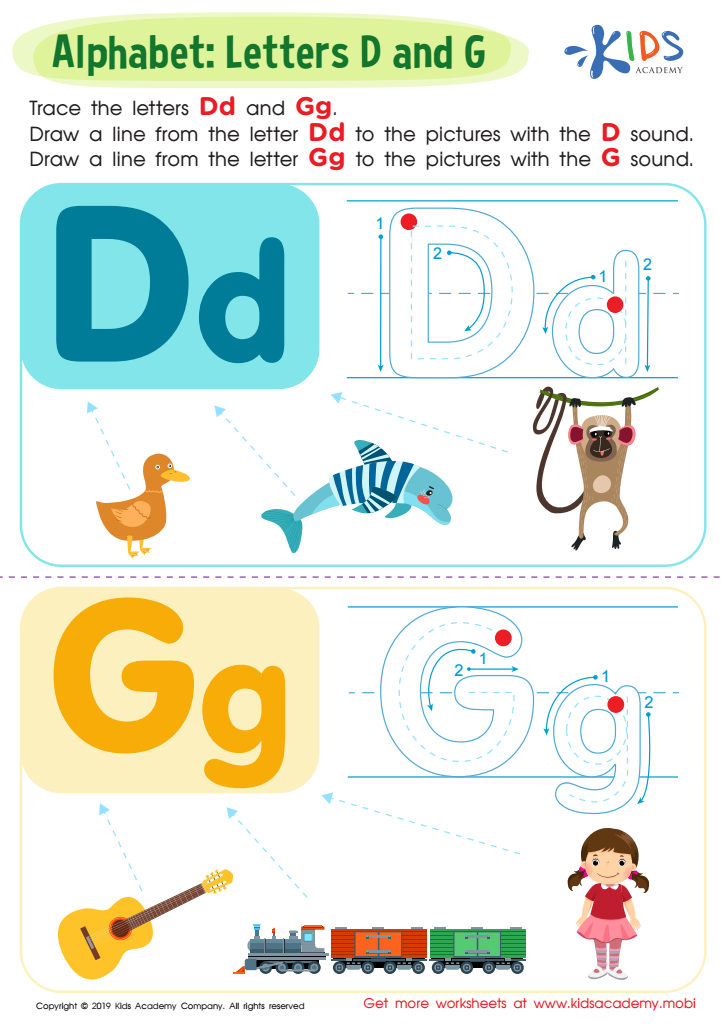
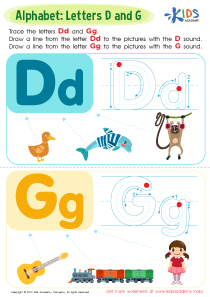
Letter D and G Tracing Worksheet
Kids can explore their imagination with the 'Alphabet: Letters D and G' worksheet! They'll trace capital and lowercase "D" and "G" and trace a line from the words. Colorful animals and objects make the task more fun and entertaining!
Letter D and G Tracing Worksheet
Worksheet

Letter G Tracing Page
Get ready to trace the letter "G" – with a big red spot as the starting point, trace the lines and watch the letter appear. Uppercase and lowercase letters are both easy and fun to write. Give it a go and finish the word "go". Play the guitar and say "hello" to a funny ghost!
Letter G Tracing Page
Worksheet
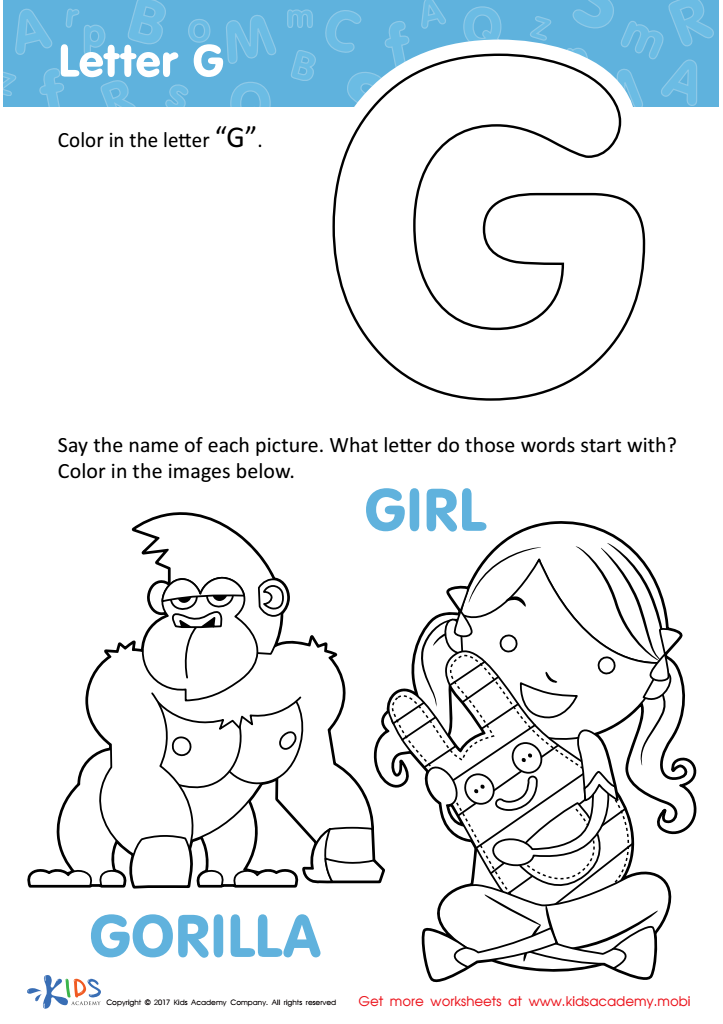
Letter G Coloring Sheet
This "G" coloring page encourages creativity and teaches kids the letter "G" sound. With its fun visuals and familiar words, it's sure to excite your child. Plus, you can talk about the letter’s sound with the pictures given.
Download (PDF)
 Assign to My Students
Assign to My Students
Letter G Coloring Sheet
Worksheet
Join Kids Academy for Free
Who is primarily going to use this learning content?






Fine motor skills are essential for 6-year-olds as they lay the foundation for various daily tasks, academic success, and overall development. Focusing on fine motor skills associated with the letter "G," such as gripping a pencil or manipulating small objects, helps enhance a child's ability to perform intricate tasks. Mastering these skills significantly impacts a child’s handwriting, drawing, and task execution, promoting confidence in their abilities.
Parents and teachers should care because fine motor competencies are closely linked to cognitive and language development. Engaging in activities that strengthen skills (like tracing the letter "G," cutting with scissors, or using educational toys) fosters coordination, which is critical for reading and writing readiness. Furthermore, these activities encourage concentration, patience, and problem-solving skills, crucial for a child's academic journey.
Additionally, developing fine motor skills contributes to social-emotional development. As children successfully manipulate objects or complete tasks, they build self-esteem and social skills by connecting with peers during collaborative activities. In an ever-evolving academic landscape, ensuring that children have well-developed fine motor skills will prepare them for future challenges both in and out of the classroom. Therefore, prioritizing these skills is vital for holistic child development.