Lowercase identification Letter Recognition Worksheets for 6-Year-Olds
5 filtered results
-
From - To
Explore our engaging Lowercase Letter Recognition Worksheets designed specifically for 6-year-olds! These worksheets help young learners easily identify and practice lowercase letters in a fun, interactive way. Perfect for reinforcing foundational reading skills, each activity encourages recognition through colorful visuals and hands-on exercises. Kids will enhance their alphabet knowledge while enjoying exercises like tracing, matching, and fun letter-related games. Tailored to satisfy young learners' curiosity and energy, our worksheets are ideal for both classroom settings and at-home learning. Support your child’s literacy development with these essential tools, making learning lowercase letters an enjoyable experience! Get started today!
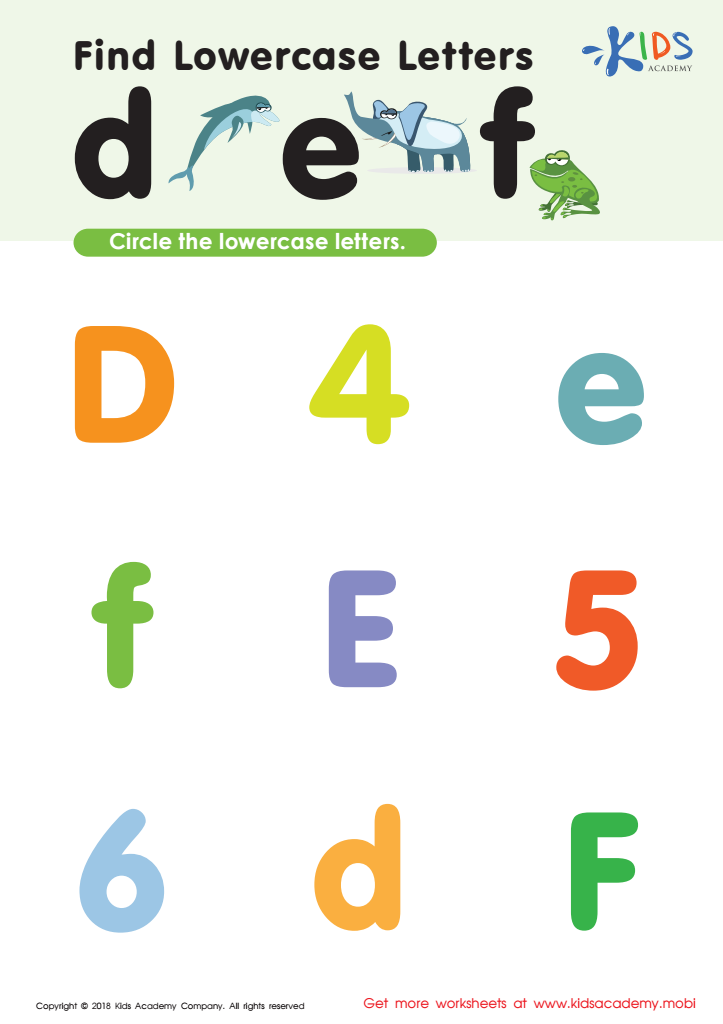
Find Lowercase Letters d e f Worksheet
 Assign to My Students
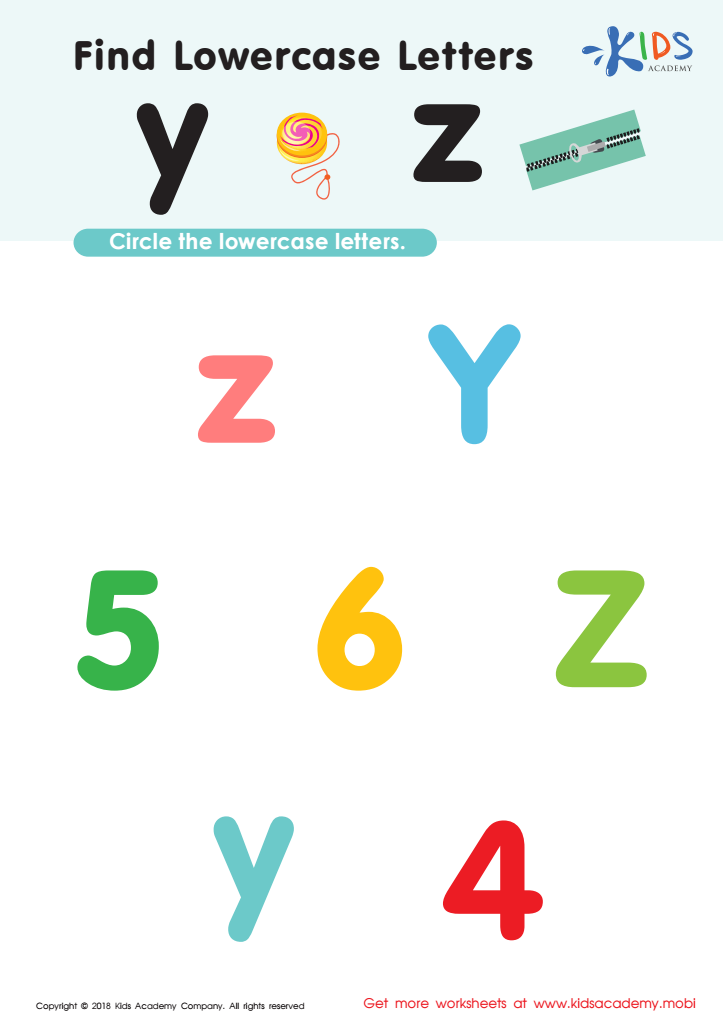
Find Lowercase Letters y z Worksheet
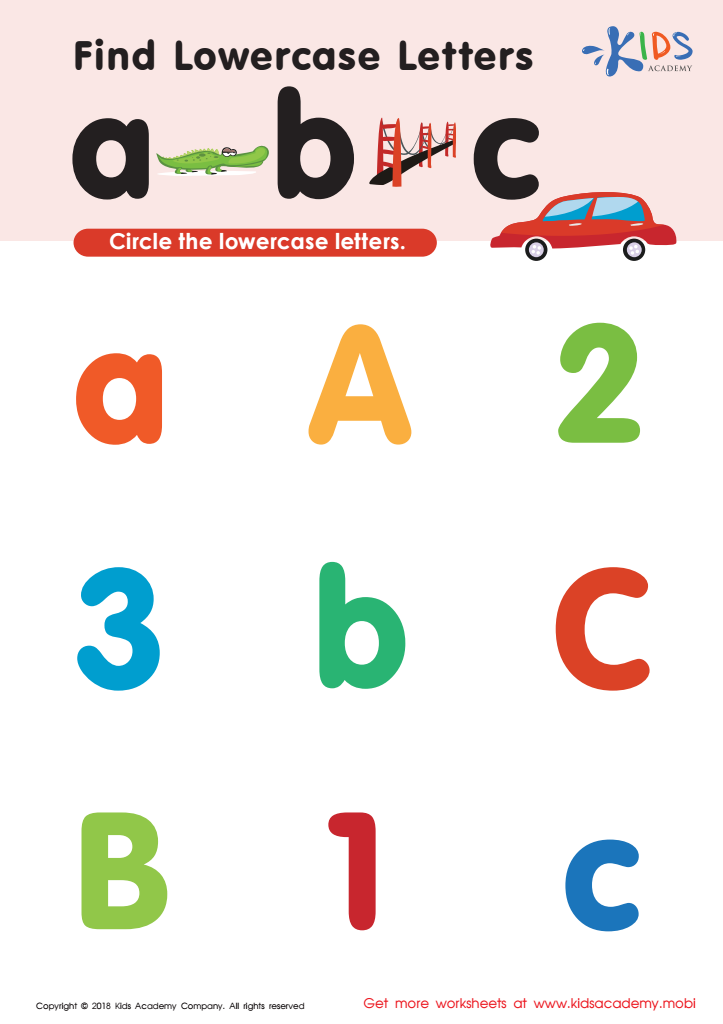
Find lowercase letters a b c Worksheet
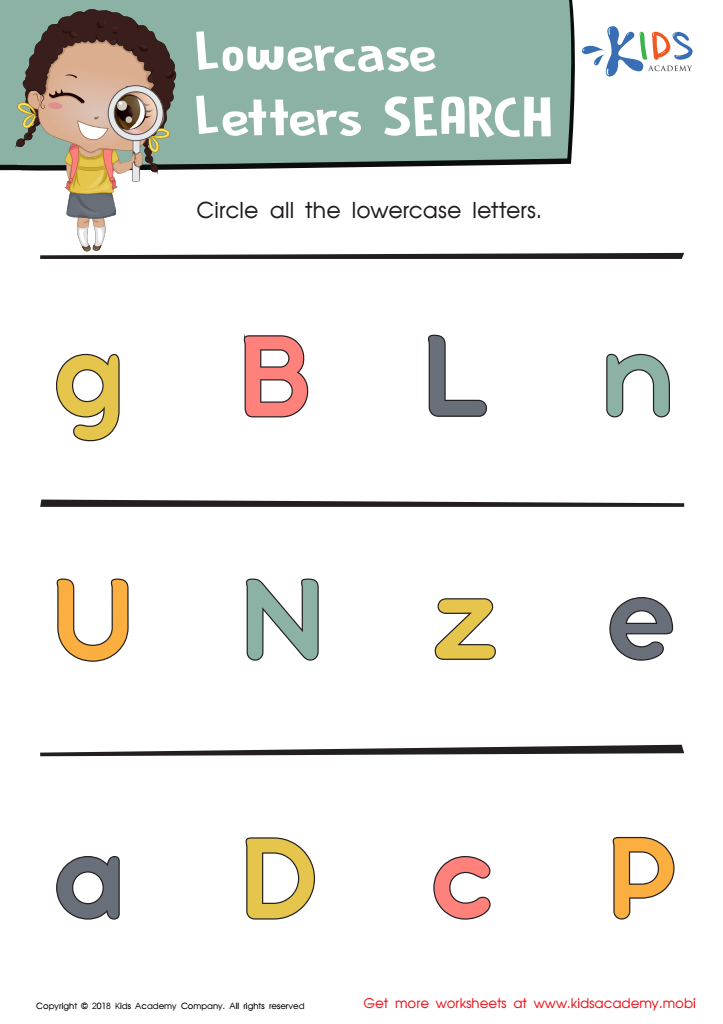
Lowercase Letters Search: Assessment Worksheet
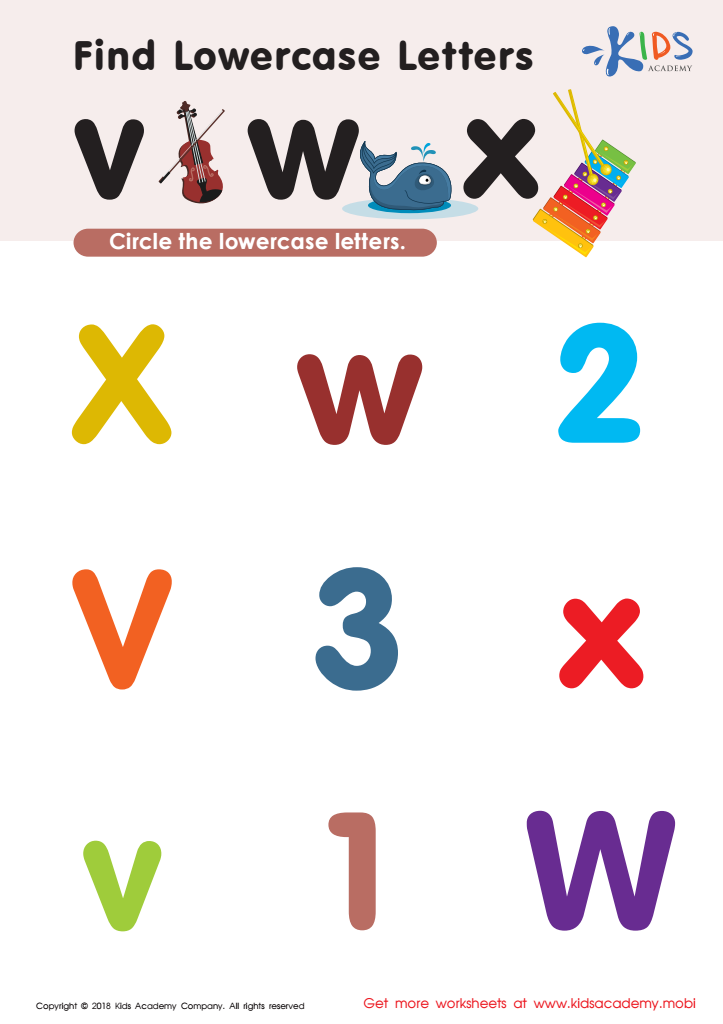
Find Lowercase Letters v w x Worksheet








Lowercase letter recognition is a crucial skill for six-year-olds, laying the foundation for literacy development. As children embark on their reading journey, they encounter lowercase letters more frequently than uppercase ones in everyday texts. Recognizing these letters helps children decode words, ultimately enhancing their reading fluency and comprehension.
Parents and teachers play a vital role in supporting this skill. When they emphasize lowercase letter identification, they foster a deeper understanding of language and encourage a love for reading. Engaging activities, such as reading books together, playing letter-matching games, or using educational apps, can make learning fun and interactive.
Furthermore, mastery of lowercase letters promotes child confidence, which is essential for their overall learning experience. Struggling with letter recognition can lead to frustration, diminishing a child's enthusiasm for school and reading. By prioritizing lowercase identification, parents and educators help empower children to participate actively in literacy activities and classroom discussions.
In summary, nurturing lowercase letter identification at this critical developmental stage supports a child’s reading abilities, boosts their confidence, and lays the groundwork for academic success, making it an essential focus for parents and teachers alike.







