Filters

28 filtered results

Clear all filters
Favorites
With answer key
Interactive

28 filtered results

Difficulty Level

Grade


Check out this FREE Trial Lesson on Tracing Letters for age 6!

Tracing Uppercase Letters S-Z

Favorites
With answer key
Interactive
  • 6
  • Alphabet Recognition
  • Tracing Letters
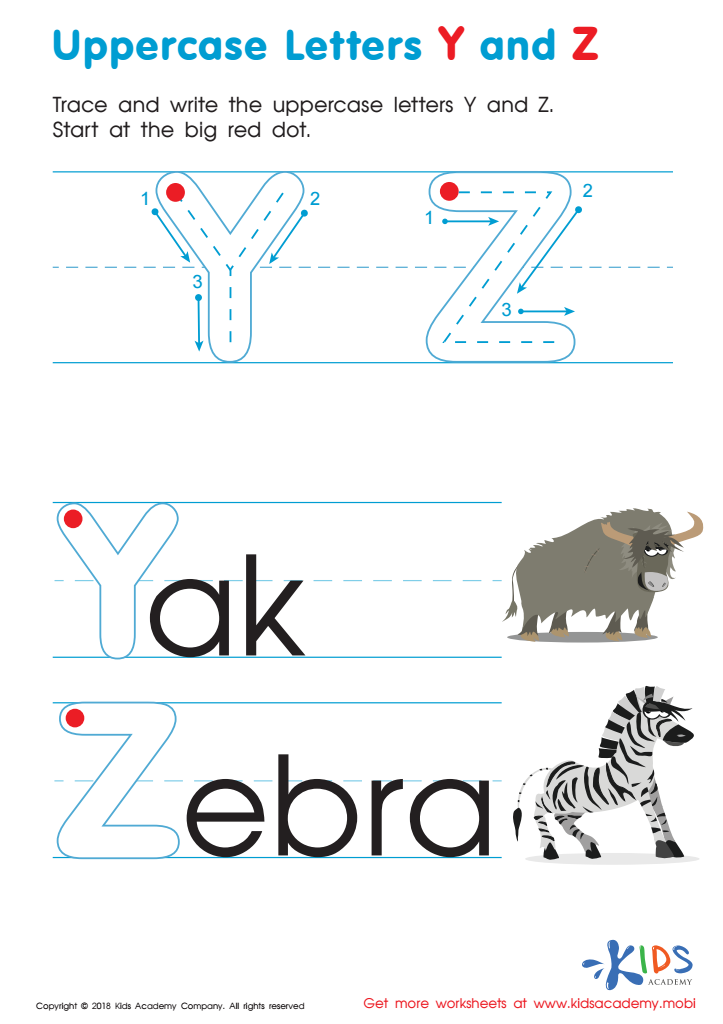
Uppercase Letters Y Z Worksheet

Uppercase Letters Y Z Worksheet

Help your child learn their ABCs with this fun tracing activity! They must trace and write Y and Z in uppercase form, starting from the red dot. Kids will love the fun images for extra engagement. Guiding their hand carefully will help them practice and perfect their writing skills.
Uppercase Letters Y Z Worksheet
Worksheet
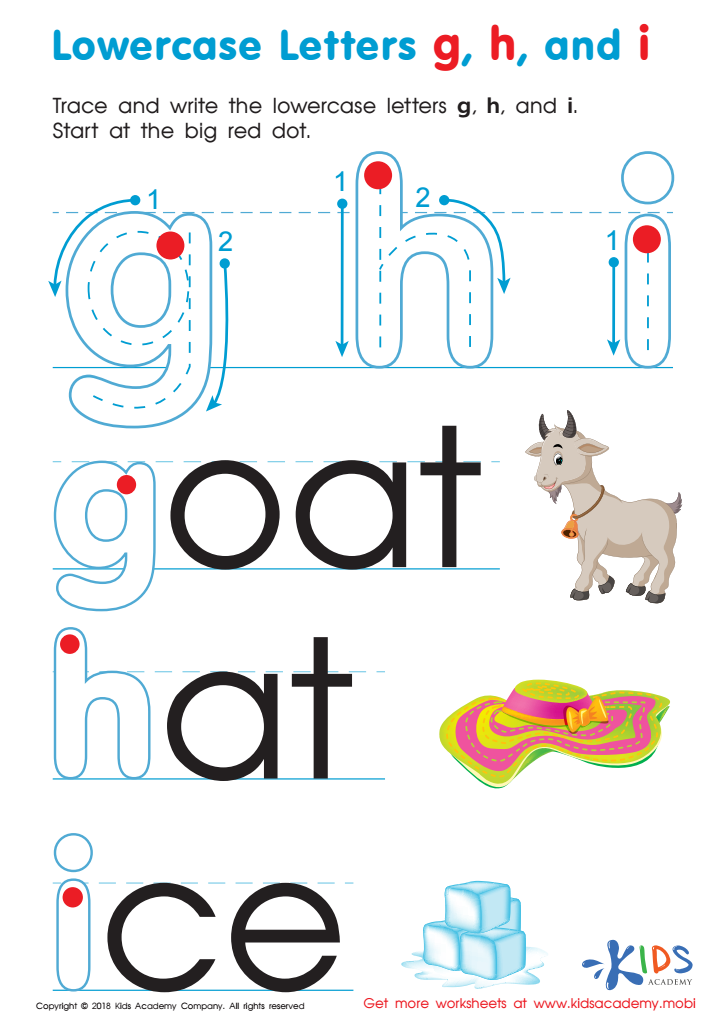
Lowercase Letters g h i Worksheet

Lowercase Letters g h i Worksheet

Learning is fun for your youngster with color and an enjoyable exercise. Help them build their understanding of the alphabet by starting at the big red dot drawn on each letter and carefully following the dotted lines to draw g, h, and i.
Lowercase Letters g h i Worksheet
Worksheet
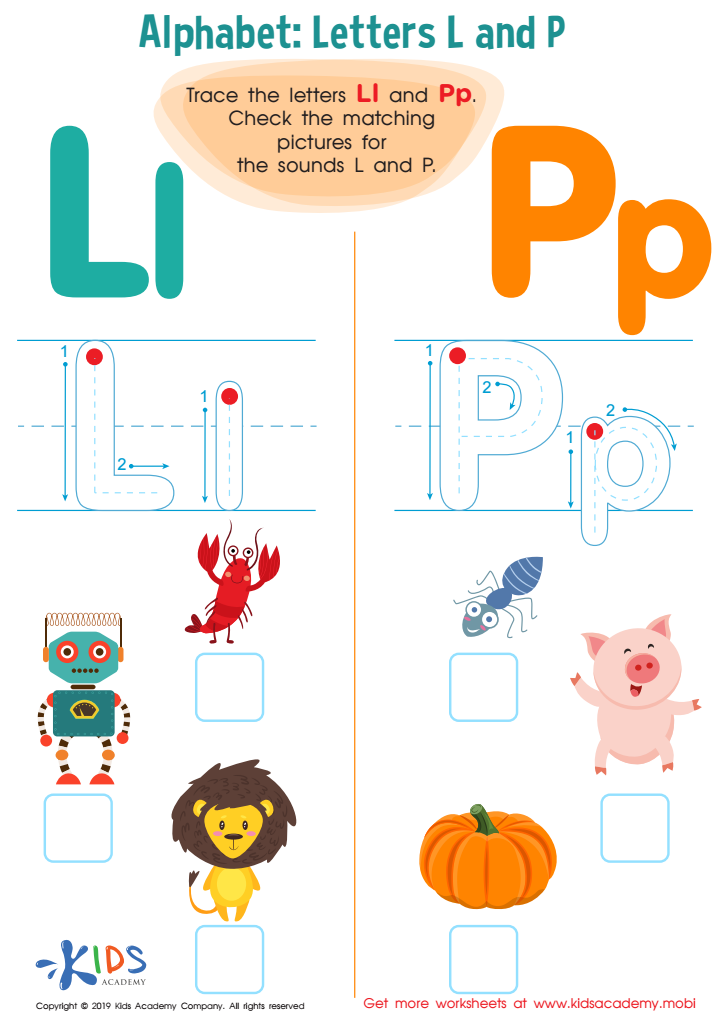
Letter L and P Tracing Worksheet Preview

Letter L and P Tracing Worksheet

This traceable worksheet can motivate your students to learn and practice core skills. They'll trace the letters 'L' and 'P' and identify the pictures next to them. With this exercise, they'll unlock their learning abilities and excel in the subject!
Letter L and P Tracing Worksheet
Worksheet
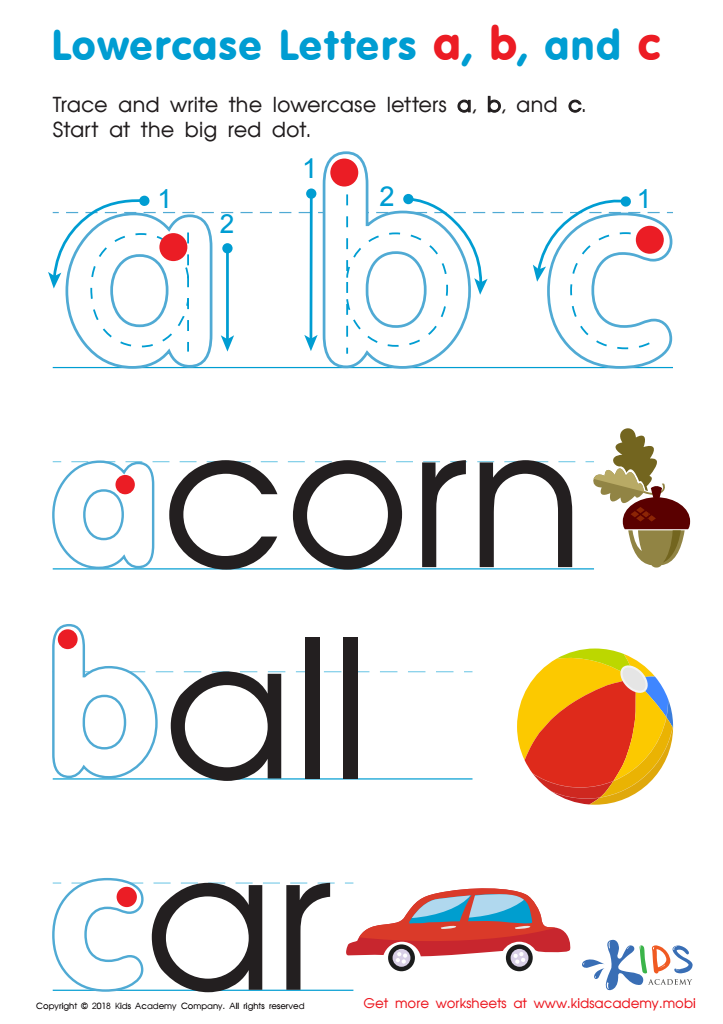
Lowercase Letters a b c Worksheet


Lowercase Letters a b c Worksheet

Help your child trace and write the lowercase letters of the alphabet with this fun worksheet. Start by following the arrows and directions from the red dot, and watch them improve their writing skills! Vibrant illustrations make it easy and enjoyable.
Lowercase Letters a b c Worksheet

Worksheet


Alphabet recognition and letter tracing are crucial for the literacy development of 6-year-olds. At this age, children are typically transitioning from a pre-literate stage to the early stages of reading and writing. Recognizing letters ensures that they can identify and differentiate between the 26 characters of the English alphabet, forming the foundation for their reading skills.

Tracing letters provides children with a hands-on approach to learning. This activity enhances fine motor skills, which are essential for writing. By physically tracing each letter, children develop muscle memory that aids in their ability to write letters accurately and confidently.

Furthermore, letter recognition is fundamentally linked to phonemic awareness—the ability to hear, identify, and manipulate individual sounds in spoken words. Familiarity with letters allows children to decode words, a critical skill when they begin reading.

When parents and teachers prioritize activities like alphabet recognition and tracing, they create a supportive environment that fosters a child’s enthusiasm for reading and writing. Early intervention is key; those who struggle with letter recognition often face challenges in literacy later on. Therefore, investing time in these foundational skills paves the way for successful academic futures.