Letter tracing skills Upper & Lowercase Letters Worksheets for 6-Year-Olds
3 filtered results
-
From - To
Perfect your 6-year-old's handwriting with our engaging Letter Tracing Skills Upper & Lowercase Letters Worksheets. Designed by Kids Academy, these worksheets provide a fun and interactive way for young learners to master both uppercase and lowercase letters. Each worksheet offers ample practice, helping children improve their fine motor skills and letter recognition. Through guided tracing activities, kids will boost their confidence and prepare for future writing tasks. Ideal for at-home practice or classroom use, these worksheets are essential for developing foundational literacy skills. Download now and watch your child’s writing abilities flourish!
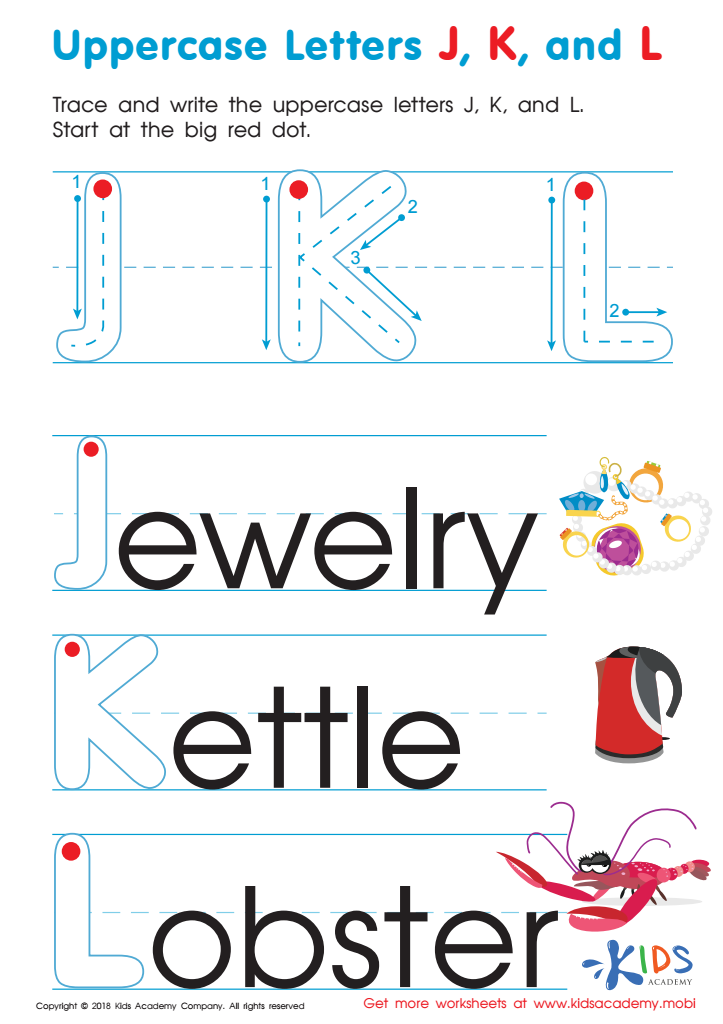
Uppercase Letters J, K, and L Worksheet
 Assign to My Students

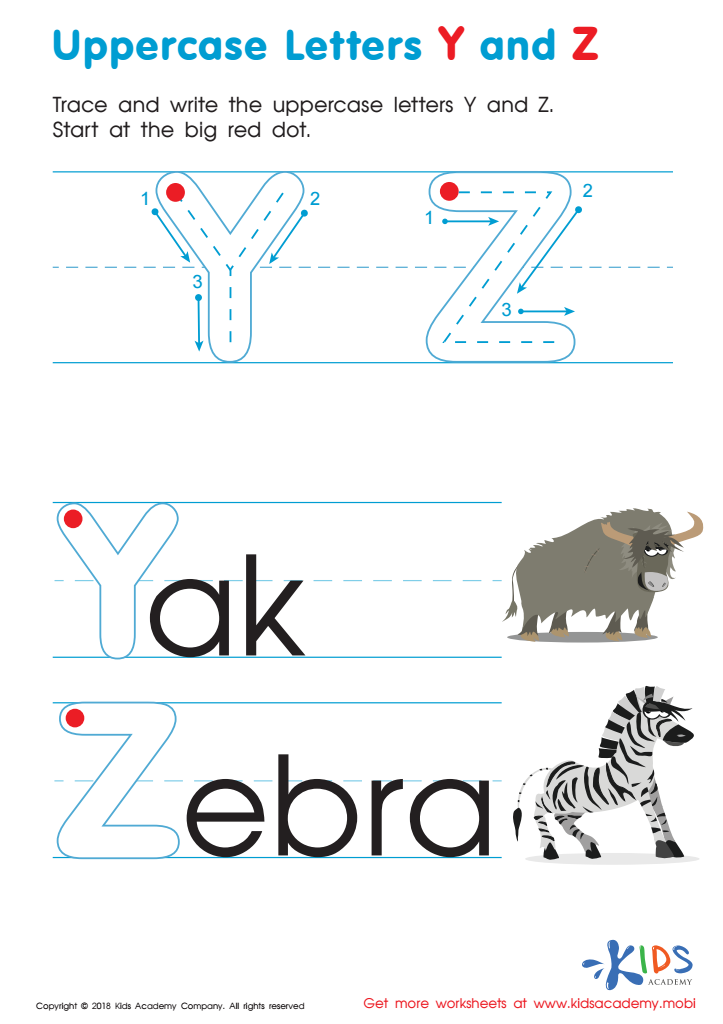
Uppercase Letters Y Z Worksheet
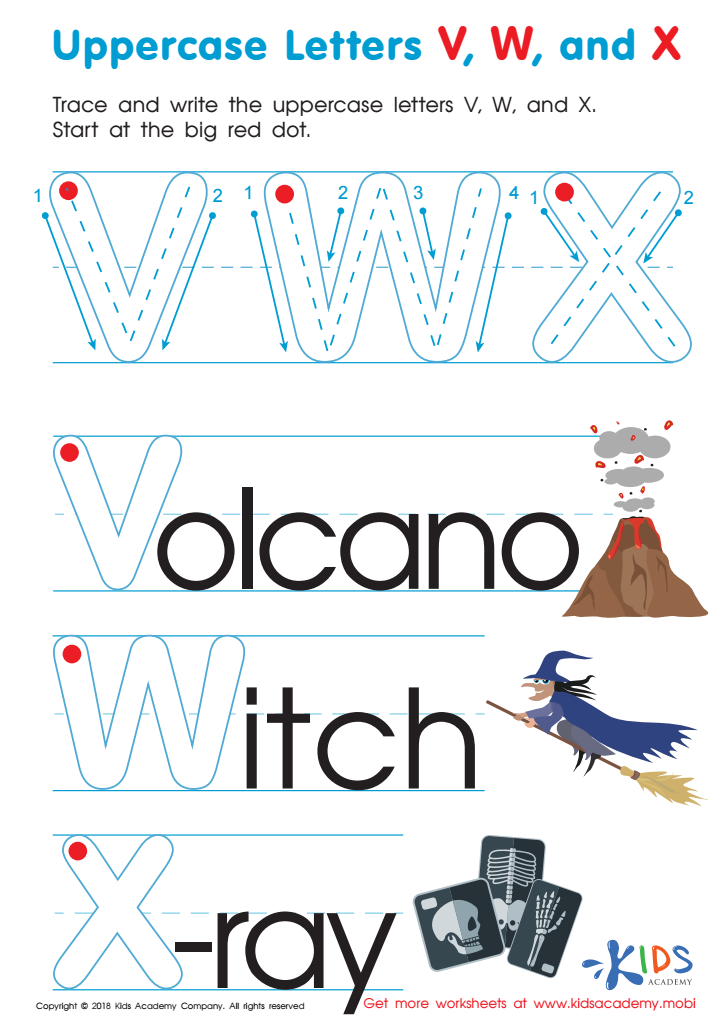
Uppercase Letters V, W, and X Worksheet






Parents and teachers should prioritize letter tracing skills in uppercase and lowercase letters for 6-year-olds because it forms a crucial foundation for their literacy development. At this age, children are often beginning or continuing their journey in learning to read and write. Letter tracing helps solidify the recognition of each letter and its form, which is essential for both reading fluency and confident writing.
The act of tracing allows children to practice the fine motor skills necessary for writing. It strengthens hand-eye coordination and improves hand dexterity, essential for legible handwriting. Furthermore, by learning both uppercase and lowercase forms, children become more familiar with different contexts in which the letters are used. For instance, they learn that names typically start with an uppercase letter, while most of the others are lowercase, providing a practical understanding of language structure.
Tracing exercises also promote cognitive development by linking the physical act of writing with mental processes like memory and comprehension. Engaging in these activities gives children an opportunity for repeated exposure and practice, helping reinforce their learning in a controlled and enjoyable way.
Overall, investing time in letter tracing not only supports the immediate goal of learning to write but also offers long-term benefits in language skills and cognitive development, setting the stage for academic success.







