Lowercase identification Upper & Lowercase Letters Worksheets for 6-Year-Olds
5 filtered results
-
From - To
Discover engaging Lowercase Identification worksheets designed specifically for 6-year-olds! Our resources provide a fun and interactive way for young learners to familiarize themselves with uppercase and lowercase letters. With vibrant illustrations and age-appropriate activities, children will build their literacy skills effectively while enjoying the learning process. These worksheets encourage recognition and differentiation between letter cases, essential for reading and writing proficiency. Ideal for classrooms or home learning, they support early education development and stimulate curiosity in young minds. Download now to foster a love for letters and create confident little readers in no time!
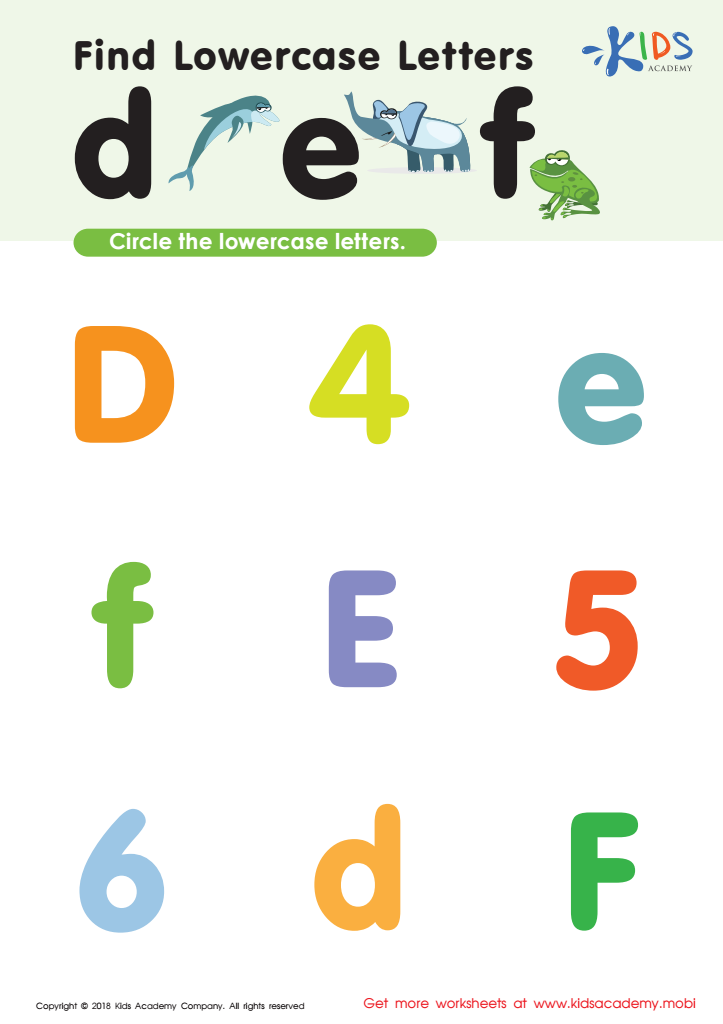
Find Lowercase Letters d e f Worksheet
 Assign to My Students


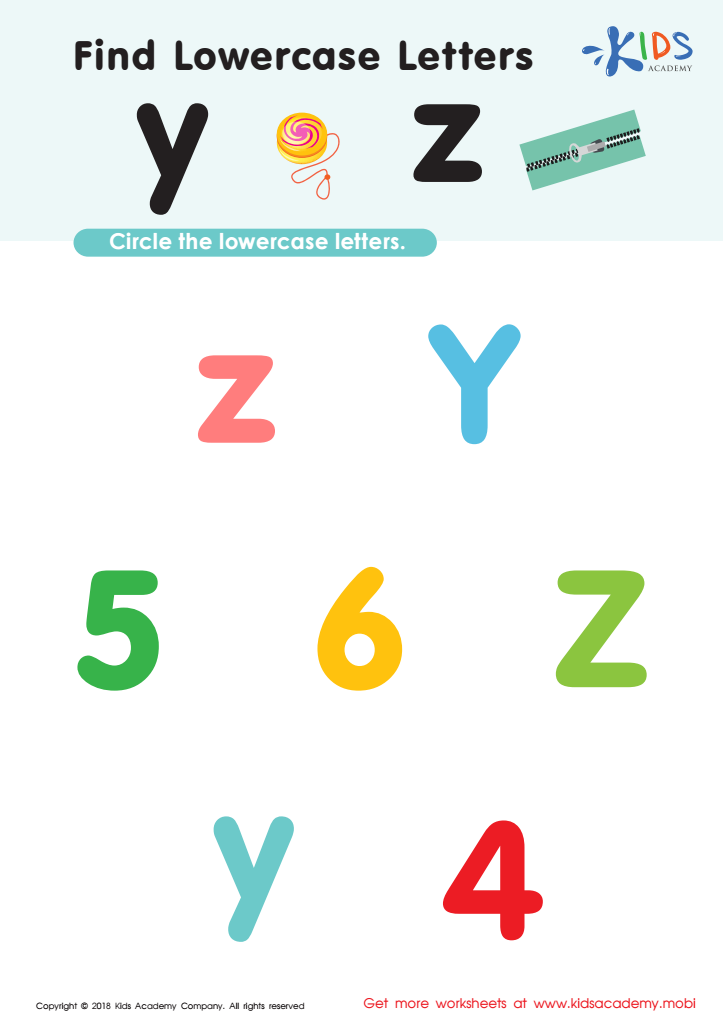
Find Lowercase Letters y z Worksheet
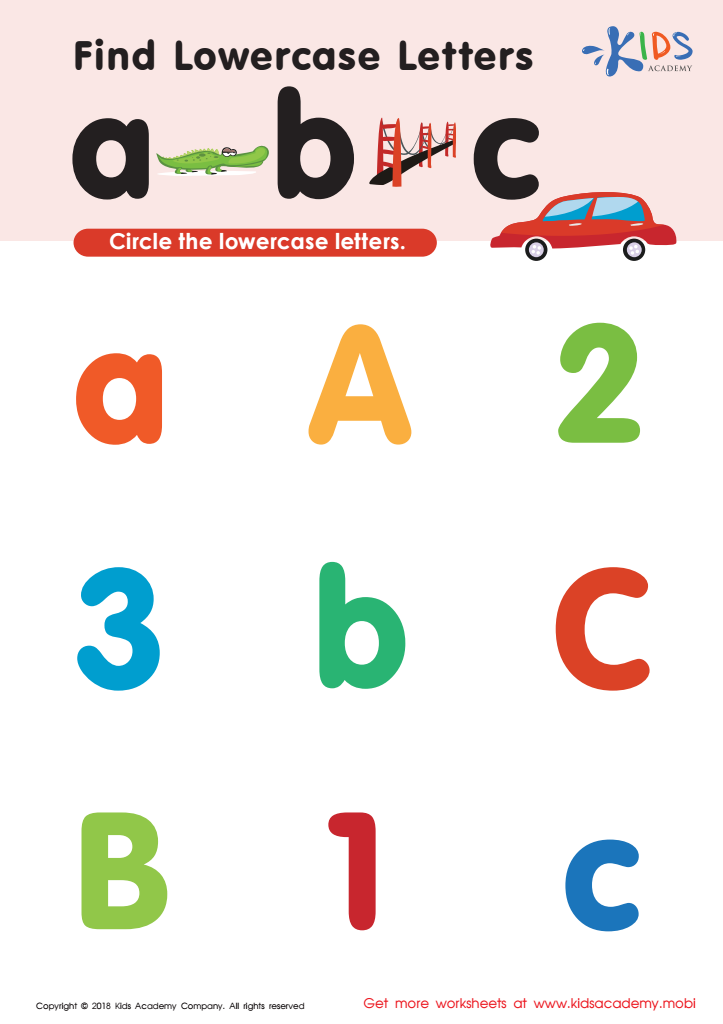
Find lowercase letters a b c Worksheet
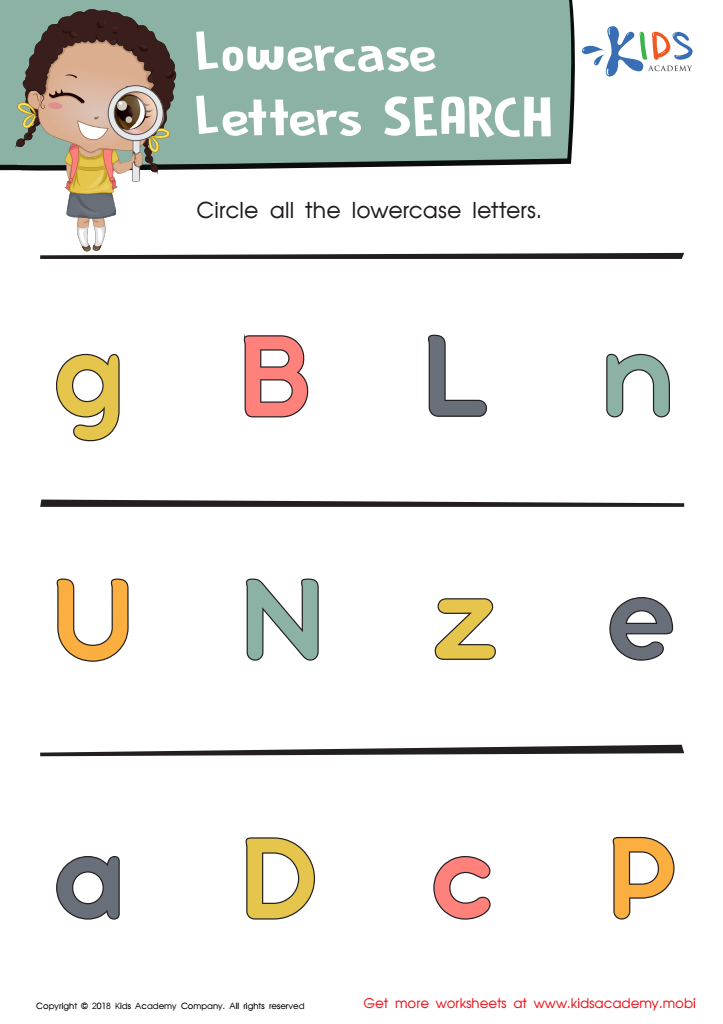
Lowercase Letters Search: Assessment Worksheet
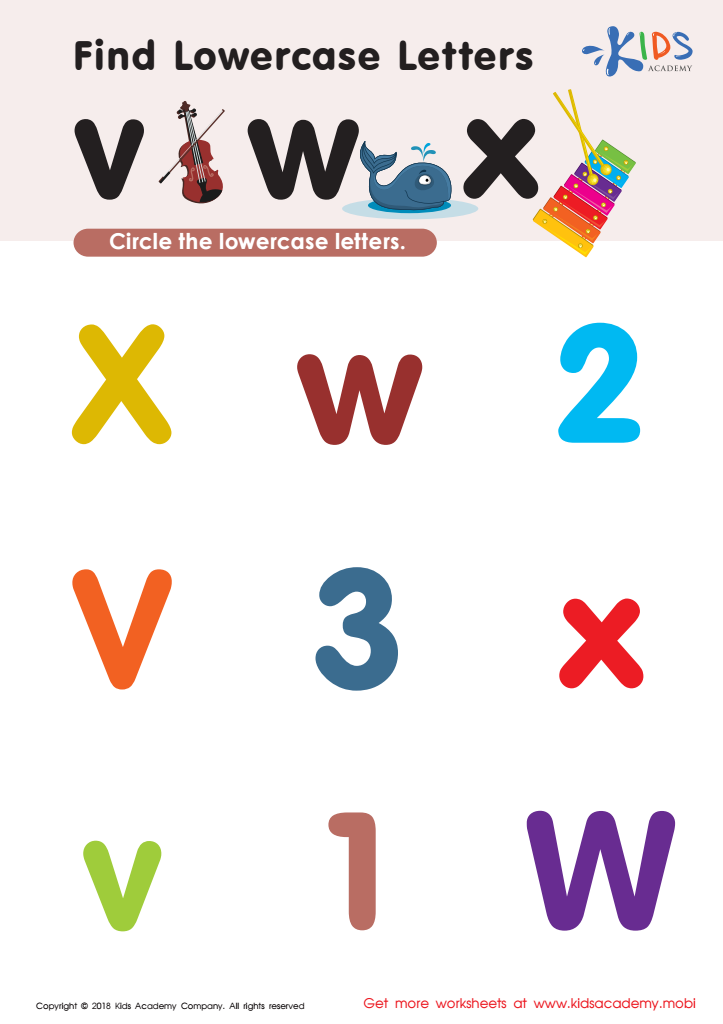
Find Lowercase Letters v w x Worksheet






Lower and uppercase letter identification is crucial for 6-year-olds as it lays the foundation for literacy skills essential for academic success. Recognizing and properly using lowercase and uppercase letters not only helps children read but also aids in writing, spelling, and overall language development.
First, understanding the differences between uppercase and lowercase letters enhances reading fluency. Most text combines both types, and recognizing their distinct roles—such as how uppercase letters signify the start of sentences or proper nouns—helps children make sense of written material.
Second, writing requires children to differentiate between uppercase and lowercase letters to produce coherent sentences. Mastery in this area boosts their confidence and encourages them to express themselves through writing.
Moreover, supporting letter identification promotes cognitive skills, such as memory and recognition, while fostering a love for language. Engaging in letter-related activities, like games and crafts, also strengthens the bond between parents, teachers, and children, making learning a collaborative and enjoyable process.
Ultimately, prioritizing lowercase and uppercase letter identification equips children with vital skills needed for effective communication, setting the stage for future academic endeavors and lifelong learning.







