Cognitive Development Chess Worksheets for 6-Year-Olds
5 filtered results
-
From - To
Unlock your child's potential with our Cognitive Development Chess Worksheets for 6-Year-Olds! Designed to enhance critical thinking, memory, and problem-solving skills, these engaging worksheets help young learners explore the world of chess while developing essential cognitive abilities. With age-appropriate themes and colorful illustrations, your child will effortlessly grasp the fundamentals of chess strategy and decision-making. These worksheets encourage creativity and boost analytical thinking through fun puzzles and challenges, making learning enjoyable. Perfect for home or classroom use, our resources pave the way for a brighter, more strategic future. Start your child's journey into chess today with our expertly crafted worksheets!
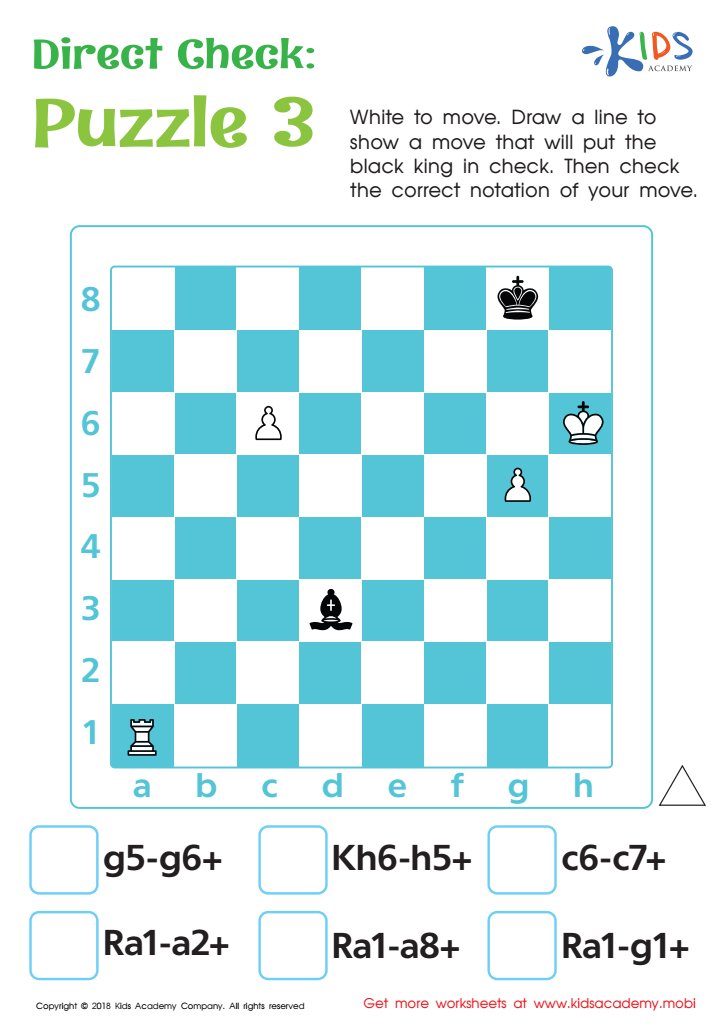
Direct Check: Puzzle 3 Worksheet
 Assign to My Students
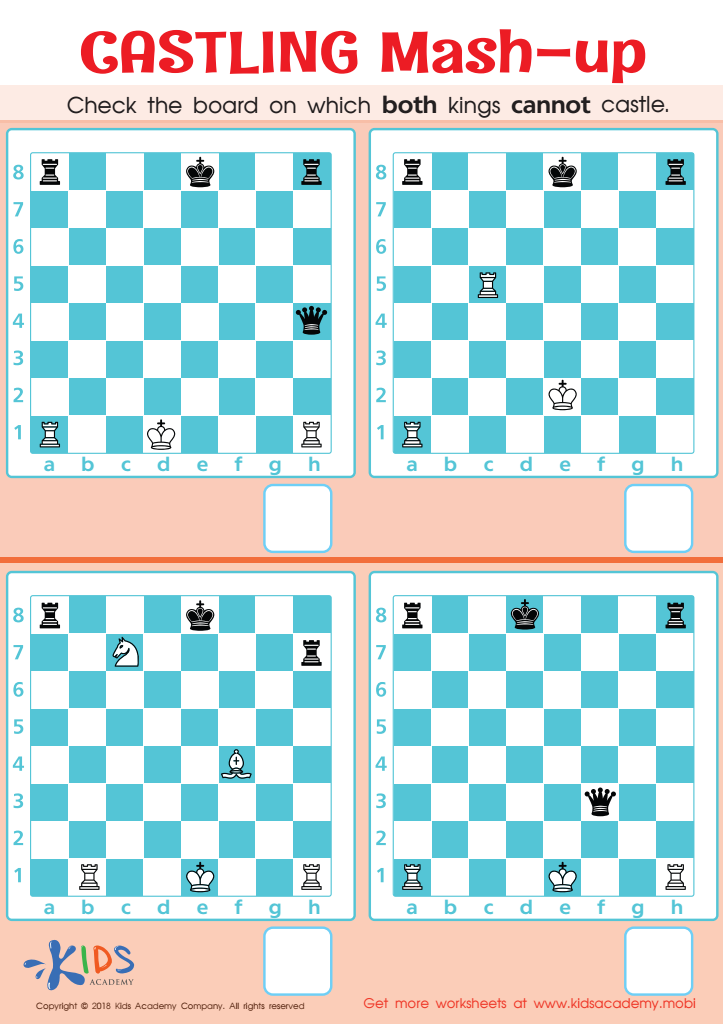
Castling Mash–up Worksheet
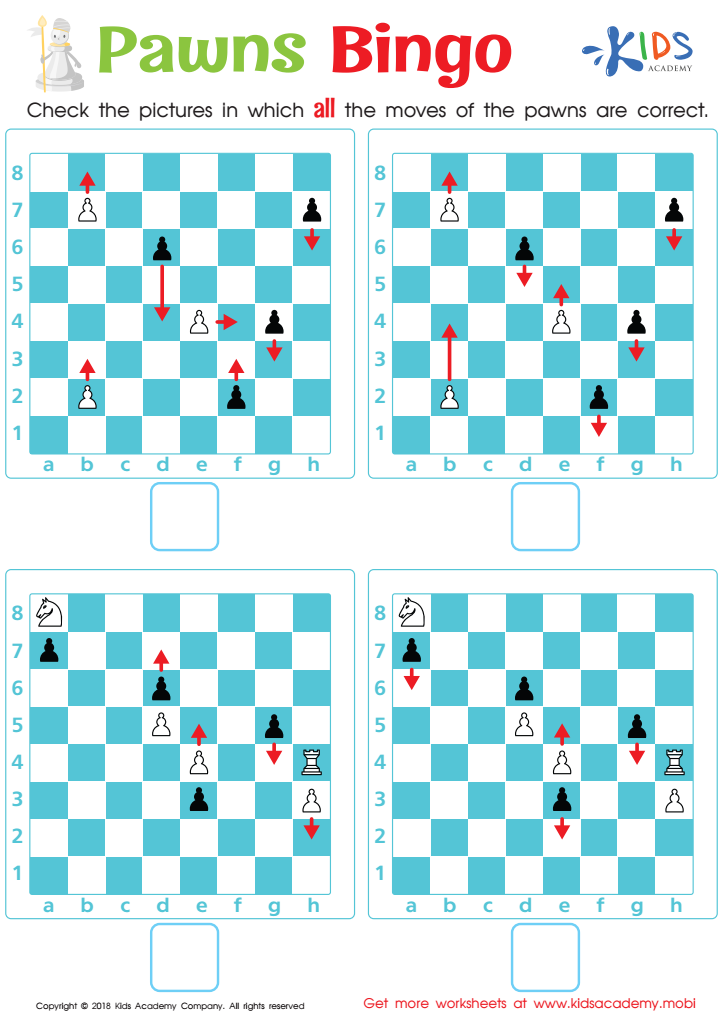
Pawns Bingo Worksheet
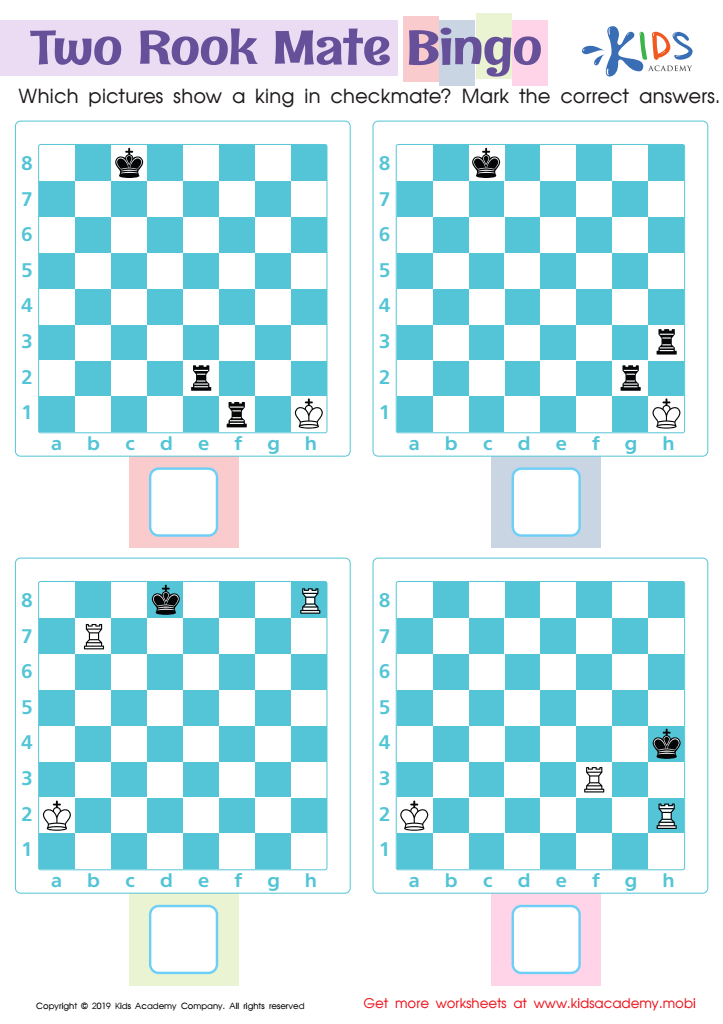
Two Rook Bingo Worksheet
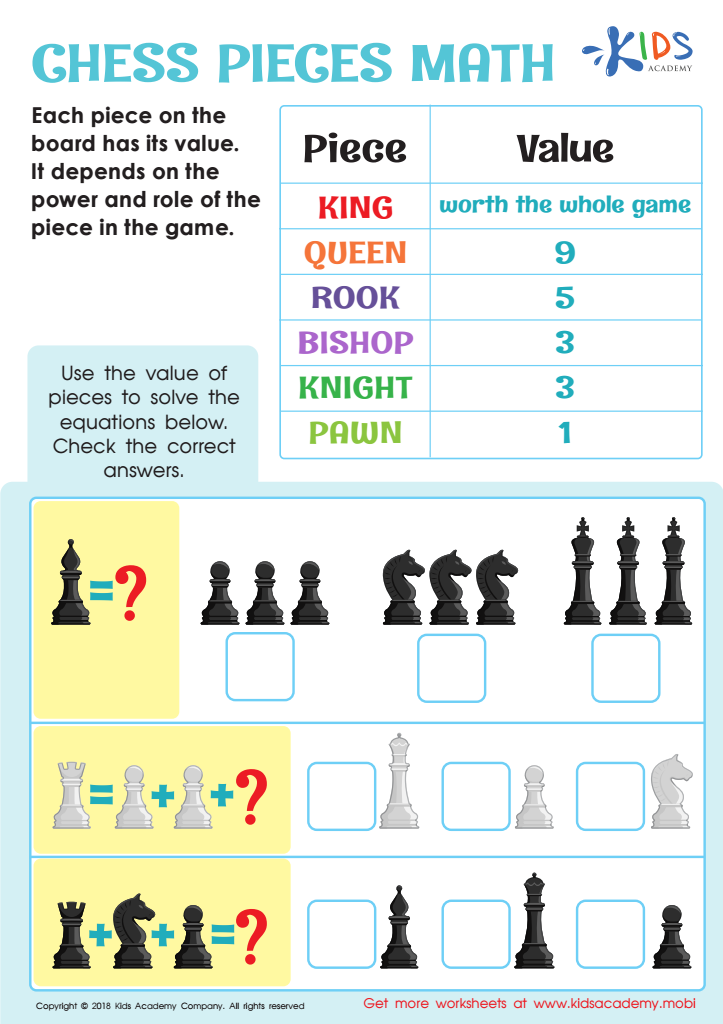
Chess Pieces Math Worksheet






Cognitive Development Chess for 6-year-olds is an invaluable tool that can significantly enhance a child's early learning experience. Chess engages young minds in strategic thinking, problem-solving, and decision-making, fostering essential cognitive skills. By playing chess, children learn to anticipate their opponent's moves, plan several steps ahead, and adapt their strategies based on new information.
Moreover, chess promotes critical thinking and improves concentration, as players must stay focused to foresee potential outcomes and devise effective strategies. This focus often translates into better attention spans in academic settings. Additionally, chess encourages the development of patience and persistence, highlighting the value of practice and learning from mistakes.
Engaging children in chess from a young age also fosters social skills, as they often play with peers, teaching them how to interact, compete fairly, and respect others. For parents and teachers, encouraging chess not only enriches cognitive development but also creates a supportive environment that promotes emotional growth and friendship.
In summary, Cognitive Development Chess equips 6-year-olds with essential skills that transcend the game, laying a strong foundation for future learning, social interactions, and overall academic success. Prioritizing such activities can yield significant benefits in a child's educational journey.