Enhancing problem-solving skills Chess Worksheets for 6-Year-Olds
3 filtered results
-
From - To
Discover our engaging chess worksheets designed specifically for 6-year-olds to boost problem-solving skills! These fun, interactive activities will inspire young learners to think critically and strategically as they explore the world of chess. Each worksheet presents age-appropriate challenges, encouraging children to analyze situations, develop solutions, and make decisions. With colorful illustrations and easy-to-follow instructions, kids will enjoy honing their cognitive abilities while playing. Whether used in the classroom or at home, our chess worksheets provide a fantastic way to enhance concentration, creativity, and logical thinking. Start your child’s journey in strategic thinking today with our specially crafted resources!
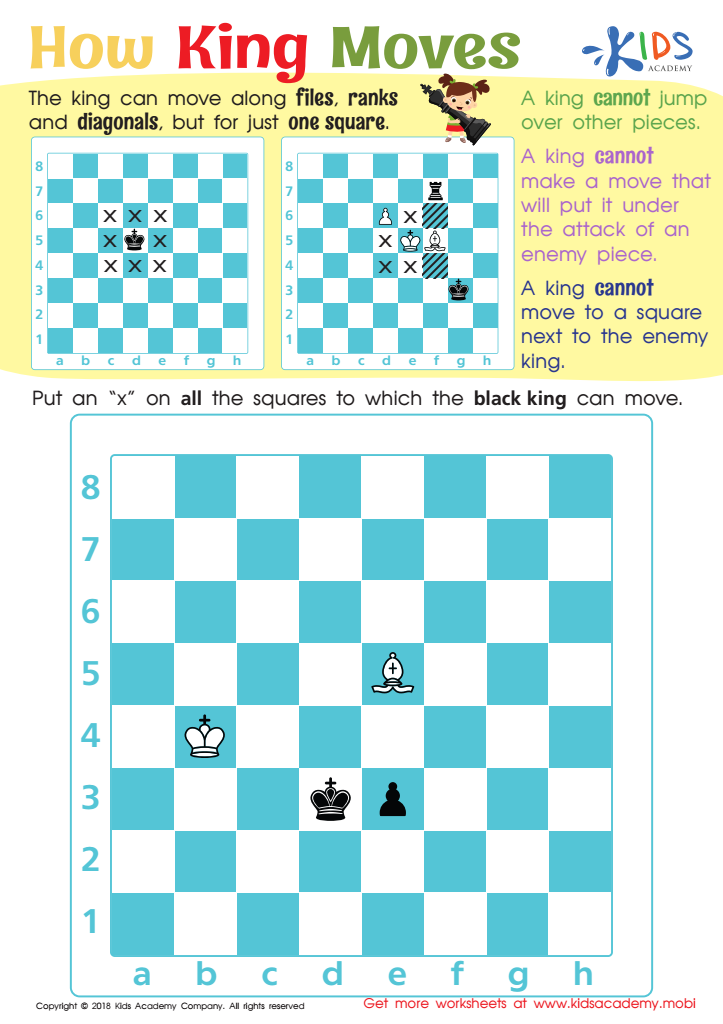
How King Moves Worksheet
 Assign to My Students
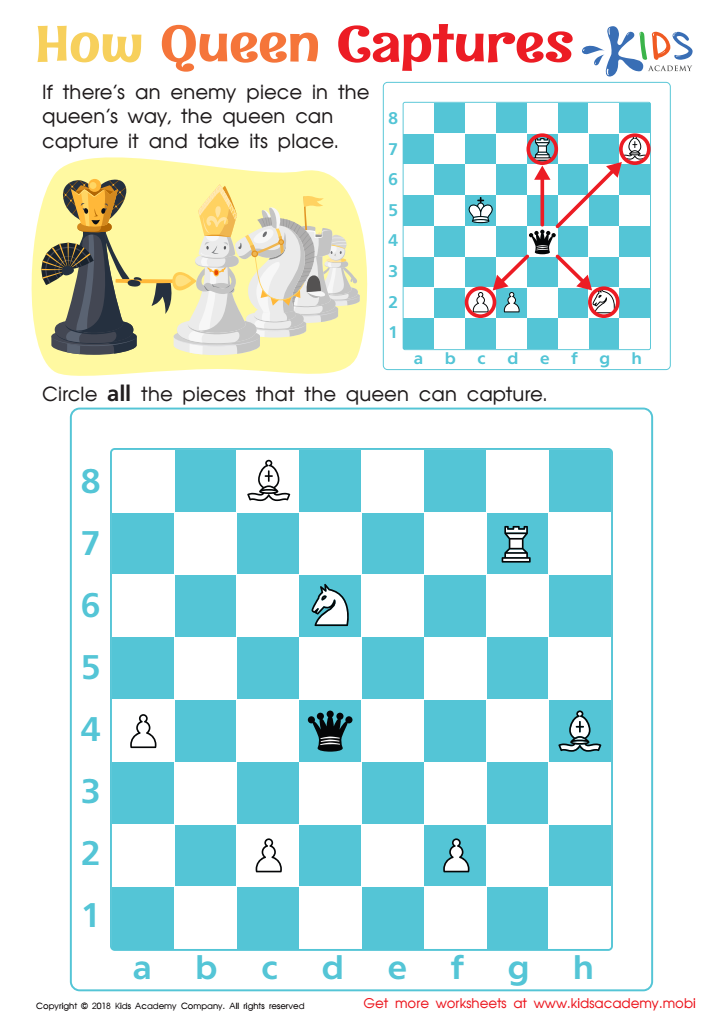
How Queen Captures Worksheet
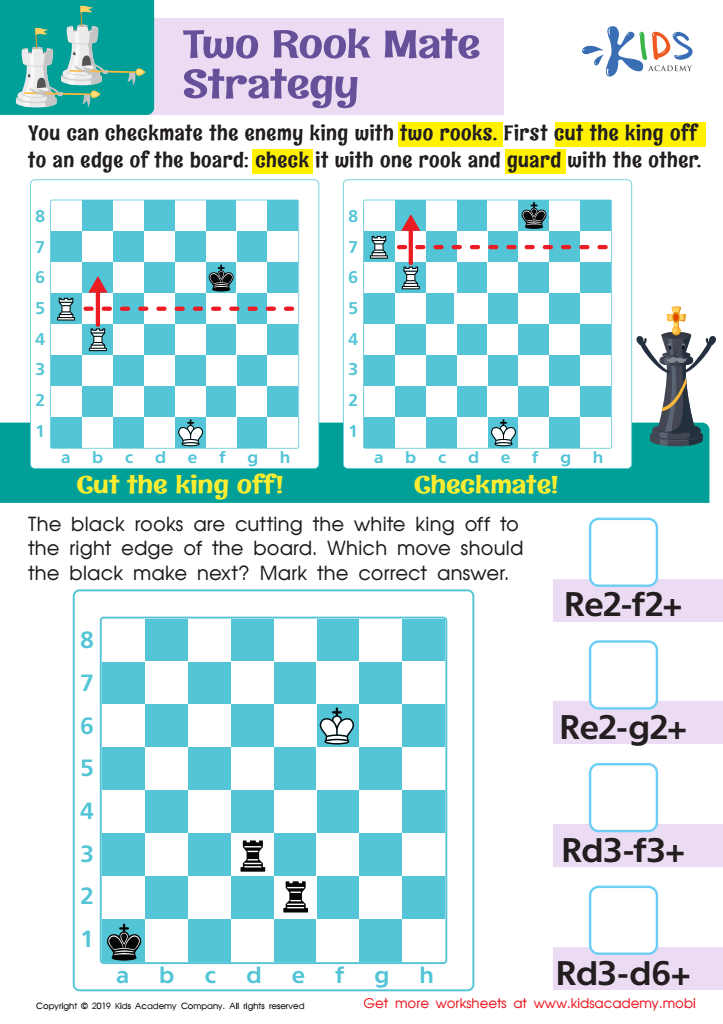
Two Rook Mate Strategy Worksheet




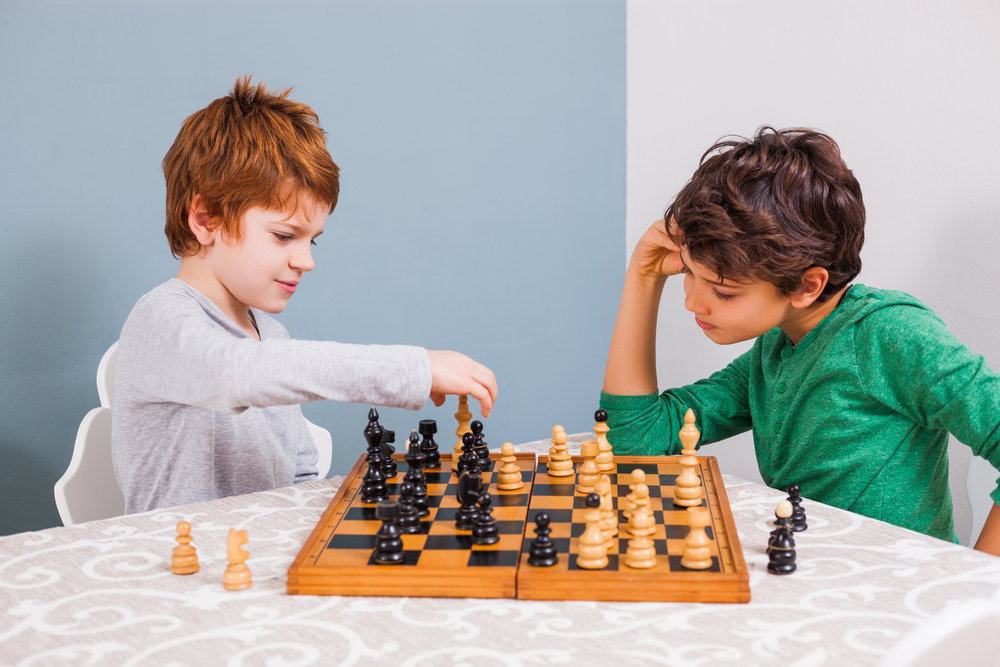


Enhancing problem-solving skills through chess for 6-year-olds is crucial for their cognitive development and lifelong learning. Chess, a game that emphasizes strategy, critical thinking, and foresight, provides an interactive way for children to engage with complex concepts. Learning to anticipate an opponent's moves teaches kids to think ahead and consider multiple outcomes, fostering strategic reasoning skills essential for real-life decision-making.
Furthermore, chess promotes patience, focus, and perseverance. Children learn to analyze situations and adapt strategies when faced with challenges, skills that are directly transferable to academic settings and daily life. This process encourages independence and initiative as they begin to see problems as opportunities to learn rather than obstacles.
Additionally, the social aspect of playing chess in a group setting can strengthen communication skills and teamwork. Parents and teachers who support chess use aid emotional development and confidence, allowing children to celebrate victories and learn from losses in a safe environment.
Investing time in chess development at the early age of six sets the foundation for strong analytical thinkers, enhances academic performance, and enriches social interactions. Ultimately, fostering problem-solving skills through chess places children on a path toward a brighter, more successful future.