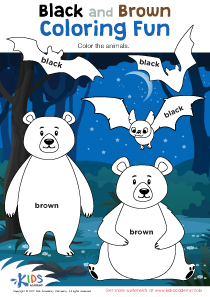
Word Recognition English for Beginners Worksheets for 6-Year-Olds
5 filtered results
-
From - To
Unlock your child's language potential with our Word Recognition English for Beginners Worksheets for 6-Year-Olds! Perfectly designed for young learners, these worksheets focus on enhancing early reading skills, phonics, and sight word recognition. Engaging activities foster a love for reading by combining fun with learning. Whether your child is an ESL student or just starting their reading journey, our printables offer a supportive, step-by-step approach to mastering new words. Simple instructions and colorful visuals make learning intuitively exciting. Empower your child's literacy foundation today and watch them confidently take their first steps towards English proficiency.
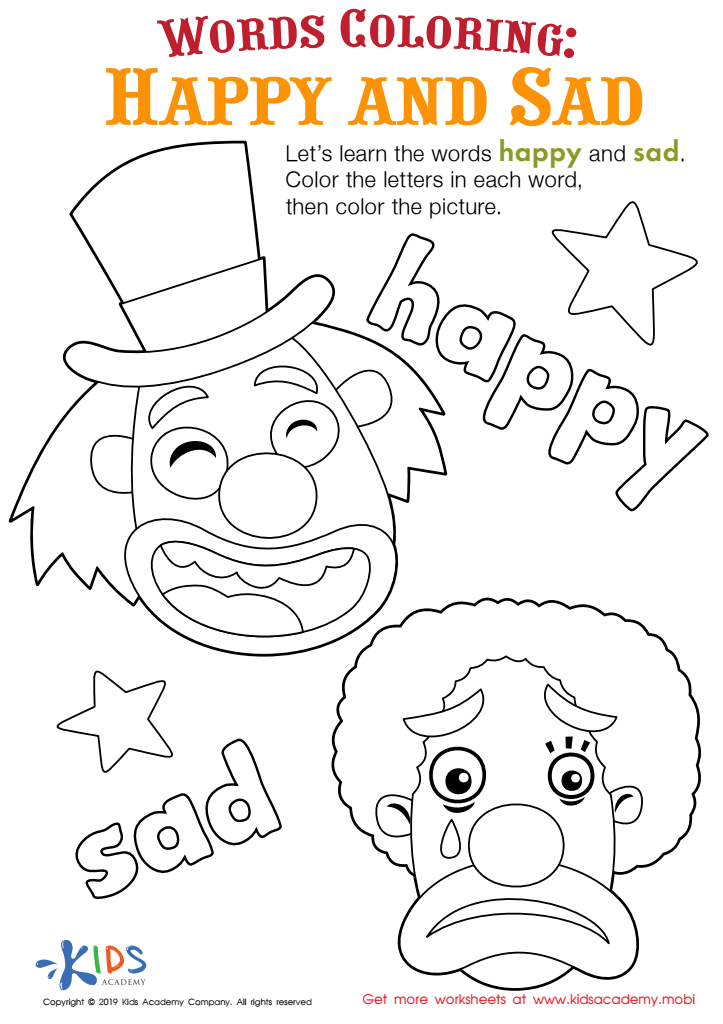
Happy and Sad Words Coloring Worksheet
 Assign to My Students
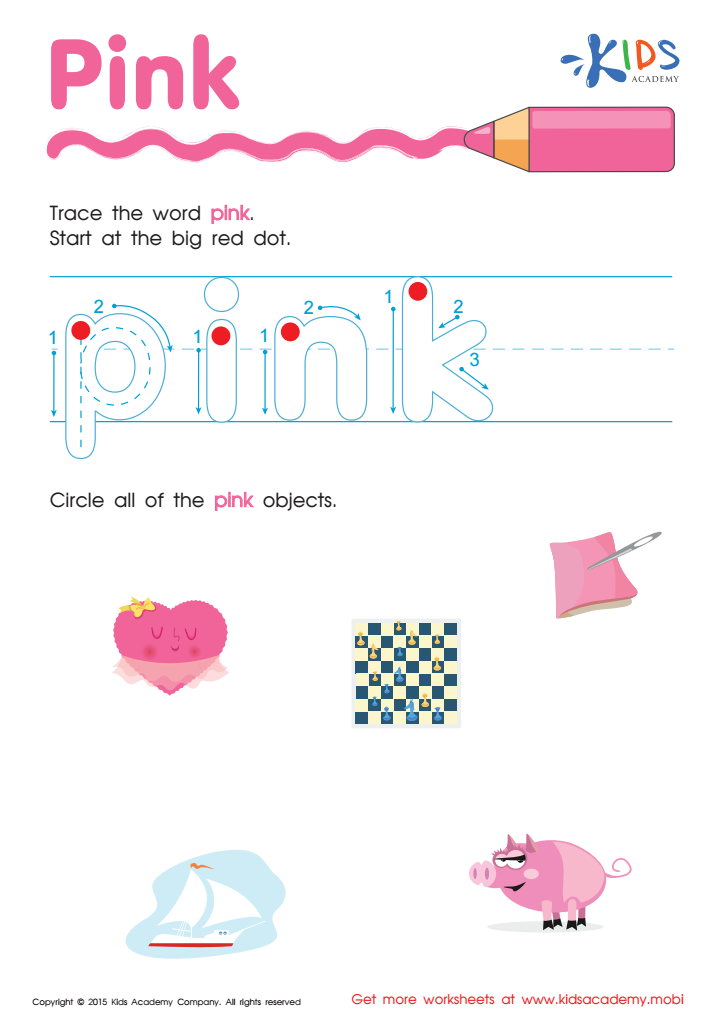
Pink Tracing Color Words Worksheet
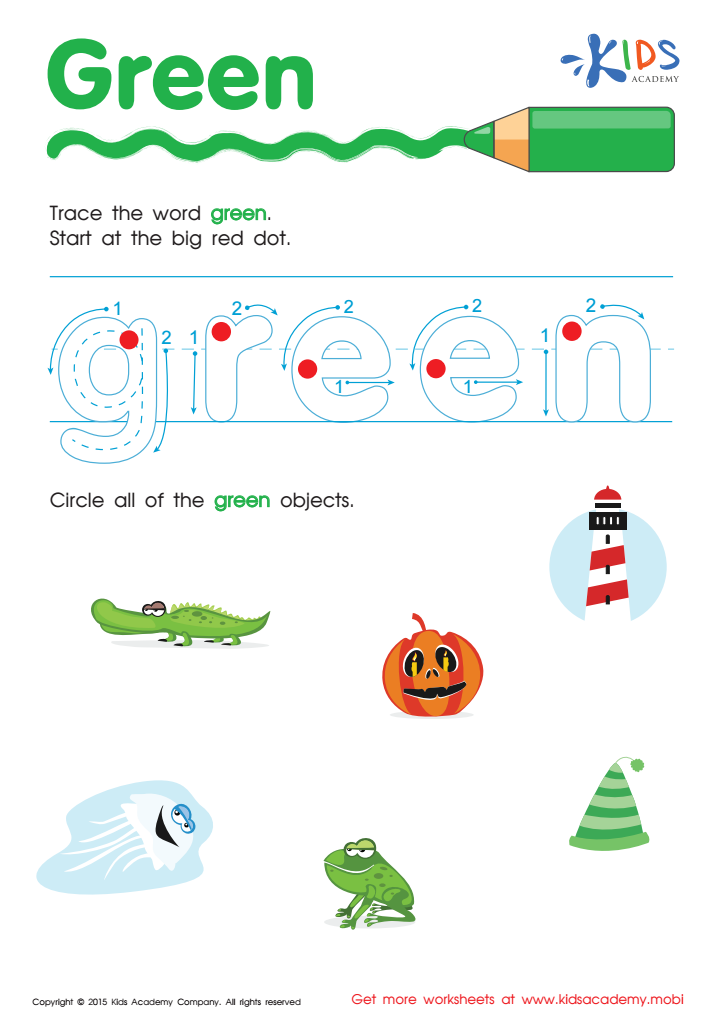
Green Tracing Color Words Worksheet
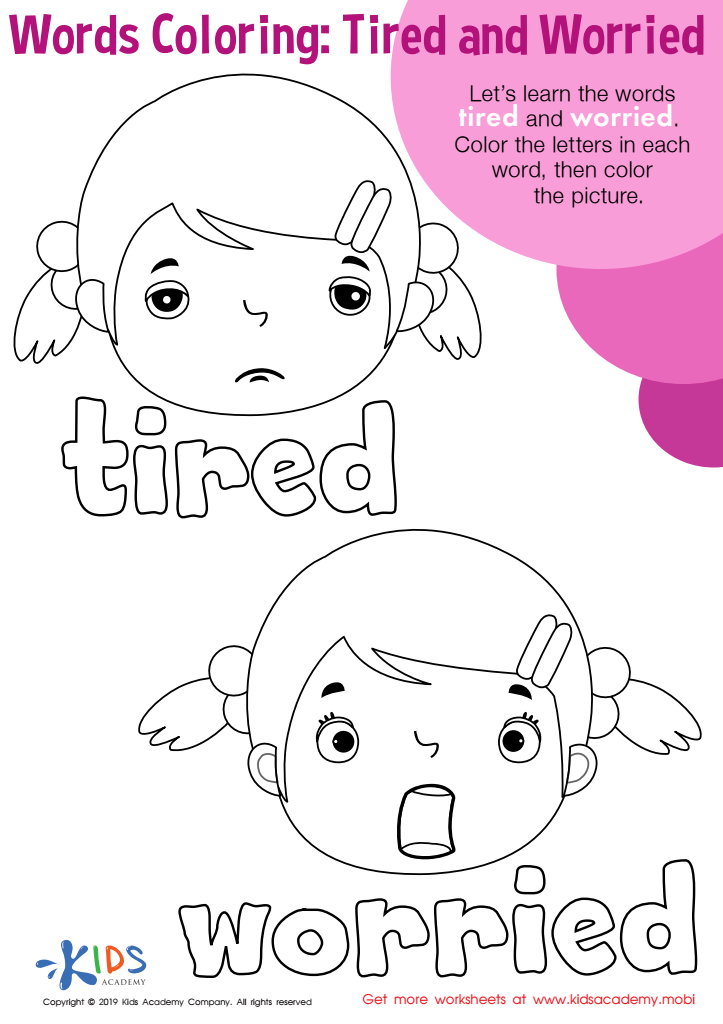
Tired and Worried Words Coloring Worksheet
Assign to My Students
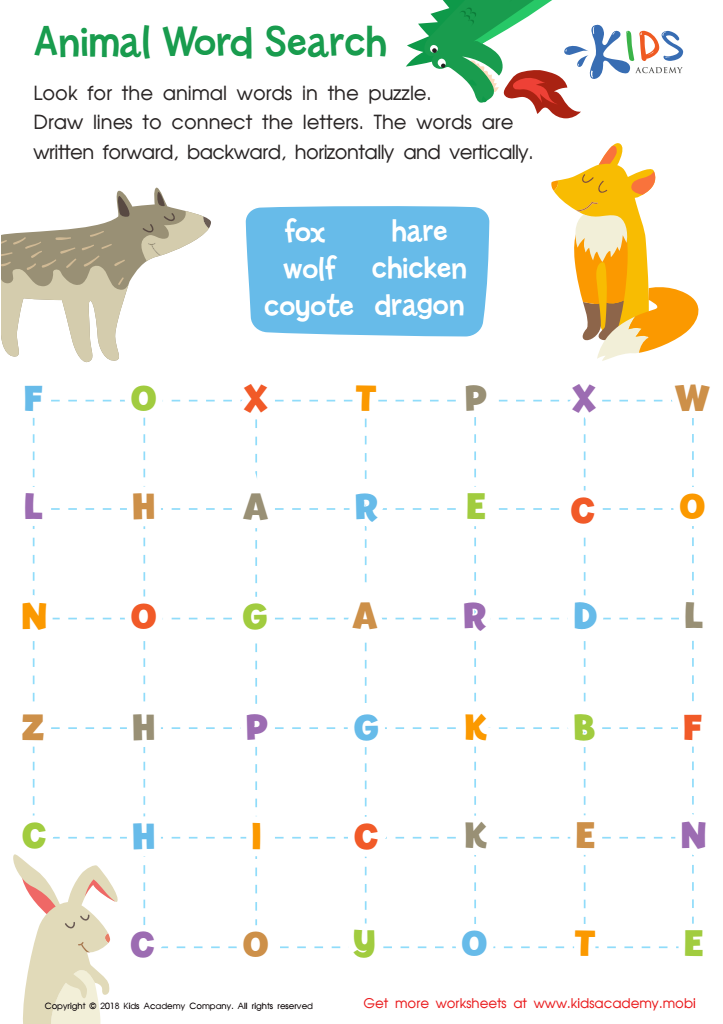
Animal Word Search Worksheet





Word recognition is fundamental for English learners, especially for 6-year-olds, because it serves as the cornerstone of literacy and academic success. At this tender age, children are in a critical period for language development when their brains exhibit high plasticity, making it an optimal time for learning new skills, including reading.
Early proficiency in word recognition boosts vocabulary, fosters fluency, and chattels comprehension capabilities. As children encounter new words, they not only learn to decode symbols but also understand meanings, improving their linguistic and communicative abilities. This early skill opens the door to more advanced learning and a love for reading, which is crucial for their lifelong educational journey.
Parents and teachers play a pivotal role in creating an environment conducive to learning word recognition. Engaging activities such as phonics games, reading aloud, and interactive apps can make the learning process enjoyable. When children feel confident in recognizing words, they are more likely to participate in reading activities, thereby reinforcing their skills.
Moreover, early word recognition is linked to psychological benefits, including bolder self-esteem and a positive attitude toward future learning challenges. Simply put, investing in word recognition at an early age sets the stage for a child's academic success, cognitive development, and emotional well-being, underscoring its critical importance in early education.