Basic arithmetic practice Worksheets for 6-Year-Olds
11 filtered results
-
From - To
Welcome to our collection of Basic Arithmetic Practice Worksheets tailored for 6-year-olds! These engaging worksheets are designed to make learning math fun and interactive. Perfect for young learners, each activity helps improve essential skills like addition, subtraction, and number recognition through colorful illustrations and easy-to-follow exercises. Our worksheets also promote critical thinking and problem-solving, allowing kids to build a strong foundation in arithmetic. Teachers and parents can easily print these resources to create a productive learning environment at home or in the classroom. Browse our selection today and watch your child's confidence in math grow!
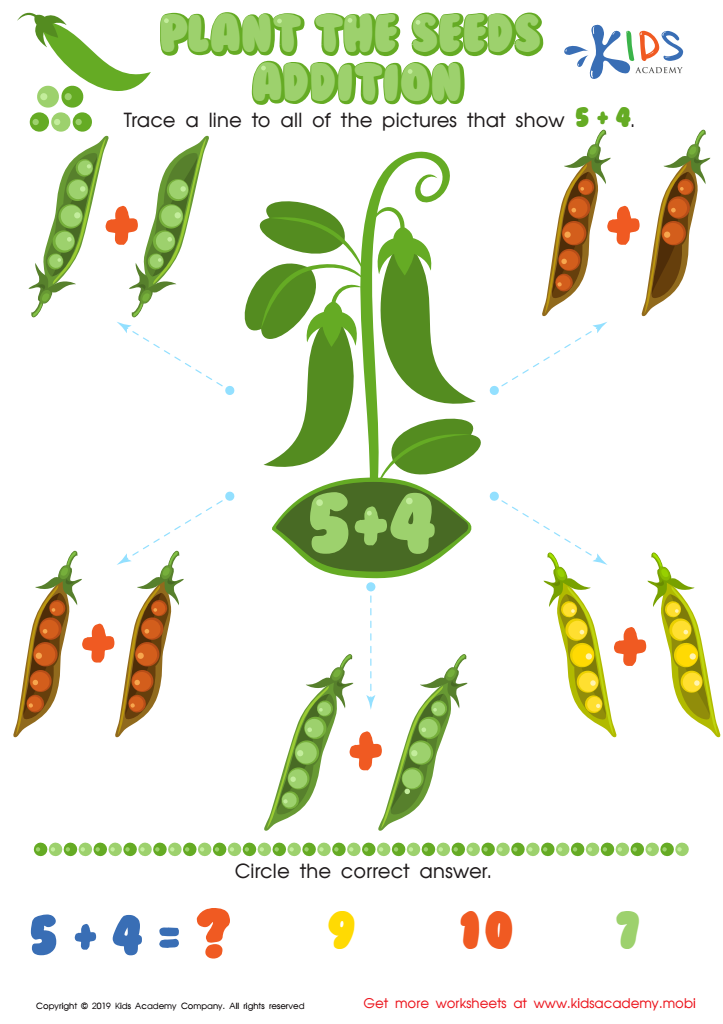
Plant the Seeds Addition Worksheet
 Assign to My Students
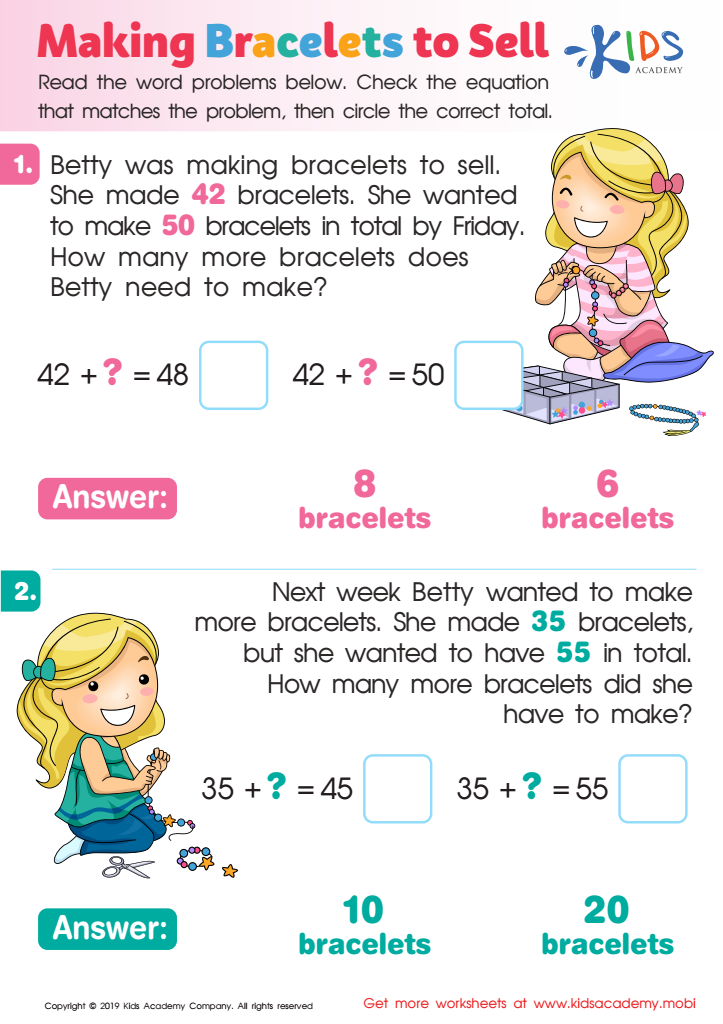
Making Bracelets to Sell Worksheet
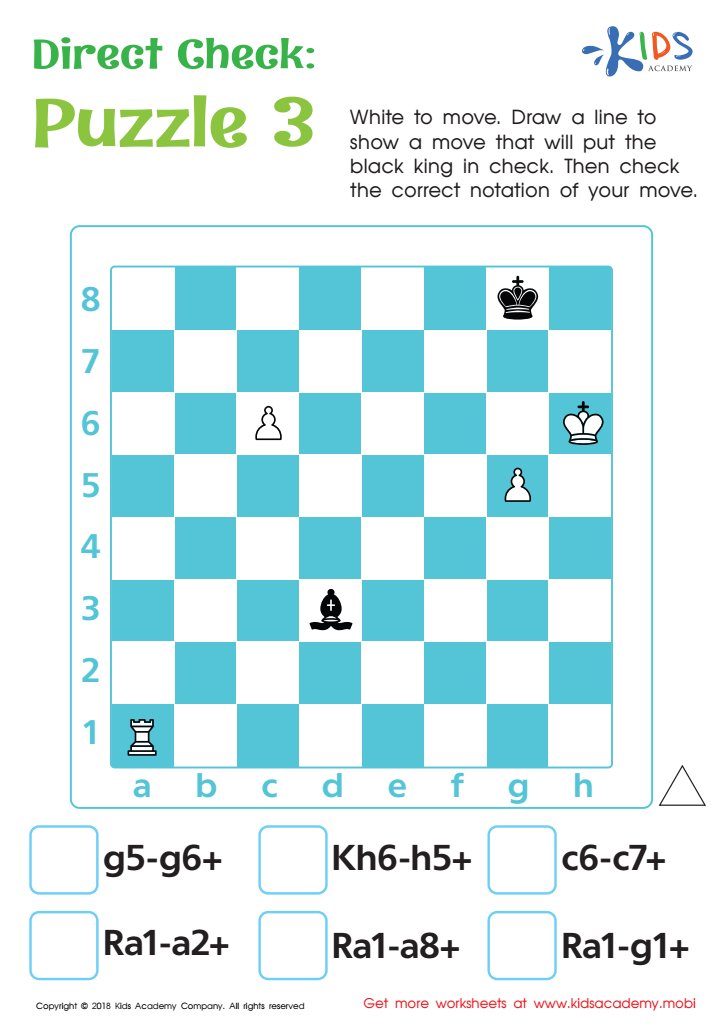
Direct Check: Puzzle 3 Worksheet
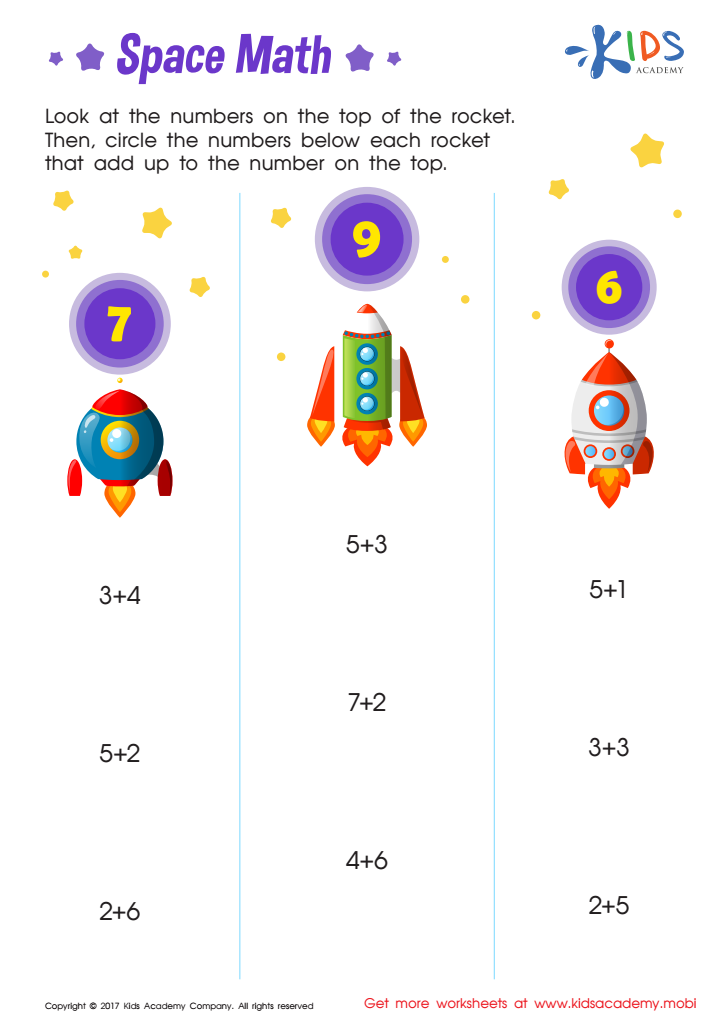
Addition: Space Math Worksheet
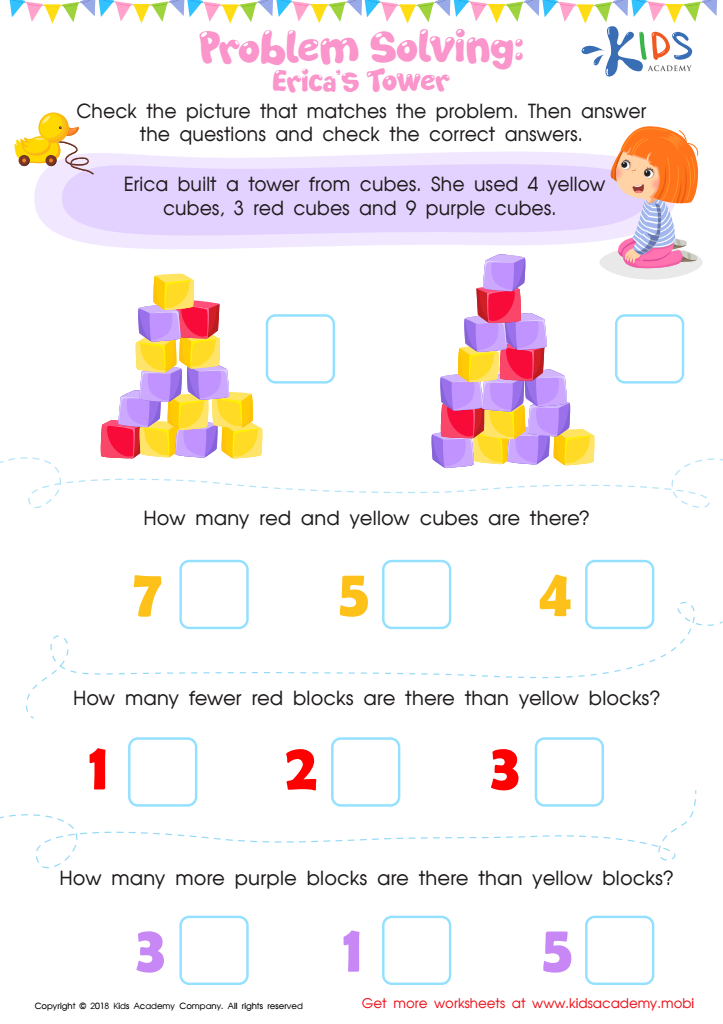
Problem Solving: Erica's Tower Worksheet
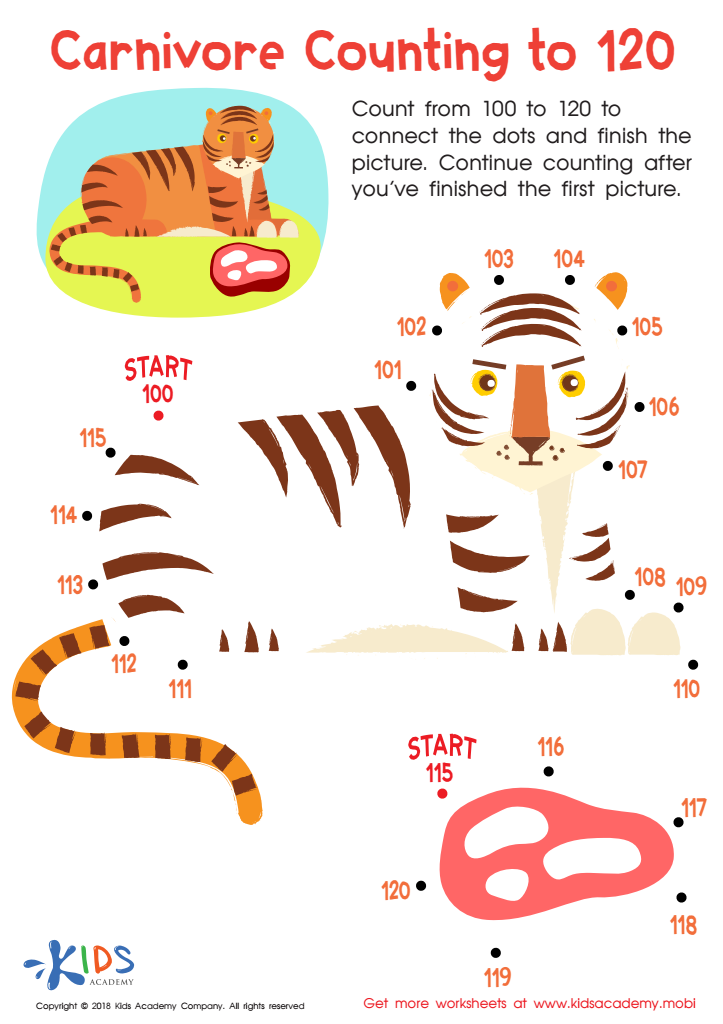
Carnivore Counting to 120 Worksheet
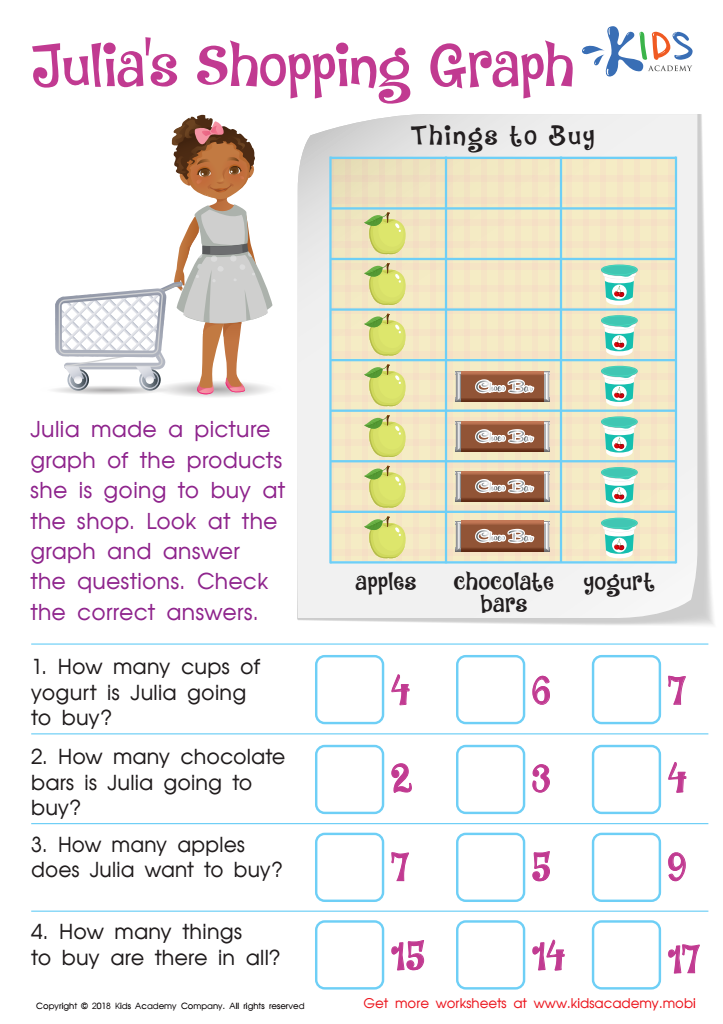
Julia's Shopping Graph Worksheet
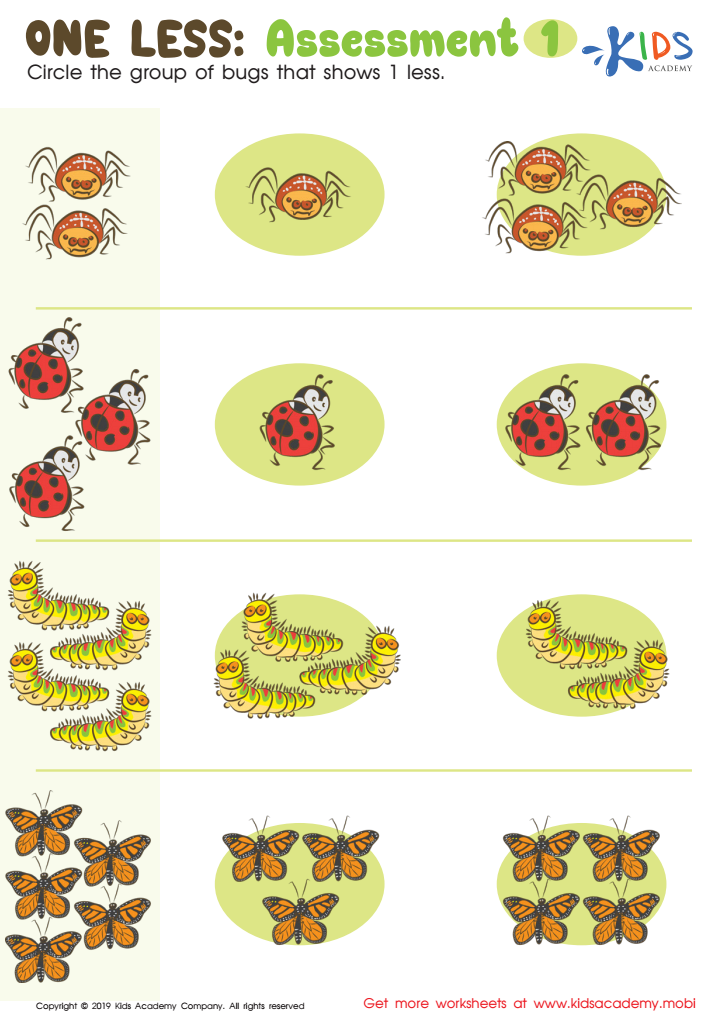
One Less: Assessment 1 Worksheet






Basic arithmetic practice is essential for 6-year-olds as it lays the groundwork for their future mathematical understanding and overall academic success. At this age, children are developing cognitive skills, and engaging with math helps stimulate their critical thinking, problem-solving abilities, and logical reasoning. Mastering foundational arithmetic, such as addition and subtraction, builds confidence and encourages a positive attitude toward learning.
Moreover, early arithmetic skills are closely linked to daily life experiences. Understanding numbers enables children to relate to the world around them, whether it’s counting objects, measuring ingredients for a recipe, or managing a small allowance. Arithmetic practice not only strengthens numerical skills but also enhances language development through the mathematical vocabulary they acquire.
Additionally, consistent practice helps cultivate discipline and persistence. Learning to tackle challenges—like memorizing addition facts or solving simple word problems—teaches children valuable lessons in perseverance as they navigate learning curves.
Lastly, strengthening arithmetic skills at an early age can prevent future gaps in understanding, making transitions to more complex topics smoother and reducing anxiety related to mathematics. Therefore, parents and teachers play a pivotal role in encouraging regular practice, fostering a love for math, and setting the stage for lifelong learning.








