
Letter pronunciation Worksheets for 6-Year-Olds
3 filtered results
Difficulty Level
Grade
Age
-
From - To
Subject
Activity
Standards
Discover our engaging Letter Pronunciation Worksheets designed specifically for 6-year-olds! These printable resources provide fun activities that help young learners master the sounds of each letter, enhancing their phonetic skills and boosting their reading abilities. Each worksheet features colorful images and clear instructions, making it easy for kids to practice letter sounds through a variety of exercises, such as tracing, matching, and identifying. Ideal for both classroom and home use, our worksheets promote active learning and inspire a love for reading. Start your child's phonics journey today with these interactive tools that make learning to pronounce letters exciting!
Favorites
With answer key
Interactive
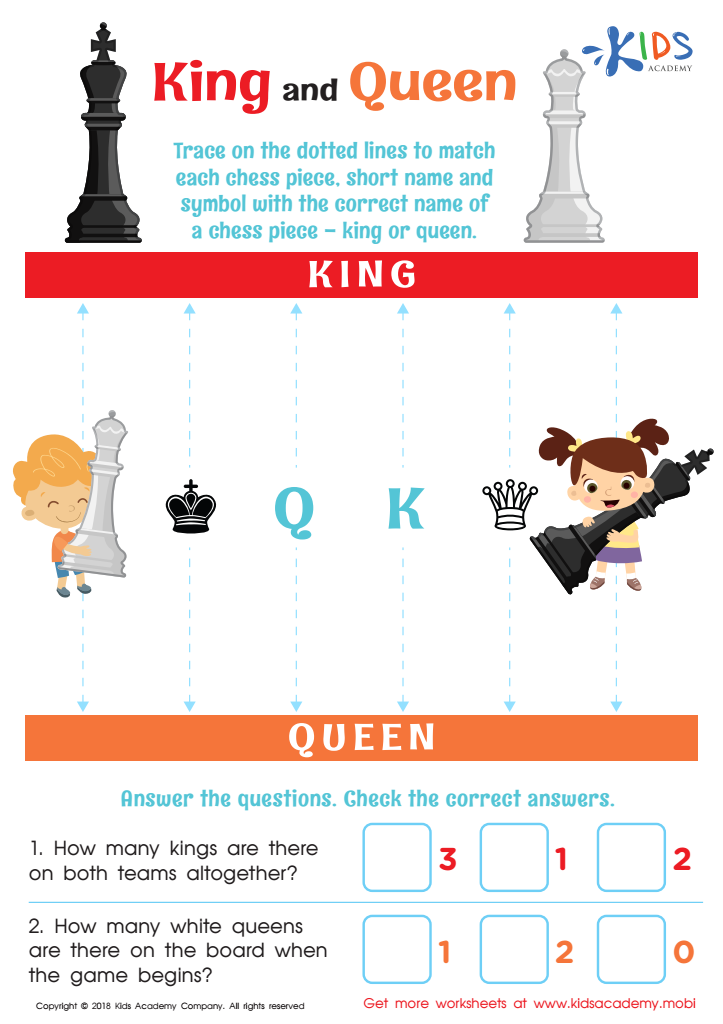
King and Queen Worksheet
Instruct your kids to trace the dotted lines to match each chess piece, short name, and symbol with either king or queen.Answer the questions at the bottom and check the answers. This exercise will help your children to differentiate between a king and queen chess piece and know their symbols.
King and Queen Worksheet
Worksheet
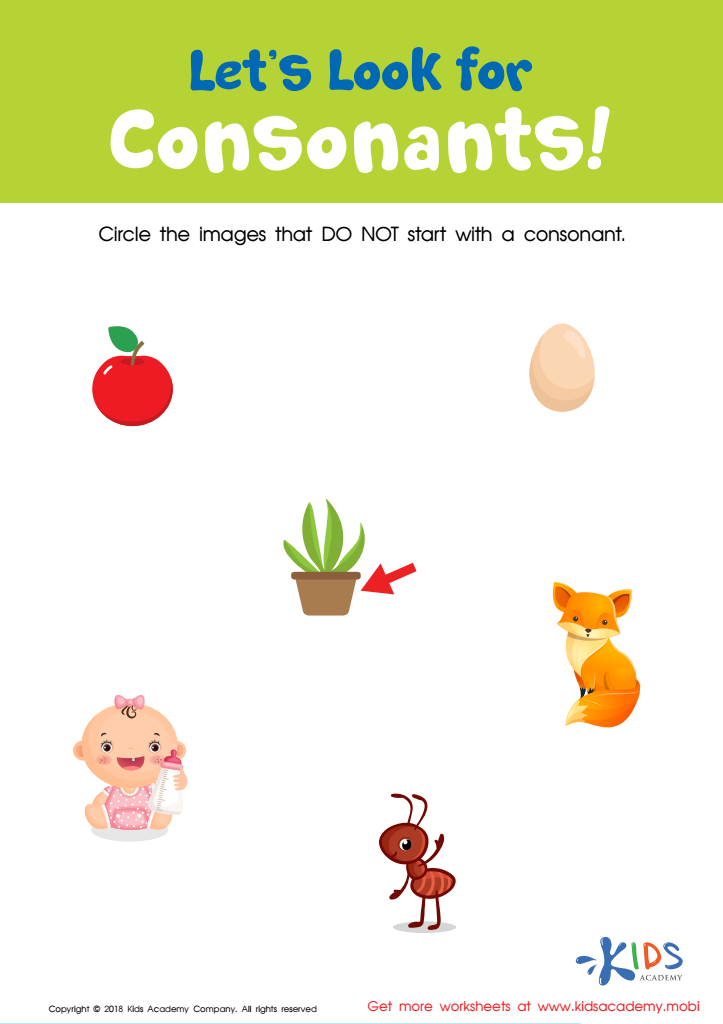
Let's Look for Consonants Worksheet
Help kids learn consonants and words that start with them. Ask them to recite the alphabet, then explain consonants are all letters but the 5 vowels. Use the worksheet to ask them to circle items without a consonant. Emphasize that's 21 consonants.
Let's Look for Consonants Worksheet
Worksheet
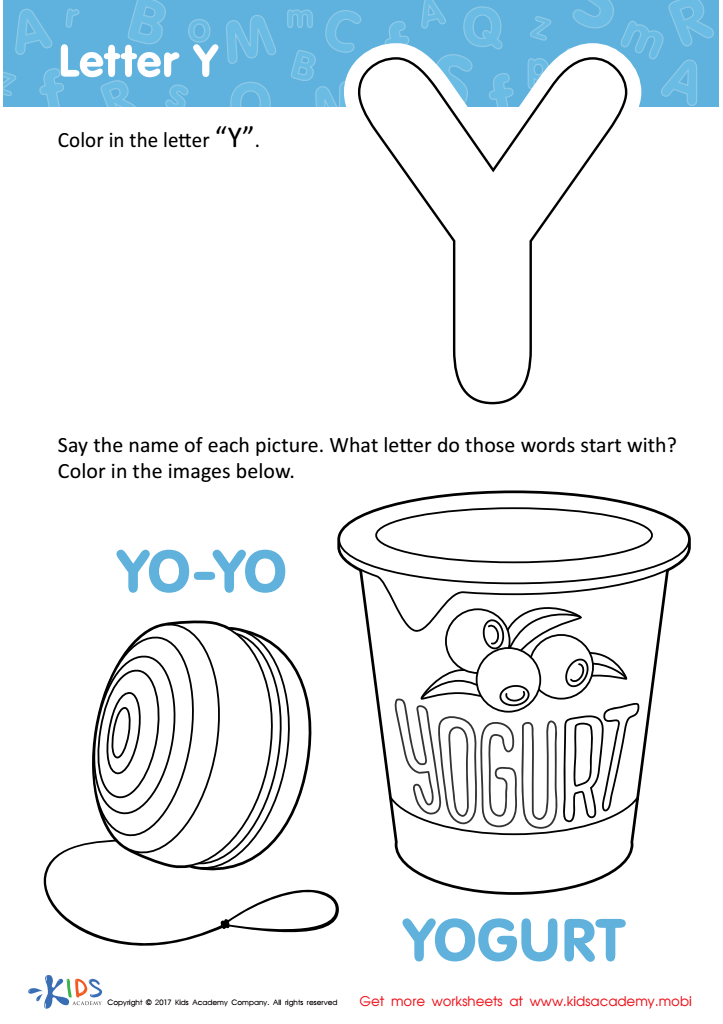
Letter Y Coloring Sheet
Let's celebrate letter "Y"! Here's a fun coloring page that'll help your child learn this end-of-the alphabet letter. It's packed with familiar objects that'll help build their art and literacy skills. So let's say "Yay"!
Download (PDF)
 Assign to My Students
Assign to My Students
Letter Y Coloring Sheet
Worksheet
Join Kids Academy for Free
Who is primarily going to use this learning content?








Letter pronunciation is a foundational skill crucial for 6-year-olds as they embark on their reading and writing journeys. Proper pronunciation of letters not only supports early literacy but also fosters confidence in young learners. Children who can articulate letter sounds accurately develop stronger phonemic awareness, which is essential for decoding words.
Moreover, effective letter pronunciation aids in spelling and enhances vocabulary acquisition. When children understand how each letter sounds when they come together to form words, they become adept at recognizing familiar words in their reading. This skill promotes fluent reading, making the learning process more enjoyable and less daunting.
Parental and teacher involvement in guiding letter pronunciation can also create a richer language experience. By modeling correct sounds, engaging in interactive reading sessions, and incorporating phonics games, adults can reinforce these skills in fun and meaningful ways.
Additionally, strong foundational skills in letter pronunciation can prevent future challenges in literacy development. Ultimately, fostering this critical aspect of language not only supports academic success but also promotes a love for reading, setting the stage for lifelong learning. Given its profound impact, prioritizing letter pronunciation should be an essential focus for parents and teachers alike.








