
Logic development Worksheets for 6-Year-Olds
3 filtered results
Difficulty Level
Grade
Age
-
From - To
Subject
Activity
Standards
Discover our engaging logic development worksheets designed specifically for 6-year-olds! These fun and interactive activities encourage critical thinking and problem-solving skills while keeping young learners entertained. With a variety of challenges, such as pattern recognition, sequencing, and puzzles, our worksheets help children enhance their logical reasoning abilities in a playful manner. Perfect for classroom or at-home learning, these resources support cognitive growth and provide a solid foundation for future academic success. Explore our collection today to inspire your child's love for logic and watch their confidence soar as they tackle each worksheet with enthusiasm!
Favorites
With answer key
Interactive
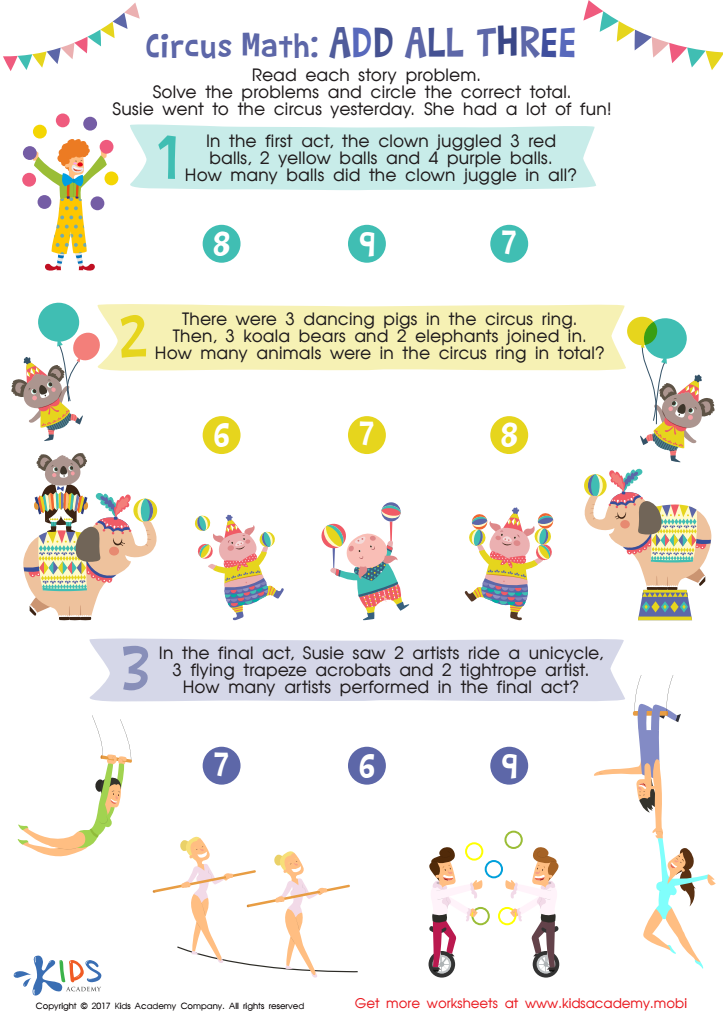
Circus Math Printable
Let's take the kids to the circus and combine literacy and numeracy skills! Our circus math printable worksheet will encourage creativity and higher-order thinking by connecting addition to real-life examples. Kids will learn to love math while they explore the fun, real-life applications of math. Ignite their passion today!
 Assign to My Students
Circus Math Printable
Worksheet
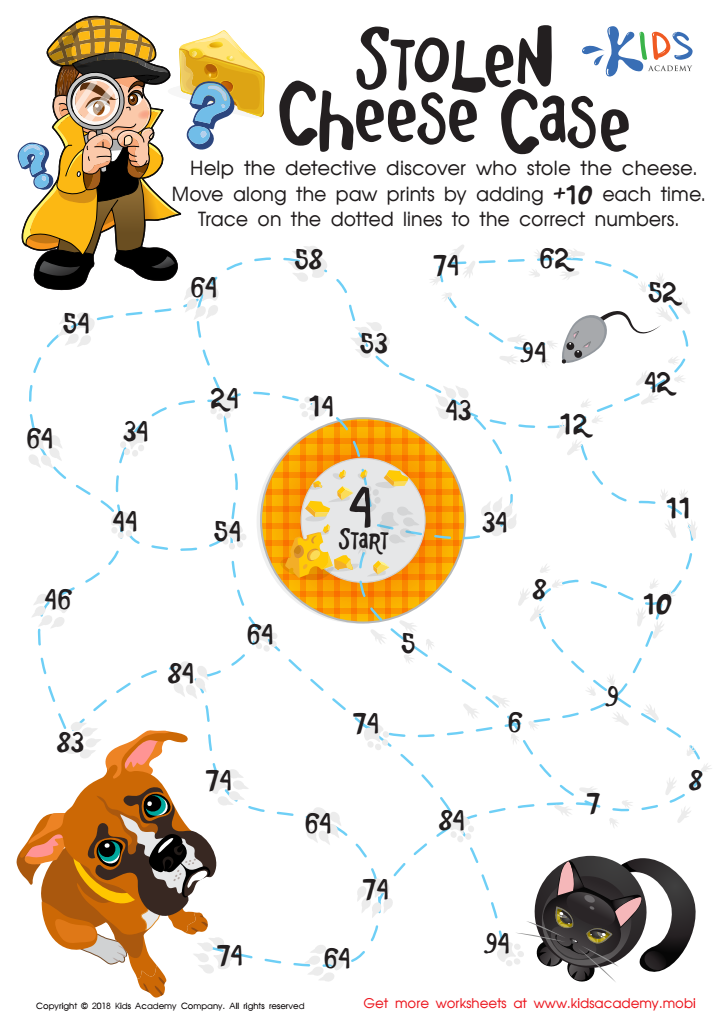
Stolen Cheese Case Maze Worksheet
Someone has stolen the cheese! Can your mathematician detective figure out who it is? Was it the dog, cat or mouse? Have them use traceable lines to skip count by 10 on this free PDF worksheet to solve the case. They'll be having fun and developing their skip-counting strategy at the same time!
Stolen Cheese Case Maze Worksheet
Worksheet
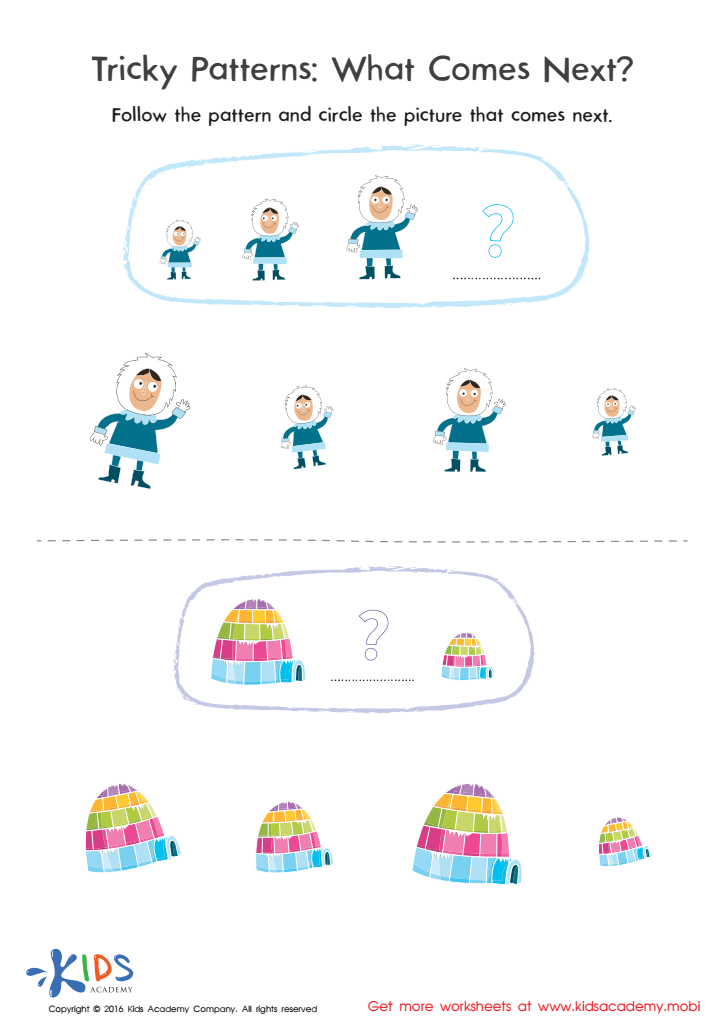
Tricky Patterns Size Worksheet
Give your child a head start on critical thinking with this picture pattern worksheet! It's an intriguingly fun way to help them master important skills like spatial reasoning, critical thinking, and logical reasoning. They'll differentiate between shapes, complete the pattern with a logical answer, and look for and understand patterns. It's the perfect foundation for future math skills, setting them up for future success!
Tricky Patterns Size Worksheet
Worksheet
Join Kids Academy for Free
Who is primarily going to use this learning content?







Logic development in 6-year-olds is crucial for several reasons that resonate with both parents and teachers. At this age, children are just beginning to make sense of the world around them, and introducing logical thinking helps them organize their thoughts, make decisions, and solve problems. When children engage in logical activities, they learn to analyze situations, recognize patterns, and draw conclusions—skills that are fundamental not only in academic settings but also in everyday life.
Moreover, logical reasoning equips children with critical thinking skills necessary for navigating challenges they will encounter both now and in the future. It fosters creativity, as logical structure gives children the freedom to explore ideas critically. Parents and teachers play a pivotal role in facilitating this development through interactive games, puzzles, and discussions that encourage questioning and hypothesis-making.
Investing time in logic development now lays a strong foundation for future academic success across subjects such as math, science, and reading comprehension. Ultimately, nurturing these skills prepares children to be independent thinkers adaptable to a diverse range of situations, ensuring they grow into confident, competent adults. Thus, prioritizing logic development should be an important focus for both parents and educators.








