Musical instruments recognition Worksheets for 6-Year-Olds
3 filtered results
-
From - To
Discover our engaging Musical Instruments Recognition Worksheets designed specifically for 6-year-olds! These fun, interactive activities help young learners identify various musical instruments while developing essential cognitive skills. Each worksheet features colorful images and simple descriptions, making learning enjoyable and accessible. As children match instruments to their sounds and names, they enhance their auditory skills and broaden their knowledge of music. Perfect for home or classroom use, our worksheets promote creativity and critical thinking, all while introducing kids to the exciting world of music. Start nurturing your child's passion for music today with our delightful and educational resources!
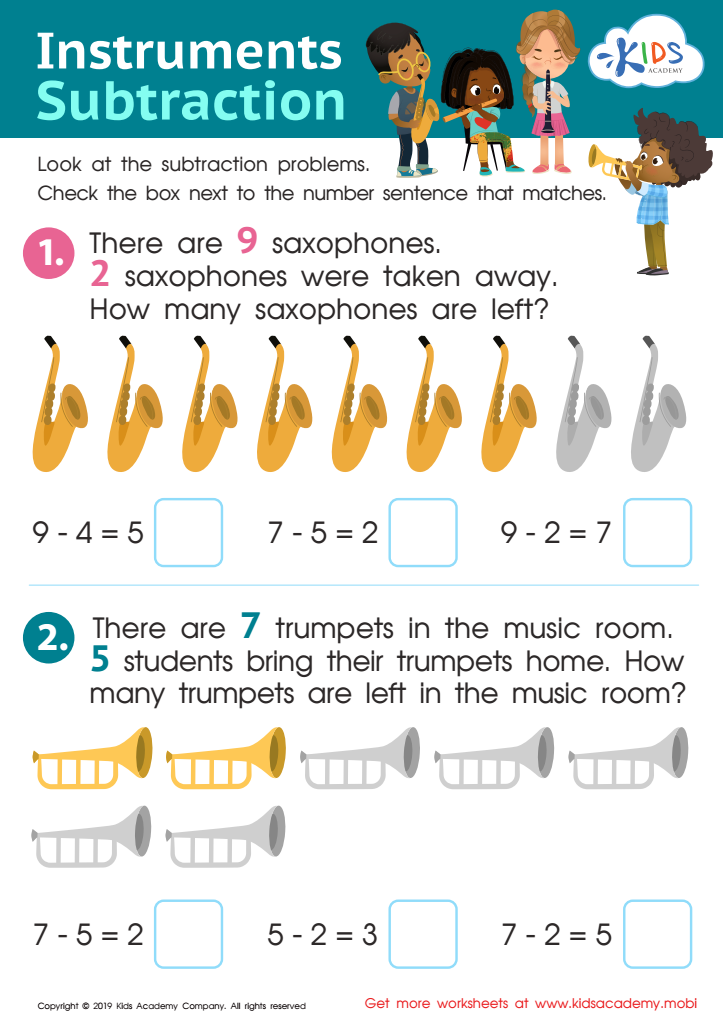
Instrument Subtraction Worksheet
 Assign to My Students
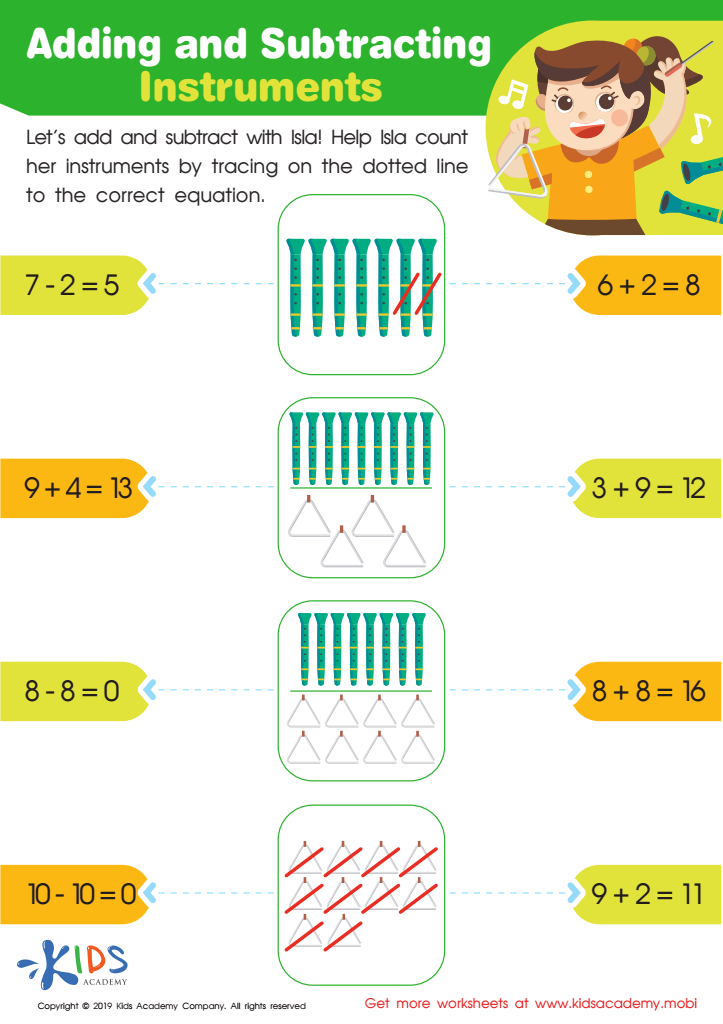
Adding and Subtracting: Instruments Worksheet
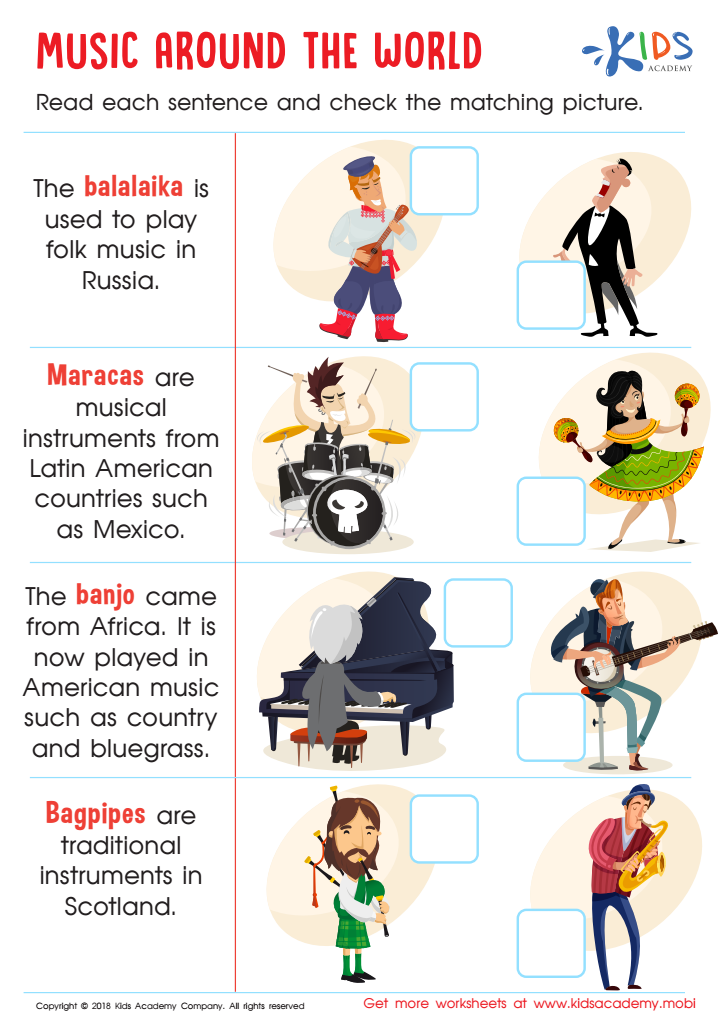
Music Around the World Worksheet








Musical instrument recognition is a crucial aspect of early childhood education that offers numerous benefits to six-year-olds. At this age, children are naturally curious and open to new experiences, making it the perfect time to introduce them to different instruments. Recognizing various instruments not only enhances their musical awareness but also fosters creativity and cognitive skills.
Engaging with musical instruments promotes critical thinking as children learn to categorize sounds, which sharpens their listening skills and aids in language development. Additionally, exploring music can boost emotional intelligence; children express feelings and ideas through sound, enhancing their social interactions.
For parents and teachers, encouraging musical instrument recognition creates a joyful learning environment that nurtures a passion for music. It serves as a foundation for later involvement in music education, potentially leading to learning an instrument, participating in school bands, or enjoying concerts. Moreover, research suggests that music education correlates with improved academic performance, particularly in math and reading.
Ultimately, recognizing musical instruments enriches a child’s educational experience, fostering skills that have far-reaching benefits in cognitive, emotional, and social development. Thus, investing time in this area can yield lifelong advantages for young learners.








