
Predicting outcomes Worksheets for 6-Year-Olds
3 filtered results
Difficulty Level
Grade
Age
-
From - To
Subject
Activity
Standards
Unlock your child's potential with our Predicting Outcomes Worksheets designed specifically for 6-year-olds! These engaging and educational worksheets guide young learners through the exciting world of prediction, helping them develop essential critical thinking and reading comprehension skills. Each worksheet presents relatable scenarios, fun stories, and colorful visuals to captivate your child’s interest. As they practice predicting outcomes, they'll learn to anticipate story developments and enhance their understanding of cause and effect. Our expertly crafted resources provide the perfect blend of challenge and enjoyment, ensuring your little one achieves academic success while enjoying the learning journey. Discover the magic of prediction today!
Favorites
With answer key
Interactive
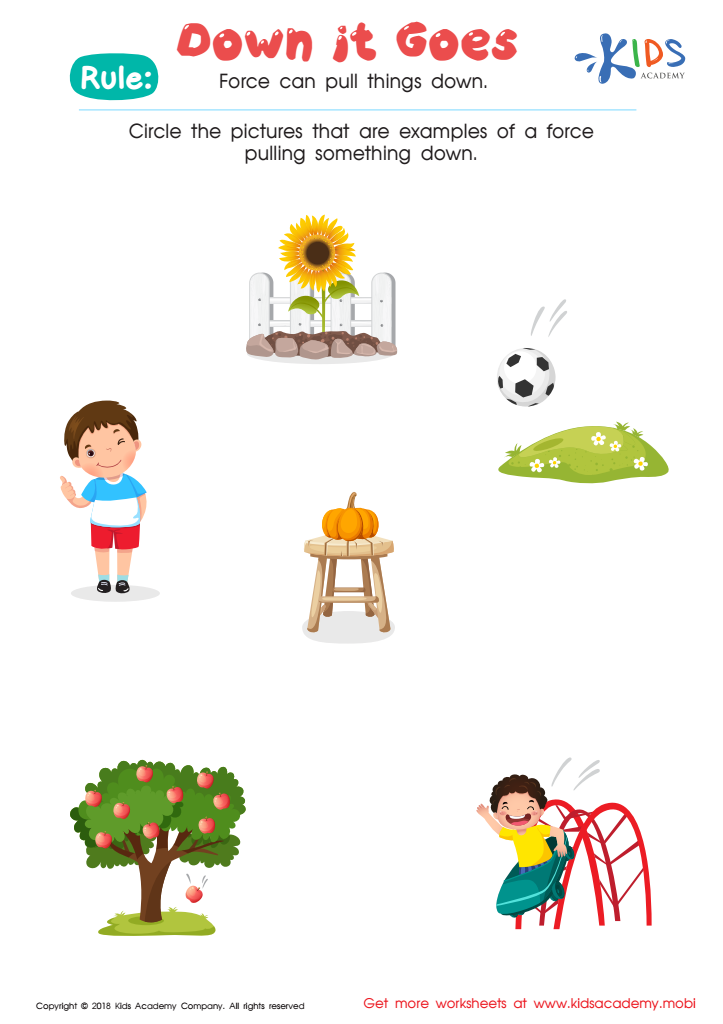
Down it Goes Worksheet
Explain gravity to your child using this fun worksheet. Ask them to give examples of things pulled down with force, then instruct them to circle the pictures that show this. It's a great way to help them understand the concept of gravity.
 Assign to My Students
Down it Goes Worksheet
Worksheet
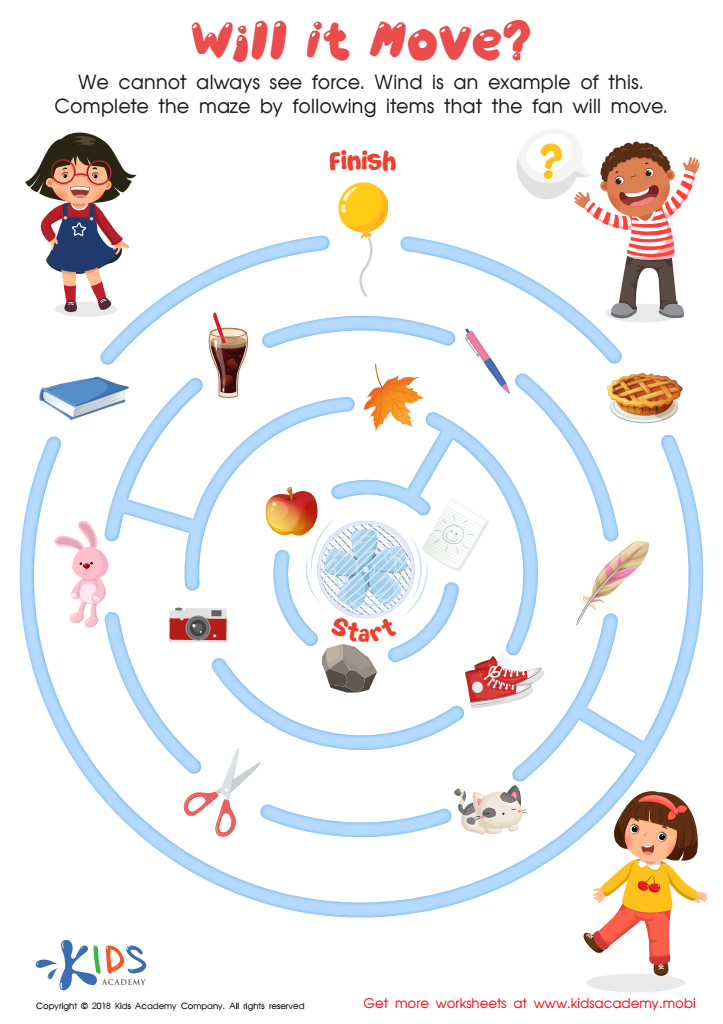
Will it Move? Worksheet
Does your child know about force? If yes/no, this worksheet can help. Force is invisible - like wind - but it moves objects. Ask your child to complete the maze, following the path of items moved by the wind. 80 words.
Will it Move? Worksheet
Worksheet
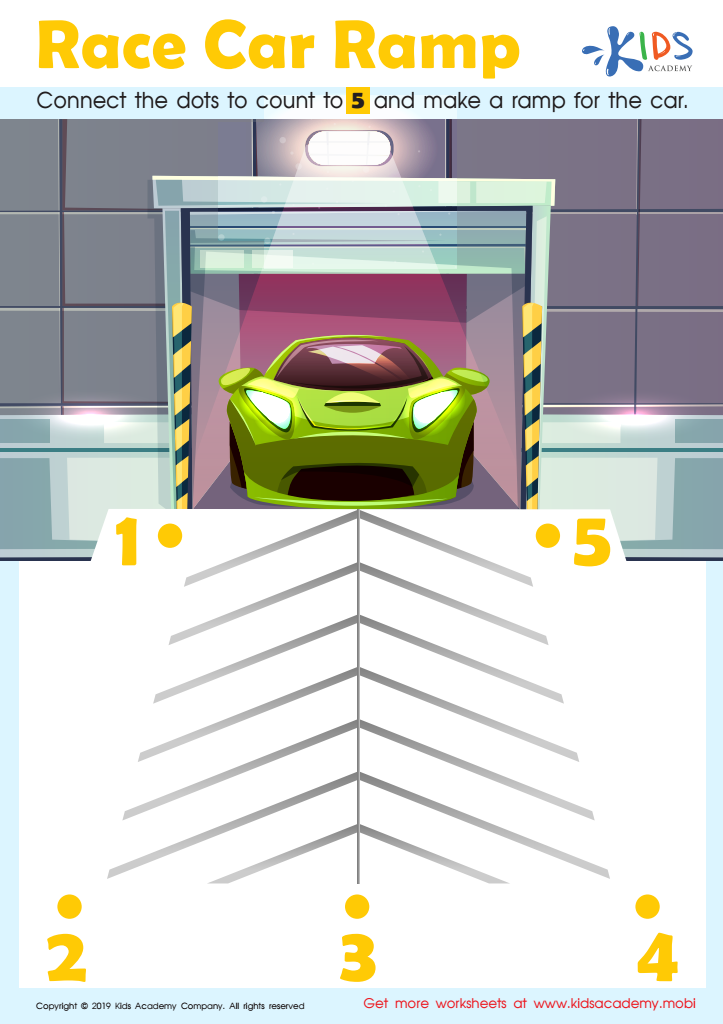
Race Car Ramp Worksheet
Kids can learn numbers quickly and have fun with this worksheet! It teaches preschoolers counting to 5 and allows them to draw a car ramp. It's a creative way to learn numbers, making them fun and easy to remember.
Race Car Ramp Worksheet
Worksheet
Join Kids Academy for Free
Who is primarily going to use this learning content?




.jpg)

Predicting outcomes for 6-year-olds is crucial for parents and teachers because it provides key insights into a child's development and future learning needs. At this early age, children undergo significant physical, emotional, social, and cognitive growth. By understanding potential outcomes, caregivers can intervene early to support any areas where a child might struggle, thereby fostering a stronger foundation for later success in school and life.
Early prediction helps identify learning disabilities, speech delays, or social challenges before they become entrenched. For instance, if a teacher notices a child having difficulty with reading comprehension, they can implement targeted interventions such as individualized reading programs. Similarly, parents can create enriching home environments by incorporating more reading time or educational games tailored to the child's needs.
Furthermore, understanding potential outcomes aids in setting realistic and achievable expectations, reducing undue stress and pressure on both the child and the caregivers. It equips parents and teachers to create a nurturing and supportive learning environment that embraces each child’s unique pace of development.
Overall, predicting outcomes facilitates proactive measures that enhance a child's overall trajectory, ensuring they receive the appropriate support and encouragement they need to thrive academically, socially, and emotionally.








