Spatial awareness Worksheets for 6-Year-Olds - Page 2
26 filtered results
-
From - To
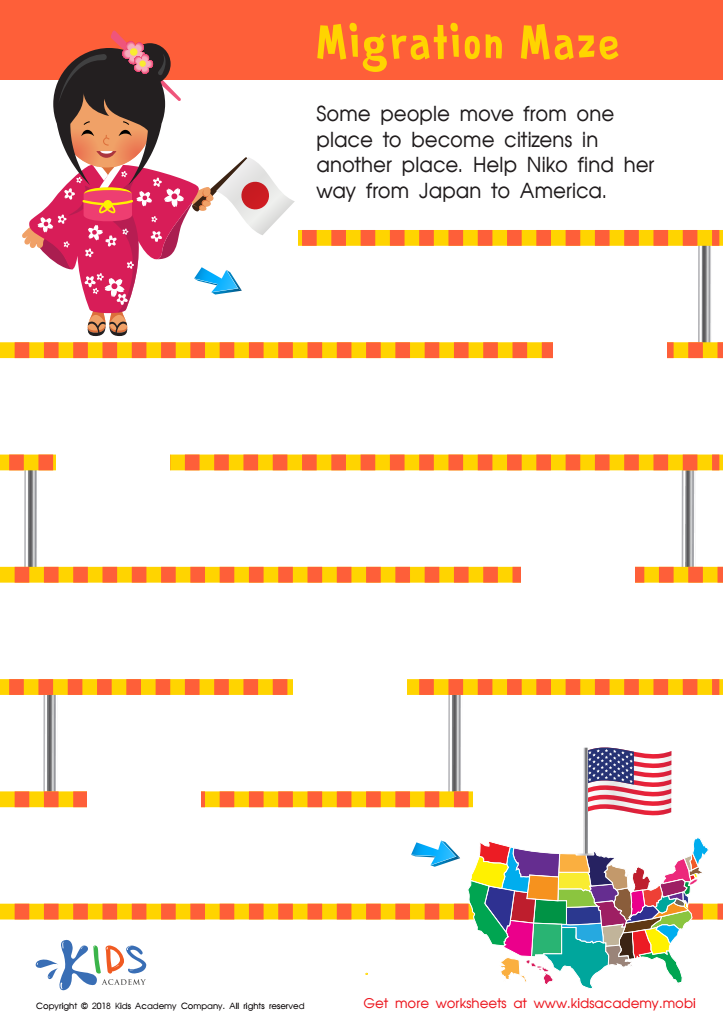
Migration Maze Worksheet
 Assign to My Students
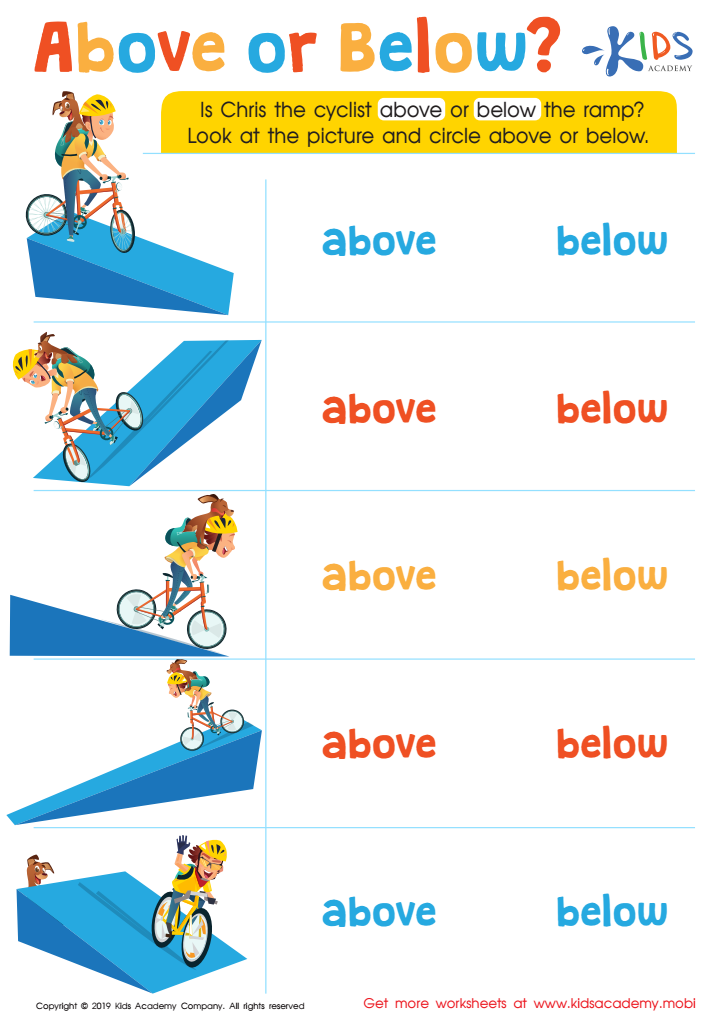
Above or Below? Worksheet







Spatial awareness is a crucial component of early childhood development that parents and teachers should pay close attention to, especially for 6-year-olds. This ability helps children understand the relationships between objects within a given space, which is essential for everyday tasks and academic success. For instance, spatial awareness affects a child's ability to follow directions, recognize patterns, and understand geometric concepts in math.
Moreover, strong spatial skills support better handwriting, as children learn how to properly align letters and use lined paper effectively. These skills are equally important in physical activities such as sports and dance, enhancing a child's coordination and ability to navigate within their environment confidently.
Additionally, spatial awareness contributes to problem-solving and creativity. Children with well-developed spatial skills can visualize solutions and build structures, fostering their imagination and critical thinking. Activities like puzzles, building blocks, and drawing can further stimulate spatial reasoning.
In summary, prioritizing spatial awareness at an early age equips children with essential skills for academic and everyday success, contributes to their physical coordination, and nurtures their creative and analytical abilities.








