Spatial Orientation Worksheets for 6-Year-Olds
4 filtered results
-
From - To
Enhance your child's spatial awareness with our engaging Spatial Orientation Worksheets designed for 6-year-olds! These fun and interactive resources help young learners develop essential skills such as distinguishing between directions, understanding positions, and recognizing shapes in different orientations. Our worksheets are tailored to capture the attention of young minds while promoting critical thinking and problem-solving abilities. Each activity encourages children to explore the world around them, improving their coordination and visual-spatial skills. Perfect for classroom or home use, these worksheets lay a strong foundation for future learning. Download and watch your child thrive in their understanding of spatial concepts today!
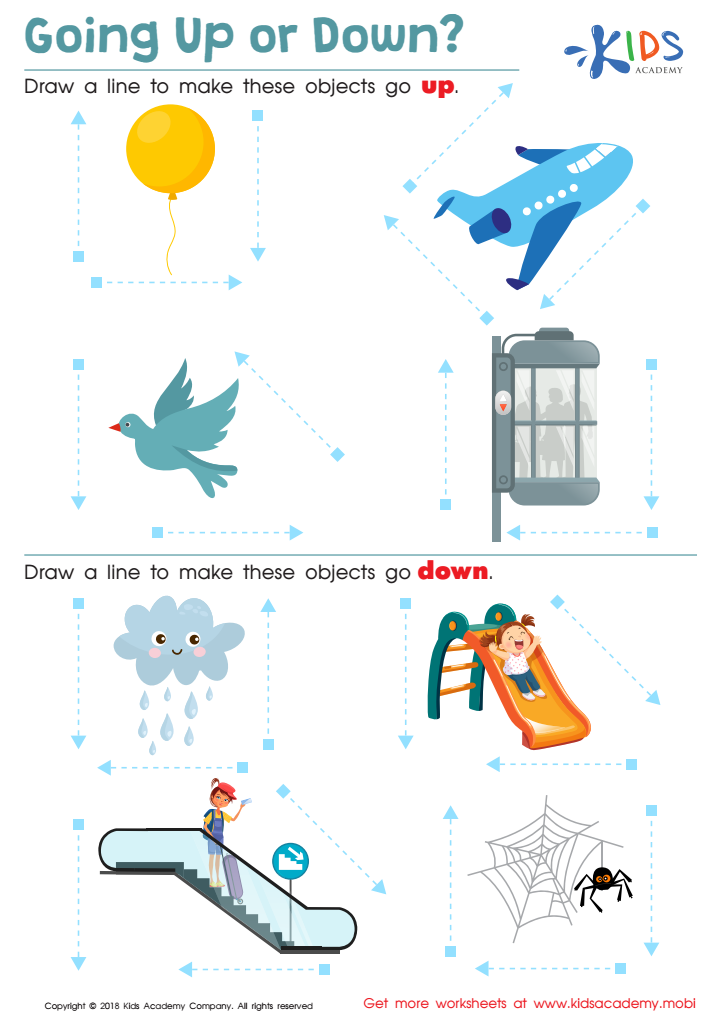
Going up or Down? Worksheet
 Assign to My Students
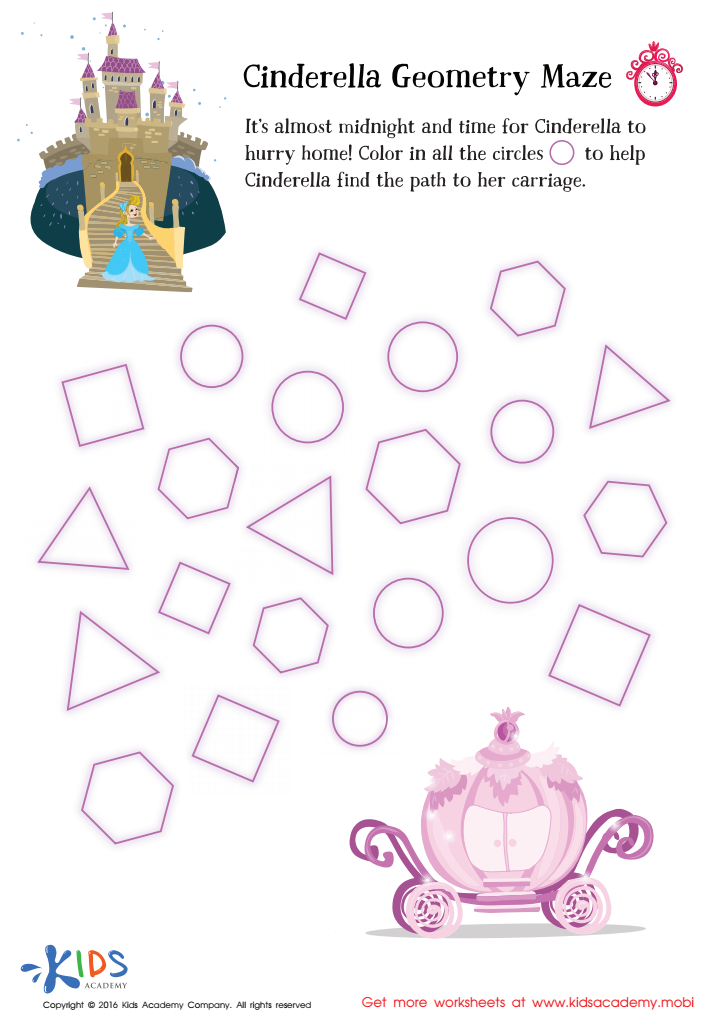
Cinderella Geometry Maze Worksheet
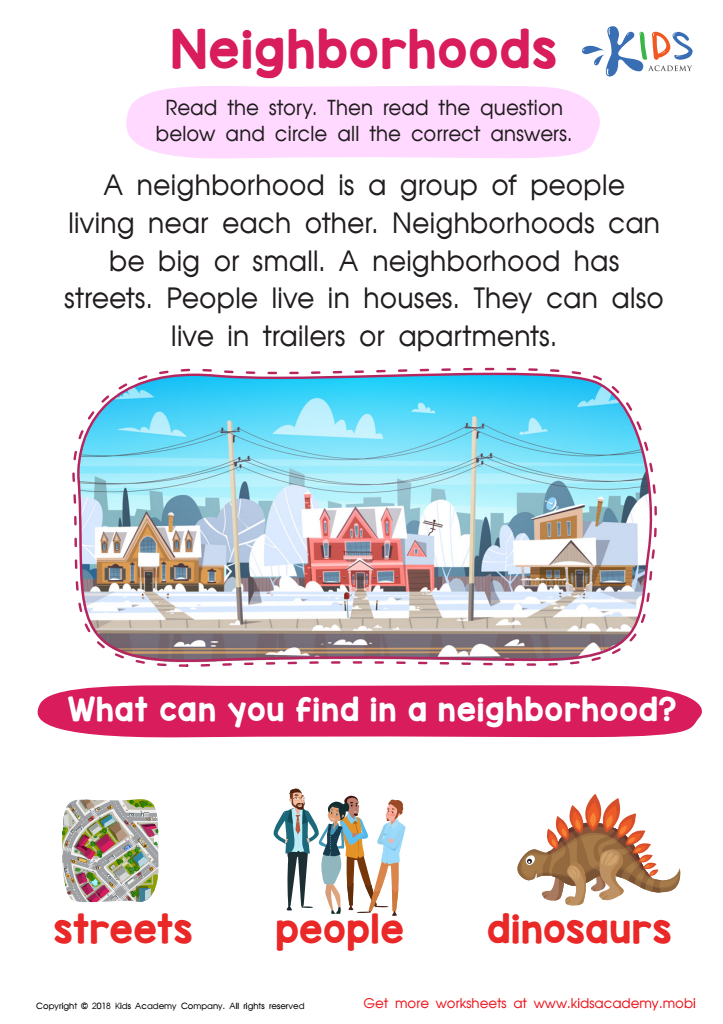
Neighborhoods Worksheet
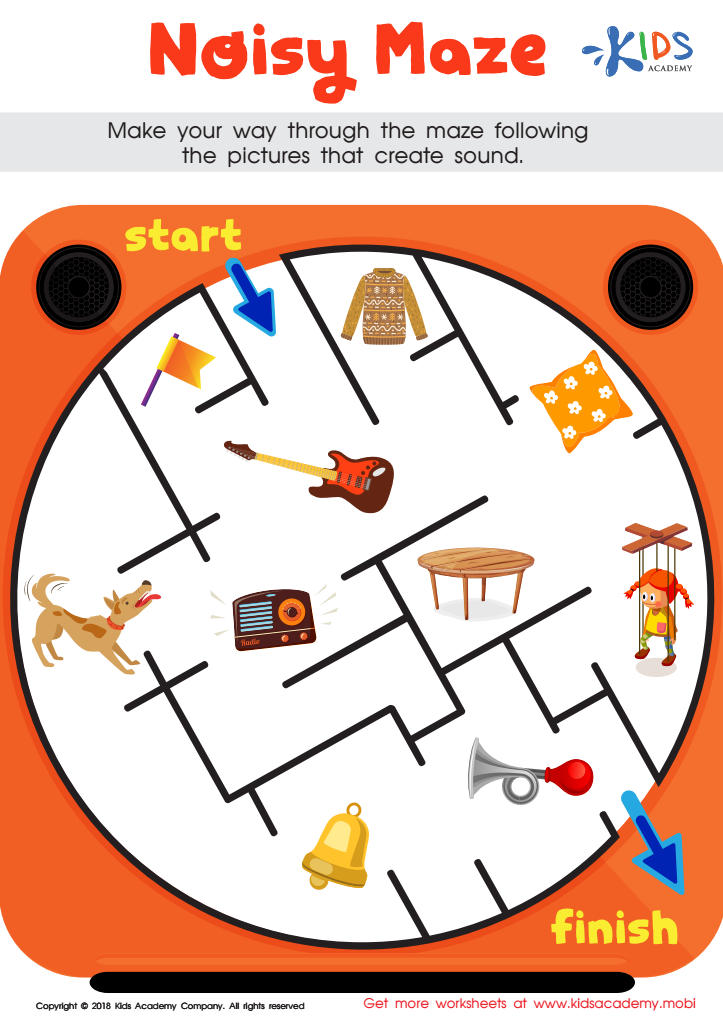
Noisy Maze Worksheet




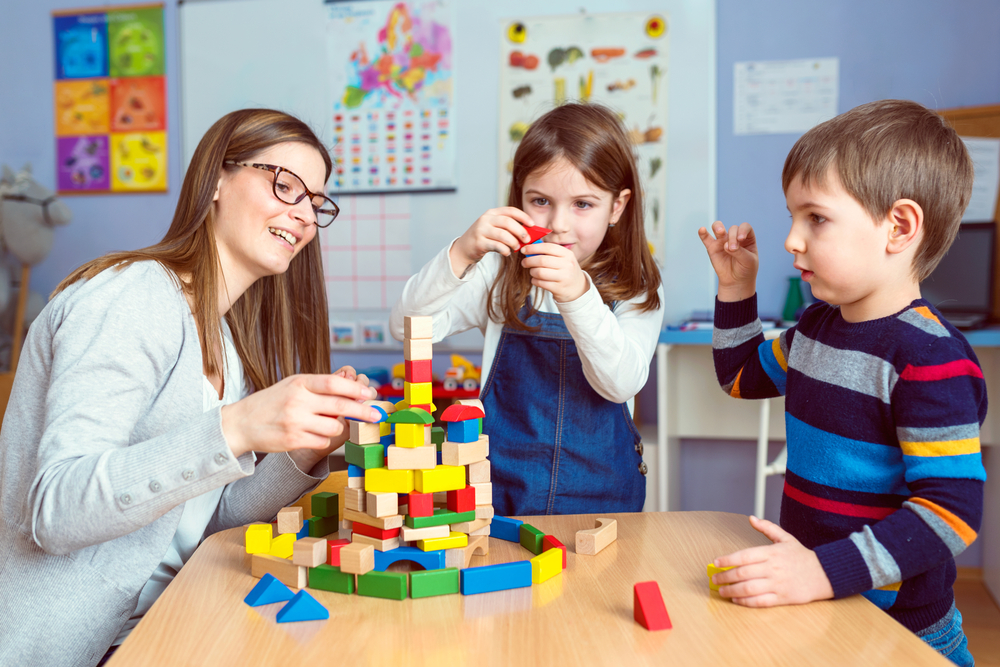


Spatial orientation is a crucial skills development area for 6-year-olds, influencing their cognitive and physical abilities in everyday life. This skill involves understanding one's position in relation to the surrounding space and is foundational for numerous activities, such as reading, math, and geography. Parents and teachers should care about fostering spatial orientation because it is integral to academic success and overall development.
At this age, children are learning about shapes, sizes, and spatial relationships, which are essential for reading maps, solving puzzles, and even navigating social environments. Engaging children in activities like building blocks, arts and crafts, and interactive games can enhance their spatial awareness. This competency supports problem-solving skills as they learn to visualize and manipulate objects mentally.
Moreover, strong spatial orientation skills encourage more confident and independent children. It allows them to interact safely with their environment, enhancing their fine and gross motor skills and paving the way for more complex academic ideas in the future. Additionally, supporting spatial orientation contributes to lifelong skills, beneficial in various professions, such as science, engineering, and even creative arts. Thus, prioritizing this skill helps create well-rounded and capable learners.








