Understanding place value Worksheets for 6-Year-Olds
8 filtered results
-
From - To
"Understanding Place Value Worksheets for 6-Year-Olds" by Kids Academy offers a fun and engaging method for young learners to master essential numerical concepts. These expertly designed worksheets help children grasp the fundamental idea of place value in a structured and imaginative way. By using beautifully illustrated activities and exercises, kids practice putting numbers in their correct places, enhancing their math skills while building a solid foundation for future learning. Ideal for both classroom and home, our worksheets cultivate confidence and a love for math in young learners, ensuring they have the basic skills needed for success.
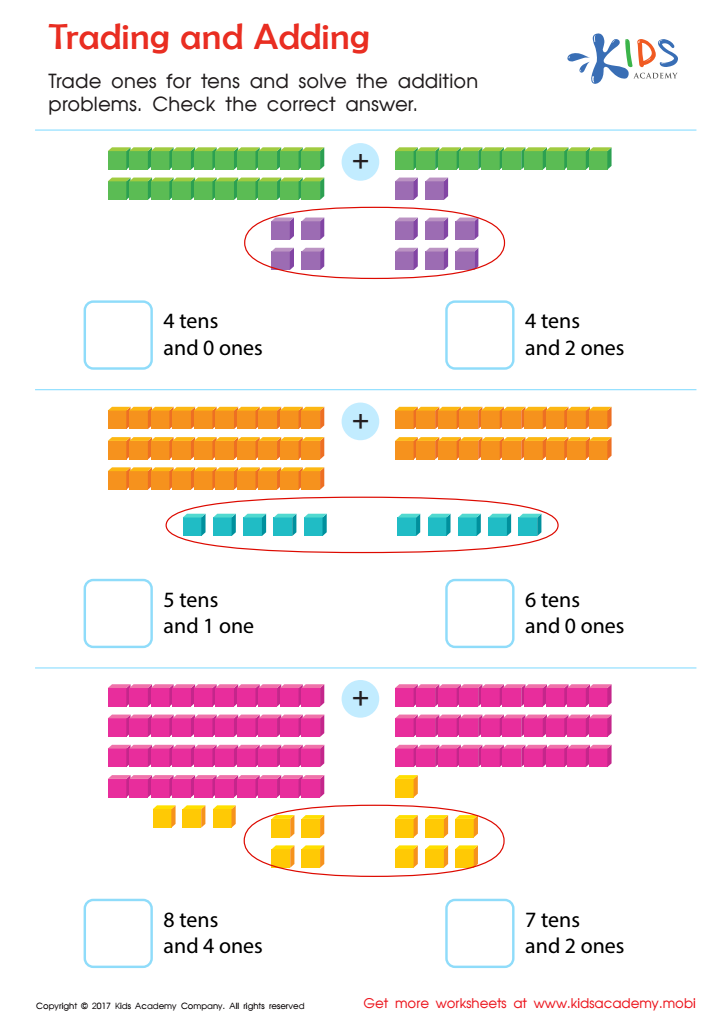
Trading and Adding Worksheet
 Assign to My Students
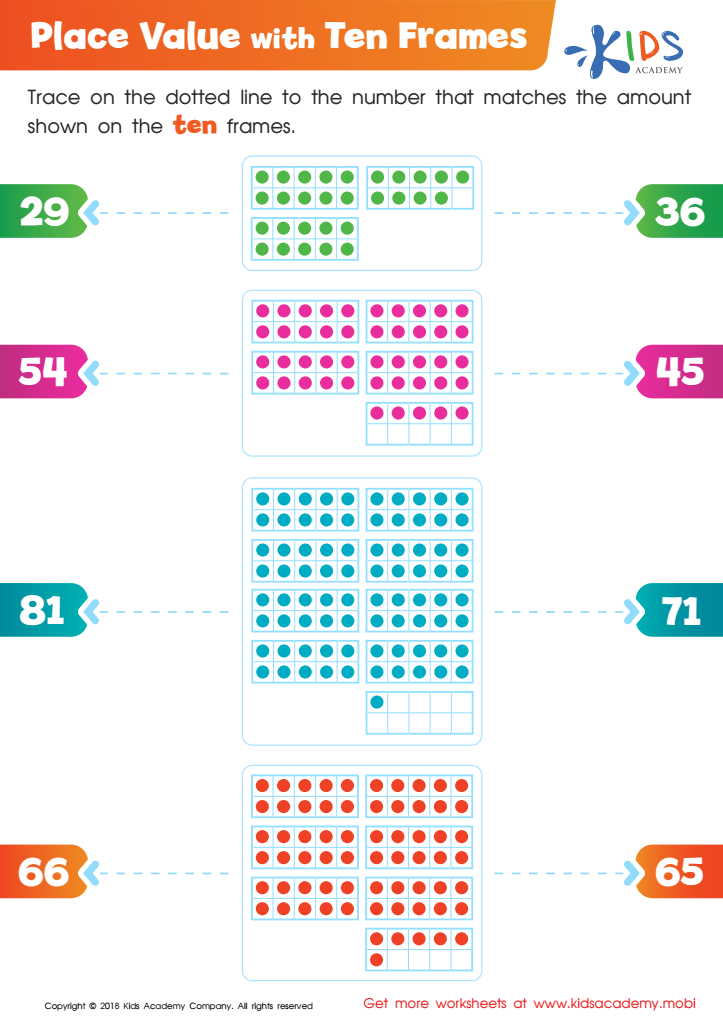
Place Values with Ten Frames Worksheet
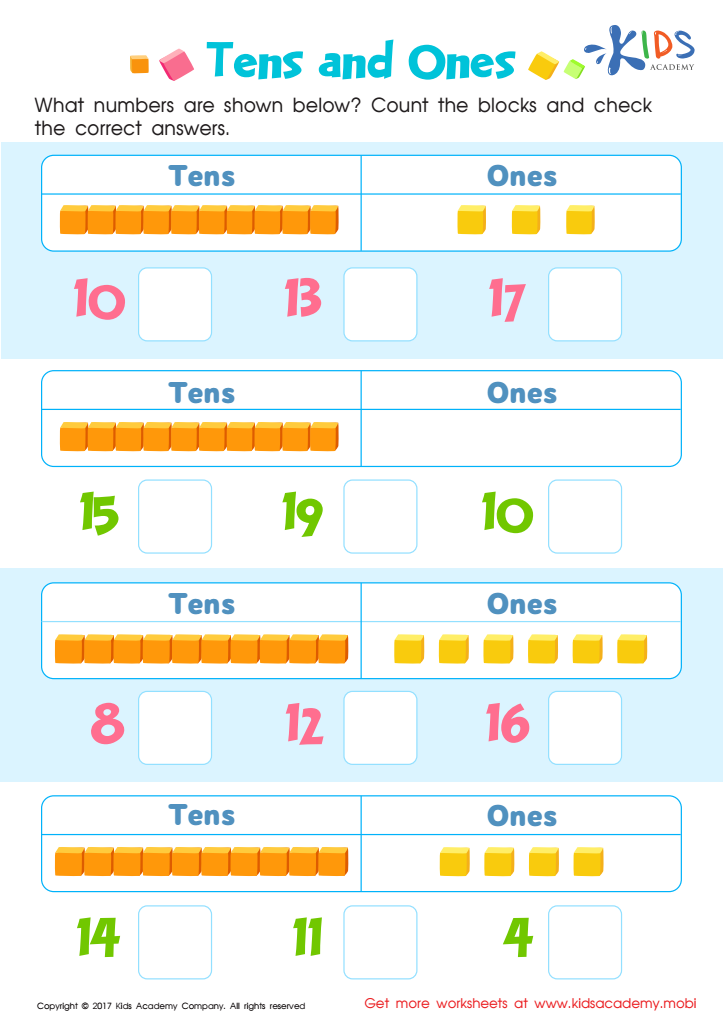
Tens and Ones Worksheet
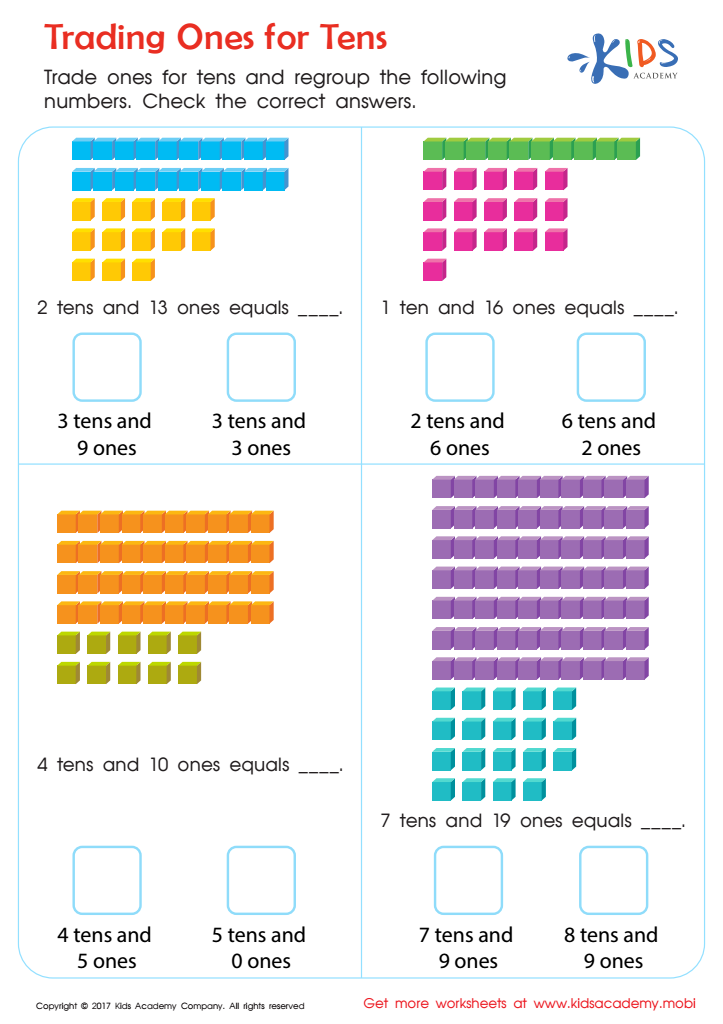
Trading Ones for Tens Worksheet
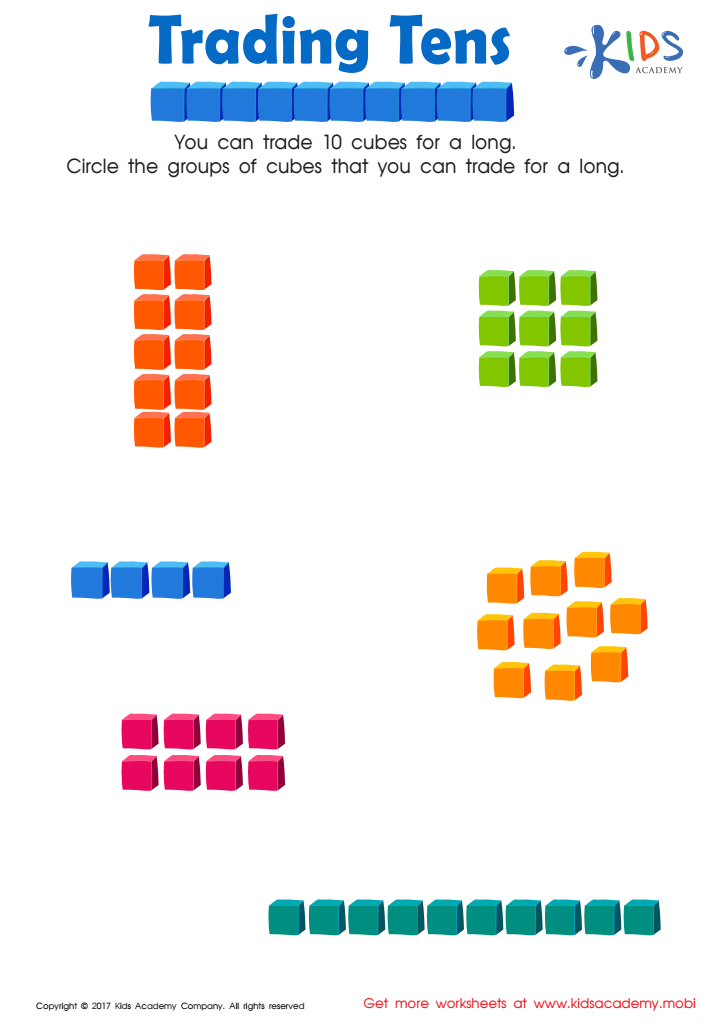
Trading Tens Worksheet
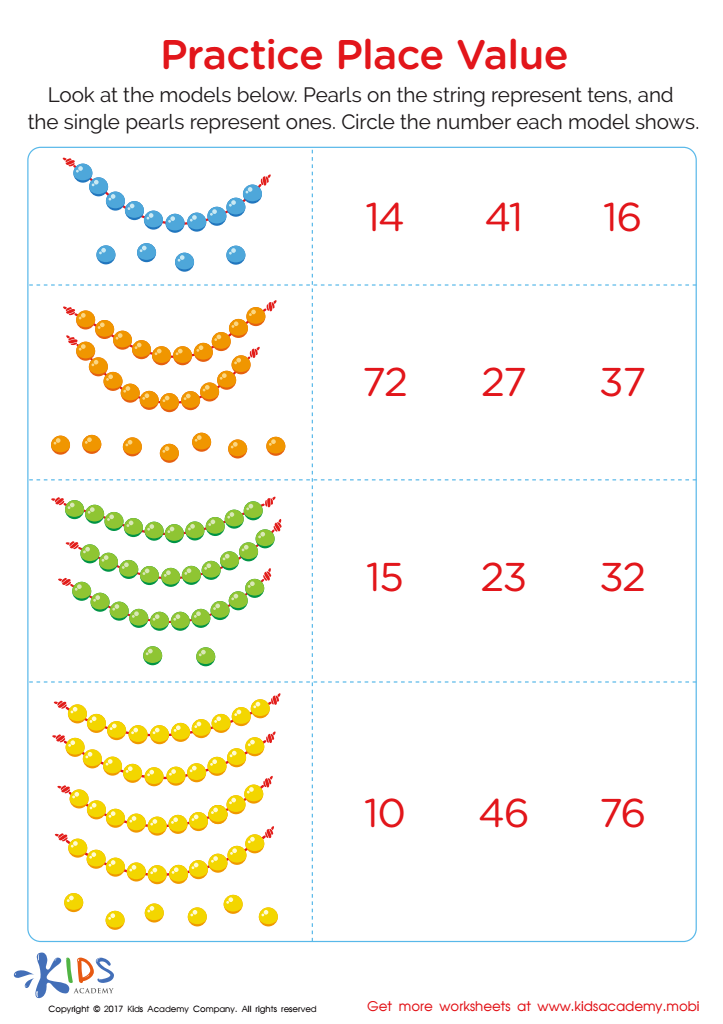
Practice Place Value Printable
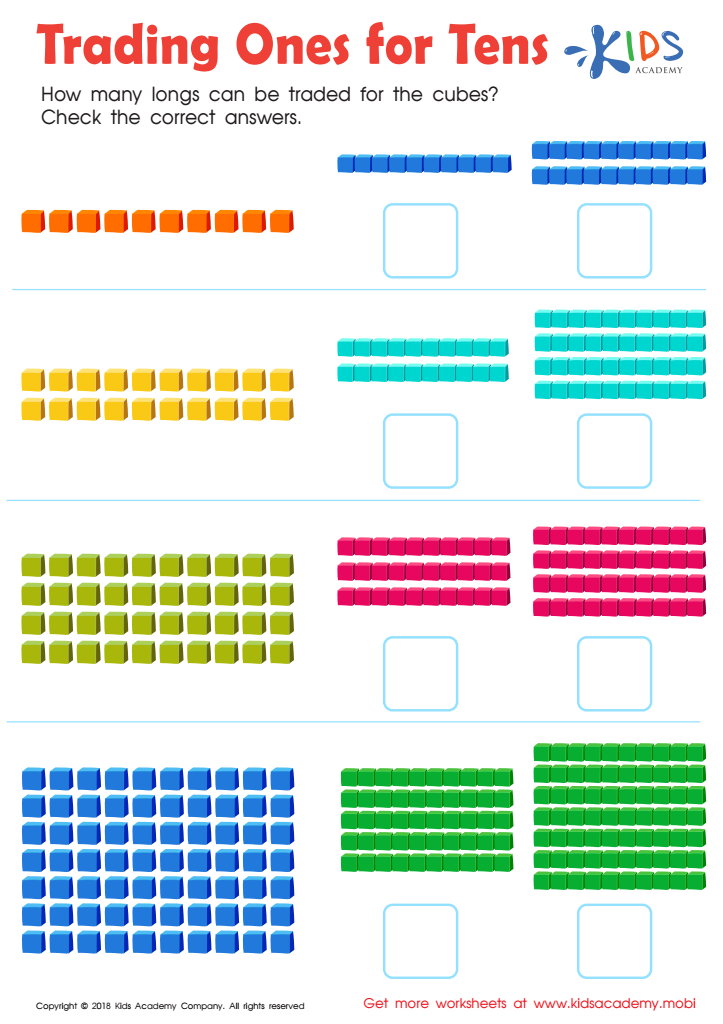
Trading Ones for Tens Worksheet: Part 2
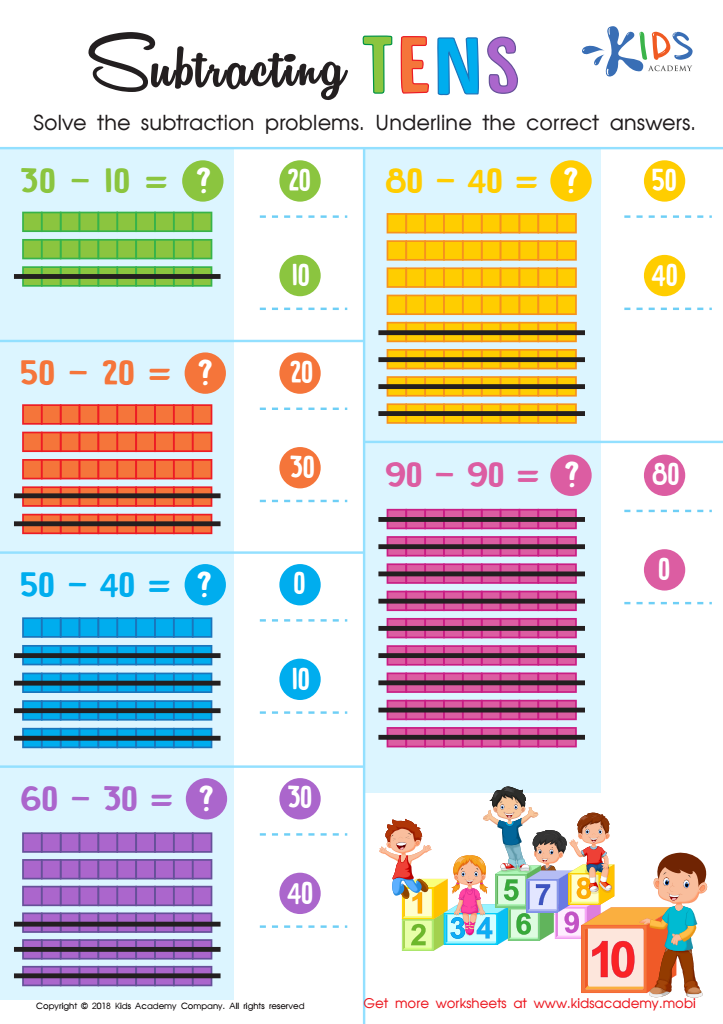
Subtracting Tens Worksheet


.jpg)





Understanding place value is crucial for 6-year-olds because it's the foundation of their mathematical learning and comprehension. Place value refers to the value of a digit depending on its position within a number. For young children, grasping this concept is essential to becoming confident and effective with arithmetic and number sense.
Firstly, place value helps children understand the basic structure of our number system, which is built on the ten digits from 0 to 9 in combinations. This comprehension allows them to appreciate the significance of numerical order and how numbers grow exponentially at each place (units, tens, hundreds, etc.). For instance, the digit 5 in 50 is not the same as the 5 in 5; understanding why 50 represents fifty and not just another five is vital.
Secondly, proficiency in place value supports the development of more complex skills like addition, subtraction, multiplication, and division. By decomposing numbers based on their place values, children can simplify operations and solve problems more efficiently.
Finally, a strong grasp of place value feeds into their overall confidence and enthusiasm toward math. When children understand how numbers work fundamentally, they are more likely to find math engaging and less intimidating. This positive early experience fosters a lifelong interest and proficiency in mathematics, setting them up for future academic success. Parents and teachers play a pivotal role in nurturing this foundational skill, ensuring children have the tools they need to thrive.








