Understanding sizes Worksheets for 6-Year-Olds
3 filtered results
-
From - To
Help your 6-year-old grasp the concept of sizes with our engaging "Understanding Sizes Worksheets"! These specially designed worksheets offer a variety of fun activities, enabling children to distinguish between big, small, tall, short, and everything in between. Kids will enjoy coloring, matching, and comparing objects, fostering their visual discrimination and observational skills. Ideal for at-home learning or classroom activities, these worksheets make understanding sizes an exciting experience. Parents and teachers will appreciate the clear instructions and vibrant visuals, making education both enjoyable and interactive. Download your worksheets today and watch your child develop confidence in understanding sizes through play!
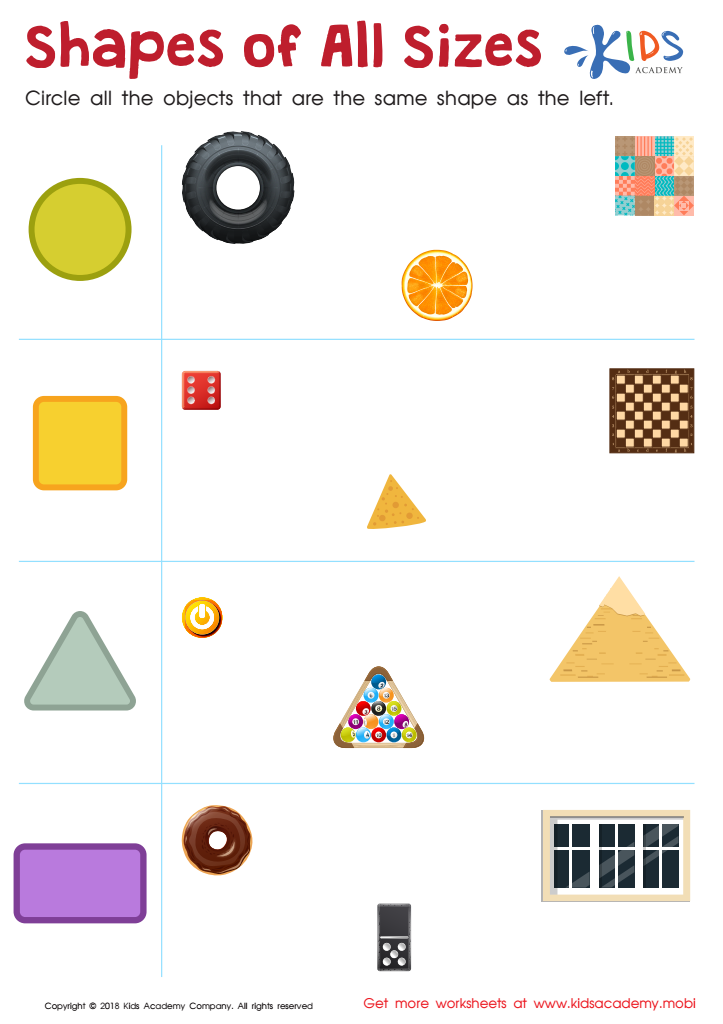
Shapes of All Sizes Worksheet
 Assign to My Students
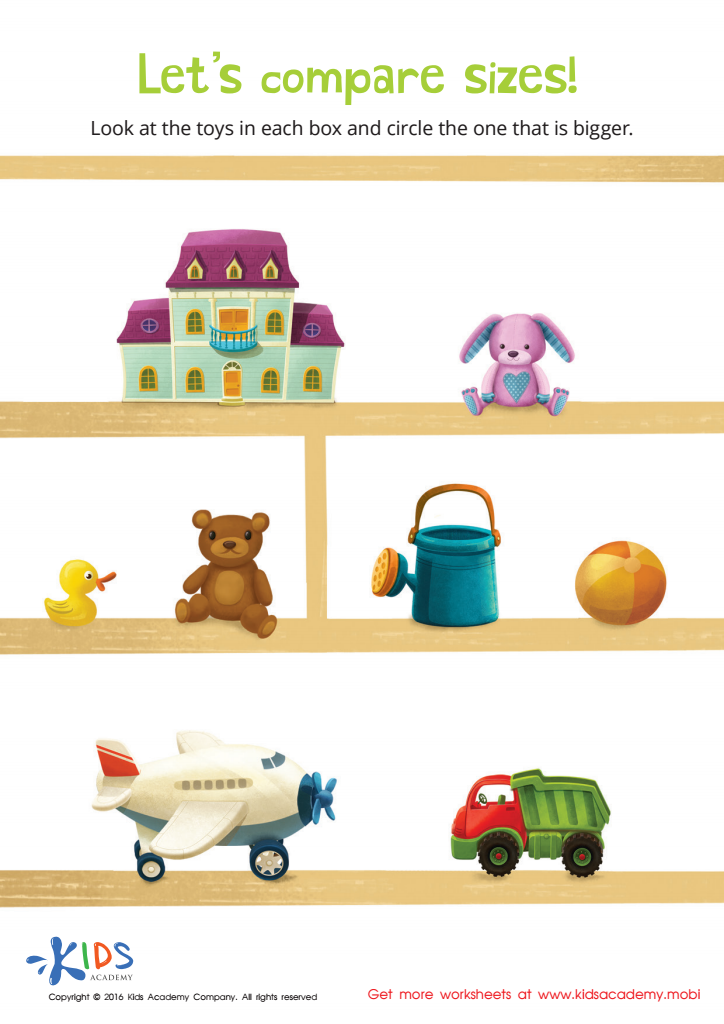
Classifying by Size Sorting Worksheet
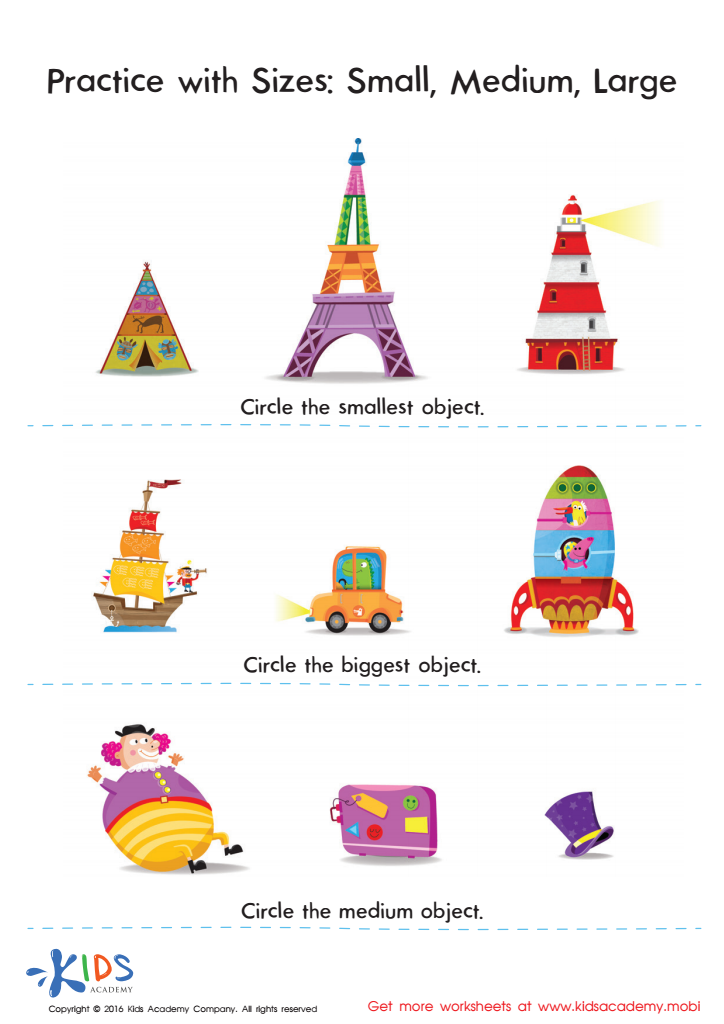






.jpg)

Understanding sizes is a fundamental concept for 6-year-olds that lays the groundwork for various academic and life skills. At this age, children begin to grasp the differences between big, small, tall, short, wide, and narrow, which helps them navigate their physical world. Parents and teachers should focus on teaching this concept because it promotes critical thinking and problem-solving abilities. For instance, when children compare sizes, they learn to categorize objects and recognize relationships, which fosters cognitive development.
Moreover, size understanding aids in early math skills. It introduces children to concepts such as measurement, counting, and spatial awareness, all of which form the foundation for later mathematics. In practical contexts, recognizing sizes enables children to make informed choices, such as selecting the appropriate-sized clothing or understanding portion sizes in food.
Furthermore, discussing sizes can enhance language development as children learn new vocabulary associated with dimensions. Engaging with the concept also encourages creativity—children can use their understanding of size in art projects, building, and imaginative play.
Ultimately, emphasizing the importance of sizes equips children with essential skills that not only bolster their knowledge but also instill confidence in everyday decision-making, setting them up for future success in school and life.








