Matching skills 2D Shapes Worksheets for 6-Year-Olds
5 filtered results
-
From - To
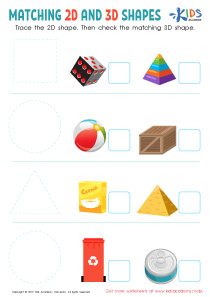
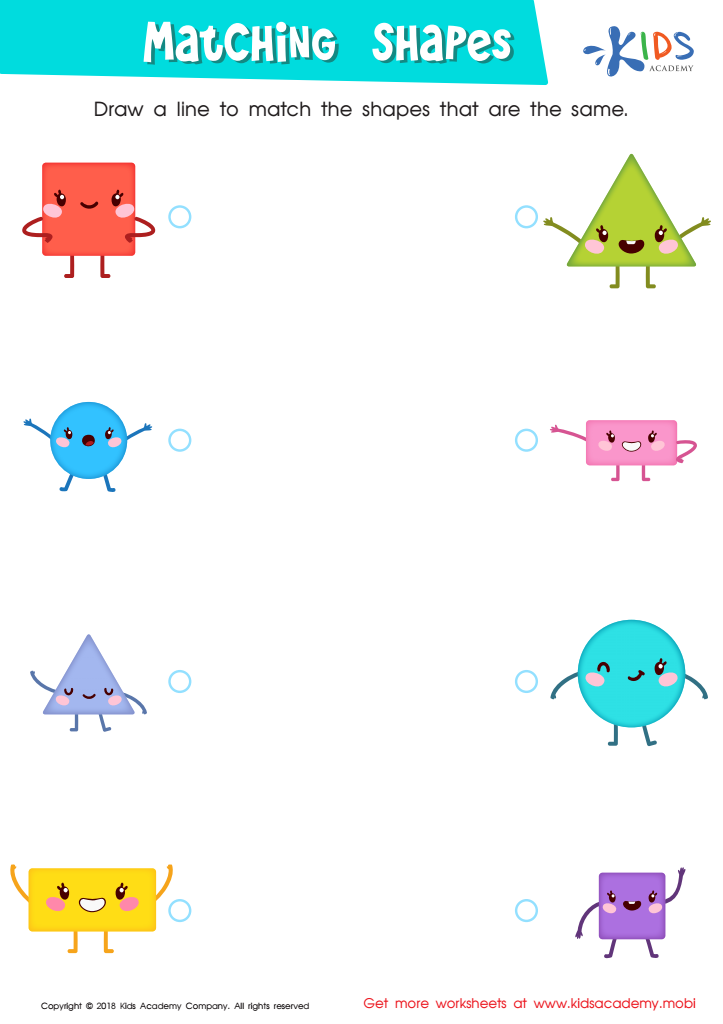
Boost your 6-year-old's geometry skills with our engaging Matching Skills 2D Shapes Worksheets! Designed to make learning fun, these printable activities help children recognize and match various 2D shapes such as circles, squares, triangles, and rectangles. By matching identical shapes and fitting them into corresponding spaces, kids enhance their spatial awareness, visual discrimination, and problem-solving abilities. Our expertly crafted worksheets are perfect for both classroom use and at-home practice, providing a strong foundation in geometry for young learners. Discover the joy of learning shapes with Kids Academy’s comprehensive Matching Skills Worksheets, and watch your child excel!
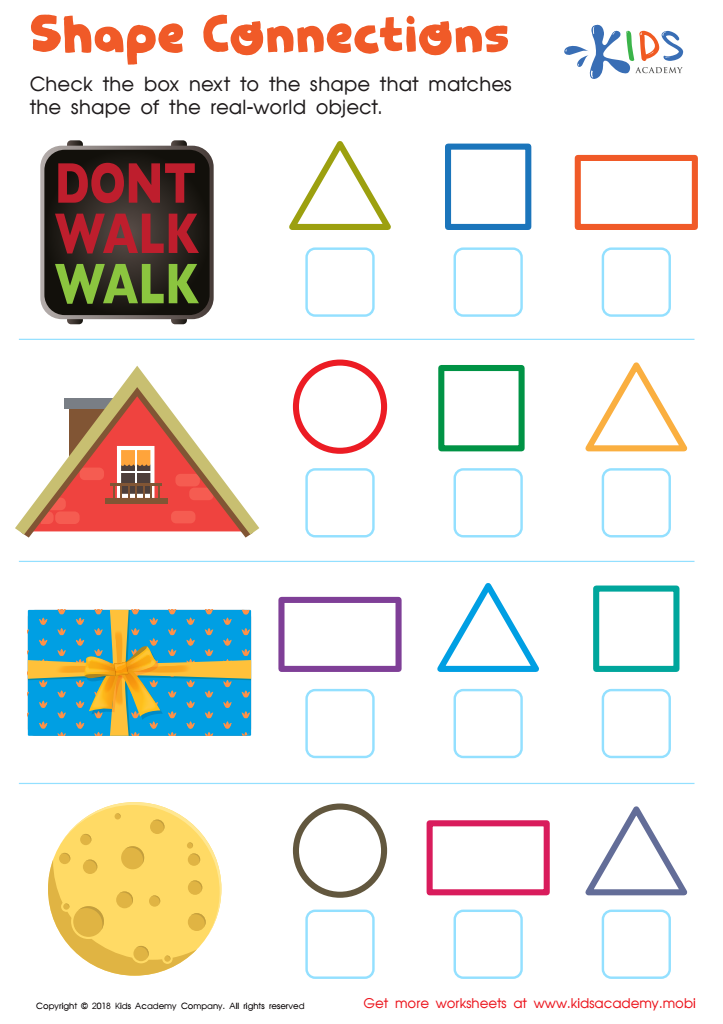
Shape Connections Worksheet
 Assign to My Students




Matching Shapes Worksheet
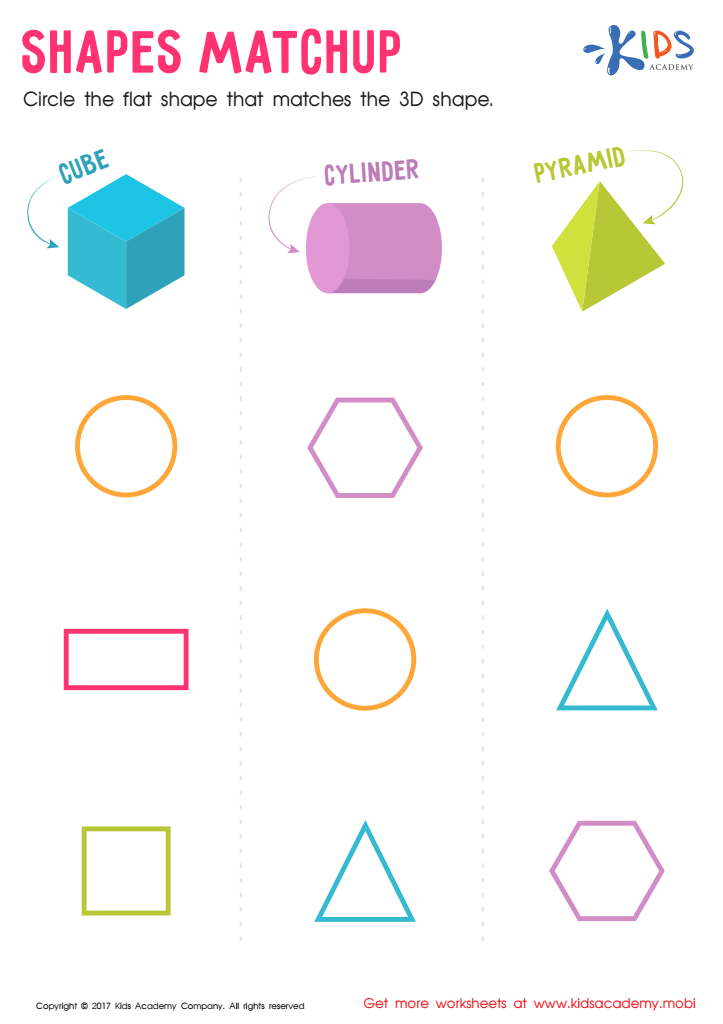
Shapes Matchup Worksheet
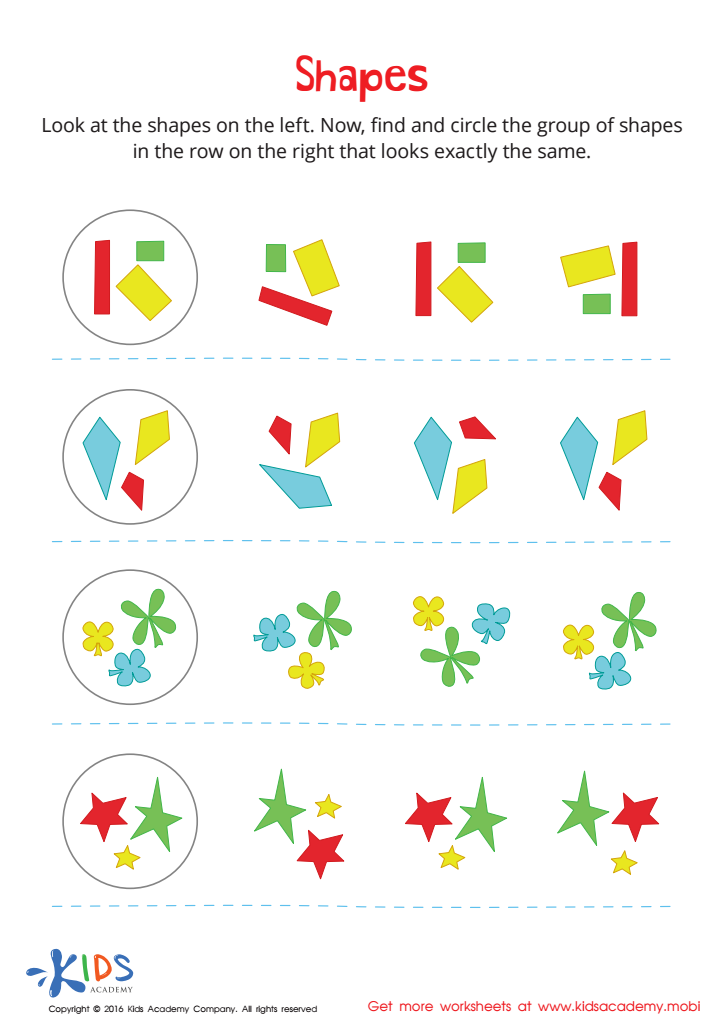
Shapes Worksheet
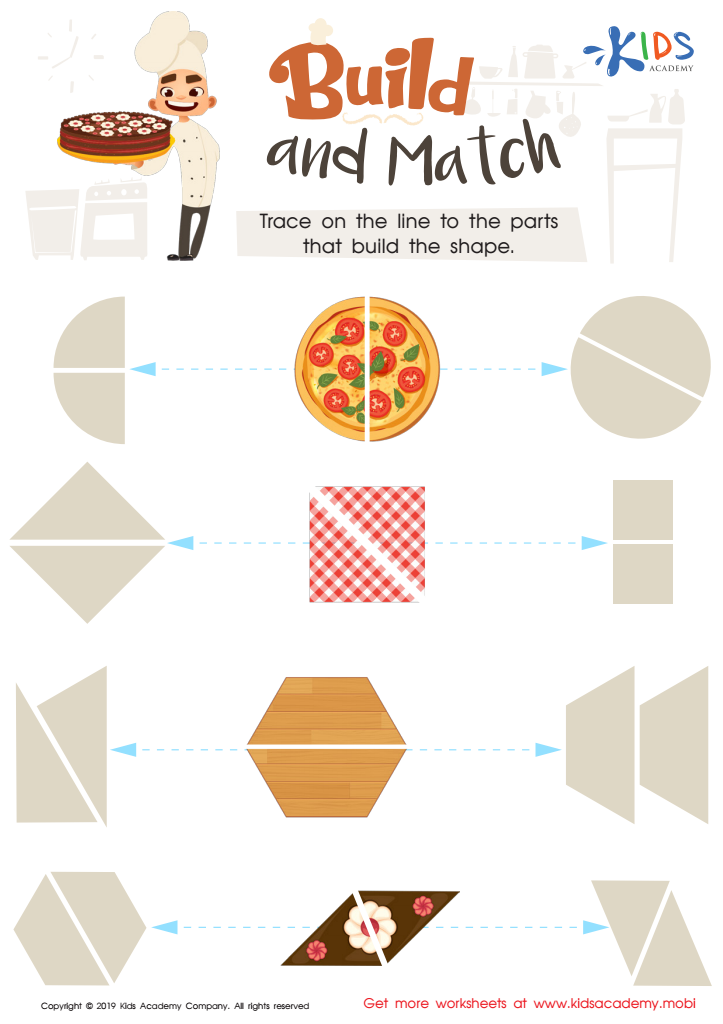
Build and Match Worksheet








Developing matching skills with 2D shapes for 6-year-olds is crucial for several reasons. Firstly, these activities significantly enhance a child's cognitive development. Recognizing and matching shapes boost visual perception and memory, laying the foundation for more complex learning tasks, such as reading or mathematics. For instance, understanding shapes can help young children recognize letters and numbers, which are essential for literacy and numeracy.
Secondly, matching 2D shapes fosters spatial awareness and geometric thinking. These skills are vital for problem-solving and reasoning, enabling children to navigate their environments more effectively. As they grow, this understanding evolves into the ability to comprehend and solve more advanced mathematical problems.
Additionally, engaging in shape-matching activities supports fine motor skills. Cutting, drawing, and moving shapes help improve hand-eye coordination and dexterity, which are critical for writing and other everyday tasks.
Finally, these activities can be fun and stimulating, fostering a positive association with learning. They can be incorporated into playful activities that captivate children’s interest and keep them engaged. Parents and teachers should prioritize these exercises as a multifaceted developmental tool, ensuring children build a strong educational foundation while enjoying the process of learning.