Vocabulary enhancement 2D Shapes Worksheets for 6-Year-Olds
6 filtered results
-
From - To
Boost your child's vocabulary with our engaging 2D Shapes Worksheets designed specifically for 6-year-olds! These fun and interactive resources help young learners explore essential mathematical terms through colorful illustrations and relatable activities. Each worksheet focuses on key 2D shapes like circles, squares, and triangles while fostering language skills. Kids will enjoy matching shapes to words, completing fill-in-the-blank exercises, and identifying shapes in daily life. Perfect for independent practice or classroom use, these worksheets provide a comprehensive approach to learning that combines geometry with vocabulary enhancement. Start your child's educational journey today and watch their confidence grow!
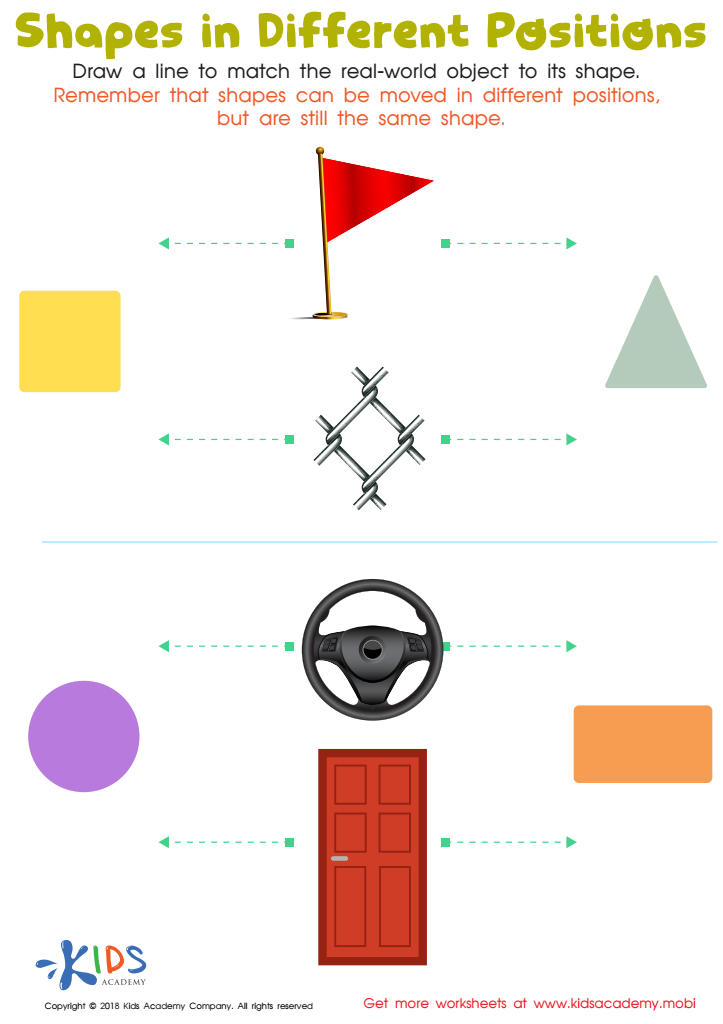
Shapes in Different Positions Worksheet
 Assign to My Students

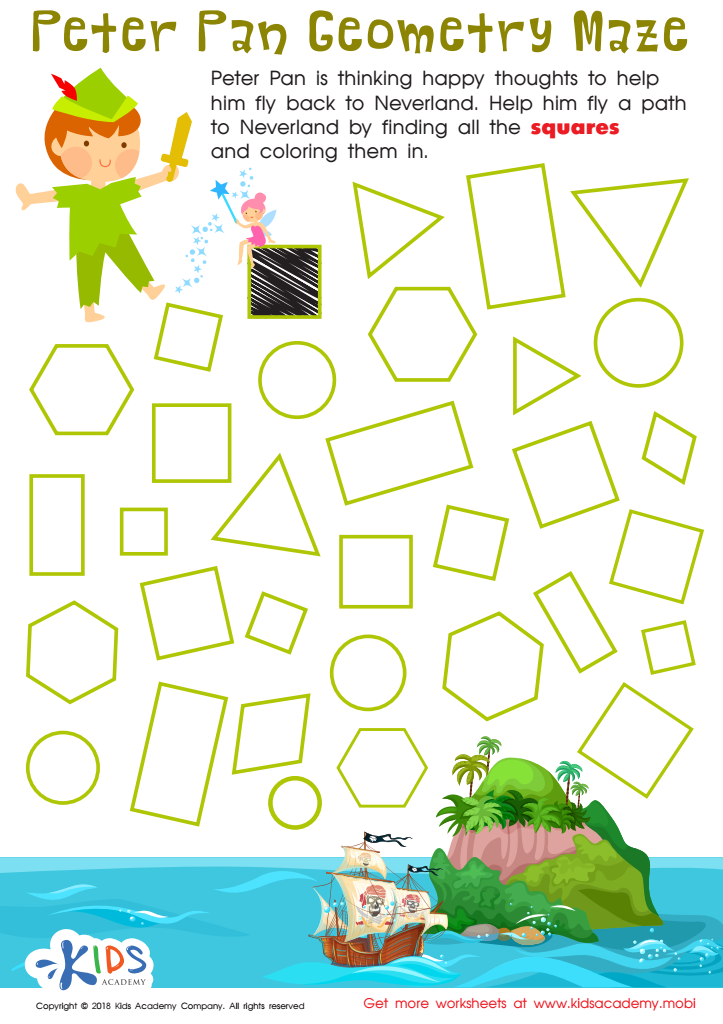
Peter Pan Worksheet
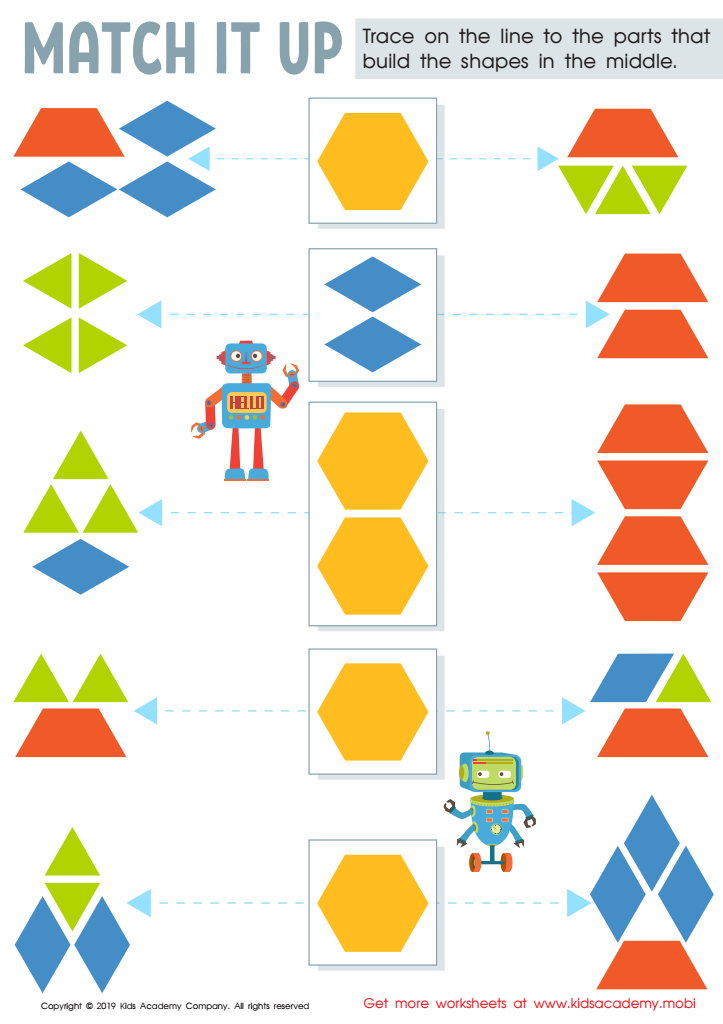
Match It up Worksheet
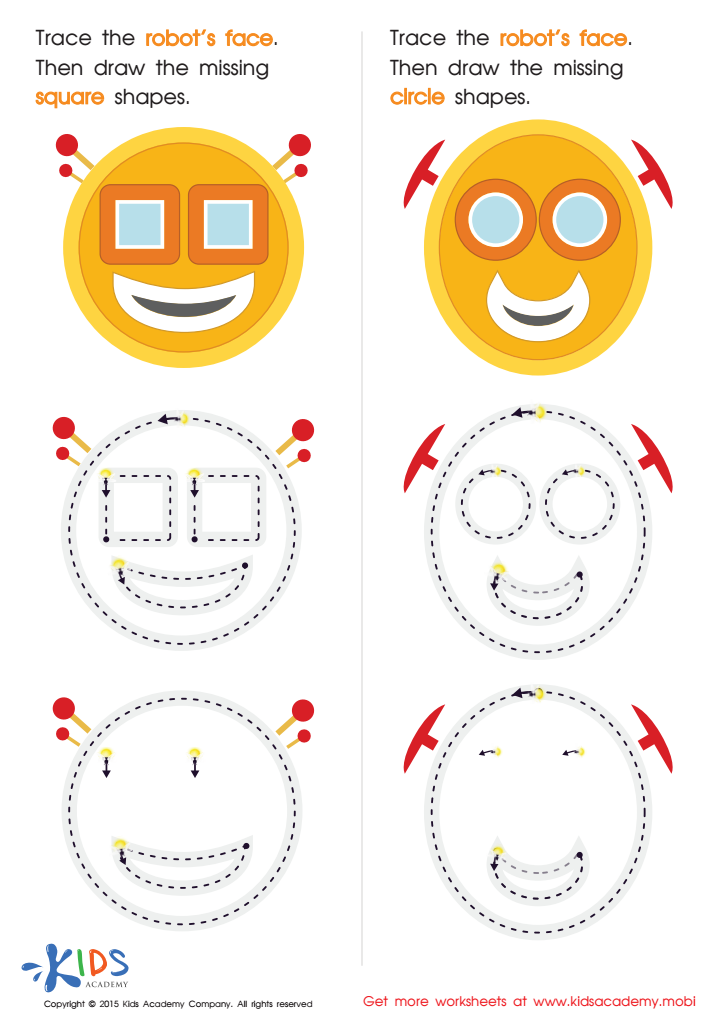
Practicing to Draw Circles And Squares Printable
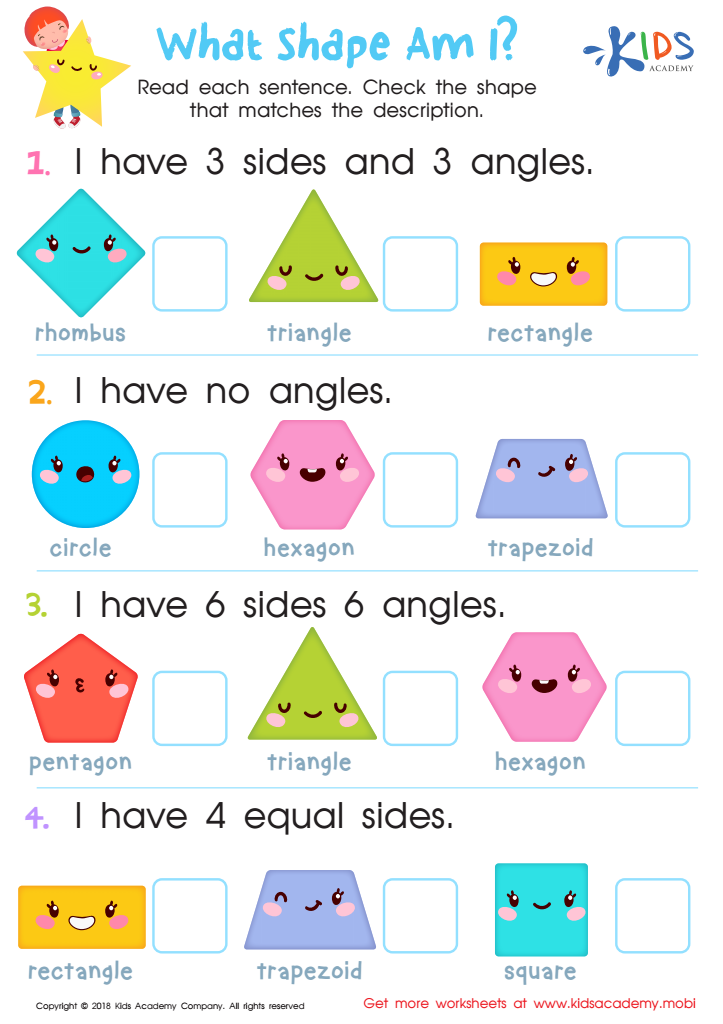
What Shape Am I? Worksheet
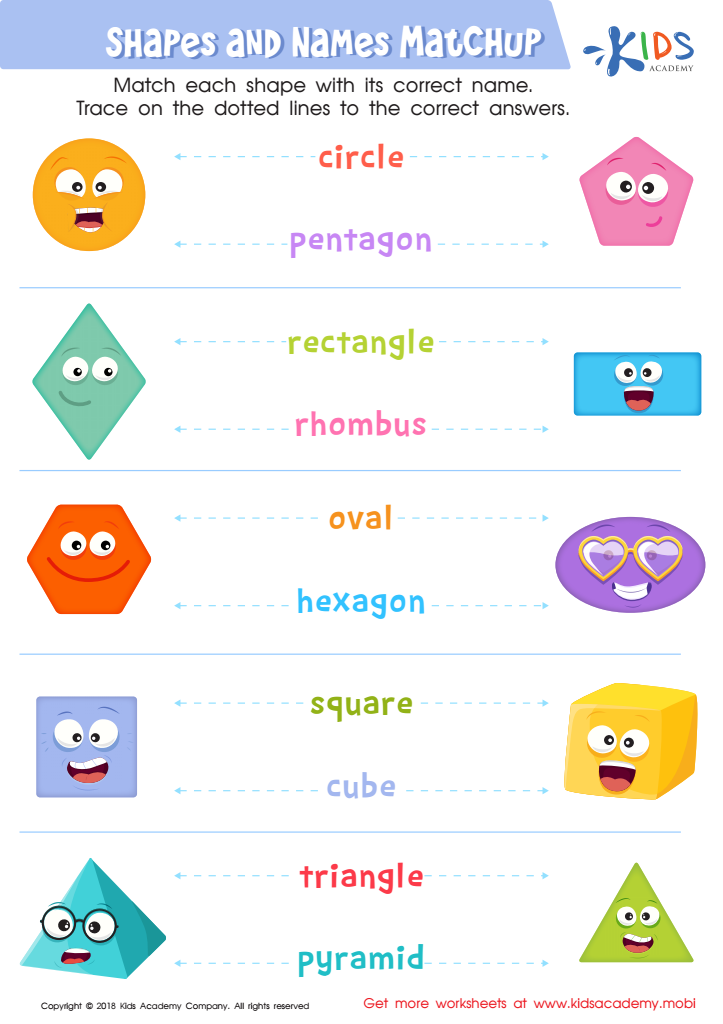
Shapes and Names Matchup Worksheet








Vocabulary enhancement in the context of teaching 2D shapes to 6-year-olds is vital for several reasons. First and foremost, a robust vocabulary helps young learners articulate their thoughts and observations about shapes effectively. When children are equipped with terms like "triangle," "circle," "square," and "rectangle," they can engage in meaningful conversations about their properties, sizes, and relationships, enhancing their cognitive skills.
Additionally, a strong vocabulary lays the foundation for future mathematical success. Understanding shape vocabulary introduces kids to essential concepts in geometry, which is crucial as they progress in their education. Early exposure to this language can foster confidence in tackling more complex topics later on.
Moreover, learning shape vocabulary supports literacy development. The act of recognizing and naming shapes encourages children to connect visual concepts with verbal language, thus enhancing overall communication skills. It promotes critical thinking, as they categorize and compare shapes based on attributes.
Lastly, from a holistic educational perspective, parents and teachers engaged in vocabulary enhancement cultivate a love for learning and curiosity about the world. By prioritizing this aspect of education, they equip children with tools that extend beyond 2D shapes, fostering lifelong learners who appreciate and seek knowledge throughout their academic journey.