Visual Learning Addition and Subtraction Word Problems Worksheets for 6-Year-Olds
5 filtered results
-
From - To
Enhance math skills with our "Visual Learning Addition and Subtraction Word Problems Worksheets" designed specifically for 6-year-olds. These worksheets use engaging visual aids such as colorful illustrations and diagrams to simplify complex addition and subtraction concepts. By turning abstract numbers into tangible images, children can easily grasp and solve word problems, fostering both comprehension and enjoyment. Our carefully crafted problems aim to boost critical thinking and problem-solving abilities, ensuring young learners build a solid foundation for future math success. Perfect for classroom or at-home practice, these worksheets make learning math a fun and visual adventure.
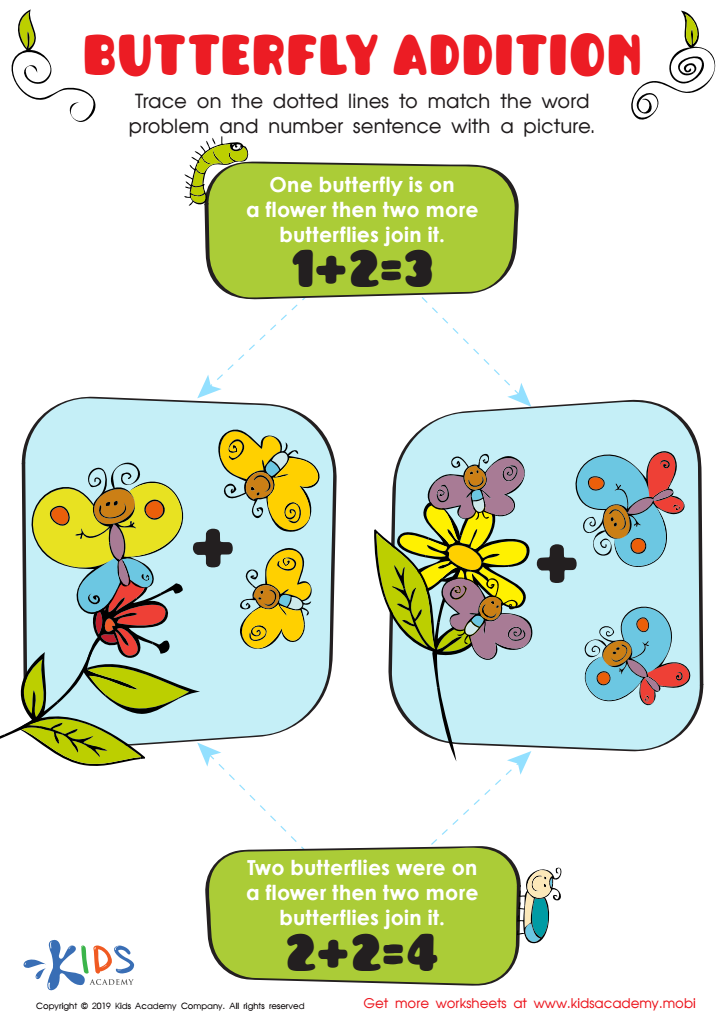
Butterfly Addition Worksheet
 Assign to My Students
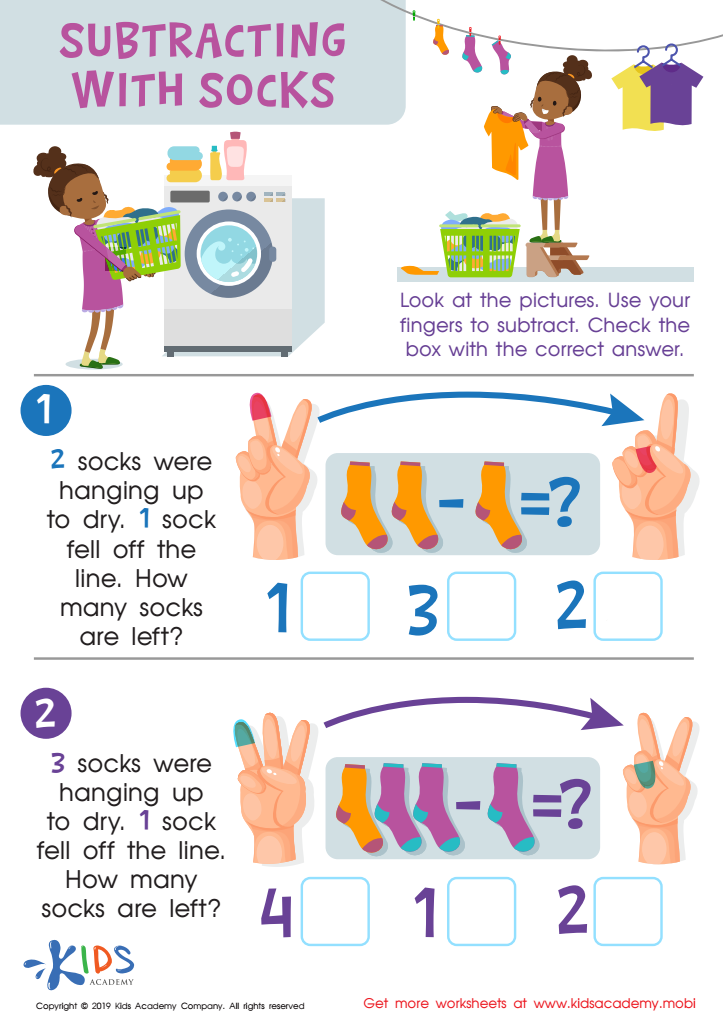
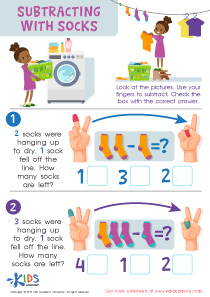
Subtracting Socks Worksheet
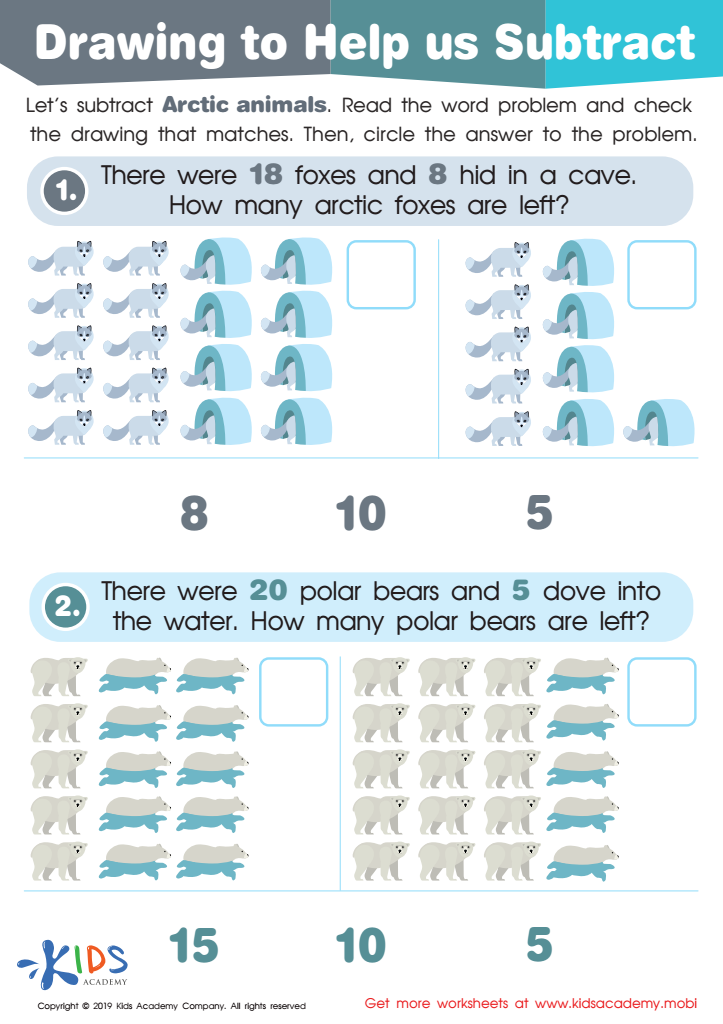
Drawing to Help Us Subtract Worksheet
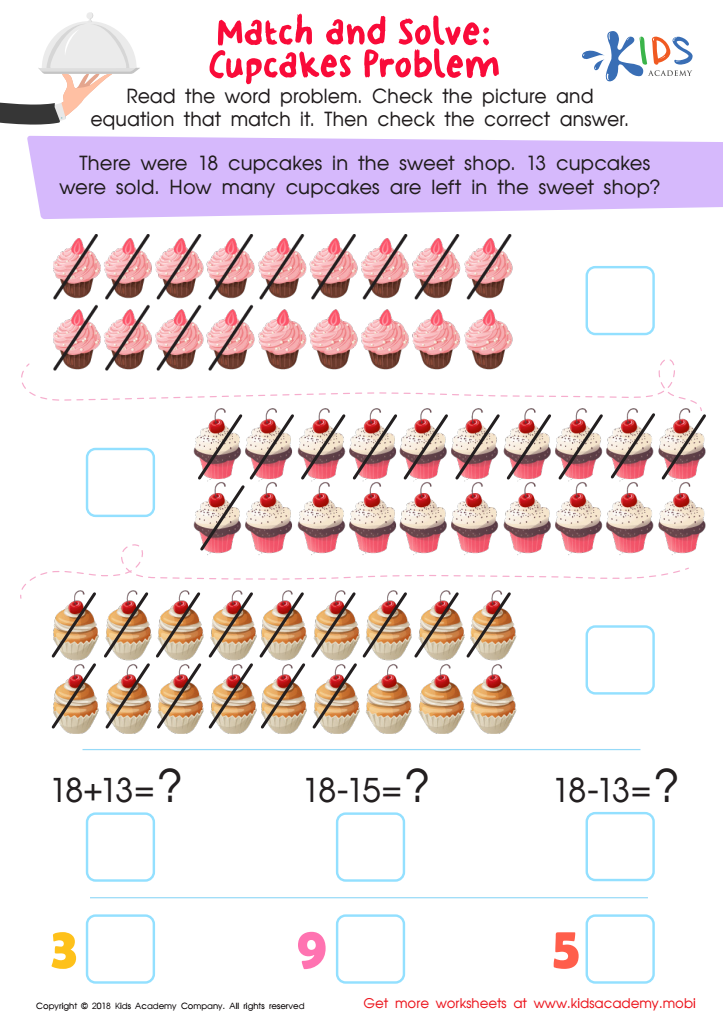
Match and Solve: Cupcakes Problem Worksheet
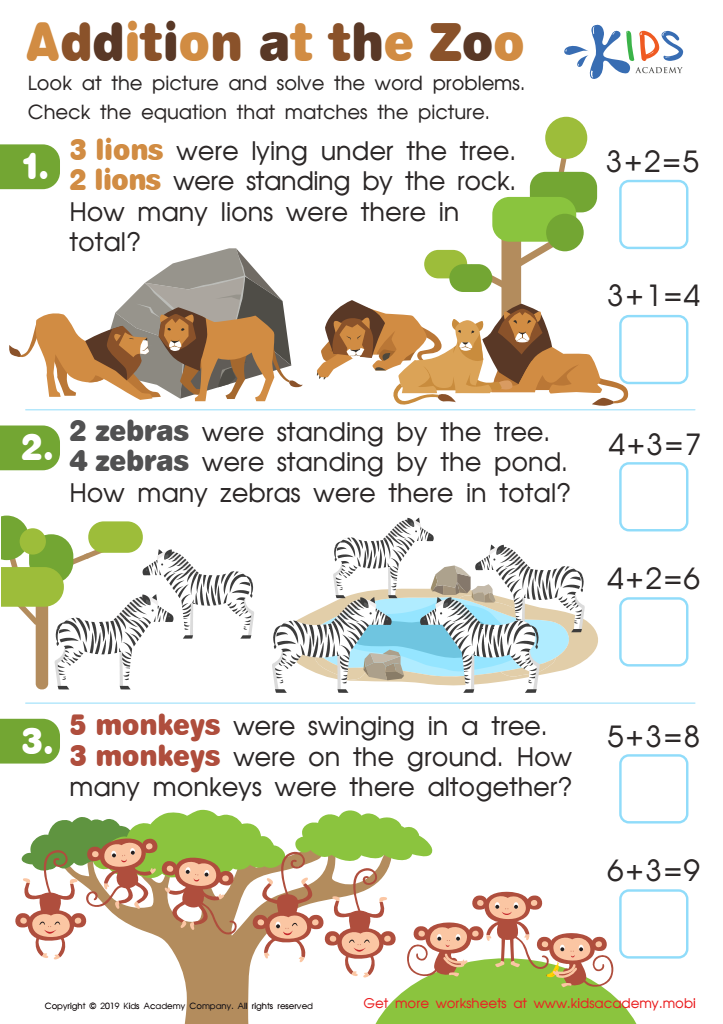
Addition at the Zoo Worksheet








Visual learning addition and subtraction word problems are crucial for six-year-olds because they significantly enhance conceptual understanding and retention. Young children, at this developmental stage, are often visual and concrete learners. They grasp complex ideas more effectively when these are represented through images, patterns, and tangible objects rather than abstract symbols.
Incorporating visual elements into math problems helps bridge the gap between concrete experiences and abstract concepts. For instance, using pictures of apples or cars in addition problems makes the mathematical process tangible and relatable. This method builds a strong foundational understanding of basic arithmetic, which is vital for tackling more advanced math concepts later.
Furthermore, visual learning caters to diverse learning styles, addressing the needs of children who may struggle with text-heavy, traditional methods. It nurtures critical thinking and problem-solving skills, as children learn to interpret and process visual information to arrive at a solution.
Parents and teachers benefit as well, as visual tools make it easier to monitor and understand a child’s thought process and identify any misconceptions early on. In summary, visual learning addition and subtraction word problems not only make math more engaging and accessible for six-year-olds but also establish essential, enduring numeracy skills.