Basic geometry knowledge Geometry Worksheets for 6-Year-Olds
3 filtered results
-
From - To
Introduce your 6-year-old to the fascinating world of shapes and spatial understanding with our Basic Geometry Knowledge Worksheets. These worksheets are designed specifically for young learners, making geometry fun and approachable. They help children recognize, compare, and categorize different shapes like triangles, circles, and squares. Packed with vibrant visuals and engaging activities, these printables enhance critical thinking and fine motor skills. Perfect for both classroom and homeschool settings, our geometry worksheets serve as a solid foundation for future math success. Visit our page to make early geometry learning an enjoyable experience for your child today!
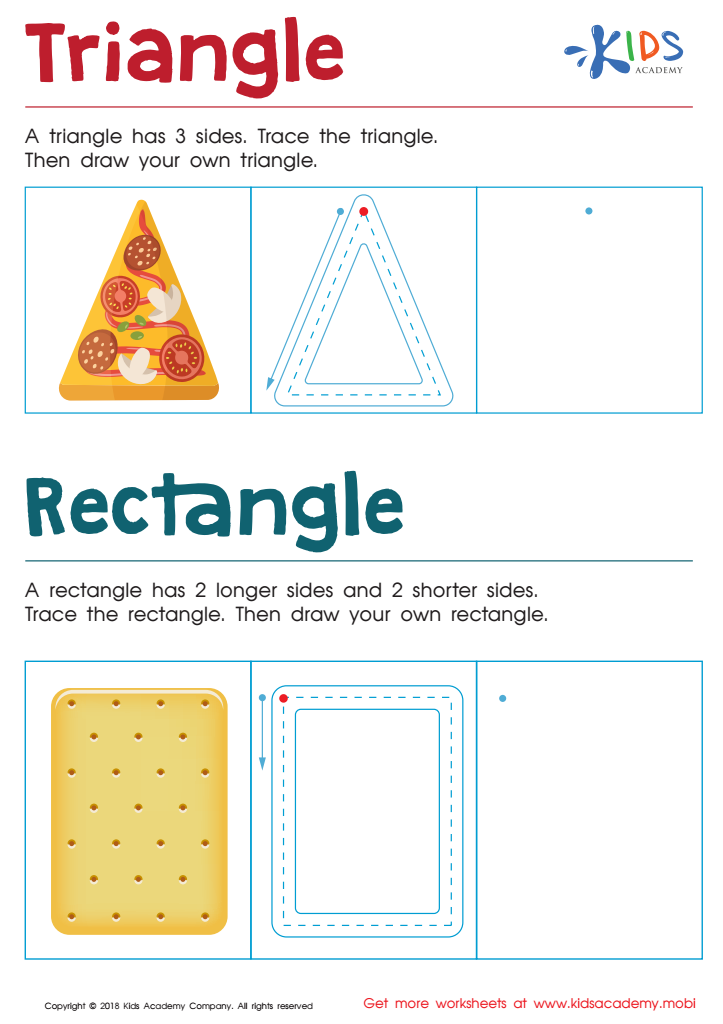
Triangle Rectangle Worksheet
 Assign to My Students











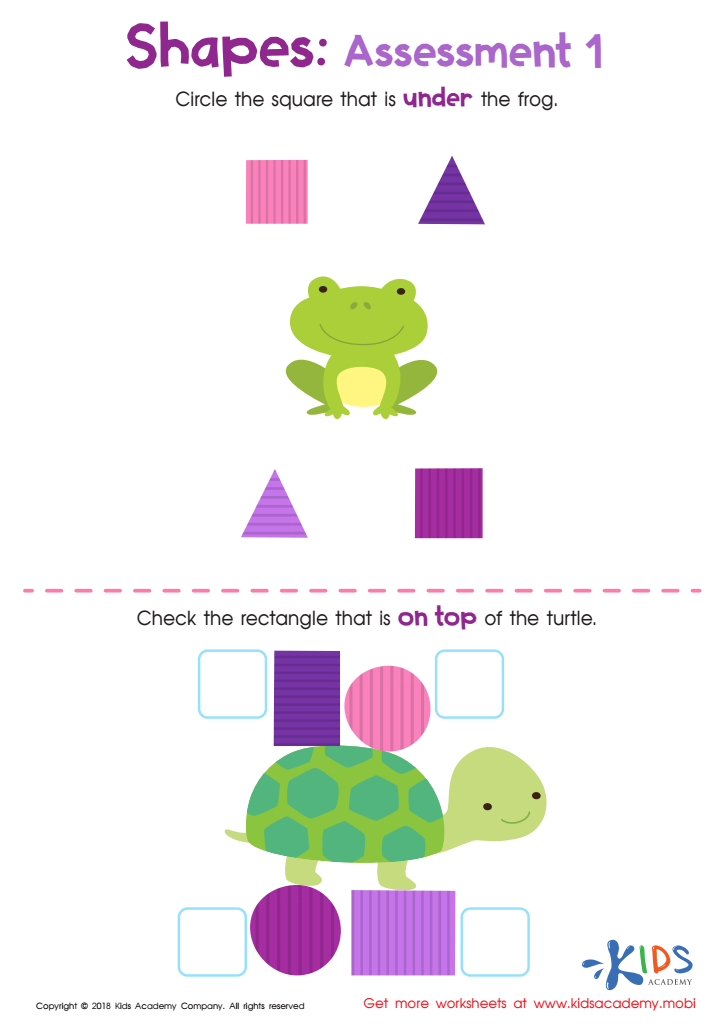
Geometry – Assessment 1 Worksheet
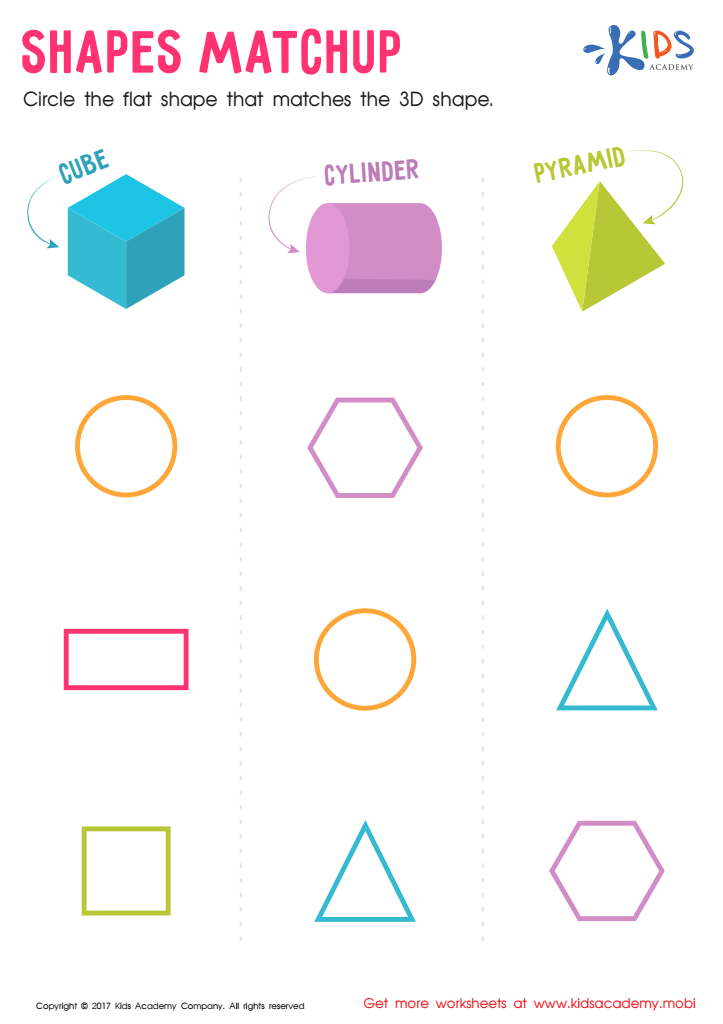
Shapes Matchup Worksheet








Parents and teachers should care about imparting basic geometry knowledge to 6-year-olds because this early exposure to mathematical concepts is crucial for their cognitive development and academic success. Geometry helps young children develop spatial awareness, which is essential for understanding the world around them. Recognizing shapes, lines, and patterns fosters critical thinking and problem-solving skills, which are foundational for more advanced math and science learning.
As children engage with geometric concepts, they enhance their visual and fine motor skills through activities like drawing shapes or constructing objects with building blocks. This hands-on learning cultivates their creativity and imagination while reinforcing the vocabulary and language skills associated with different shapes and spatial relationships. For instance, understanding that a triangle has three sides and three angles helps them connect language to visual objects and abstract concepts.
Furthermore, introducing geometry at a young age aligns with educational standards and prepares children for future academic challenges. By making geometry fun and accessible through interactive activities, parents and teachers can instill a positive attitude towards math. This early enthusiasm can motivate children to tackle more complex mathematical tasks with confidence as they progress in their education, thereby setting a solid groundwork for lifelong learning and curiosity in STEM (Science, Technology, Engineering, and Mathematics) fields.








