Filters

12 filtered results

Clear all filters
Favorites
With answer key
Interactive

12 filtered results

Difficulty Level

Grade


Discover our engaging Basic Math Skills Geometry Worksheets, specially designed for 6-year-olds! These worksheets introduce young learners to essential geometry concepts, including shapes, measurements, and spatial awareness. Each activity promotes interactive learning, helping children identify and classify shapes through fun exercises that spark their imagination. Our thoughtfully crafted worksheets encourage critical thinking and fine motor skills, providing a solid foundation for future math success. Perfect for use at home or in the classroom, these resources make math enjoyable and accessible for young minds. Start your child's geometry adventure today and watch their confidence grow with every completed worksheet!

Check out this FREE Trial Lesson on Geometry for age 6!

Cut Rectangles: Halves and Wholes

Favorites
With answer key
Interactive
  • 6
  • Basic Math Skills
  • Geometry
Cone Hide-and-Seek Worksheet

Cone Hide-and-Seek Worksheet

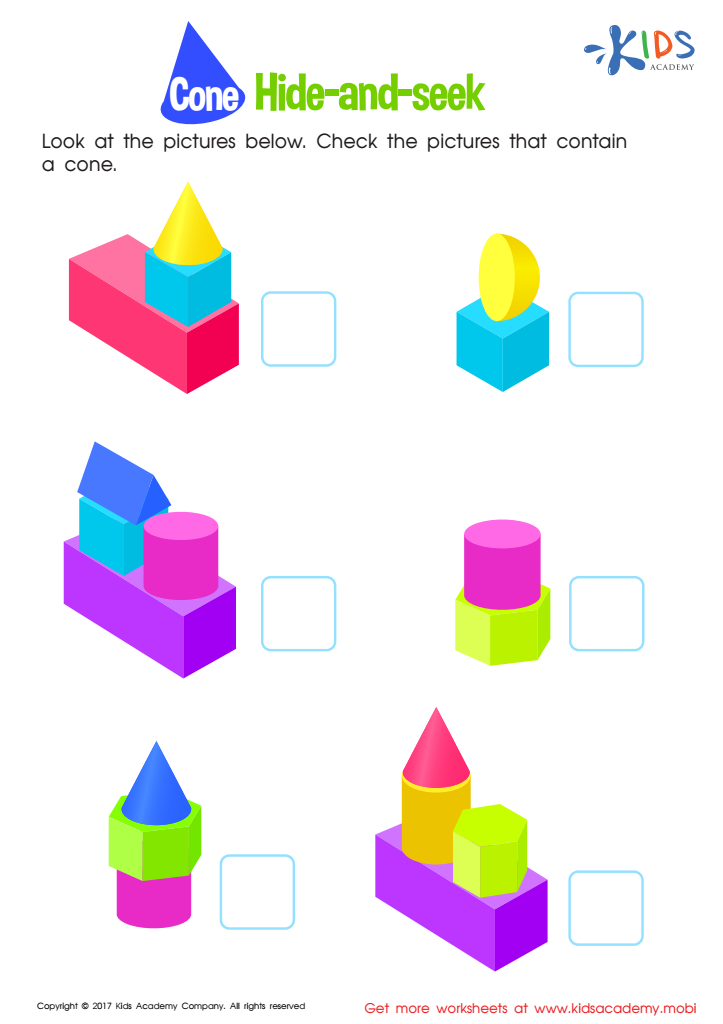
Prior to starting this worksheet, quiz your kid on shapes. If they gave quite a few, you've done well! This pdf will teach them more about cones; show them the pictures in the printout and have them identify which ones contain a cone.
Cone Hide-and-Seek Worksheet
Worksheet
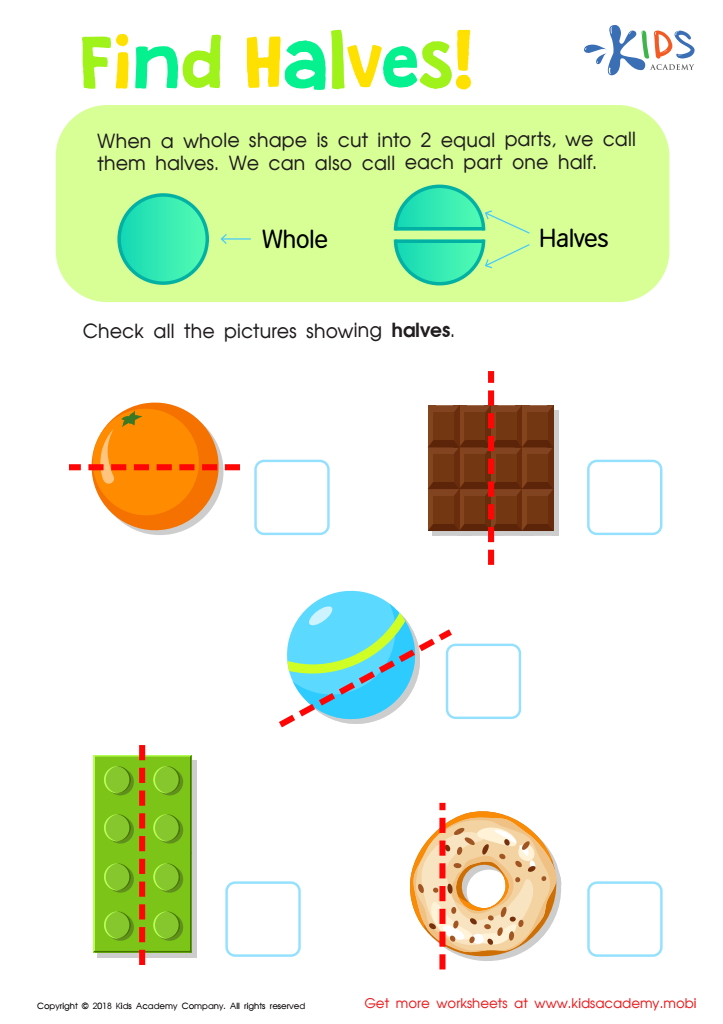
Find Halves Worksheet

Find Halves Worksheet

If your child can tell you what two, three and four equal parts are called, give yourself a pat on the back! If not, this worksheet can help. Halves are two equal parts of a whole shape. Check the pictures in this printable pdf to help your child understand.
Find Halves Worksheet
Worksheet
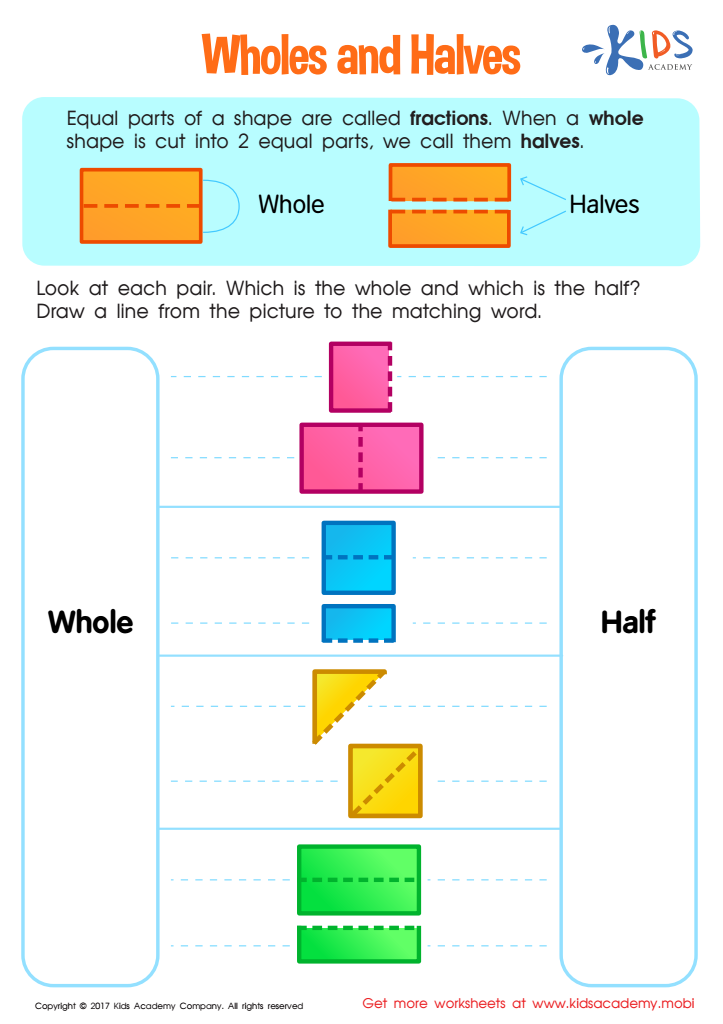
Wholes and Halves Worksheet

Wholes and Halves Worksheet

Students can feel overwhelmed with fractions. Help take the stress off by using a colorful worksheet to explain whole shapes and how to find halves. Ask them to identify the whole and point to the matching word for the half. A free printout can help guide them.
Wholes and Halves Worksheet
Worksheet
Going up or Down? Worksheet

Going up or Down? Worksheet

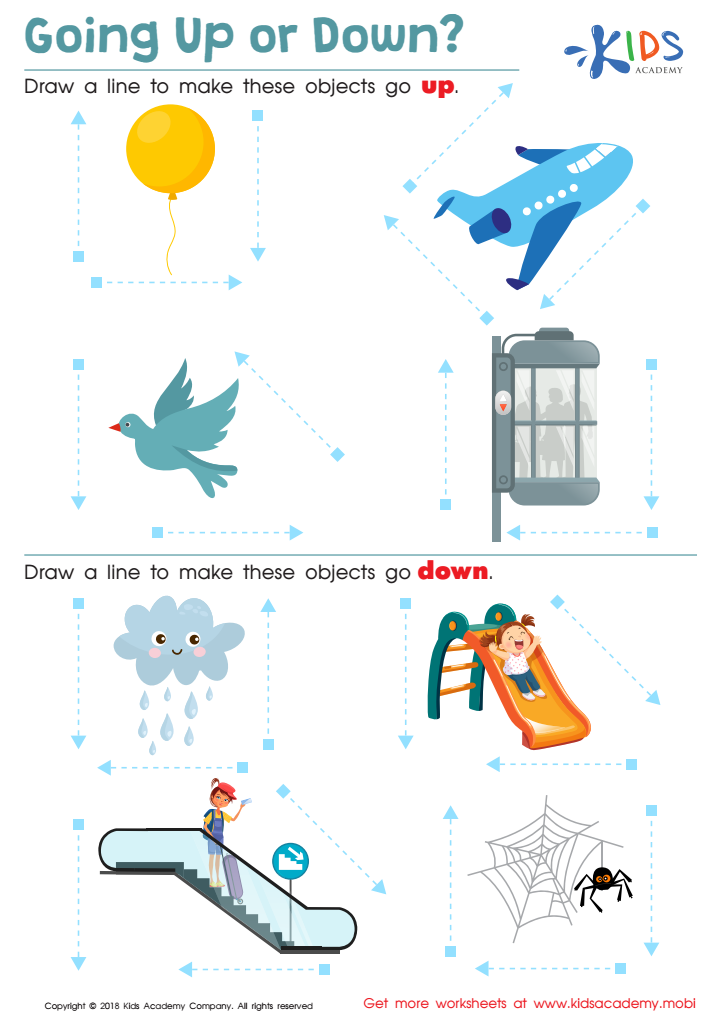
Young students learn the concept of up and down with this geometry worksheet. They trace lines to identify relative positioning as an object travels. Kids can use position words to describe an object's movement, enhancing their spatial relationship skills - an important geometry foundation.
Going up or Down? Worksheet
Worksheet
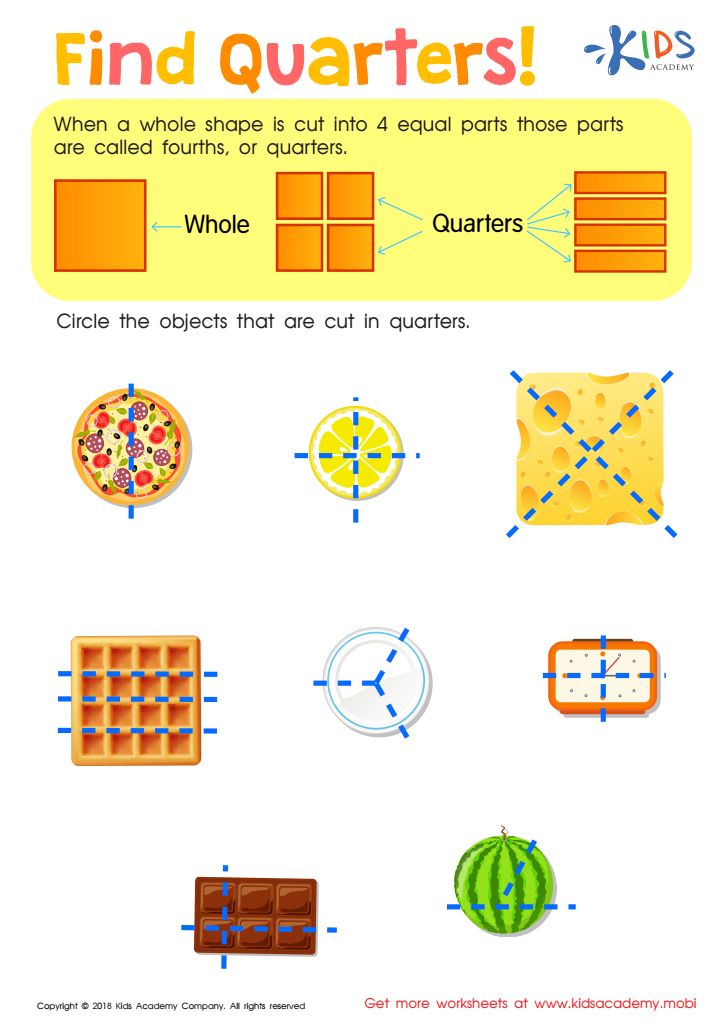
Find Quarters Worksheet

Find Quarters Worksheet

Ask your child if they know what it is called when a shape is cut into two equal parts. If yes, introduce them to quarters. Tell them that when a shape is cut into 4 equal parts, each part is called a quarter. Have them do this exercise by finding and circling objects split into quarters.
Find Quarters Worksheet
Worksheet
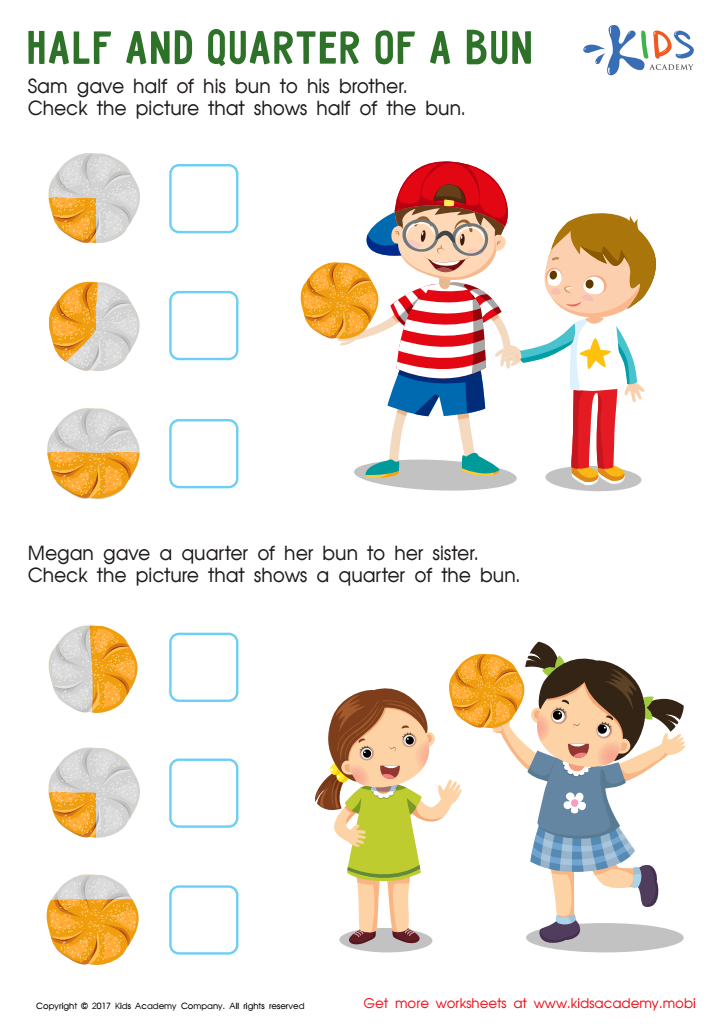
Half and Quarter of a Bun Worksheet

Half and Quarter of a Bun Worksheet

This worksheet introduces Sam, his brother and Megan, her sister, who are sharing buns. Show kids the picture of half and quarter to help them understand. Ask if they know what half and quarter of a shape is before progressing. Help them check the picture showing half and quarter of a bun.
Half and Quarter of a Bun Worksheet
Worksheet
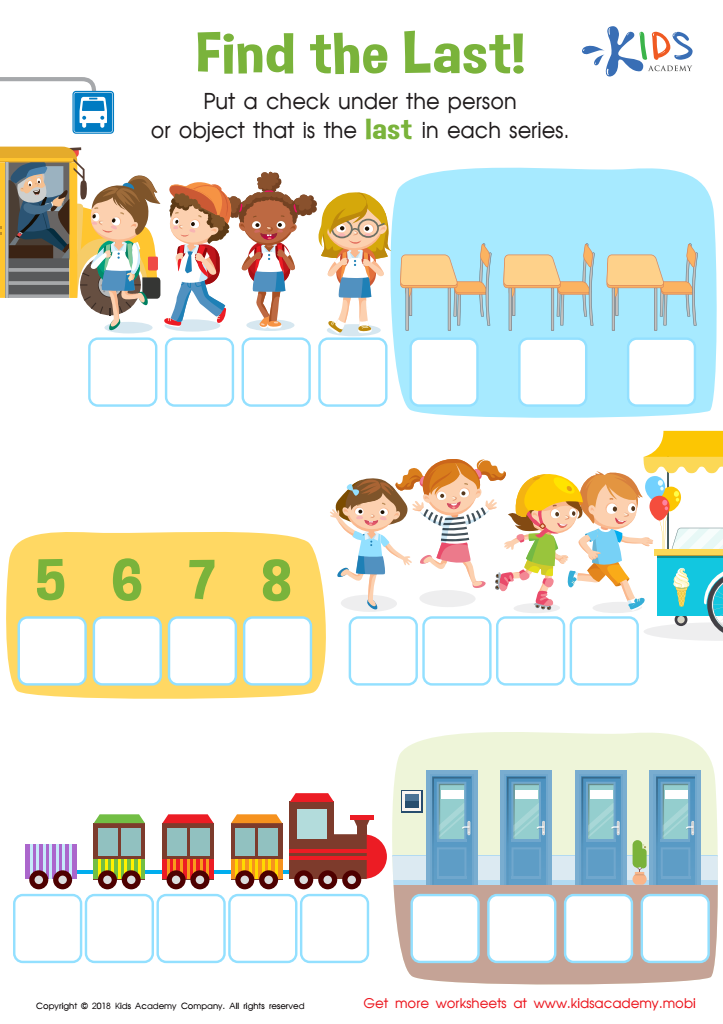
Find the Last! Worksheet

Find the Last! Worksheet

Teach young students about sequence words with this free worksheet. Have them look at sets of people or objects and choose the one that is last. Engage them further by having them describe or act out their day, and what happens last? Enjoy this printout and have fun!
Find the Last! Worksheet
Worksheet
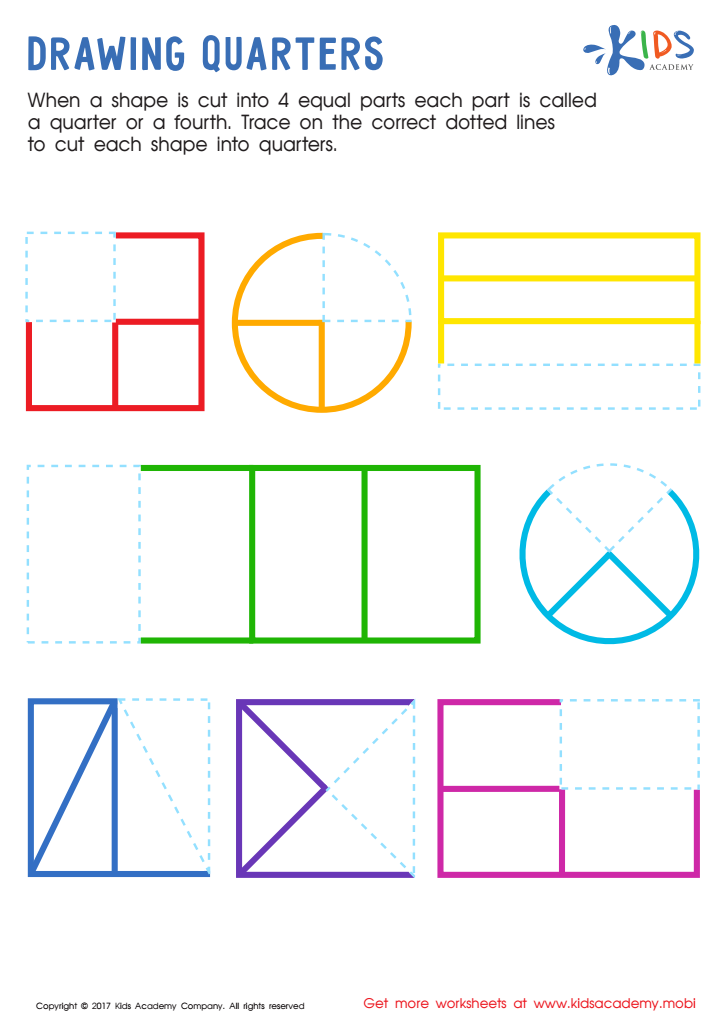
Drawing Quarters Worksheet

Drawing Quarters Worksheet

Help your kids divide shapes into quarters! Have them trace dotted lines to cut each shape into 4 equal parts. Each of the 4 parts is called a quarter or a fourth. This worksheet will help kids learn more about dividing shapes into four equal parts.
Drawing Quarters Worksheet
Worksheet
Shapes: Assessment 1 Worksheet

Shapes: Assessment 1 Worksheet

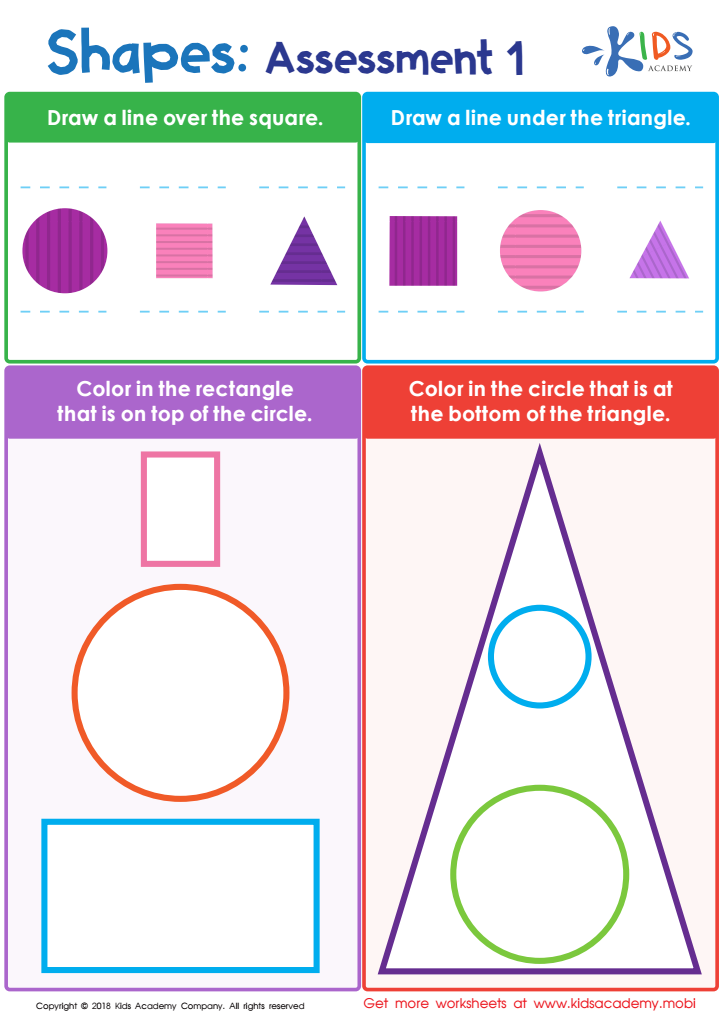
Test your students' understanding of the four basic shapes - circle, square, triangle and rectangle - with this assessment worksheet. Get them to draw a line over or under the shape indicated in the directions to show they can identify it correctly.
Shapes: Assessment 1 Worksheet
Worksheet
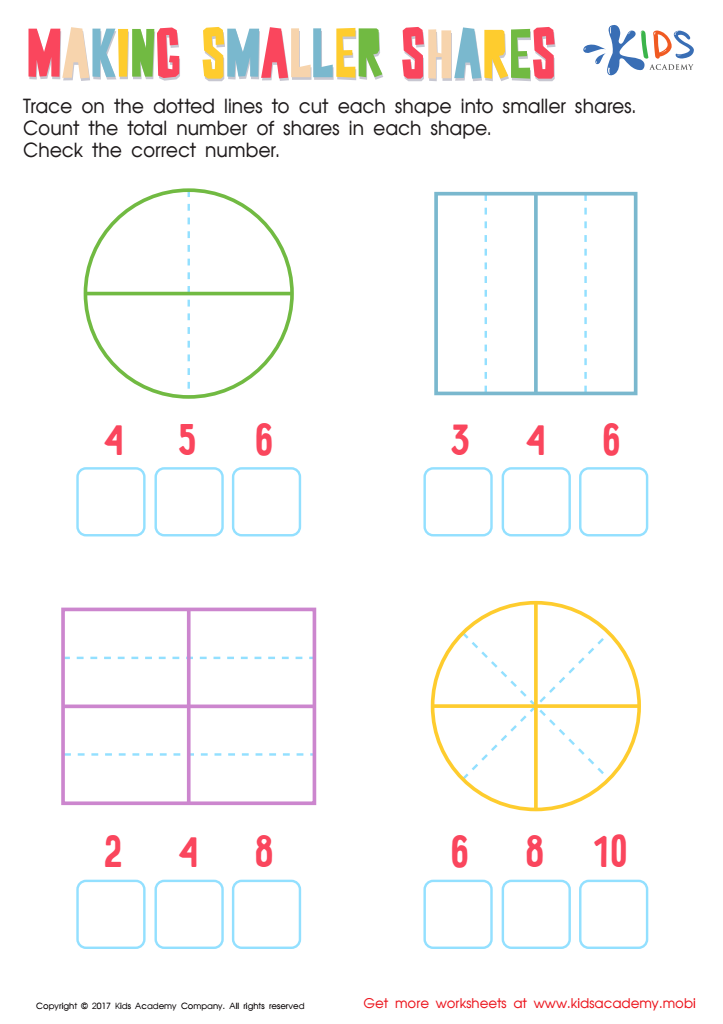
Making Smaller Shares Worksheet

Making Smaller Shares Worksheet

Help your kids learn shapes by having them cut out shapes on this tracing sheet. Point out the dotted lines, then guide their hand as they trace them, breaking shapes into smaller parts. Ask your children to count the number of parts and check the answers given.
Making Smaller Shares Worksheet
Worksheet
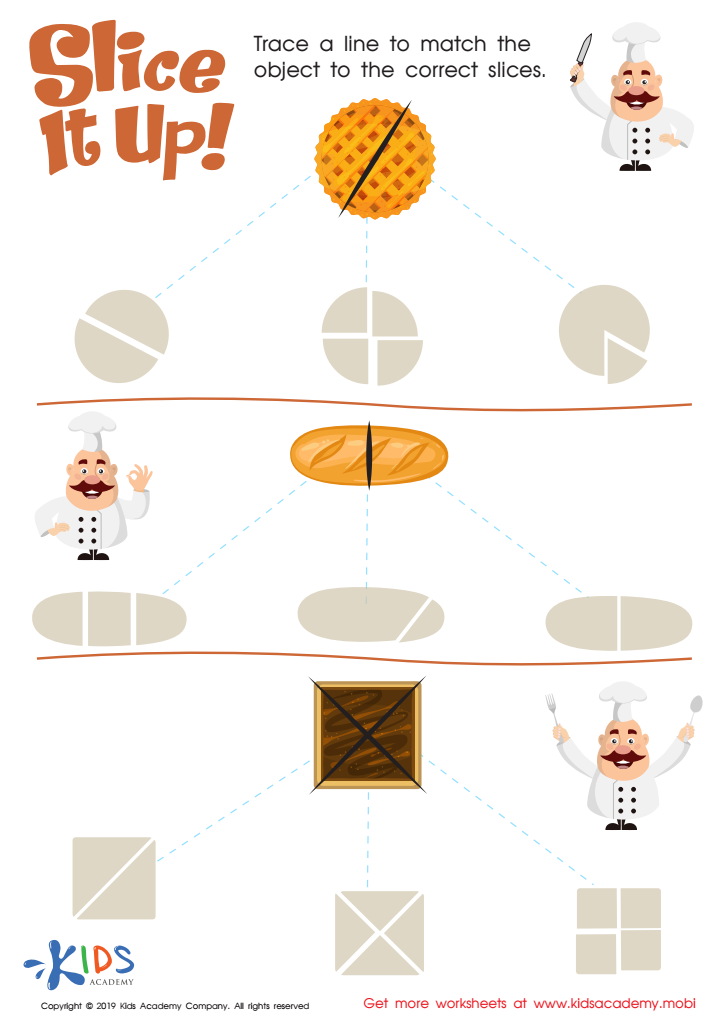
Slice It Up Worksheet

Slice It Up Worksheet

Try this fun math, reading and writing worksheet with your kids! They will love the colorful activities that perfect coordination and tracing. Engaging learning exercises help keep young minds sharp and boost skills. With these worksheets, your kids will be academically ahead of the curve!
Slice It Up Worksheet
Worksheet
Data: Assessment 2 Worksheet


Data: Assessment 2 Worksheet

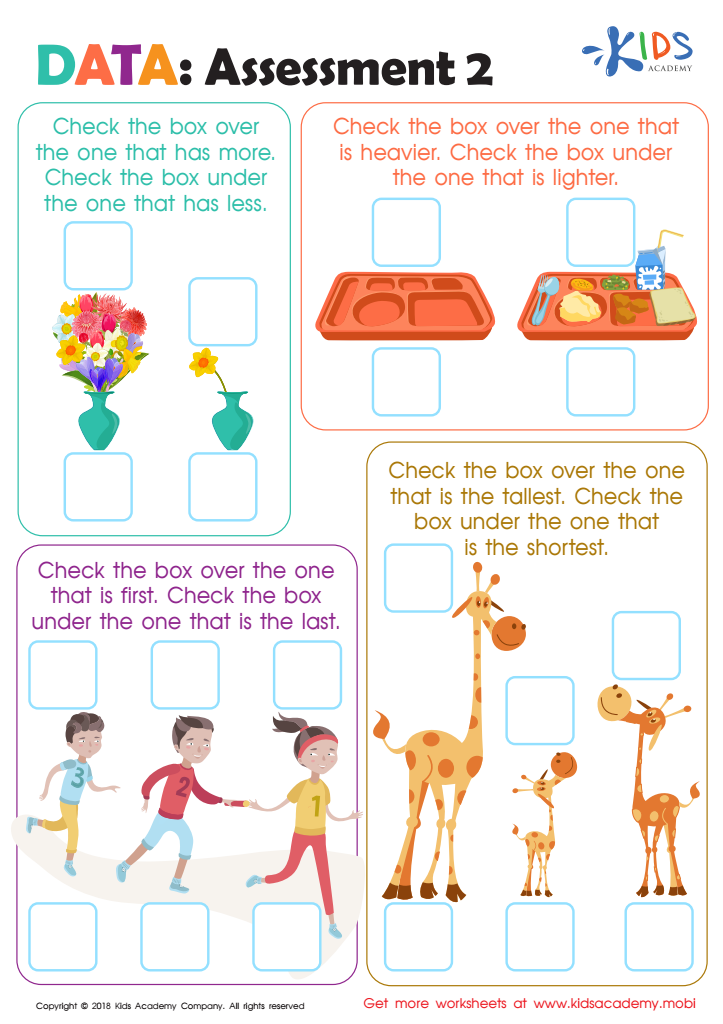
This printable worksheet tests students' understanding of words related to quantity and measurement, such as "more", "less", "heavy", "light", "first", "last", "tall", and "short". It helps children compare and contrast when solving measurement problems. Ideal for math classes, it encourages students to gain the essential skills needed in subjects like math, science, and reading.
Data: Assessment 2 Worksheet
Worksheet


Parents and teachers should prioritize basic math skills in geometry for 6-year-olds because these foundational concepts play a crucial role in children's cognitive development and everyday life. At this age, children are naturally curious about the world around them, and geometric concepts such as shapes, sizes, and spatial relationships are integral to understanding their environment.

By introducing basic geometry, children start to recognize and categorize different shapes like squares, circles, and triangles, enhancing their visual discernment. This knowledge is not only vital for future math studies but also supports skills in problem-solving, critical thinking, and logical reasoning. Engaging with geometry in a hands-on way—through building blocks, art, and puzzles—instills a sense of exploration and creativity within a mathematical context.

Additionally, basic geometry sets the stage for more advanced mathematics and subjects, promoting confidence in students as they progress through their education. For parents and teachers, fostering these skills cultivates a positive attitude toward learning mathematics, reducing anxiety often associated with the subject later in life. Investing in early geometry education ensures that children develop a strong foundation that will empower them academically and in real-life situations.