
Color recognition Geometry Worksheets for 6-Year-Olds
3 filtered results
Difficulty Level
Grade
Age
-
From - To
Subject
Activity
Standards
Unlock your child's creativity and cognitive skills with our engaging Color Recognition Geometry Worksheets designed specifically for 6-year-olds. These worksheets combine essential geometry concepts with vibrant colors, making learning an enjoyable experience. Kids will explore shapes, classify objects, and develop their color identification skills through fun activities and interactive exercises. Promote critical thinking as your young learners distinguish between different shapes and colors while honing their fine motor skills. Perfect for home or classroom use, our worksheets provide endless opportunities for exploration and discovery. Download our Color Recognition Geometry Worksheets today and inspire a love for learning!
Favorites
With answer key
Interactive
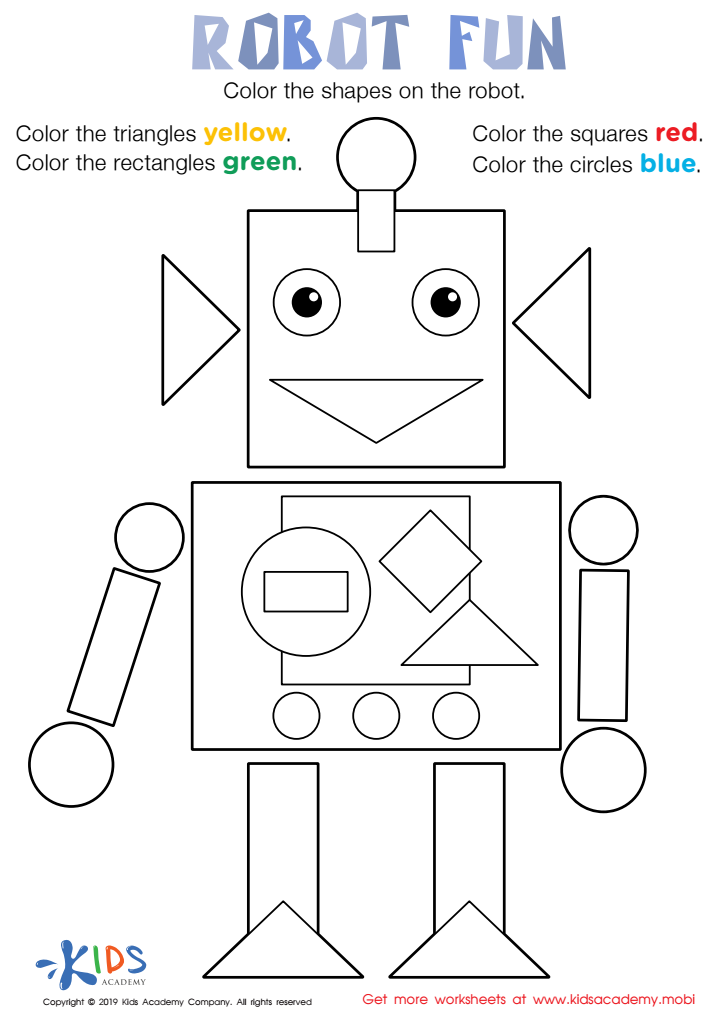
Robot Fun Worksheet
Help your child learn about basic shapes with this fun robot worksheet! Kids practice identifying circles, squares, rectangles and triangles, then color each shape according to directions. Make math practice enjoyable with this coloring page that teaches all four basic shapes - it's an important math skill!
Download (PDF)
 Assign to My Students
Assign to My Students
Robot Fun Worksheet
Worksheet











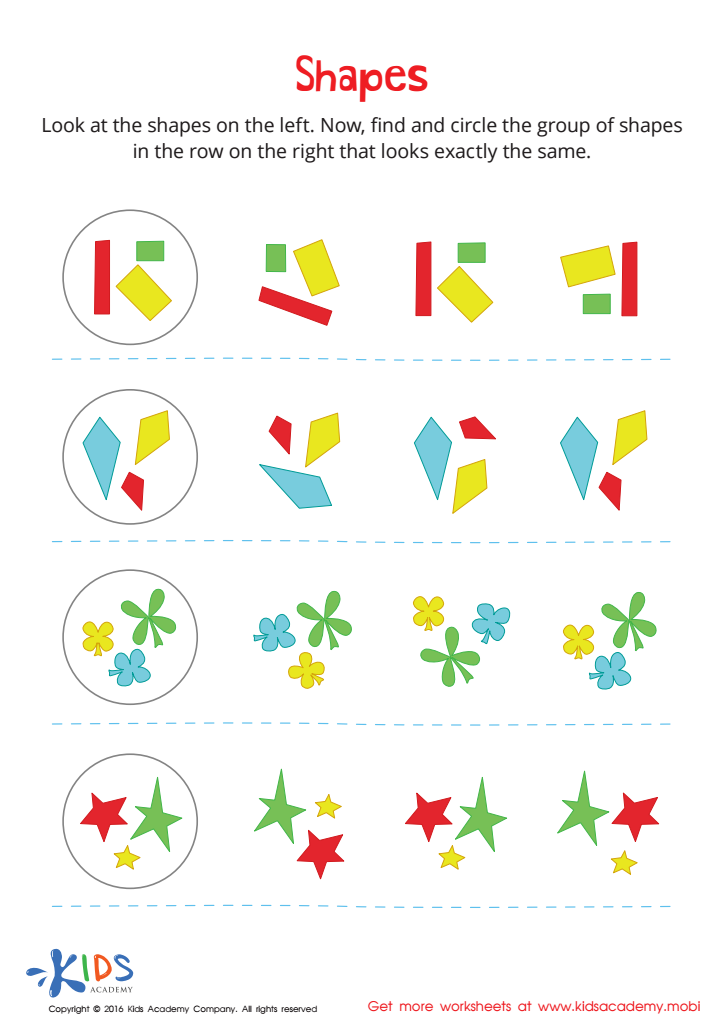
Shapes Worksheet
This fun worksheet will challenge your child to recognize tricky patterns, sort through similar ones, and create strategies to get the right answer. It'll also help them to strengthen problem-solving skills and build confidence. With more challenging tasks, your child will be ready to tackle higher level math and sequencing skills.
Shapes Worksheet
Worksheet
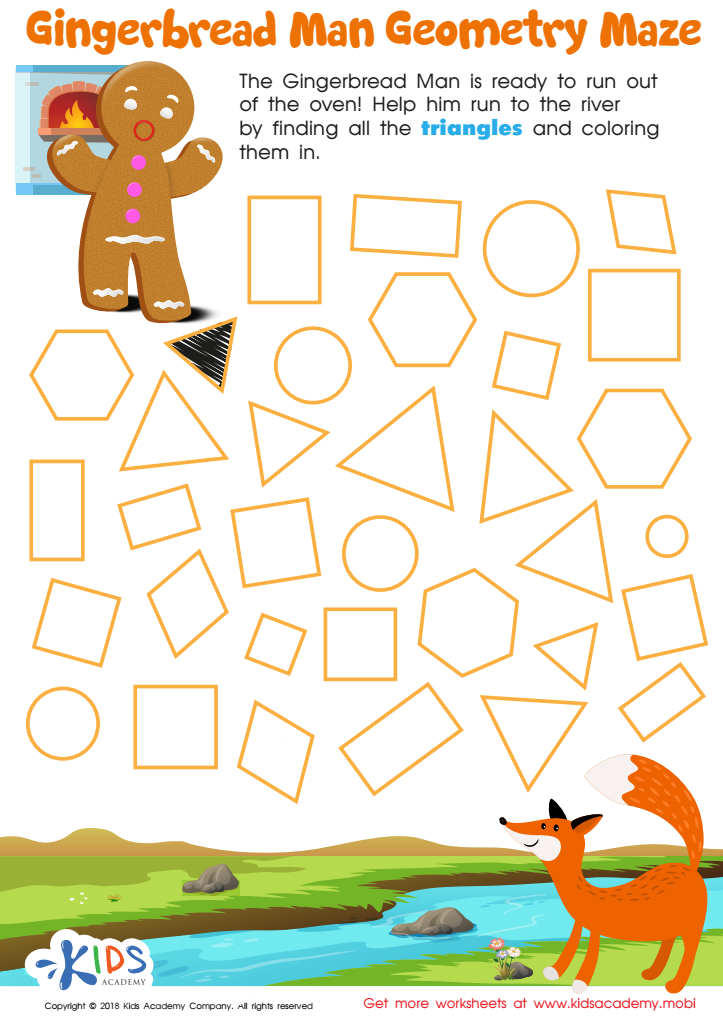
Gingerbread Man Geometry Maze Worksheet
Help a beloved character escape the oven! Kids race through a sea of geometrical shapes, searching for triangles of various sizes. With this free worksheet, they can have fun while learning about similarity of geometrical shapes concepts. Run, run, run as fast as they can!
Gingerbread Man Geometry Maze Worksheet
Worksheet
Join Kids Academy for Free
Who is primarily going to use this learning content?








Color recognition and geometry are fundamental aspects of early childhood education that serve as building blocks for a child’s cognitive and social development. For 6-year-olds, understanding colors and geometric shapes enhances their ability to recognize patterns, which is crucial for problem-solving and critical thinking skills.
Fostering color recognition not only enriches a child's vocabulary and communication but also encourages creativity and self-expression through art and play. Recognizing and naming colors can help children make sense of the world around them and allows them to categorize and analyze their experiences.
Similarly, geometry introduces children to spatial awareness, shapes, and the concept of size and dimension. Recognizing shapes like circles, squares, and triangles aids in developing logical thinking and can be applied in real-life situations, such as identifying objects, understanding directions, and even participating in basic construction activities.
Moreover, blending color recognition with geometry can create a dynamic and engaging learning environment, sparking children's interest in science, technology, engineering, and mathematics (STEM) fields. By prioritizing these skills, parents and teachers lay a solid foundation for lifelong learning, allowing children to thrive academically and socially as they progress in their education.








