Counting practice Geometry Worksheets for 6-Year-Olds
5 filtered results
-
From - To
Discover our captivating "Counting Practice Geometry Worksheets for 6-Year-Olds" designed to ignite a love for math in young learners. These worksheets effortlessly blend fundamental counting skills with exciting geometric shapes, providing a comprehensive and engaging learning experience. Ideal for helping children distinguish and count various shapes, they enhance spatial awareness, critical thinking, and early math proficiency. Perfect for classroom use or at-home practice, our worksheets are thoughtfully crafted to align with educational standards, ensuring a fun and productive way for children to strengthen their counting and geometric skills. Foster mathematical confidence and success with our innovative resources!
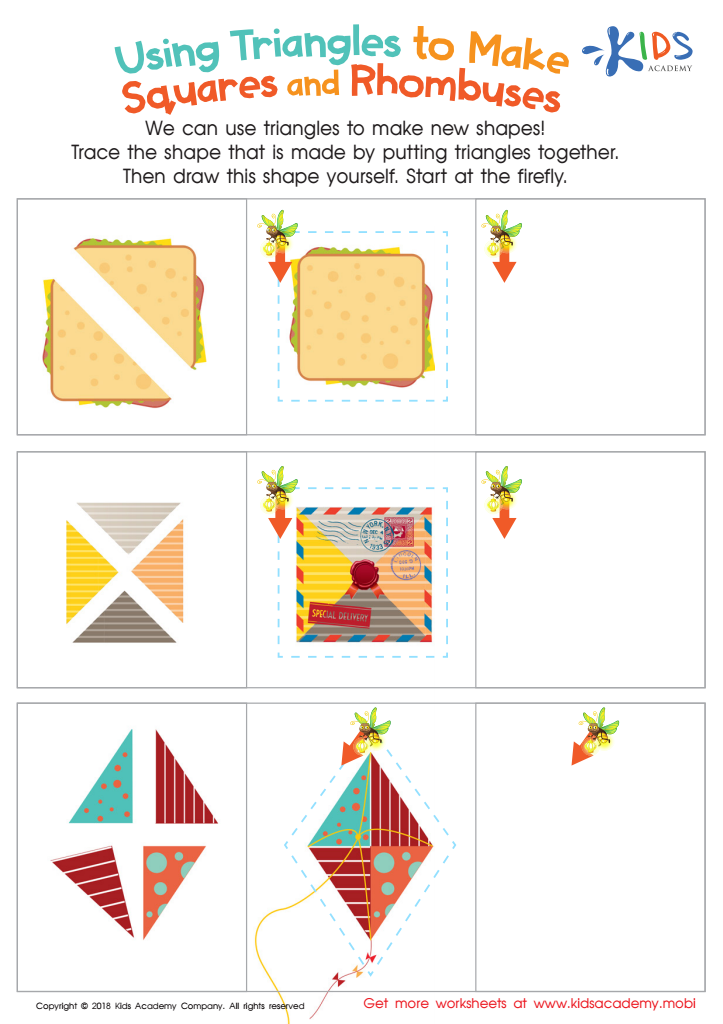
Using Triangles to Make Squares and Rhombuses Worksheet











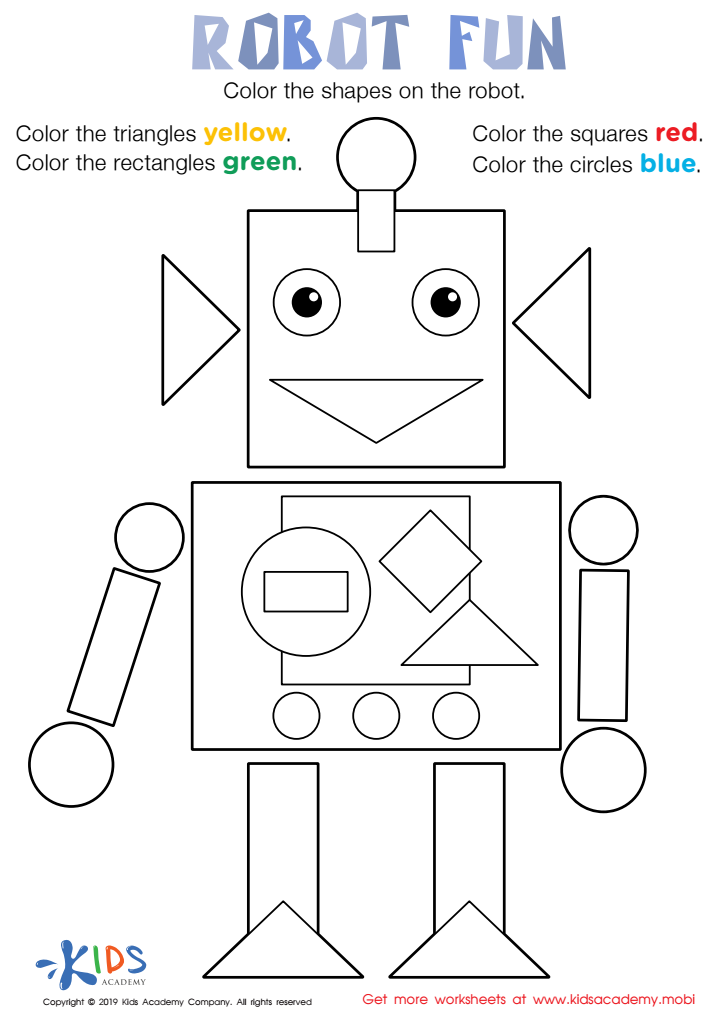
Robot Fun Worksheet
 Assign to My Students
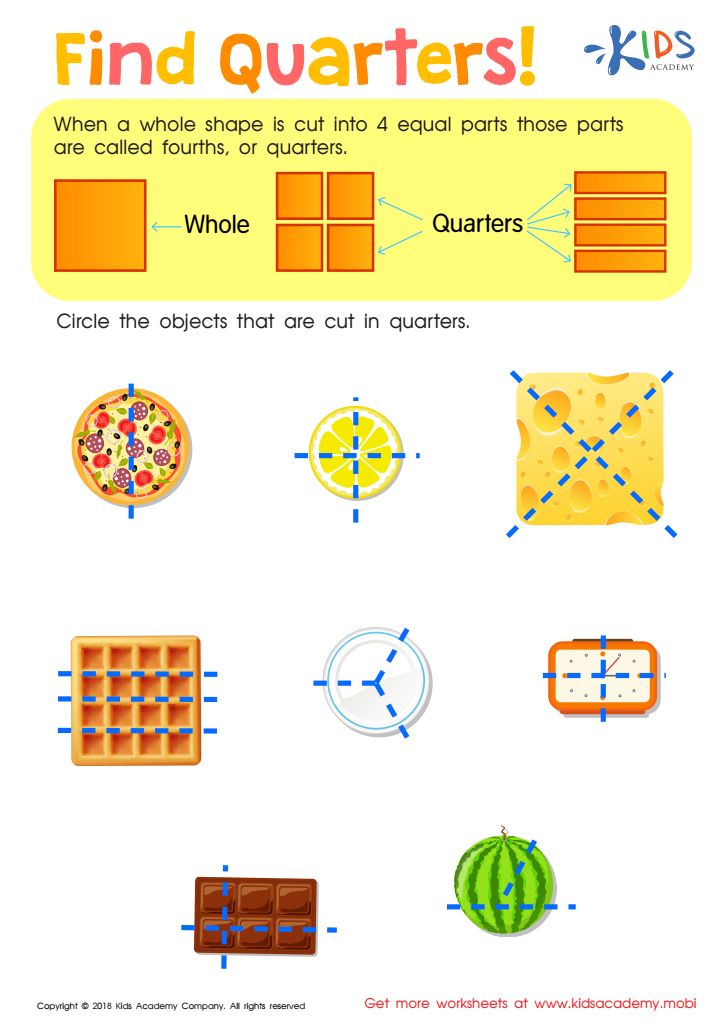
Find Quarters Worksheet
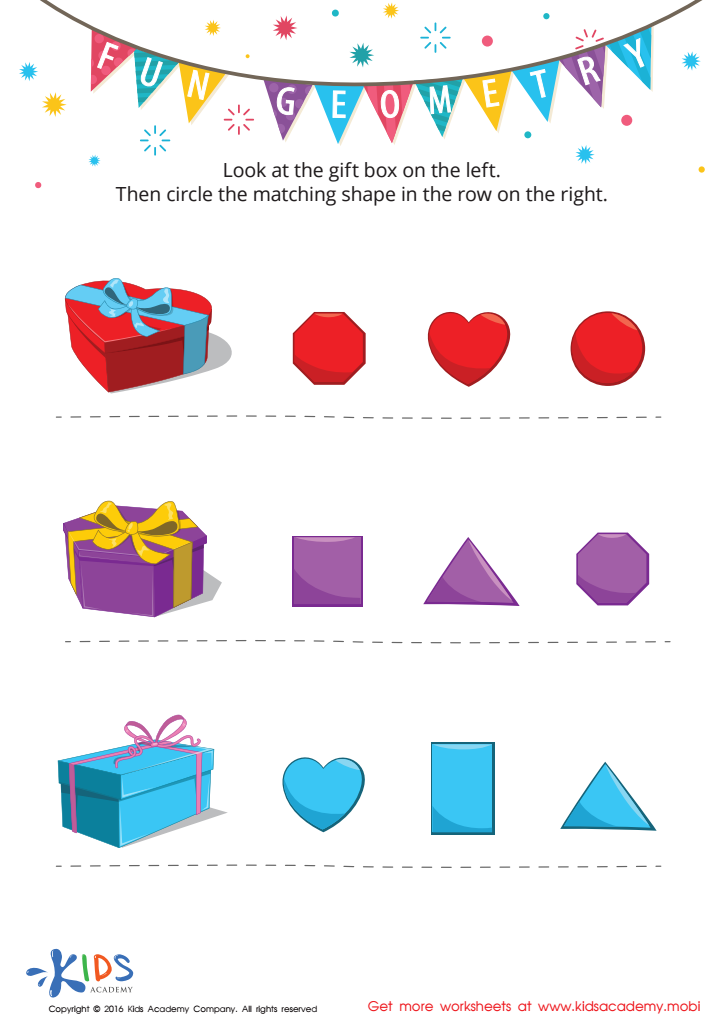
Fun Geometry Worksheet
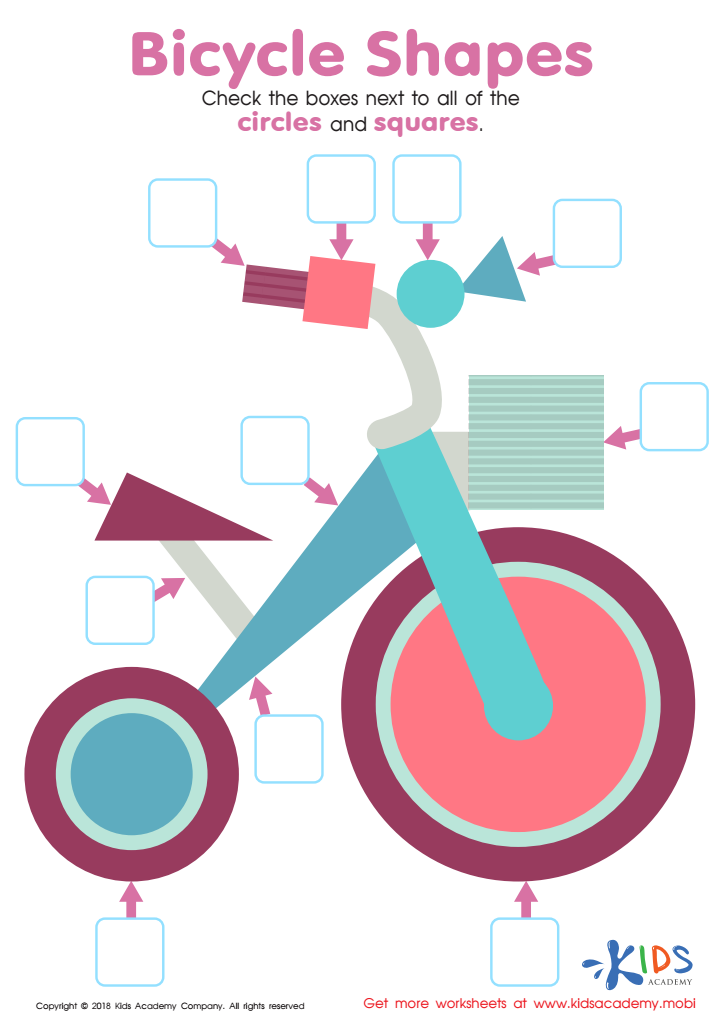
Bicycle Shapes Worksheet








Counting practice and learning the basics of geometry are crucial building blocks in a 6-year-old child's education. Parents and teachers should care about it for several key reasons. Firstly, counting enhances a child's numerical fluency and lays the foundation for advanced math skills, fostering confidence in everyday tasks, such as telling time or understanding money.
Moreover, geometry sparks spatial reasoning and visual perception. By learning shapes, kids begin to recognize and name their attributes, which are critical skills in problem-solving and logical thinking. Recognizing geometric shapes and their properties also ties into other subjects, such as science and art, promoting interdisciplinary learning and creativity.
Importantly, early practice in these areas helps detect and address learning difficulties. Early interventions can significantly improve academic outcomes. Activities involving counting and shapes serve double duty: they're engaging and educational, making learning fun and allowing parents and teachers to bond with children over productive sessions.
In an age where careers increasingly demand strong STEM skills, teaching children early sets a valuable precedent. By investing time in counting and geometry, teachers and parents cultivate a lifetime of curiosity, analytical skills, and the foundational knowledge that supports future academic and professional success.








