Differentiating shapes Geometry Worksheets for 6-Year-Olds
3 filtered results
-
From - To
Enhance your child's understanding of shapes with our engaging Differentiating Shapes Geometry Worksheets designed specifically for 6-year-olds! These printable resources feature fun activities that help kids identify, compare, and categorize various geometric shapes. Our worksheets support early math skills and promote visual recognition, making learning enjoyable and effective. Each activity is tailored to suit young learners, encouraging them to explore the world of geometry through vibrant illustrations and easy-to-follow instructions. Help your child build a solid foundation in math while fostering creativity and critical thinking. Start their geometric journey today with our interactive worksheets!
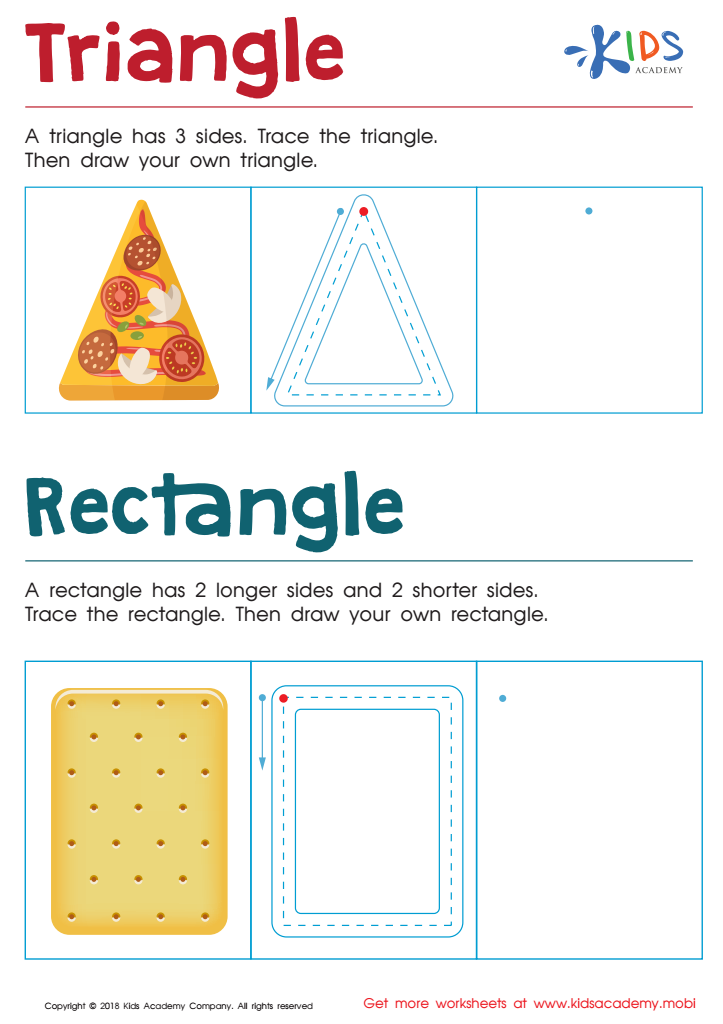
Triangle Rectangle Worksheet
 Assign to My Students











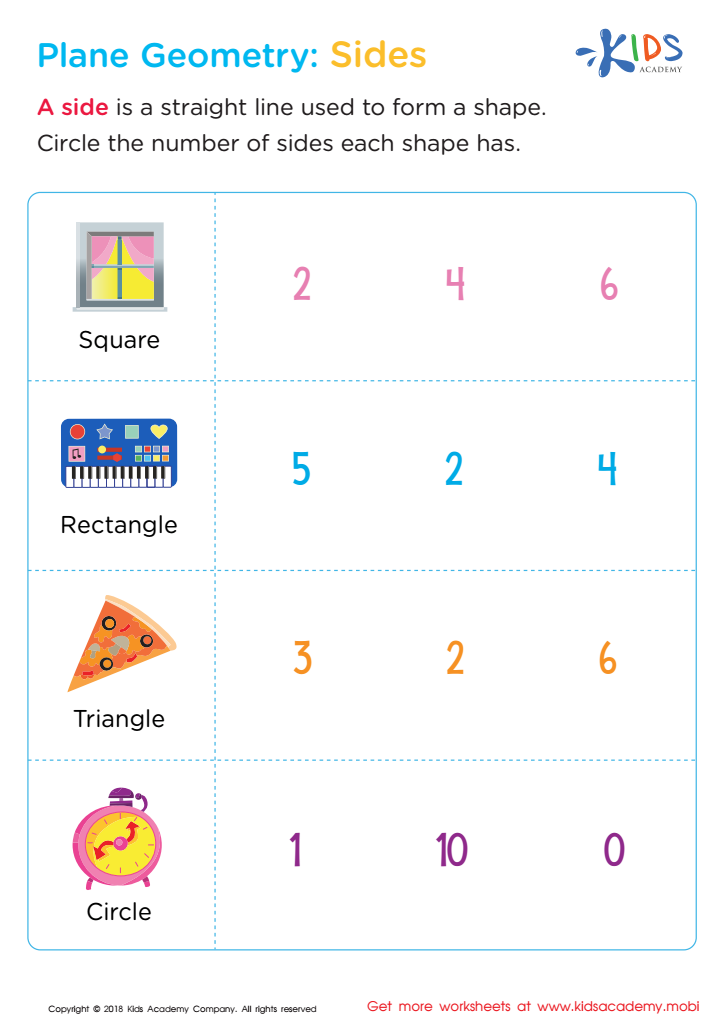
Plane Geometry: Sides Worksheet
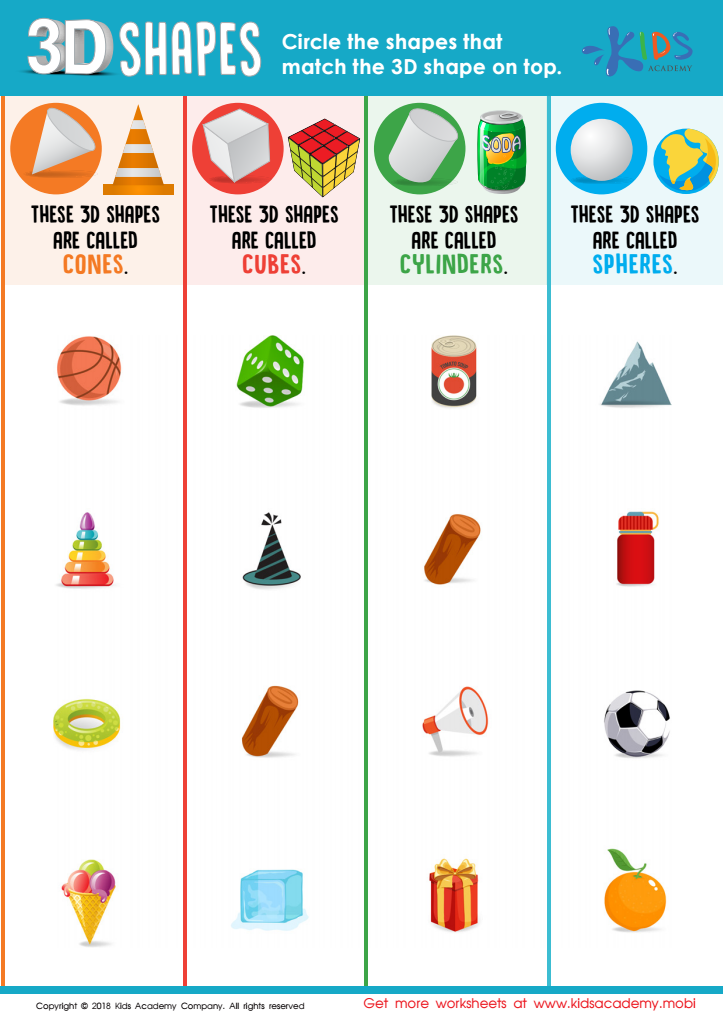
3D Shapes Worksheet








Differentiating shapes in geometry is crucial for six-year-olds because it lays the foundation for their spatial awareness and problem-solving skills. At this age, children are naturally curious and eager to explore their world, making it the perfect time to introduce varying shapes. Understanding different shapes enhances a child's cognitive development, aiding in their ability to categorize, compare, and contrast objects.
Moreover, recognizing shapes helps children in various subjects beyond math. For instance, it supports literacy development when they see shapes in letters and understand how they form words. Differentiating shapes also plays a vital role in developing fine motor skills, as children engage in activities like drawing, sorting, and crafting.
Parents and teachers should care about this differentiation because it not only fosters a love for learning but also equips children with essential skills for future academic success. Engaging children in hands-on learning and interactive experiences with shapes can promote critical thinking and creativity. Additionally, these foundational skills can improve their confidence and enthusiasm as they tackle more complex concepts in the future. By emphasizing shape differentiation, adults can help instill a strong mathematical foundation during these formative years.








