Visual Learning Geometry Worksheets for 6-Year-Olds
4 filtered results
-
From - To
Explore a vibrant collection of Visual Learning Geometry Worksheets designed specifically for 6-year-olds! These engaging worksheets help young learners develop essential geometric skills through fun visuals and interactive activities. Children will enjoy exploring shapes, understanding spatial relationships, and enhancing their reasoning abilities while connecting geometry to the world around them. Perfect for classrooms or at-home learning, our visually stimulating resources cater to various learning styles, making math both accessible and enjoyable. Foster a love for geometry in your child by incorporating our easy-to-use worksheets today and watch their confidence and skills flourish! Download now to inspire your little mathematician!
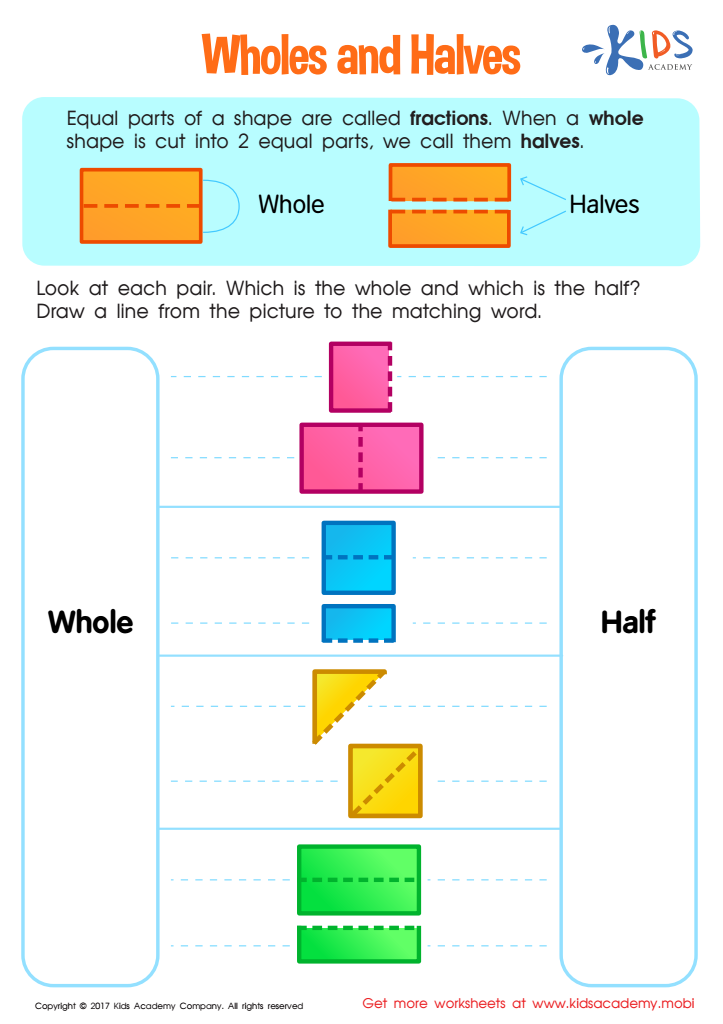
Wholes and Halves Worksheet
 Assign to My Students











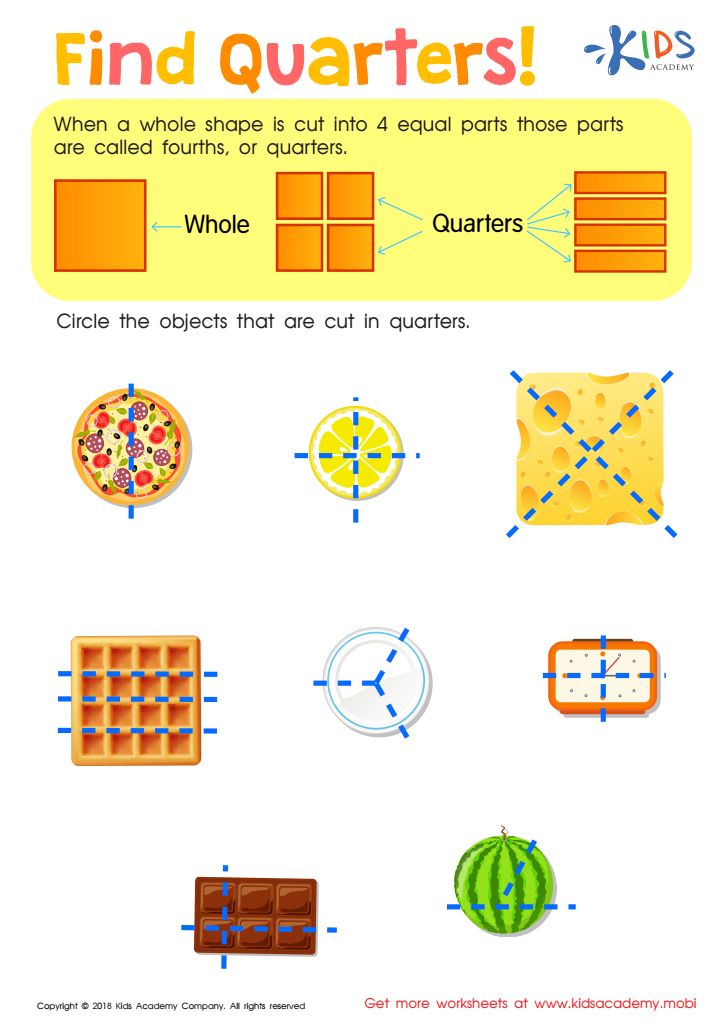
Find Quarters Worksheet
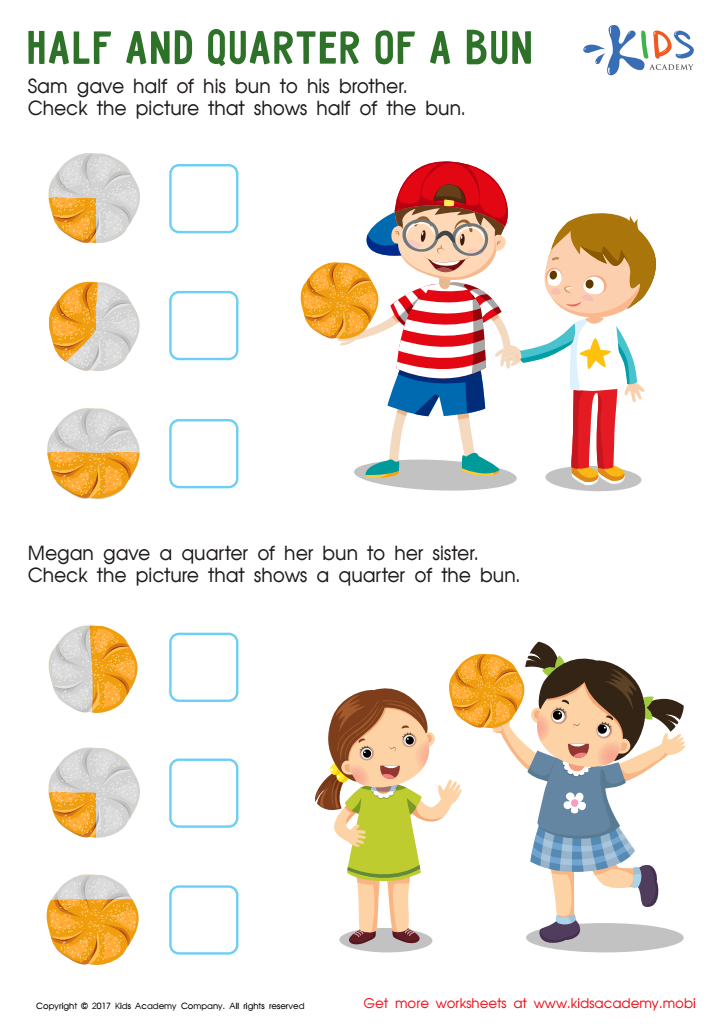
Half and Quarter of a Bun Worksheet
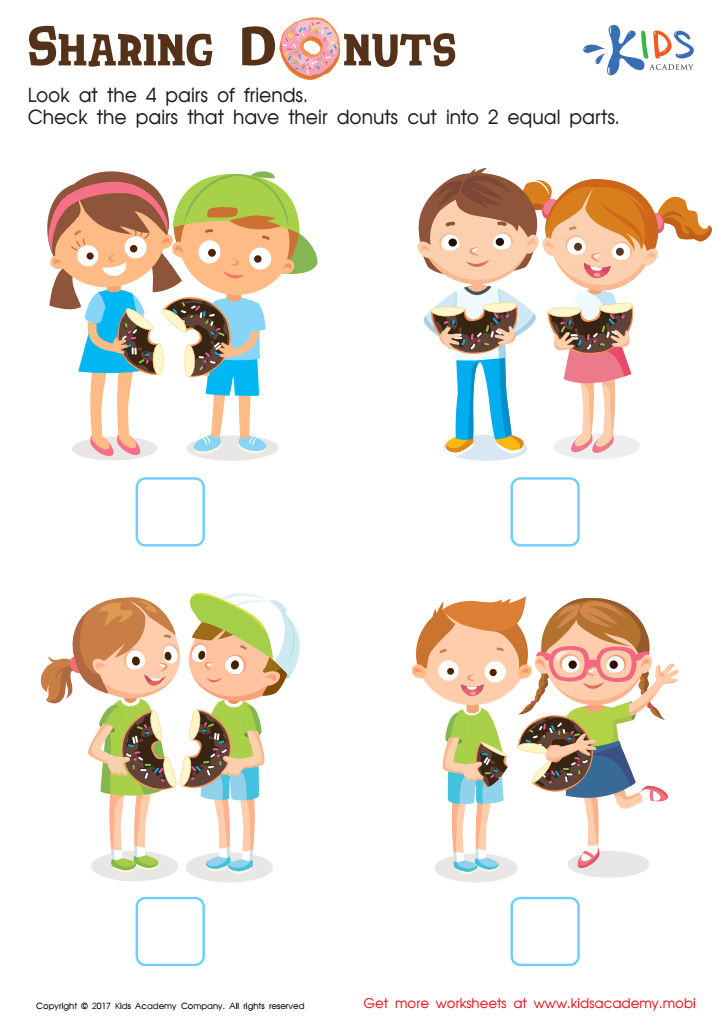
Sharing Donuts Worksheet








Parents and teachers should prioritize Visual Learning Geometry for 6-year-olds because it lays a foundational understanding of spatial relationships, shapes, and patterns that are essential for cognitive development. At this age, children are naturally curious and tend to think visually, making it an ideal time to introduce geometric concepts through engaging and hands-on activities.
Visual learning helps children to recognize and categorize different shapes, which can enhance their critical thinking and problem-solving skills. By incorporating activities such as drawing, building with blocks, or using interactive games, children can explore geometric principles in a fun and meaningful way. This approach caters to various learning styles and keeps young learners engaged, fostering a positive attitude towards mathematics.
Moreover, early exposure to visual geometry can support later academic performance. Understanding geometric concepts can enhance skills in more complex areas such as algebra and geometry in later grades. Additionally, it lays the groundwork for important skills in everyday life, from understanding basic architecture to navigating through their environments.
In essence, focusing on Visual Learning Geometry enriches a child's education, fostering not only mathematical skills but also creativity and analytical thinking that will benefit them throughout their academic journeys and everyday life challenges.








