
Number identification Numbers Worksheets for 6-Year-Olds
5 filtered results
Difficulty Level
Grade
Age
-
From - To
Subject
Activity
Standards
Discover our engaging Number Identification Worksheets designed specifically for 6-year-olds! These interactive resources help young learners master number recognition and counting skills in a fun and effective way. Each worksheet features vibrant illustrations and exciting activities that captivate children's attention while reinforcing foundational math concepts. With a focus on numbers 1-20, students will identify, trace, and compare numerals, boosting their confidence and comprehension. Ideal for both classroom and home use, our worksheets also support early math learning by blending educational content with enjoyable tasks. Start your child's number journey today with our delightful and educational worksheets!
Favorites
With answer key
Interactive
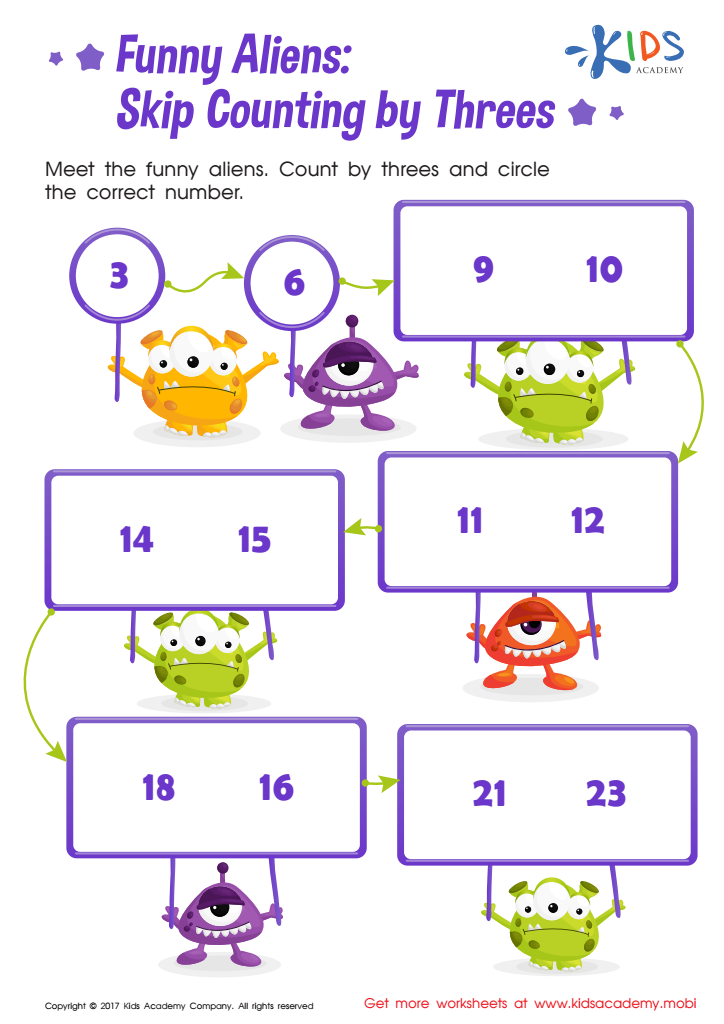
Skip Counting by 3s: Funny Aliens Printable
Blast off to outer space learning fun with this skip counting by 3 worksheet!
 Assign to My Students
Skip Counting by 3s: Funny Aliens Printable
Worksheet
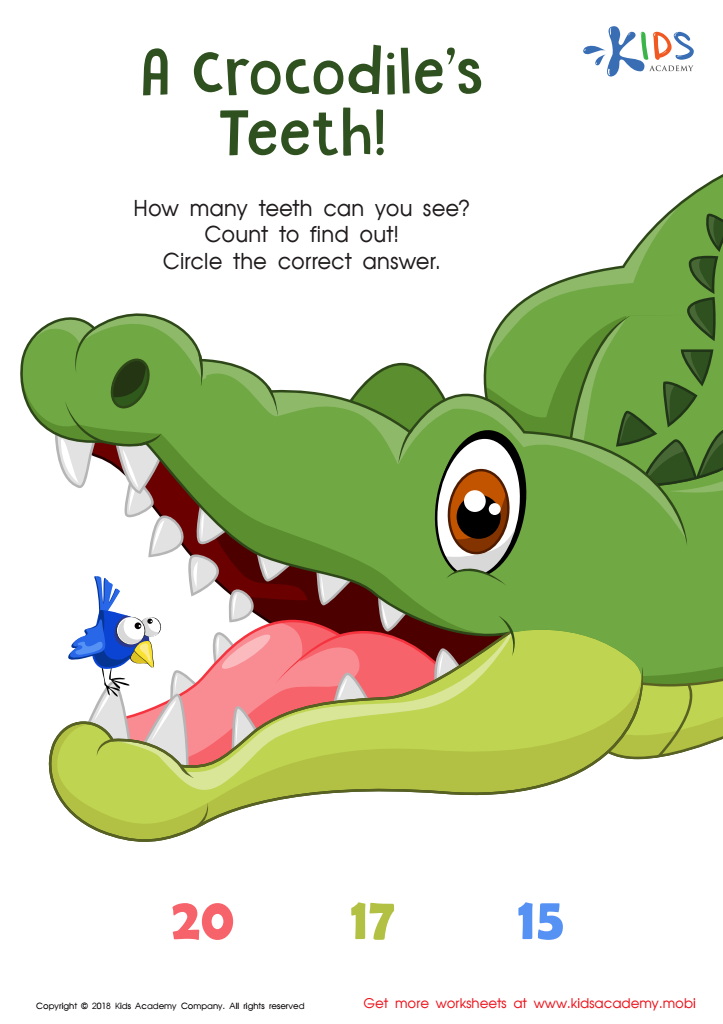
A Crocodile's Teeth Worksheet
Show your child the animal image and ask them to identify it. If they watch animal shows, they'll likely be interested. Count the teeth together, then look at the options and help them circle the right one.
A Crocodile's Teeth Worksheet
Worksheet
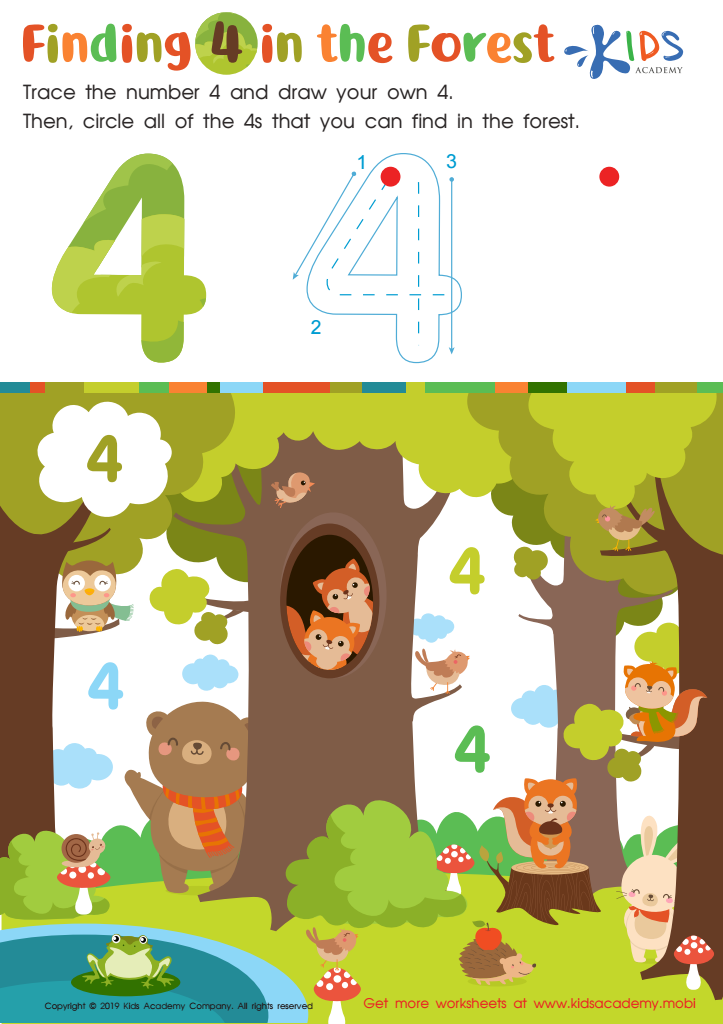
Finding 4 in the Forest Worksheet
Before starting, have your kids count as high as they can. Ask them to identify the setting and point out the 4s. Trace 4 and draw your own. Help your kids circle all the 4s they can find in the forest. How far can they count? How well did they find the hidden 4s?
Finding 4 in the Forest Worksheet
Worksheet
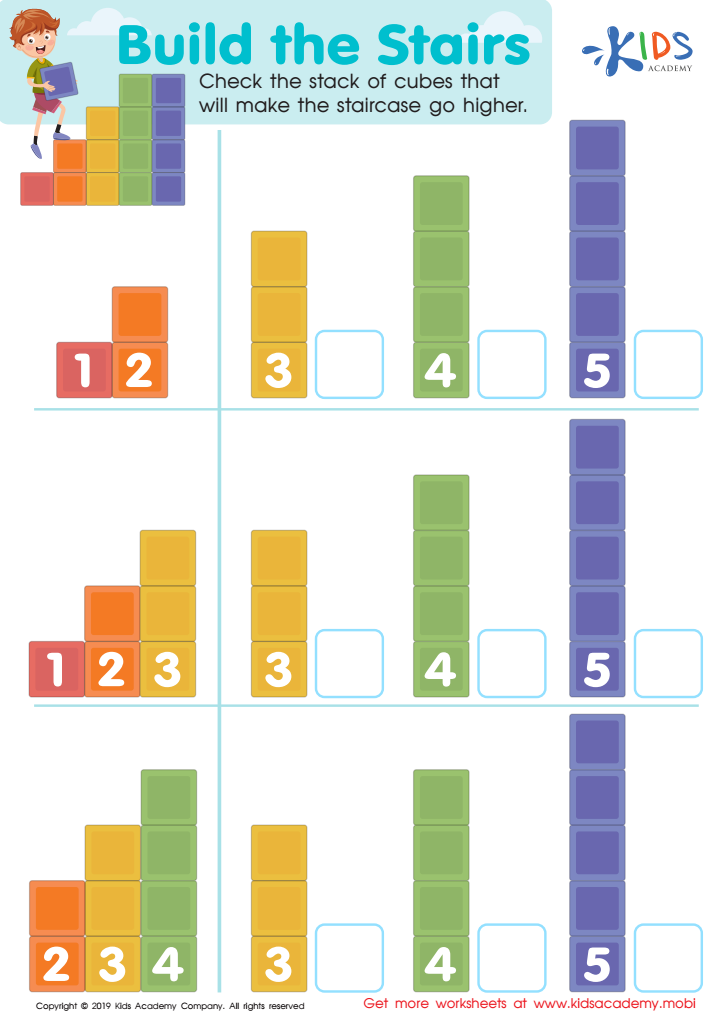
Build the Stairs Worksheet
Does your kid need help counting numbers? Make it fun with a staircase math worksheet! This printable PDF uses stairs to help your preschooler practice counting. Let them build the staircase by picking the next highest number as they go up! It's an interactive way to teach counting and sure to please your little one.
Build the Stairs Worksheet
Worksheet
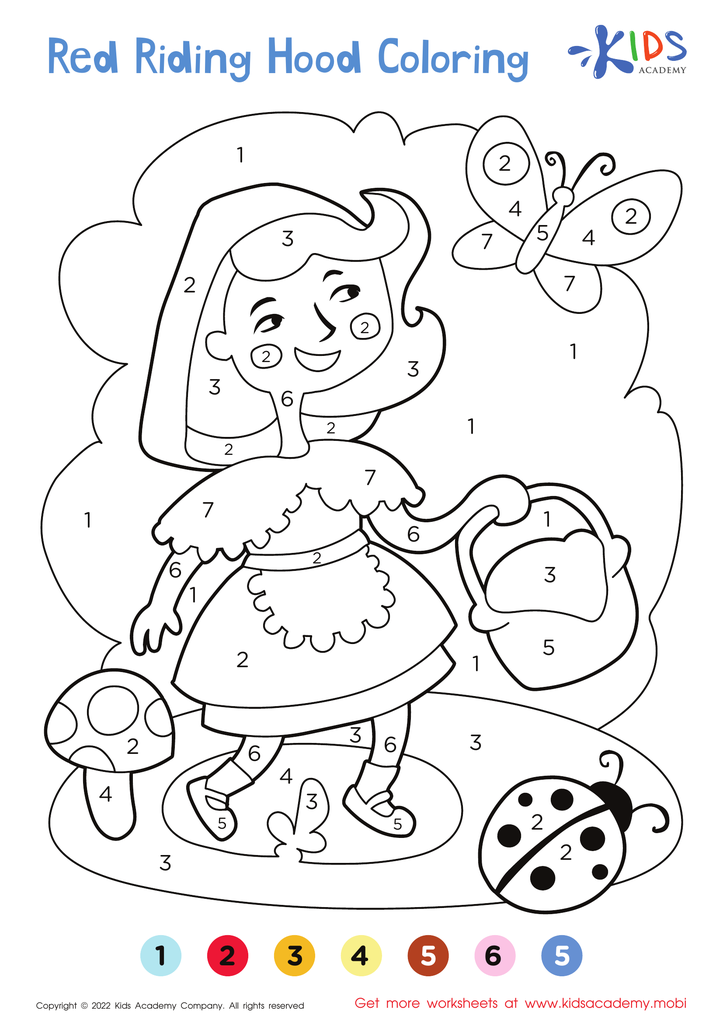
Little Red Riding Hood – Coloring by Numbers
Download this free PDF page and enjoy coloring Little Red Riding Hood. It's an easy and fun activity that everyone can do - just follow the numbers! Get your colored pencils ready and have a blast. 80 words.
Little Red Riding Hood – Coloring by Numbers
Worksheet
Join Kids Academy for Free
Who is primarily going to use this learning content?








Number identification is a fundamental skill for 6-year-olds that lays the groundwork for future mathematical learning. Parents and teachers should prioritize this skill for several reasons. First, number identification helps young learners recognize and understand quantities, which is essential for everyday tasks like counting objects, telling time, or managing money. Mastery of number recognition enhances cognitive development as children begin to connect numbers with their meanings and uses.
Moreover, number identification serves as a springboard for more complex mathematical concepts, including addition and subtraction. When children easily recognize numbers, they can progress to problem-solving and critical thinking at a much quicker pace. This skill also promotes confidence in math, reducing anxiety as they advance through their education.
Additionally, number skills are directly linked to a child’s overall academic performance. Early proficiency in this area can lead to success in standardized tests and broader educational achievements. It fosters a love for learning and the encouragement needed to tackle challenges later on.
Finally, by involving parents and teachers in nurturing number identification, a collaborative approach is created—encouraging children to view math positively, as a fun and approachable subject. Fostering these skills sets children up for a successful academic journey.








