Understanding quantity Numbers Worksheets for 6-Year-Olds
4 filtered results
-
From - To
Unlock your child's mathematical potential with our "Understanding Quantity Numbers Worksheets" designed specifically for 6-year-olds. These engaging worksheets focus on helping kids grasp the concept of quantity through fun activities, visuals, and interactive tasks. Children will learn to recognize and compare different quantities, enhancing their number sense and foundational math skills. With a variety of exercises tailored to diverse learning styles, these worksheets ensure an enjoyable learning experience. Perfect for educators and parents alike, our resources make math accessible and fun, setting the stage for confidence in future arithmetic. Explore our collection today and watch your child thrive!
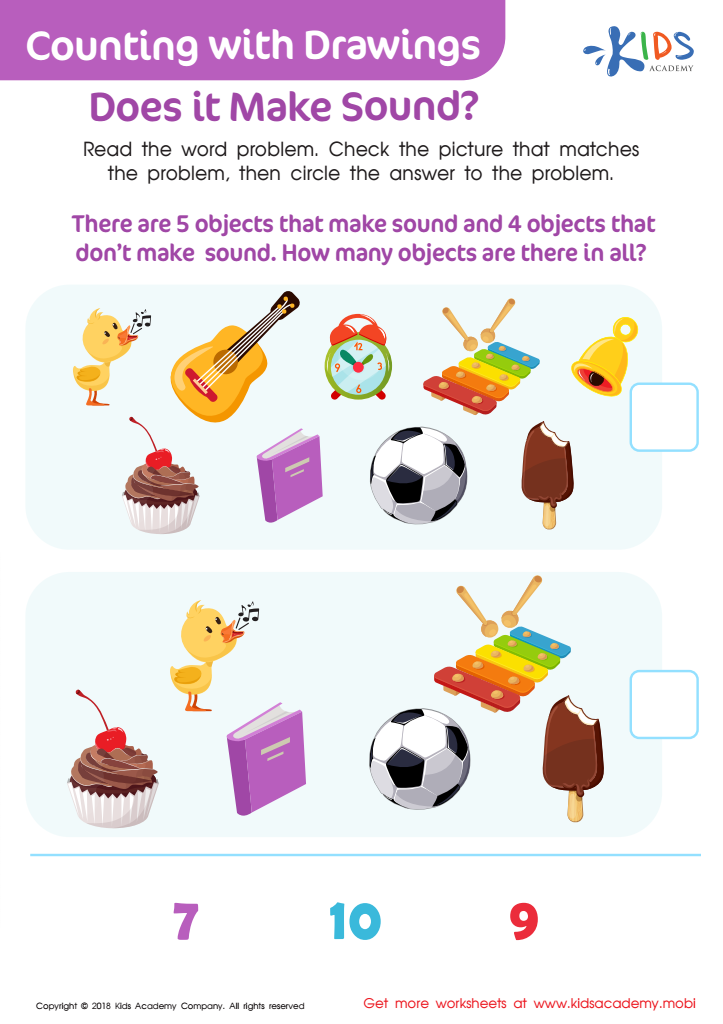
Counting With Drawings. Does It Make Sound? Worksheet
 Assign to My Students
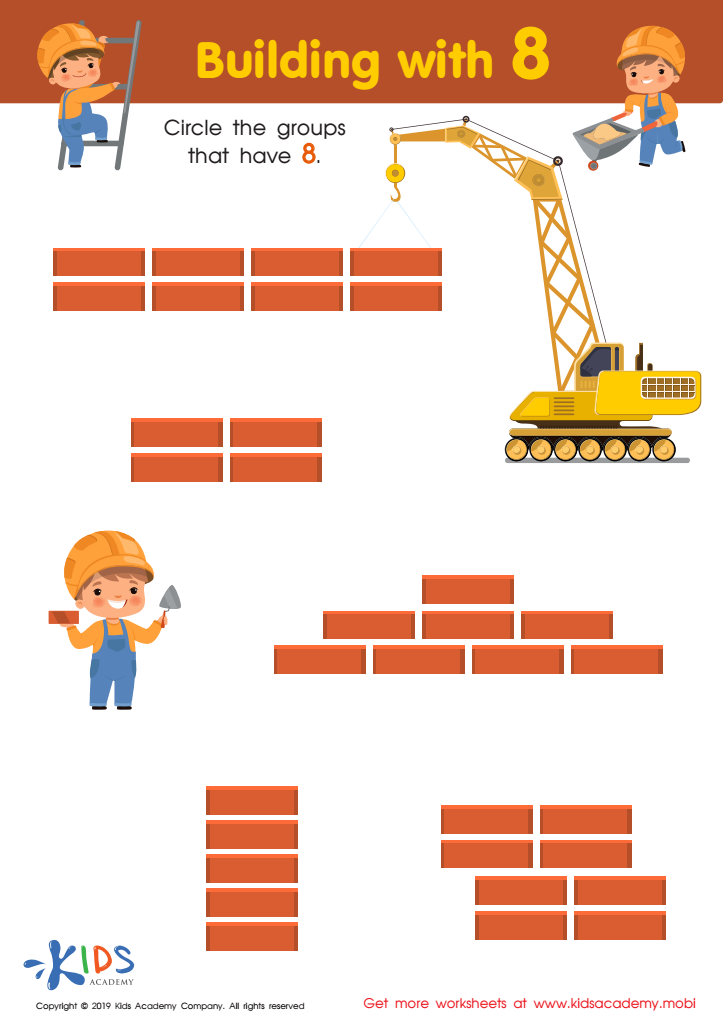
Building with 8 Worksheet
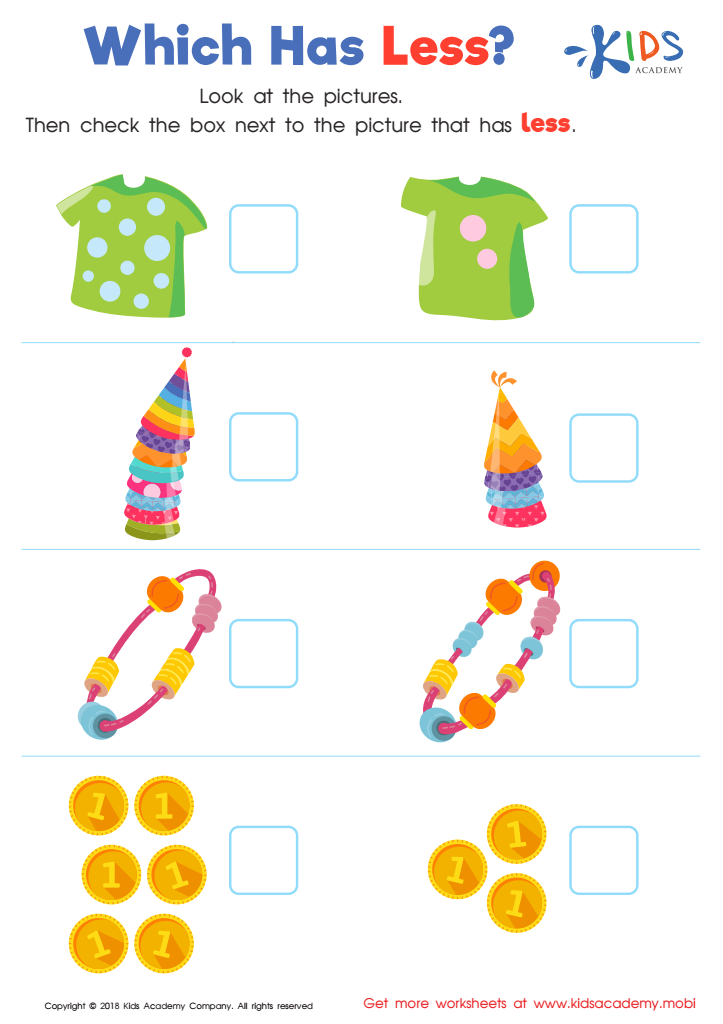
Which Has Less? Worksheet
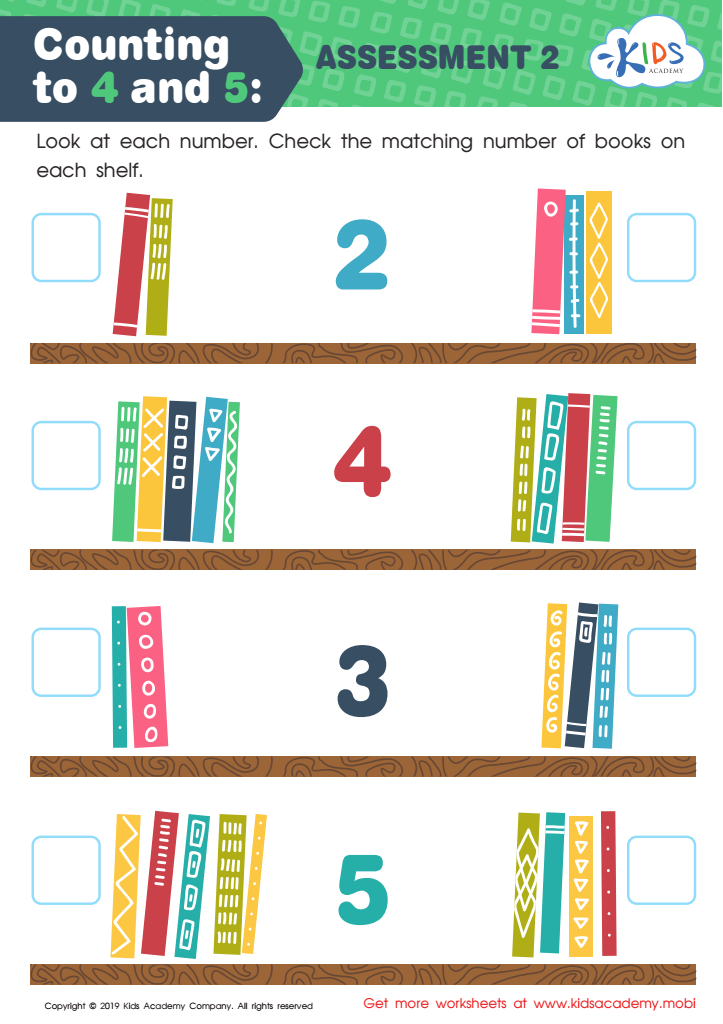
Counting to 4 and 5: Assessment 2 Worksheet








Understanding quantity numbers is crucial for the cognitive and mathematical development of 6-year-olds, and it greatly impacts their overall learning journey. At this age, children are beginning to develop foundational skills in math, which serve as building blocks for future knowledge. Recognizing and understanding quantities allows them to make sense of the world around them, fostering critical thinking and problem-solving abilities.
When parents and teachers emphasize the importance of quantity numbers, they help children draw connections between math concepts and real-life situations. For example, understanding quantities is essential for simple tasks such as counting objects, measuring ingredients while cooking, or sharing snacks among friends. This knowledge enhances their ability to engage in meaningful discussions involving numerical concepts, bolstering their confidence in mathematics.
Moreover, early comprehension of quantity numbers can reduce math anxiety, encouraging a positive attitude toward learning in general. Providing children with playful, engaging experiences such as counting games or hands-on activities nurtures their interest and reinforces these essential skills. Ultimately, a solid understanding of quantity numbers will equip 6-year-olds with the tools they need for future academic success and everyday tasks, making it a priority for both parents and teachers.








