
Basic Counting Math Worksheets for 6-Year-Olds
3 filtered results
Difficulty Level
Grade
Age
-
From - To
Subject
Activity
Standards
Discover our engaging Basic Counting Math Worksheets designed specifically for 6-year-olds! These worksheets provide a fun and interactive way for young learners to master essential counting skills, from counting objects to understanding numbers. Perfect for at-home learning or classroom activities, our resources feature colorful visuals and activities that capture children's interest and promote active participation. Each worksheet progressively builds on counting concepts, ensuring that children gain confidence in their mathematical understanding. Help your child develop a strong foundation in math with our expertly crafted worksheets, tailored to meet the developmental needs of 6-year-olds. Start counting and learning today!
Favorites
With answer key
Interactive
 Assign to My Students
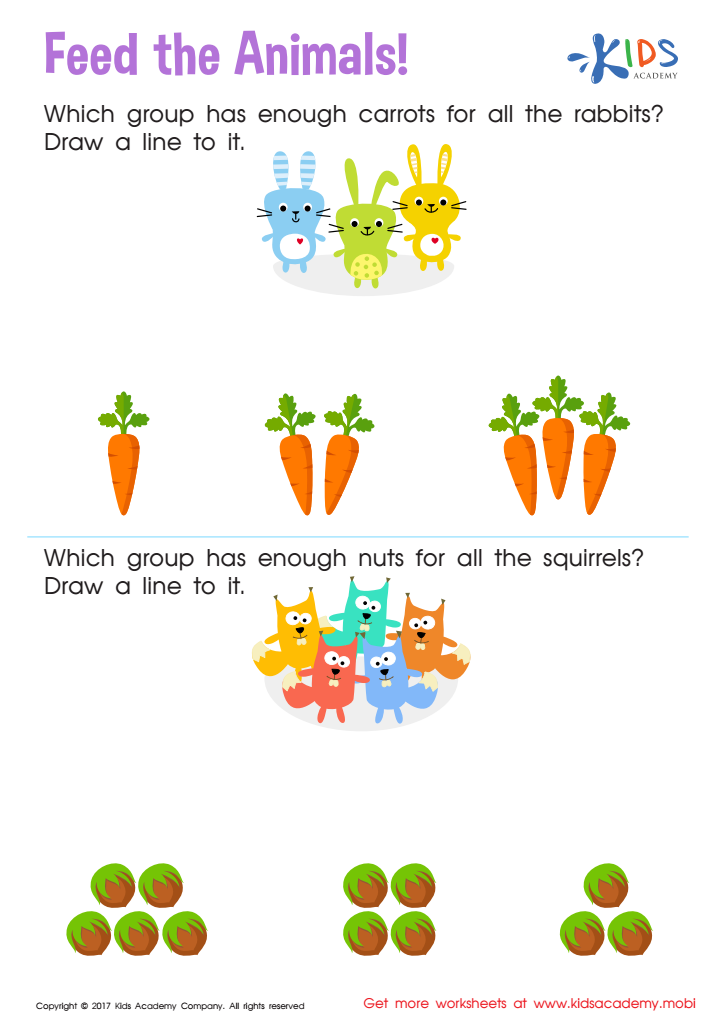
Count and Match: Feed the Animals Worksheet
Learning and growing involves more than just numbers, phonics and comparison. This Feed the Animals worksheet helps kids to exercise their reasoning skills. They must work out how many rabbits and carrots there are, and then repeat the process for the squirrels. This encourages problem solving and counting skills.
Count and Match: Feed the Animals Worksheet
Worksheet
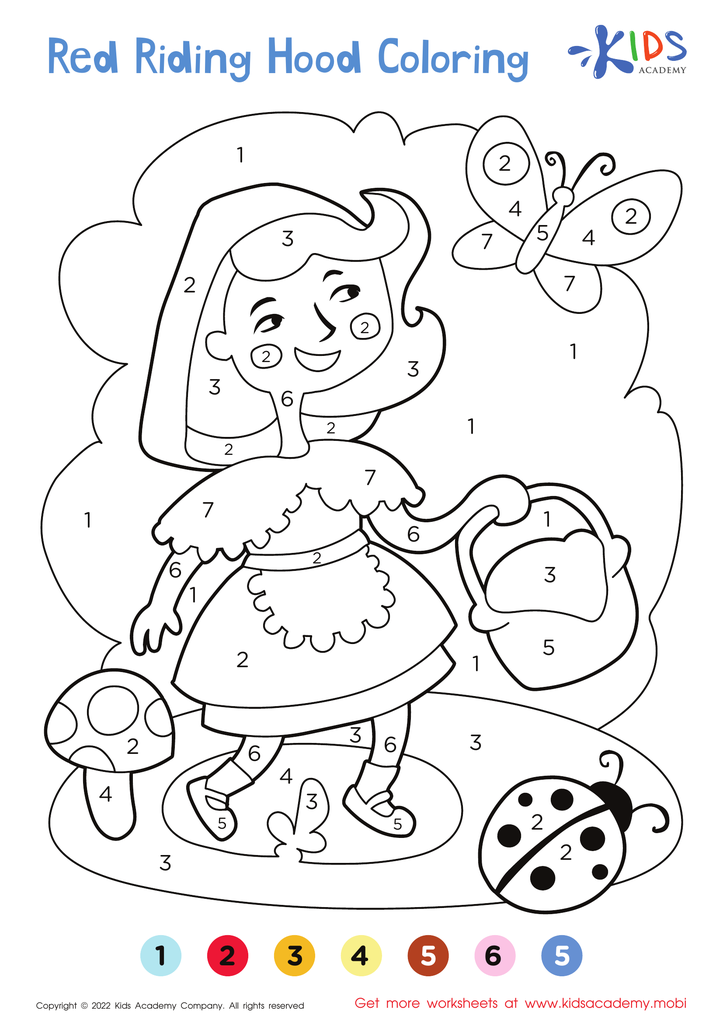
Little Red Riding Hood – Coloring by Numbers
Download this free PDF page and enjoy coloring Little Red Riding Hood. It's an easy and fun activity that everyone can do - just follow the numbers! Get your colored pencils ready and have a blast. 80 words.
Little Red Riding Hood – Coloring by Numbers
Worksheet
Join Kids Academy for Free
Who is primarily going to use this learning content?








Basic counting math is a fundamental skill for 6-year-olds that serves as the foundation for future mathematical learning and overall cognitive development. At this age, children are naturally curious and eager to explore concepts around them. Learning to count not only enhances their numerical understanding but also develops critical thinking skills, problem-solving abilities, and a strong sense of logic.
Parents and teachers should care about basic counting because it directly supports children's learning in other subjects. For instance, counting helps them understand patterns in math, supports literacy by connecting numbers to quantities, and enhances their ability to follow structured instructions. Moreover, mastering basic counting builds confidence, fostering a growth mindset that encourages children to tackle more complex math concepts later on.
Early proficiency in counting also equips children with practical life skills, such as budgeting, time management, and measuring, which are crucial for daily activities. By emphasizing this skill, parents and teachers set a positive tone for lifelong learning and mathematical appreciation. Engaging children in fun and interactive counting activities can make learning enjoyable, turning what is often perceived as a daunting subject into a delightful journey.








