Comparing object weights Math Worksheets for 6-Year-Olds
3 filtered results
-
From - To
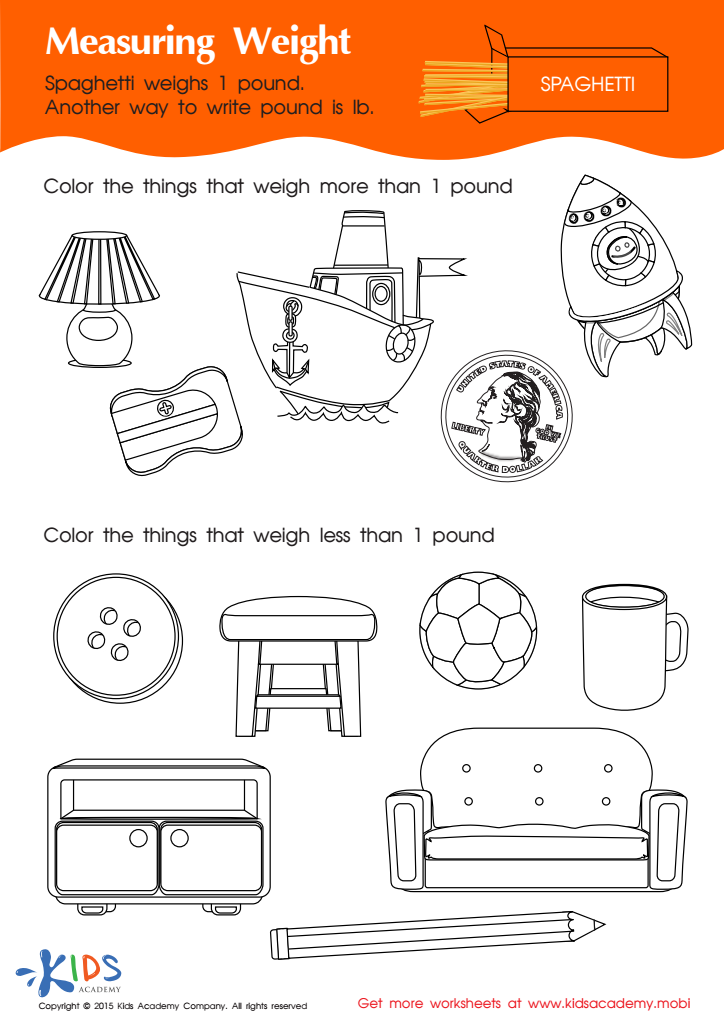
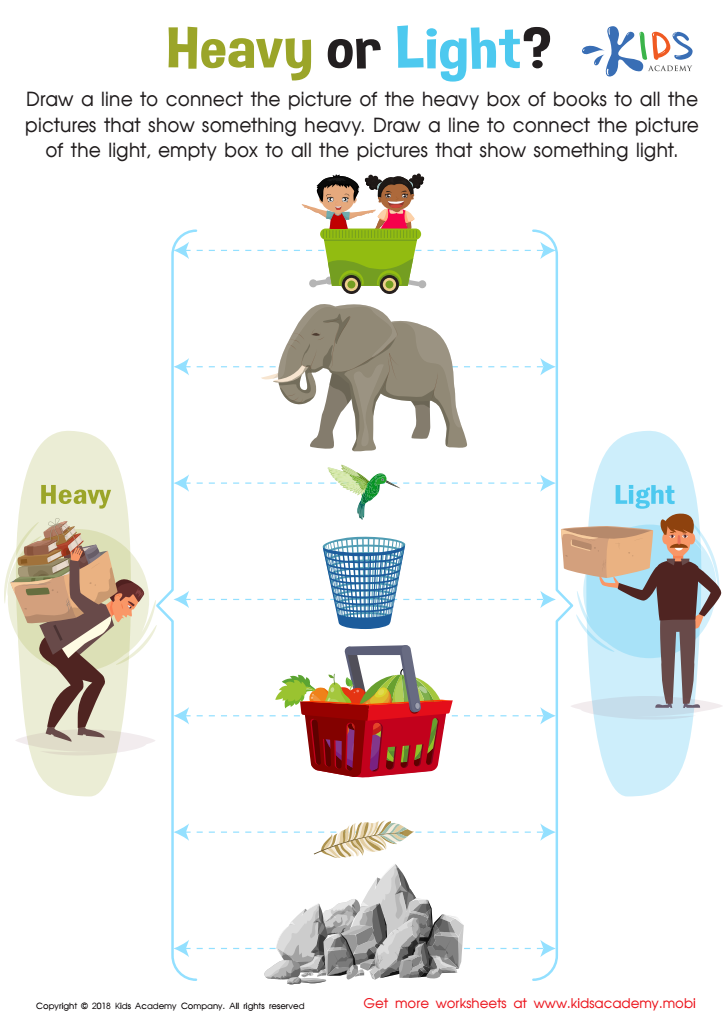
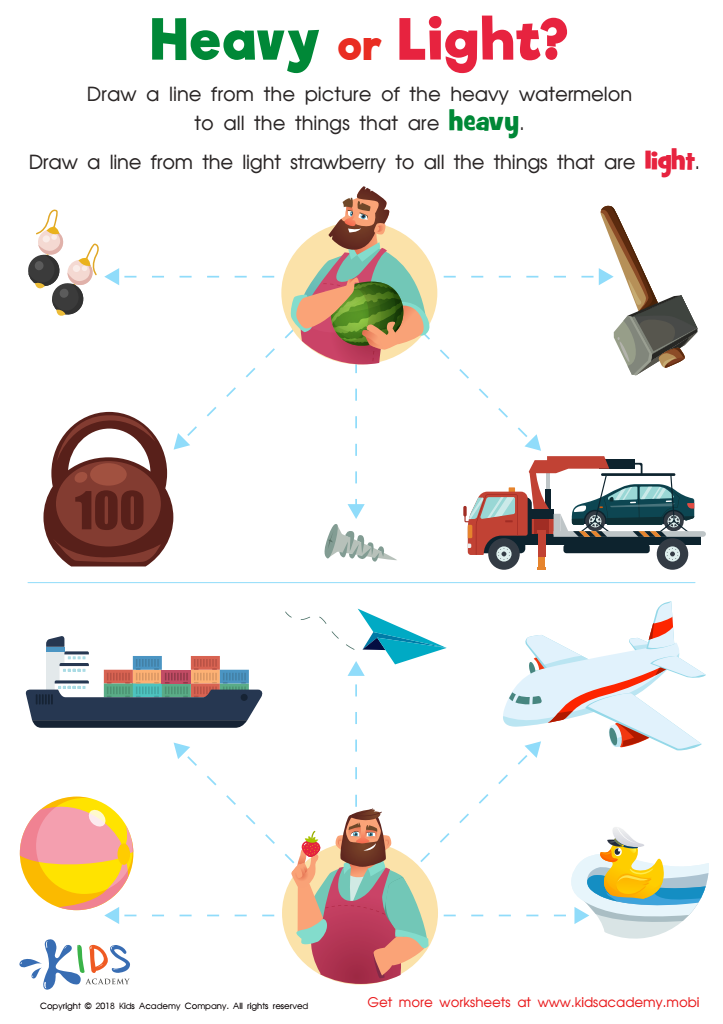
Introduce your 6-year-old to the essential skill of comparing weights with our engaging and educational Math Worksheets. Each worksheet is designed to make learning fun, helping children understand the concept of heavier and lighter objects through colorful illustrations and interactive activities. These worksheets are perfect for young learners to develop their mathematical reasoning and problem-solving skills. They will practice identifying, comparing, and contrasting the weights of various objects, honing their analytical thinking. Boost your child's confidence and prepare them for more advanced math concepts with these specially crafted worksheets. Let's make math exciting and accessible for your young learner!
 Assign to My Students
Heavy or Light? Worksheet
Heavy or Light? Worksheet





Understanding object weight comparison at the early age of six is a fundamental math skill that has long-term educational benefits. For parents and teachers, focusing on this skill helps children develop critical thinking and problem-solving abilities crucial for everyday functioning.
Firstly, comparing weights introduces children to basic arithmetic concepts, including measurement and data interpretation, foundational for more advanced math skills. By engaging in activities that require weighing objects, children develop a concrete sense of numbers and math operations. This hands-on experience grounds their abstract math learning in real-world contexts, making it relatable and easier to grasp.
Secondly, weight comparison activities enhance cognitive development by encouraging children to classify and organize objects based on attributes. These sorting and categorizing skills are essential not just in math but in sciences and daily decision-making. For instance, knowing the concept of weight helps in understanding balance, which can be fundamental when exploring scientific principles later.
Moreover, such interactive learning sessions foster a curiosity-driven environment. Children feel encouraged to ask questions and explore the world around them, promoting an engaging and enjoyable learning experience.
In addition to cognitive growth, these activities also support fine motor skills development. Handling different objects during comparisons aids in improving coordination and dexterity.
Overall, investing time in teaching children to compare object weights means setting a robust foundation for their quantitative reasoning abilities, critical thinking, and comprehensive cognitive development.








