Comparing objects Math Worksheets for 6-Year-Olds
4 filtered results
-
From - To
Enhance your child's math skills with our Comparing Objects Worksheets tailored for 6-year-olds. These engaging activities help young learners grasp the concepts of size, weight, and capacity by comparing everyday items. With colorful illustrations and fun exercises, kids will develop critical thinking and observational abilities while enjoying the process. Our worksheets align with educational standards, making them ideal for both classroom use and at-home practice. Start building a strong math foundation today with Kids Academy’s expertly designed resources. Perfect for nurturing early STEM skills and boosting your child's confidence in mathematics.
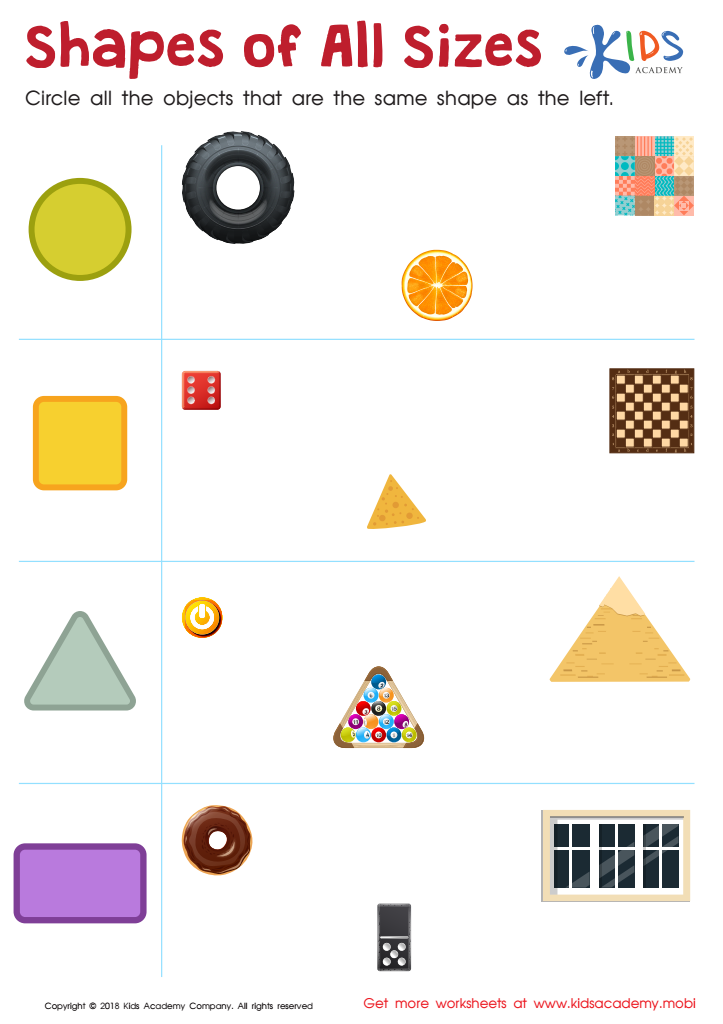
Shapes of All Sizes Worksheet
 Assign to My Students
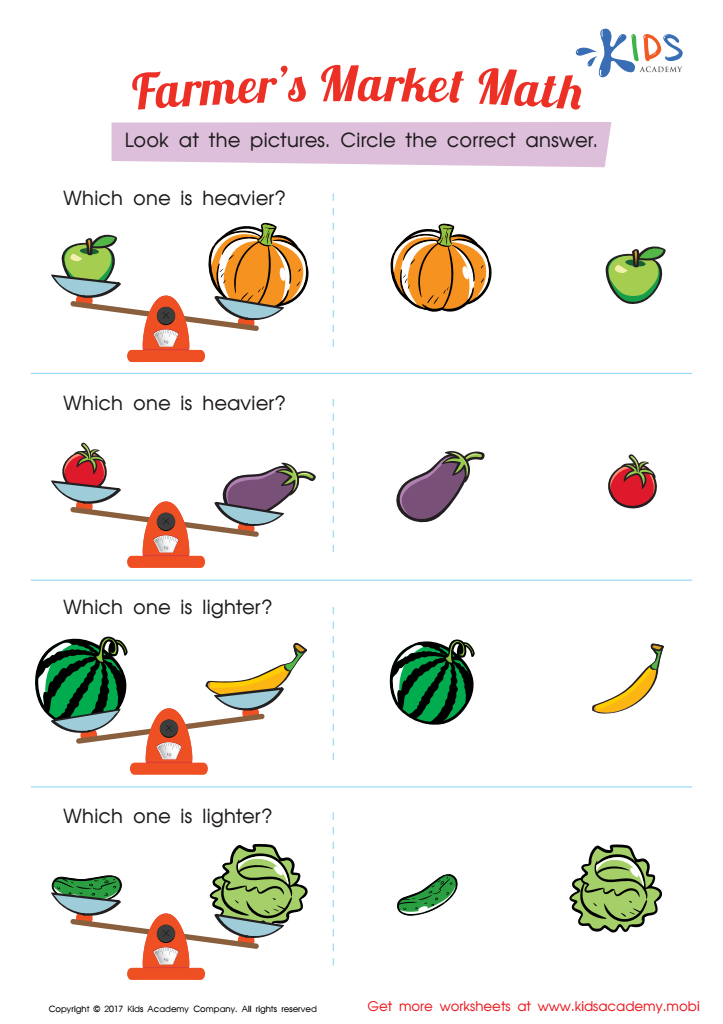
Which One Is Heavier Worksheet
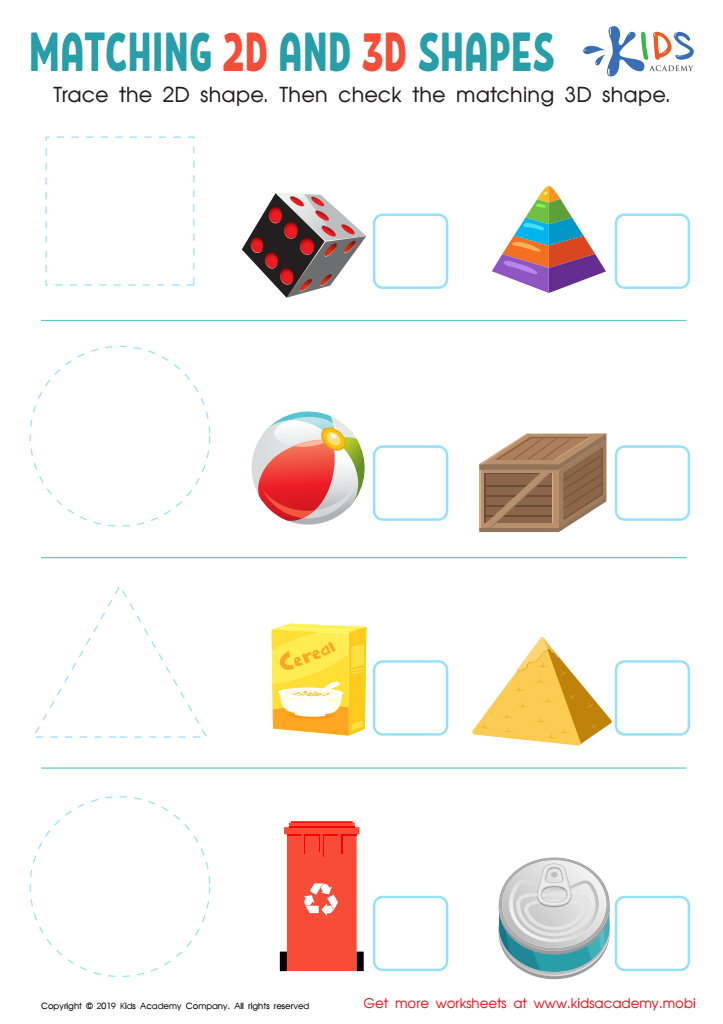
Matching 2D and 3D Shapes Worksheet
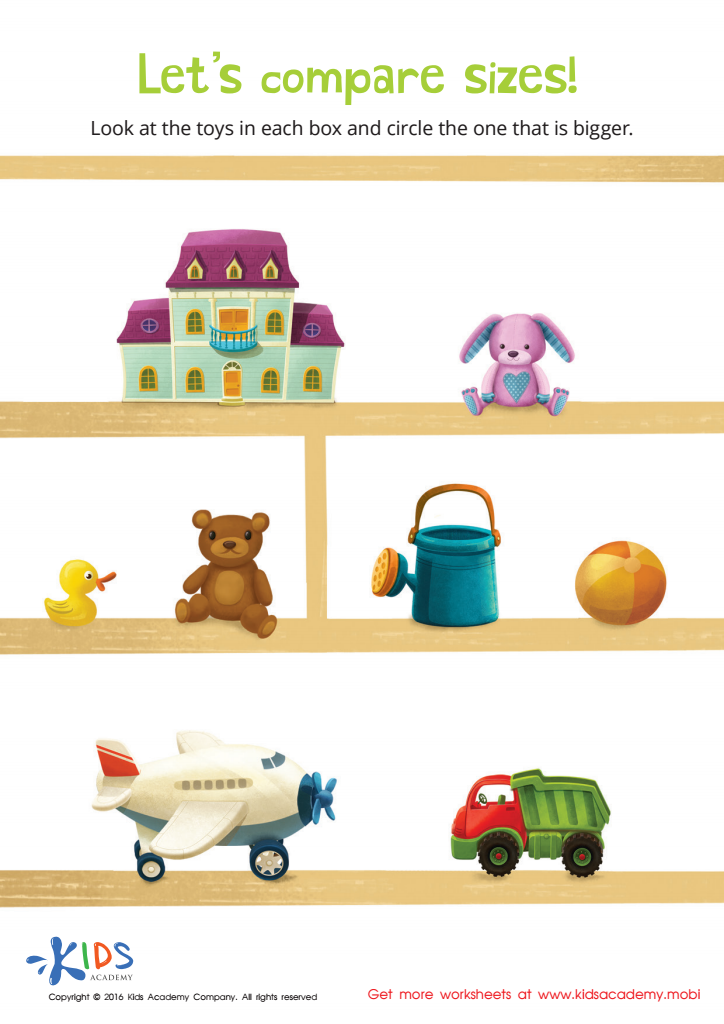
Classifying by Size Sorting Worksheet








Parents and teachers should care about teaching 6-year-olds to compare objects in math because this foundational skill promotes critical thinking and problem-solving abilities crucial for future academic success. Comparing attributes such as length, weight, and volume introduces children to measurement concepts, helping them make sense of the physical world. It also cultivates their reasoning skills, as they discern similarities and differences among objects.
Additionally, comparing objects enhances language development. Children learn to articulate their observations using comparative language like "shorter," "heavier," or "more." This vocabulary boost supports their overall communication skills, essential for both academic and social interactions.
Practical application of these skills is another significant benefit. In everyday activities, such as figuring out which container can hold more water or which toy is heavier, kids learn to apply mathematical concepts in real-life contexts, making learning more meaningful and engaging. Moreover, early proficiency in comparison prepares children for more advanced mathematical concepts like greater than, less than, ordering, and even basic arithmetic.
Investing in these early skills builds a robust mathematical foundation, encouraging a lifelong interest and confidence in math, critical for their future education and everyday problem-solving abilities. Therefore, parents and teachers play a vital role in nurturing these early comparative skills.








