
Identifying shapes Math Worksheets for 6-Year-Olds
5 filtered results
Difficulty Level
Grade
Age
-
From - To
Subject
Activity
Standards
Discover our fun and educational "Identifying Shapes Math Worksheets" designed specifically for 6-year-olds! These engaging worksheets help young learners recognize and name various shapes, enhancing their geometry skills and fostering their critical thinking abilities. Each worksheet features colorful illustrations and interactive activities that make learning shapes enjoyable and memorable. Perfect for classroom use or at-home practice, our carefully crafted worksheets provide a solid foundation in geometry, preparing children for more advanced math concepts. Encourage your child's curiosity and boost their confidence in math with our "Identifying Shapes Math Worksheets"!
Favorites
With answer key
Interactive
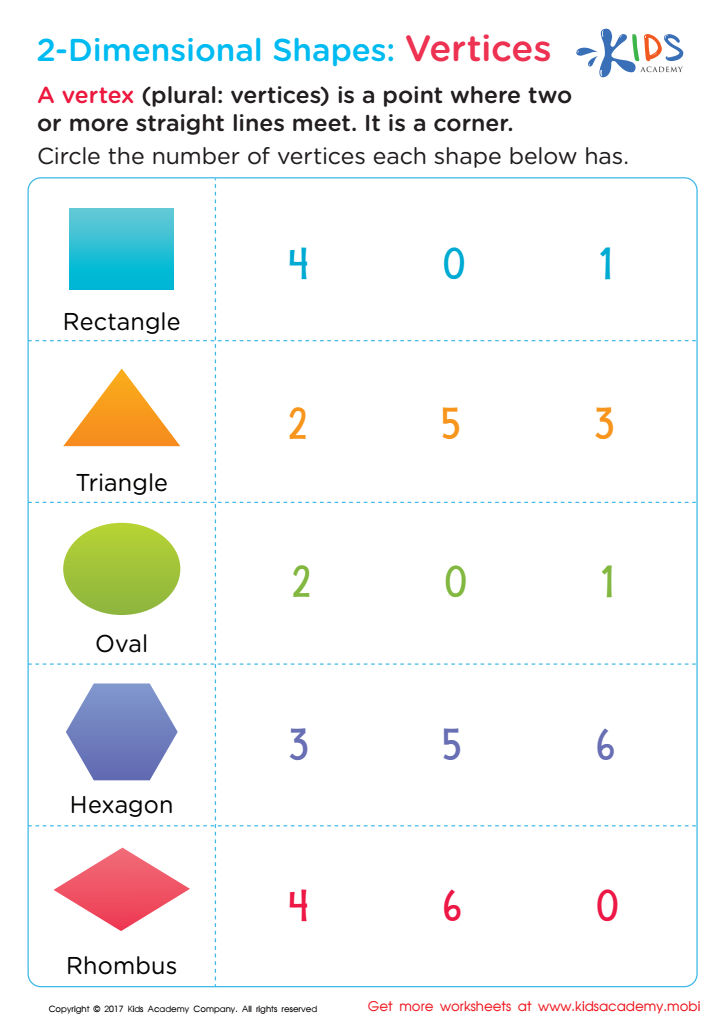
Two–Dimensional Shapes: Vertices Printable
This colorful worksheet teaches kids geometry by introducing them to two-dimensional shapes and vertices. Kids can practice counting vertices and learn an important new math term in an easy to understand way. Boost your child's knowledge of geometry today!
Two–Dimensional Shapes: Vertices Printable
Worksheet
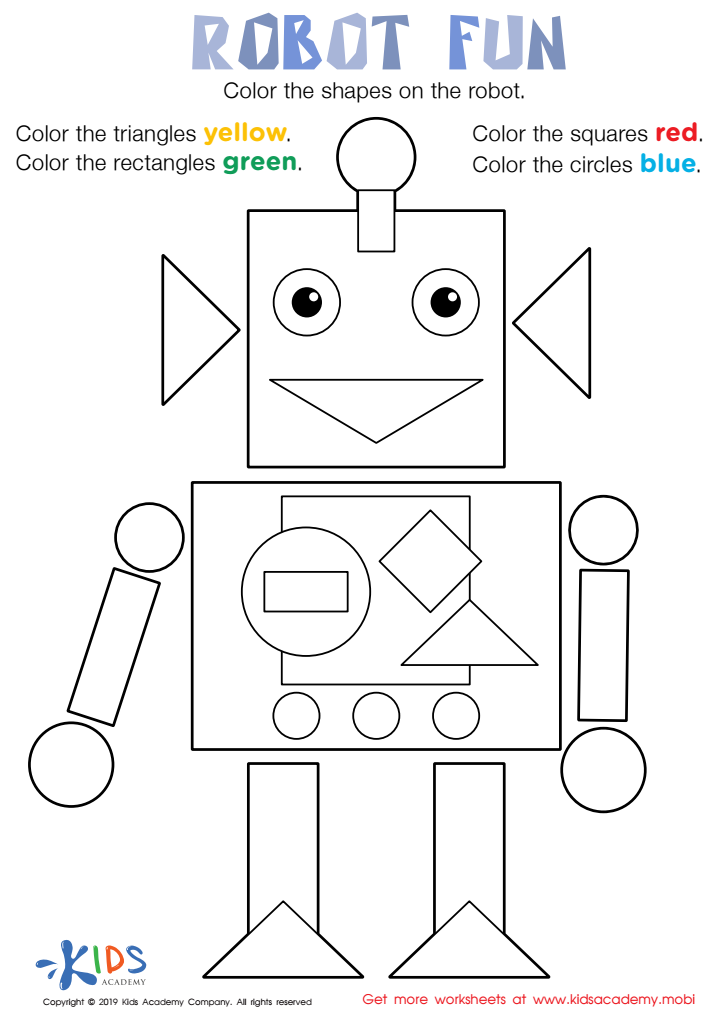
Robot Fun Worksheet
Help your child learn about basic shapes with this fun robot worksheet! Kids practice identifying circles, squares, rectangles and triangles, then color each shape according to directions. Make math practice enjoyable with this coloring page that teaches all four basic shapes - it's an important math skill!
Download (PDF)
 Assign to My Students
Assign to My Students
Robot Fun Worksheet
Worksheet
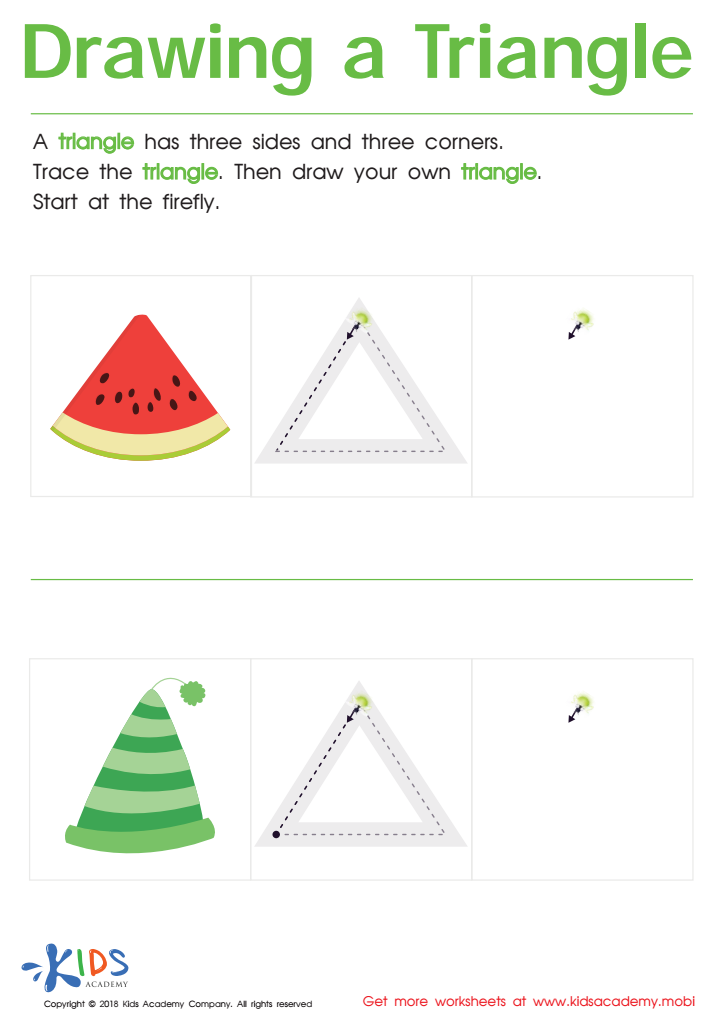
Drawing a Triangle Worksheet
Help your child develop fine motor skills with this fun, traceable printable! It teaches them how to draw a triangle, with easy steps and cute picture motivation. They'll work on pre-writing skills, pencil position, and grip control without even realizing it. With this basic shape, they'll gain a foundation for strong writing and drawing skills.
Drawing a Triangle Worksheet
Worksheet
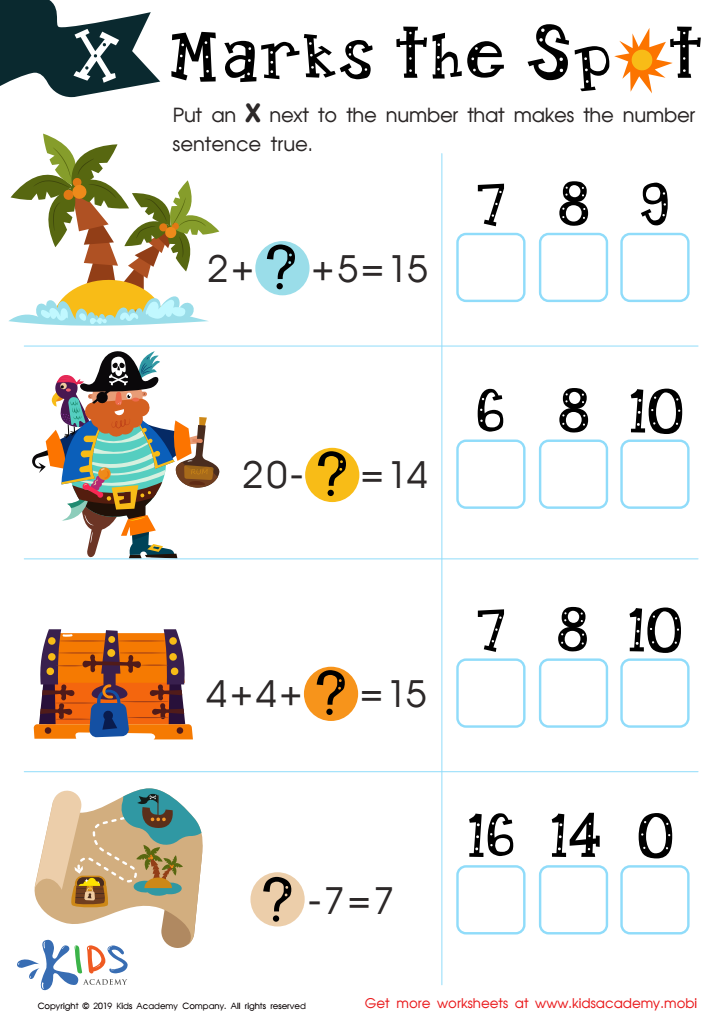
X Marks the Spot Worksheet
Let your kids explore the world of pirates! Ask them what they know about them, what they do and the phrases they like. Download the printout and point at the images, asking them to tell you what they see. Help them tick the box for the number that makes the sentence true. Let them have fun learning about pirates! (80 words)
X Marks the Spot Worksheet
Worksheet
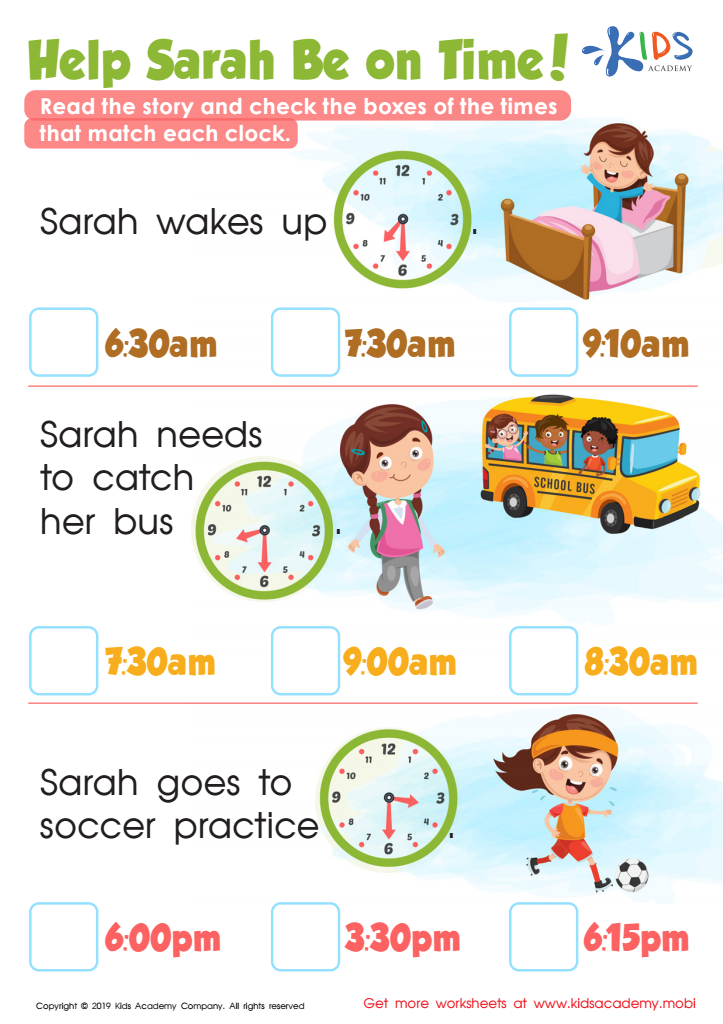
Help Sarah Be on Time! Worksheet
Humans are social creatures and need to be punctual for things to run smoothly. For instance, a meeting with a friend requires a time to be agreed upon. Ask your kids what else needs to be punctual. Then, show them the worksheet and read the accompanying story. Get them to match clocks with the correct times.
Help Sarah Be on Time! Worksheet
Worksheet
Join Kids Academy for Free
Who is primarily going to use this learning content?








Identifying shapes is crucial in early childhood education, as it lays the foundation for more complex mathematical and cognitive skills. For 6-year-olds, learning shapes isn't just about recognizing circles, squares, or triangles; it's about developing spatial awareness and visual discrimination. These skills are fundamental for tasks ranging from reading to solving puzzles and even activities in daily life.
Shapes help children understand and organize their environment. Recognizing shapes helps in grouping and categorizing objects, enhancing memory and recall. For instance, knowing the difference between a rectangle and square aids in distinguishing coins, books, and other everyday items.
Moreover, understanding shapes at an early age contributes to mathematical skills like geometry and pattern recognition. Identifying simple shapes often transitions into identifying more complex figures and understanding properties like symmetry, angles, and dimensions.
Caring about shape recognition means fostering a child’s confidence and competence in handling abstract concepts, not to mention developing finer motor skills through drawing and tracing these shapes. Encouraging shape activities also boosts critical thinking and problem-solving skills, setting a positive groundwork for future academic subjects. Therefore, both parents and teachers should prioritize this aspect of math to cultivate a well-rounded developmental trajectory for young children.








