
Understanding Sequences Math Worksheets for 6-Year-Olds
8 filtered results
Difficulty Level
Grade
Age
-
From - To
Subject
Activity
Standards
Explore our engaging "Understanding Sequences Math Worksheets" designed specifically for 6-year-olds! These worksheets help young learners grasp the concept of sequences through fun activities and colorful illustrations. Tailored for early learners, our resources aim to enhance critical thinking and problem-solving skills by promoting pattern recognition and order. Kids will enjoy completing sequences through numbers, shapes, and pictures, making math enjoyable and accessible. Parents and educators can use these worksheets to reinforce concepts learned in the classroom, ensuring a solid foundation for future math skills. Dive into the world of sequences with our worksheets and inspire a love for learning in your child!
Favorites
With answer key
Interactive
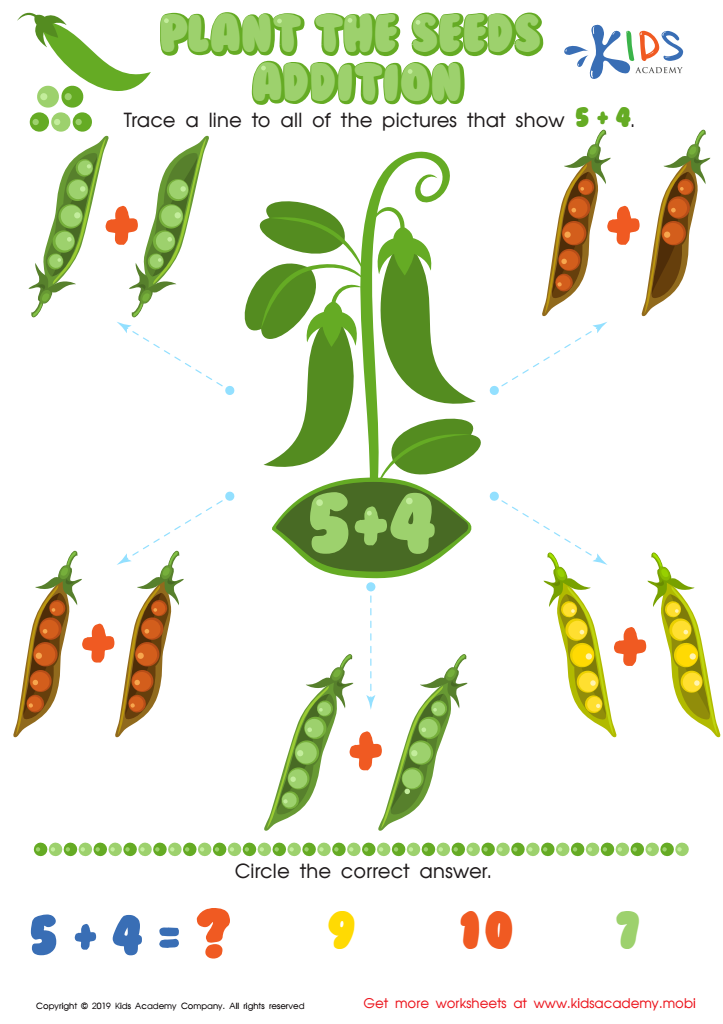
Plant the Seeds Addition Worksheet
This worksheet combines math and learning about plants. Ask kids to name their favorite plants and which ones they see the most. Have them trace a line to all pictures in the middle which show the equation 5+4. Enjoy the beauty of plants while introducing math skills!
 Assign to My Students
Plant the Seeds Addition Worksheet
Worksheet
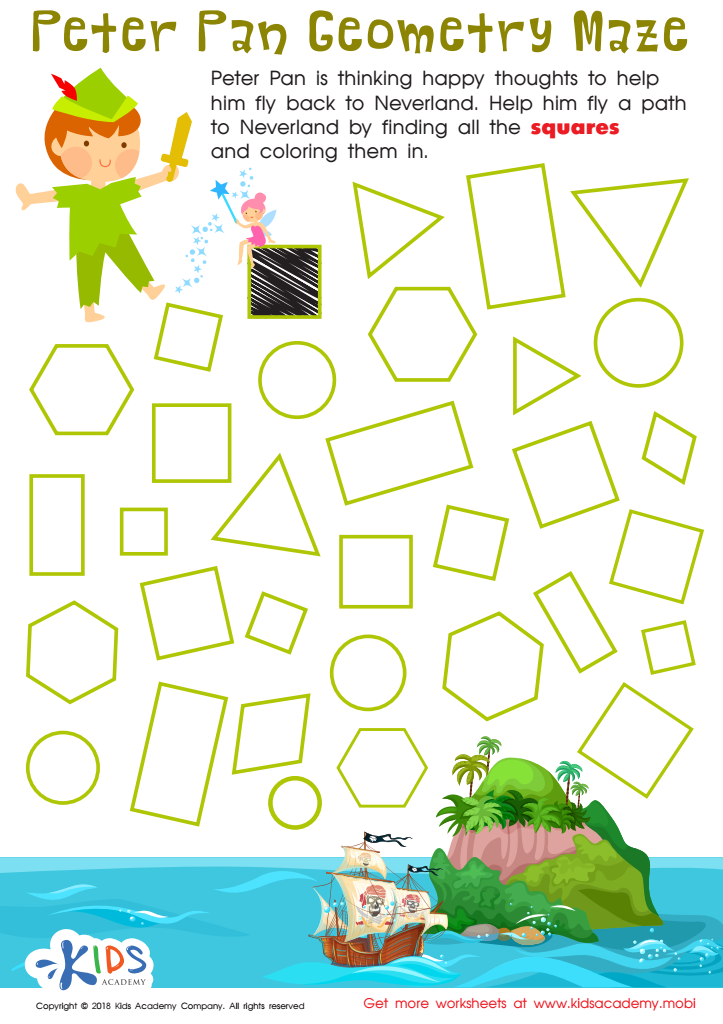
Peter Pan Worksheet
Kindergarteners can join Peter Pan on an adventure to Neverland! They can help him by coloring squares to create a path, strengthening their shape identification skills in a fun maze. Let the journey begin!
Peter Pan Worksheet
Worksheet
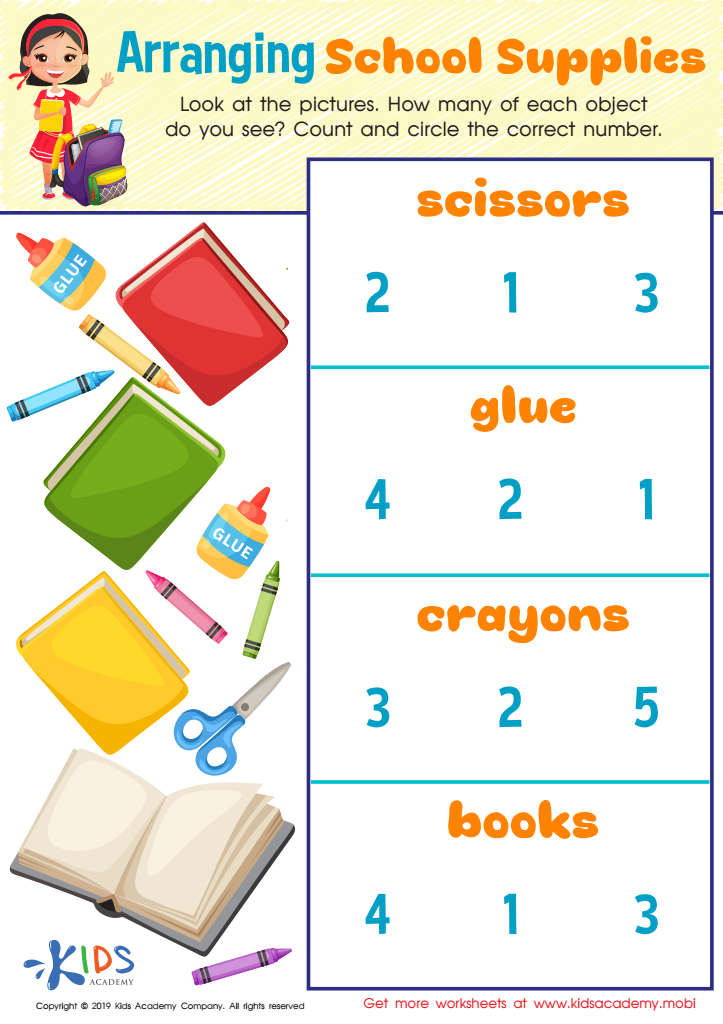
Arranging School Supplies Worksheet
Help your kids identify and count the school supplies in this colorful printout. Ask them to circle the correct number from the options provided. This is an easy and fun way for your child to practice their counting skills and recognize everyday objects.
Arranging School Supplies Worksheet
Worksheet
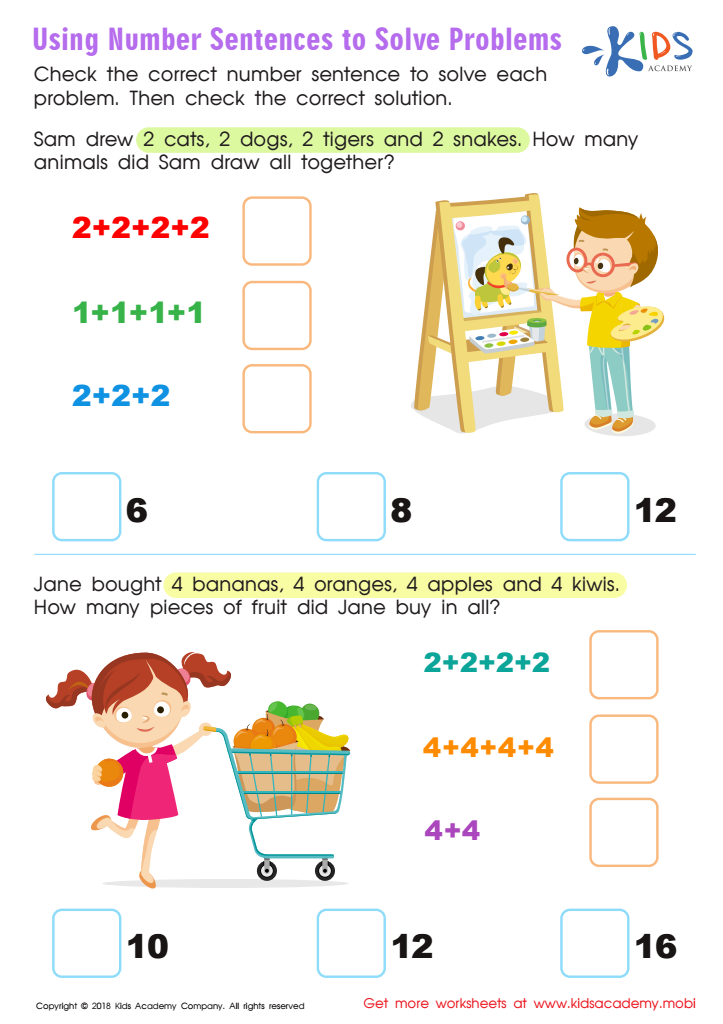
Using Number Sentences to Solve Problems Worksheet
Solving math problems requires an efficient strategy. Picture representation can help young mathematicians with basic addition problems, especially when it involves repeated addends. As they gain confidence, they'll be able to apply their number sentence solving abilities to more complex equations.
Using Number Sentences to Solve Problems Worksheet
Worksheet
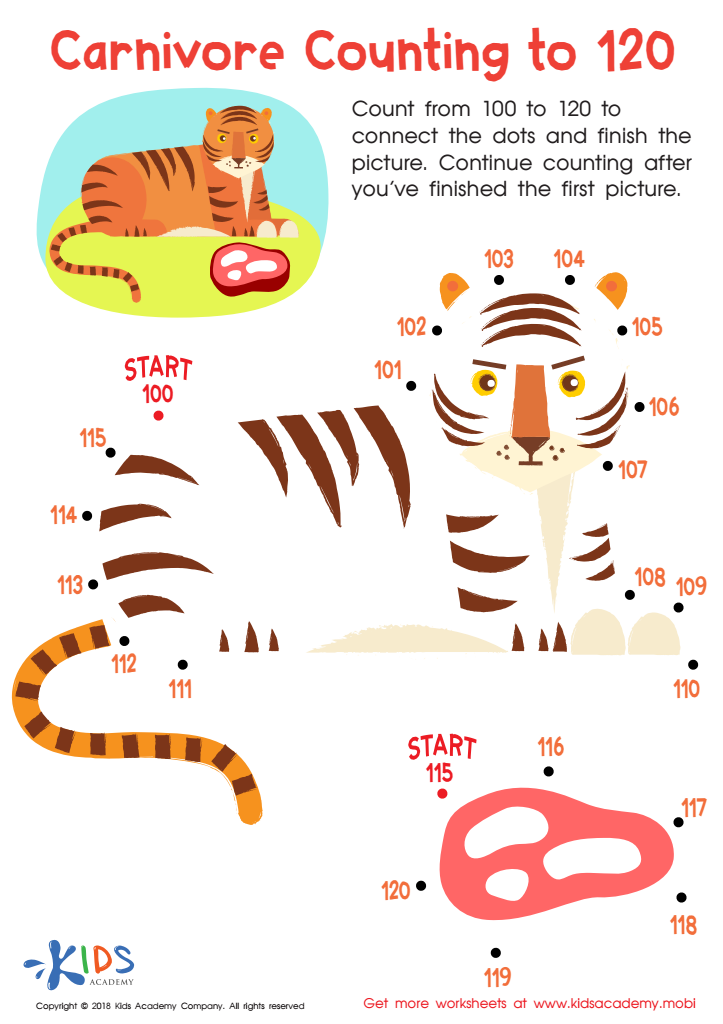
Carnivore Counting to 120 Worksheet
Ask your child to name some popular carnivores. Can they tell you what the animal in the worksheet is? A Tiger? Get them to count from 100 to 120 to connect the dots. After they finish the first picture, keep counting to help them practice!
Carnivore Counting to 120 Worksheet
Worksheet
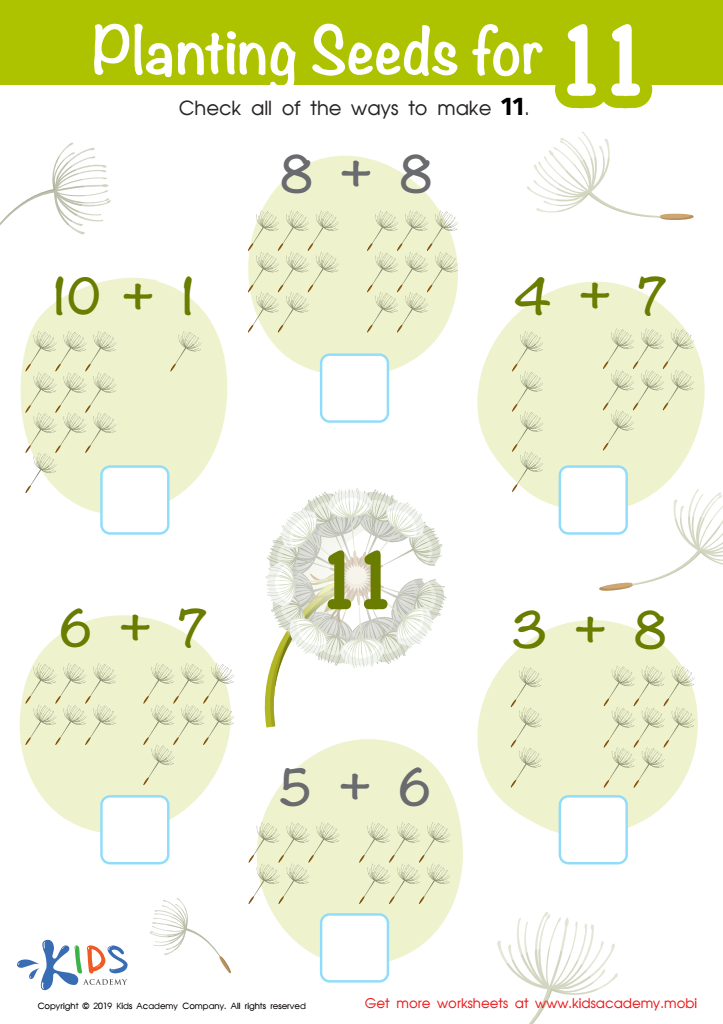
Planting Seeds for 11 Worksheet
Before starting, ask your students to count as high as they can. Explain that different numbers can add up to the same total. Give examples like 2+2 =4 and 3+1 =4. Ask if they can think of other examples. Then have them work through the equations in the printout and circle all that add up to 11.
Planting Seeds for 11 Worksheet
Worksheet
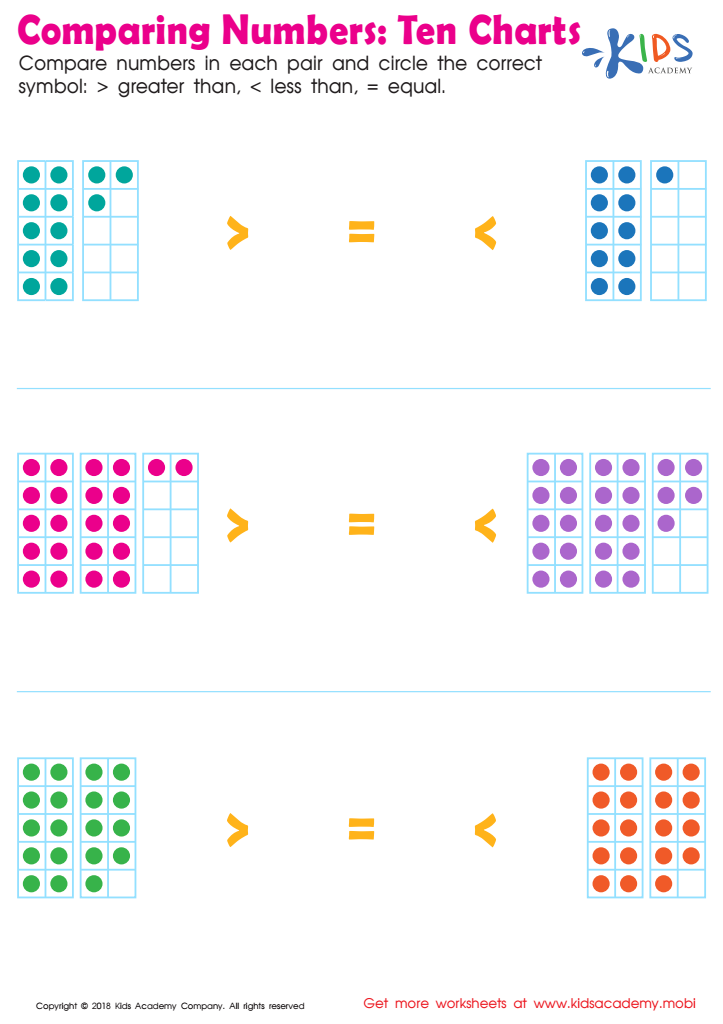
Ten Charts Worksheet
Help your child learn numbers in a creative way using this printable worksheet. They'll learn the difference between numbers, how to add them, and the symbols of "greater than", "less than" and "equals to". They can compare two sides, and identify which is greater, less or equal. Let their maths knowledge bloom!
Ten Charts Worksheet
Worksheet
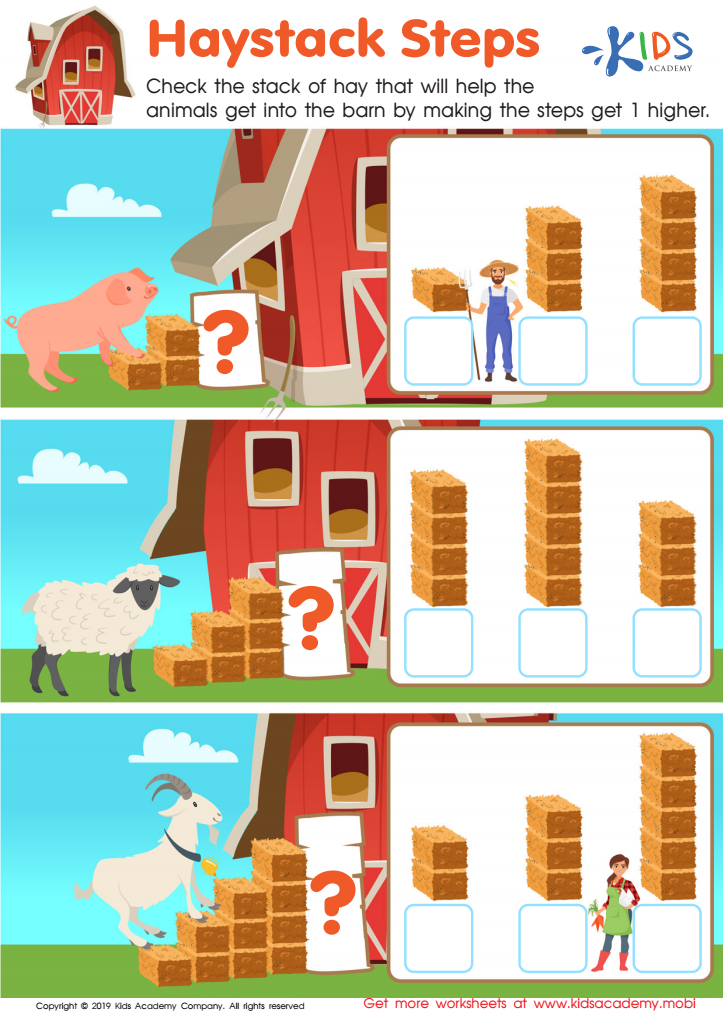
Haystack Steps Worksheet
Have your kids ever visited a farm? What activities and sights did they enjoy? Farmers are essential to our lives, growing food and providing us with dairy and eggs. In this worksheet, a farmer has made a haystack for his animals to climb into the barn. Ask your kids to add an extra layer to the stack to make the climb easier.
Haystack Steps Worksheet
Worksheet
Join Kids Academy for Free
Who is primarily going to use this learning content?






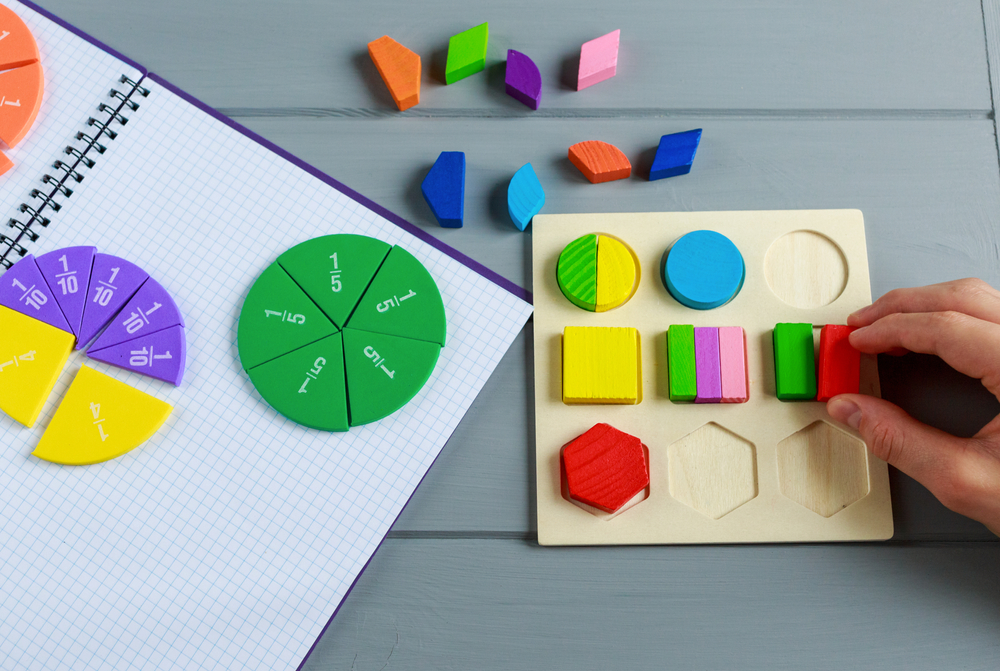

Understanding sequences is a foundational concept in early mathematics that helps six-year-olds develop critical thinking and problem-solving skills. Parents and teachers should care about this subject because it fosters logical reasoning and lays the groundwork for more advanced math concepts. When children recognize and create patterns—be it numbers, shapes, or sounds—they strengthen their cognitive abilities, which support further learning in math and beyond.
Moreover, mastery of sequences prepares children for everyday situations, such as understanding time through daily routines or recognizing patterns in nature. This real-world application enhances their engagement with math, making it relevant and exciting.
Exploring sequences also aids in developing skills like attention to detail, prediction, and adaptability. These skills boost confidence as children learn to identify what comes next in a pattern or sequence.
Furthermore, teaching it can be easily integrated into playful activities, making learning enjoyable. When parents and teachers emphasize the importance of sequences, they encourage a growth mindset and show children that learning can be fun. Ultimately, a solid grasp of sequences not only enriches a child's mathematical foundation but also contributes to overall academic success and logical thinking development.








