Understanding tens Math Worksheets for 6-Year-Olds
4 filtered results
-
From - To
Explore our "Understanding Tens Math Worksheets" designed specifically for 6-year-olds to build a strong foundation in numeracy. These engaging worksheets introduce the concept of tens, helping young learners grasp essential skills such as counting, grouping, and place value. With colorful visuals and fun activities, children will develop their understanding of numbers and improve their math fluency in a creative way. Perfect for both classroom use and homeschooling, these resources make learning enjoyable and effective. Download and print our worksheets today to support your child's math journey and foster confidence in their abilities! Join us in nurturing a lifelong love for math!
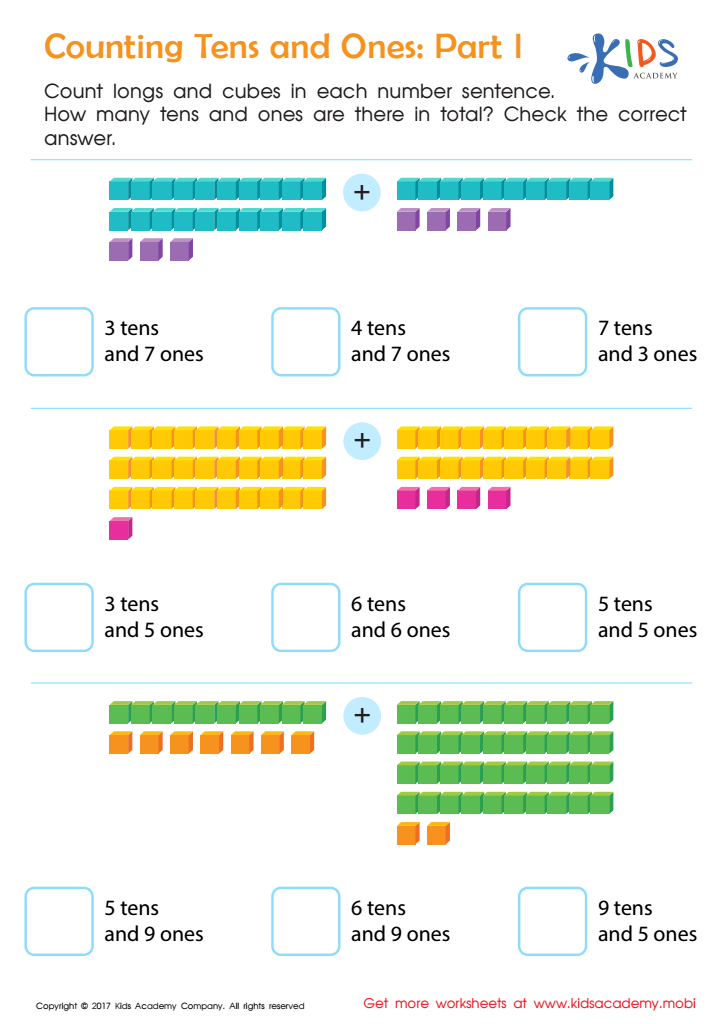
Counting Tens and Ones: Part 1 Worksheet
 Assign to My Students
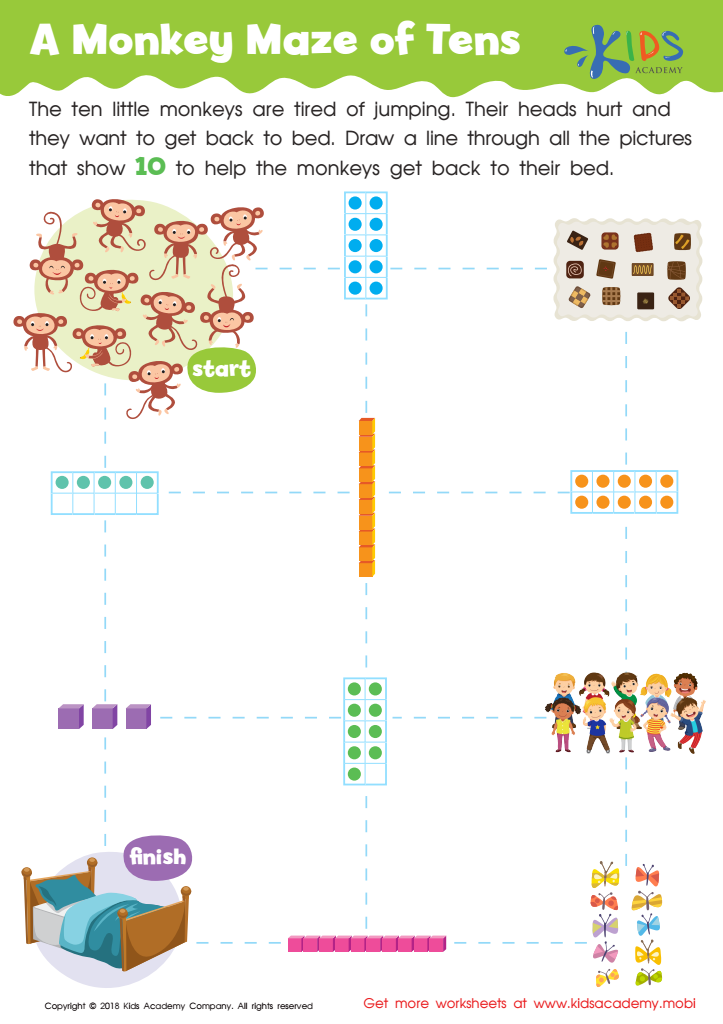
A Monkey Maze of Tens Worksheet
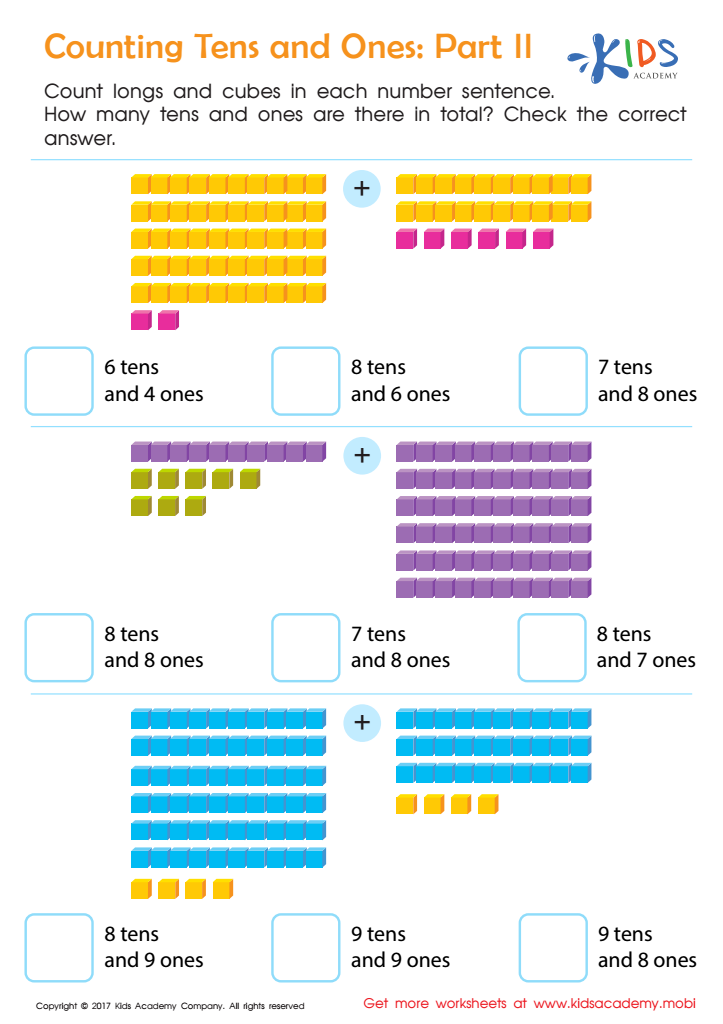
Counting Tens and Ones: Part 2 Worksheet
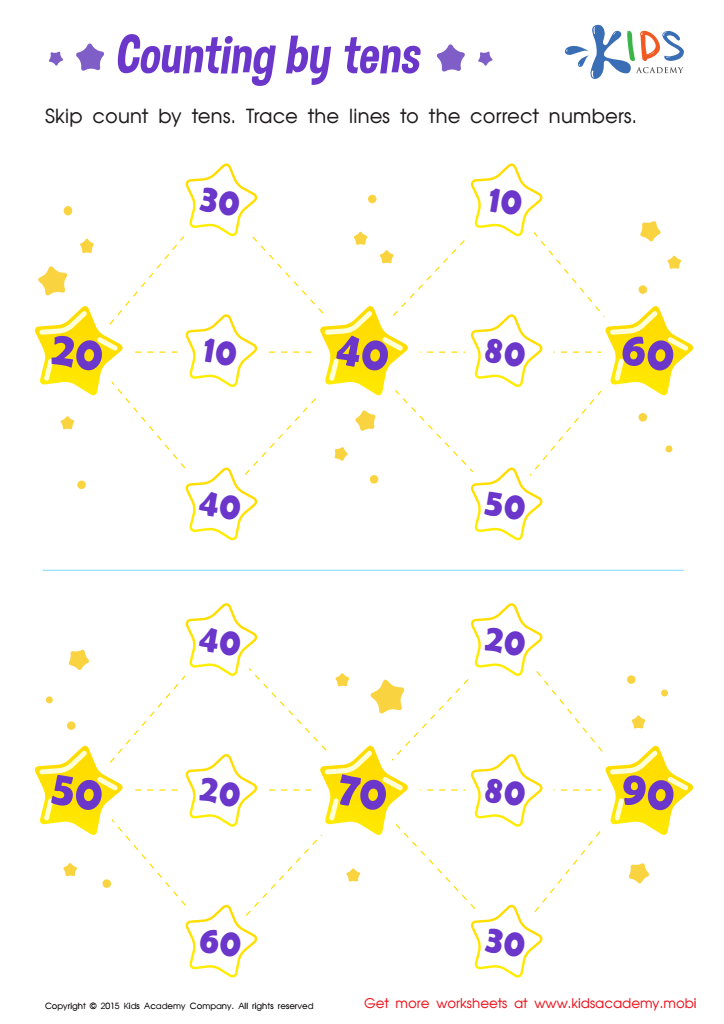
Learn Dozens: Counting by Tens Printable





Understanding tens math is crucial for 6-year-olds as it lays the foundation for more advanced arithmetic skills. At this developmental stage, children begin to understand the concept of numbers beyond just counting; they start to discover the relationship between numbers, especially the role of tens in our base-10 number system. Building a strong grasp of tens helps them in several ways.
First, it fosters place value understanding, which is essential for addition and subtraction. Recognizing that the number 23 consists of two tens and three ones aids in developing strategic mathematical thinking. Second, it enhances problem-solving skills, as children learn to group numbers into tens, simplifying calculations and making mental math easier.
Moreover, this understanding promotes confidence in their mathematical abilities. When children can breakdown complex problems into manageable parts, they are more likely to engage positively with math. Parents and teachers should care about this because these early skills not only boost academic success but also instill a love for learning and exploration in mathematics. Investing time in teaching tens math creates a strong mathematical foundation, allowing children to thrive in future mathematical concepts and applications.








