Filters

6 filtered results

Clear all filters
Favorites
With answer key
Interactive

6 filtered results

Difficulty Level

Grade


Enhance your child’s mathematical language skills with our Vocabulary Expansion Math Worksheets for 6-year-olds. Designed to intertwine math and vocabulary development, these engaging worksheets introduce key mathematical terms and concepts in a fun, interactive way. Through various exercises, young learners can build a strong foundation in both math knowledge and the critical vocabulary needed to excel. Each worksheet is crafted to simplify learning, making abstract concepts like addition and shapes more accessible. Perfect for early grade students, our worksheets boost confidence and proficiency in math, empowering children for future academic success. Download now and start learning the fun way!

Check out this FREE Trial Lesson on Math for age 6!

Draw it Out and Write an Equation

Favorites
With answer key
Interactive
  • 6
  • Vocabulary expansion
  • Math
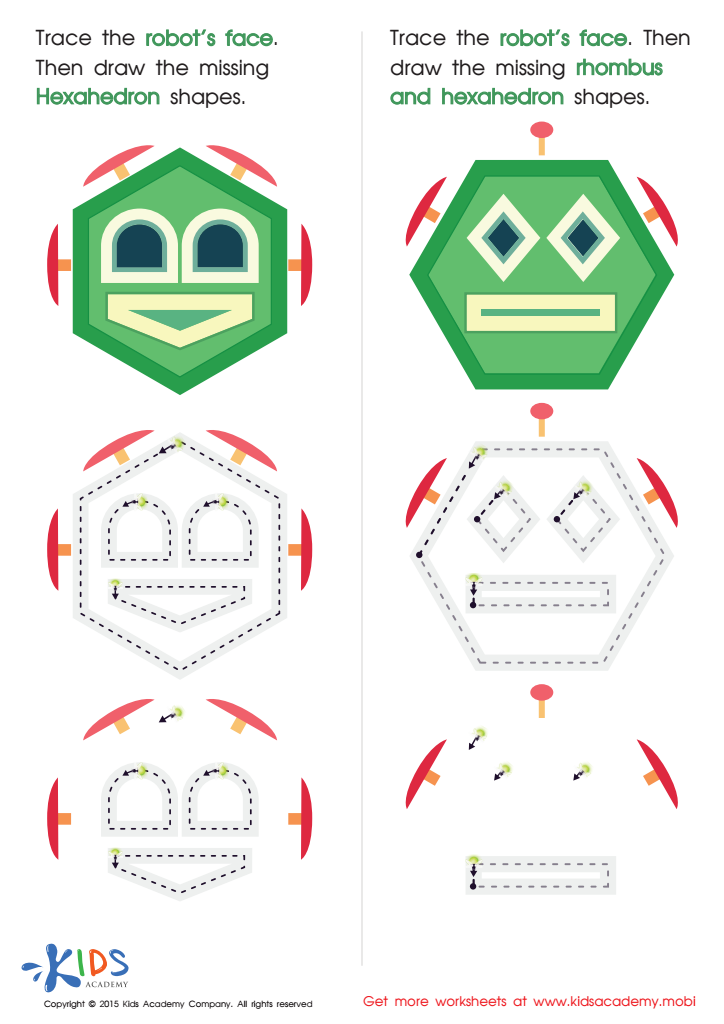
Geometric Shapes for Kids: Practice Drawing Hexahedrons And a Rhombus PDF

Practice Drawing Hexahedrons And a Rhombus Worksheet

Trace the Robot's face, draw hexahedron and rhombus shapes, then trace again. Our tracing shapes worksheets make it easy for kids to learn geometry. Get more materials from Kids Academy to practice all the shapes.
Practice Drawing Hexahedrons And a Rhombus Worksheet
Worksheet
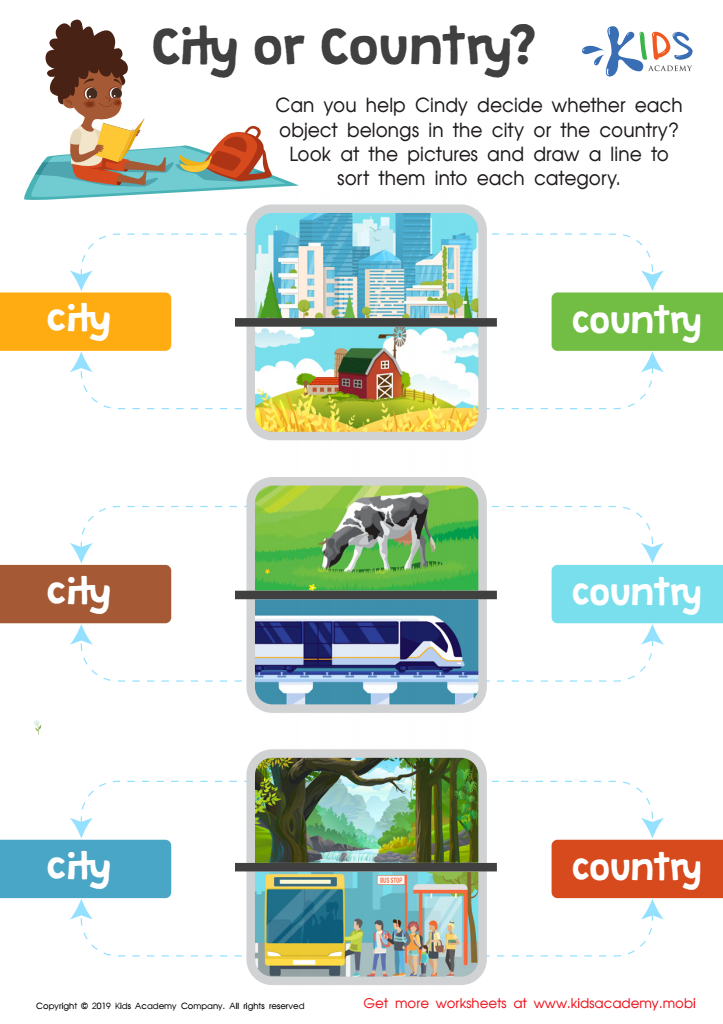
City or Country? Worksheet

City or Country? Worksheet

Whether city or country, both have distinct attributes. Cities have skyscrapers, public transport, and many business people, whereas the countryside is rural and full of nature, often farms. Download this PDF to help your child and Cindy use traced lines to decide which picture fits city or country.
City or Country? Worksheet
Worksheet
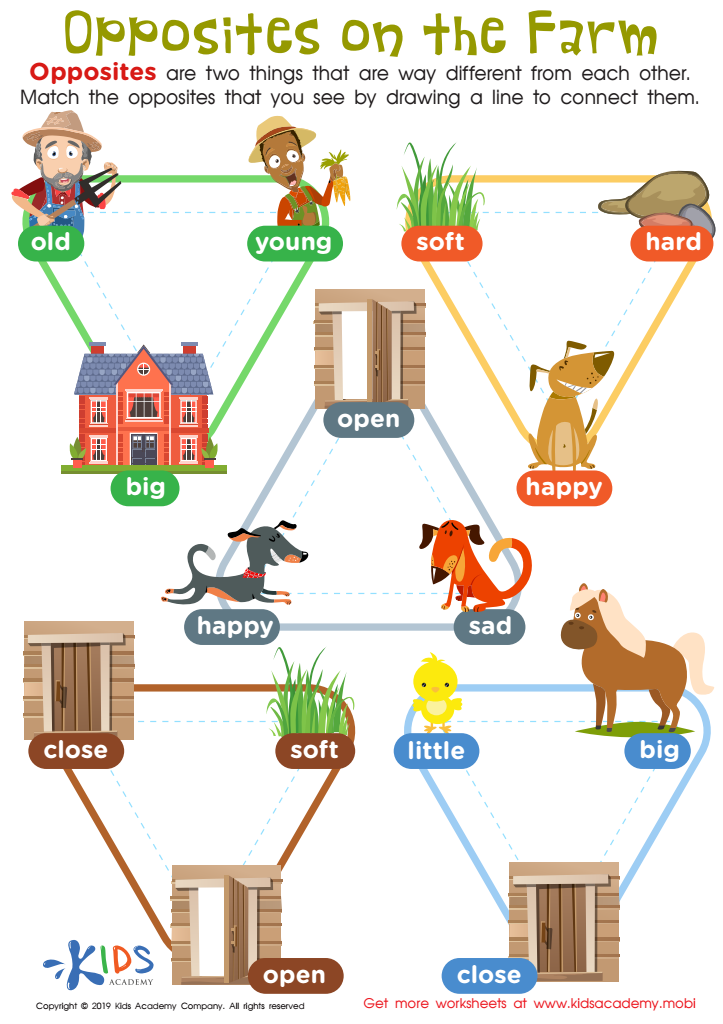
Opposites on the Farm Worksheet

Opposites on the Farm Worksheet

Teaching children the concept of opposites is important for their development. This worksheet offers a fun way to practice. Kids can use traceable lines to match farm imagery with pairs of opposites. It's a great way to help them compare and contrast, a key skill for reading, math, writing and more.
Opposites on the Farm Worksheet
Worksheet
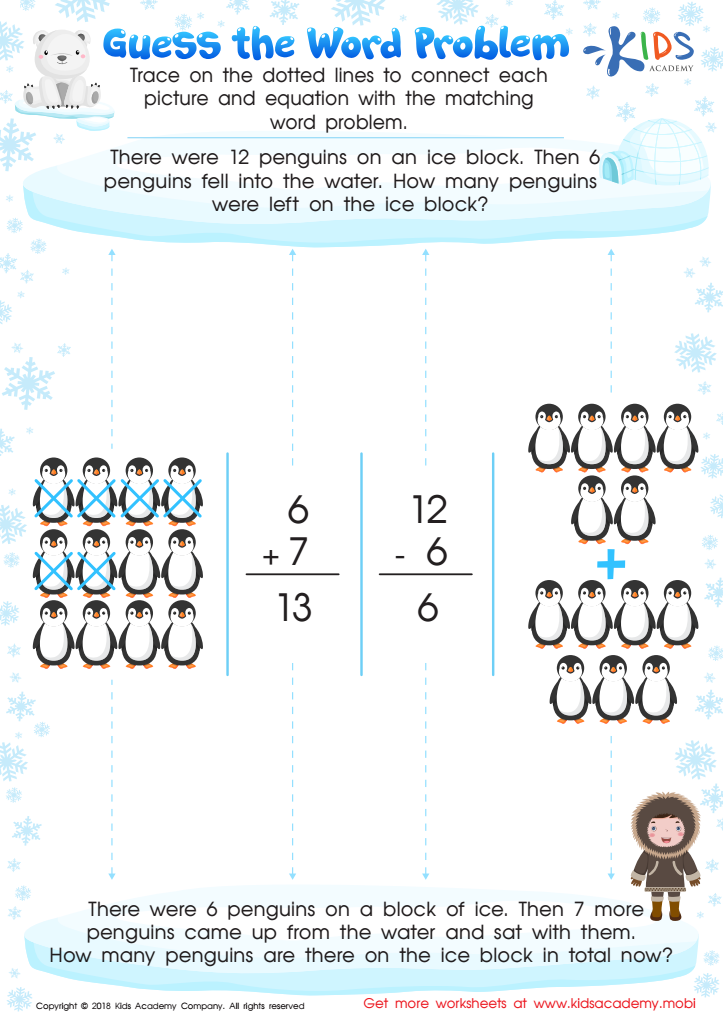
Guess the Word Problem Worksheet

Guess the Word Problem Worksheet

Head to the Arctic Circle for math word problems with penguins, bears, and eskimos! This winter printable worksheet helps kids enjoy math with cute images. Guide kids through addition and subtraction in standard form with the penguins. Compare word problems to its written and pictorial forms for an enjoyable lesson!
Guess the Word Problem Worksheet
Worksheet
Transportation: Steps Worksheet

Transportation: Steps Worksheet

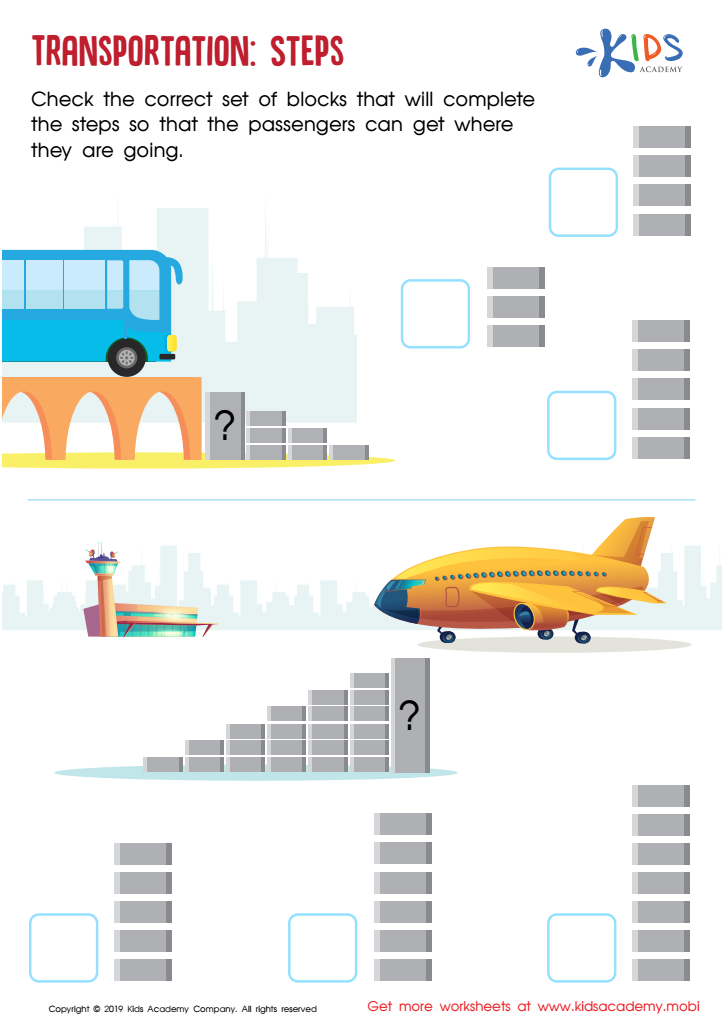
Trips are important to all - transportation and its modes have made travelling easier and quicker. Ask your kids to identify the transport in the picture then help them check the right blocks so passengers can reach their destination.
Transportation: Steps Worksheet
Worksheet
Groups in the Town Worksheet


Groups in the Town Worksheet

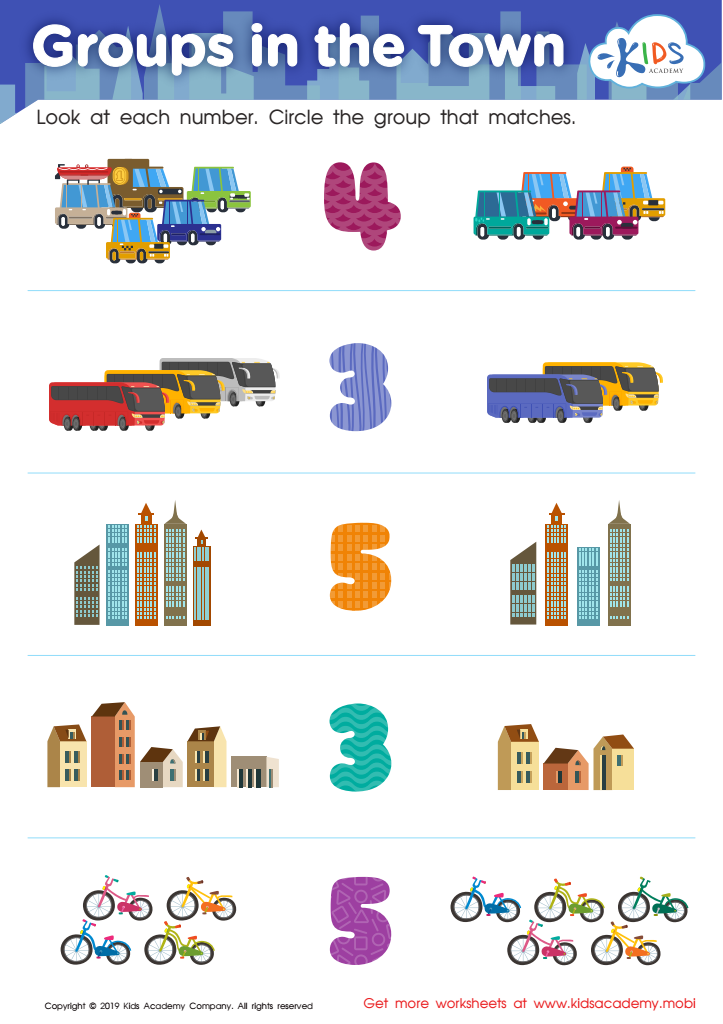
Help your kids learn to count with this worksheet! Look at each number of objects and circle the group that matches. This simple activity can give them extra practice to support what they learn in school. Learning doesn't have to be a struggle; make it fun and interactive with this worksheet.
Groups in the Town Worksheet
Worksheet


Vocabulary expansion in math for 6-year-olds is essential for building a strong educational foundation. At this age, children are in a critical period of language and cognitive development, and incorporating specific math vocabulary can significantly enhance their comprehension and academic success. By familiarizing children with terms such as "addition," "subtraction," "sum," "difference," and "equal," parents and teachers enable them to grasp basic math concepts more effectively. This specialized vocabulary helps demystify math, transforming abstract ideas into tangible, understandable concepts that young minds can easily process.

Moreover, a robust math vocabulary enhances problem-solving skills. When children understand the language of math, they can follow instructions more accurately, participate confidently in classroom discussions, and articulate their thoughts and questions clearly. Improved math vocabulary also fosters a positive attitude toward mathematics, as children are less likely to feel intimidated or frustrated by unfamiliar terms.

Additionally, early exposure to math vocabulary sets the stage for future academic and career success. A solid grasp of mathematical language makes it easier for children to tackle more complex topics in later grades and reduces the likelihood of math-related anxiety. In summary, investing in vocabulary expansion for 6-year-olds in math paves the way for lifelong learning and intellectual curiosity.