Vocabulary enhancement Measurement Worksheets for 6-Year-Olds
3 filtered results
-
From - To
Boost your child's vocabulary and measurement skills with our engaging Vocabulary Enhancement Measurement Worksheets designed for 6-year-olds. Tailored to make learning fun and effective, these worksheets cover key measurement concepts such as length, weight, and volume while introducing new vocabulary. Through interactive exercises, children grasp measurement terminology, practice problem-solving, and enhance their linguistic abilities. Ideal for early graders, these printables are perfect for at-home practice or classroom use. Help your child build a strong foundation in math and language, ensuring they excel in both subjects. Download now for a rewarding educational experience.
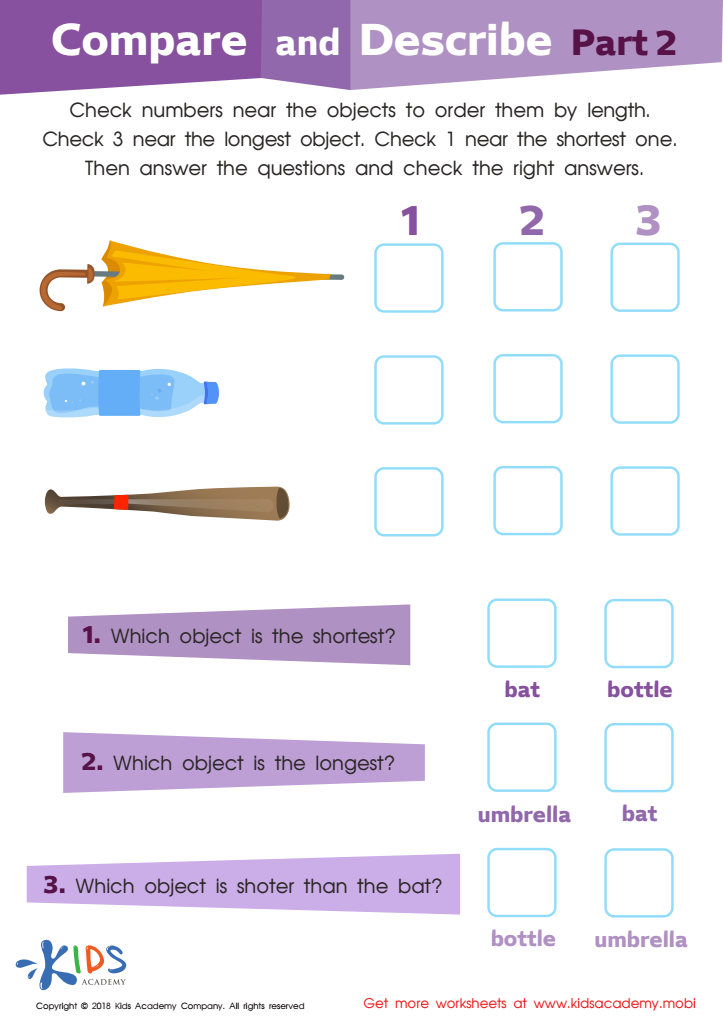
Compare and Describe: Part 2 Worksheet
 Assign to My Students
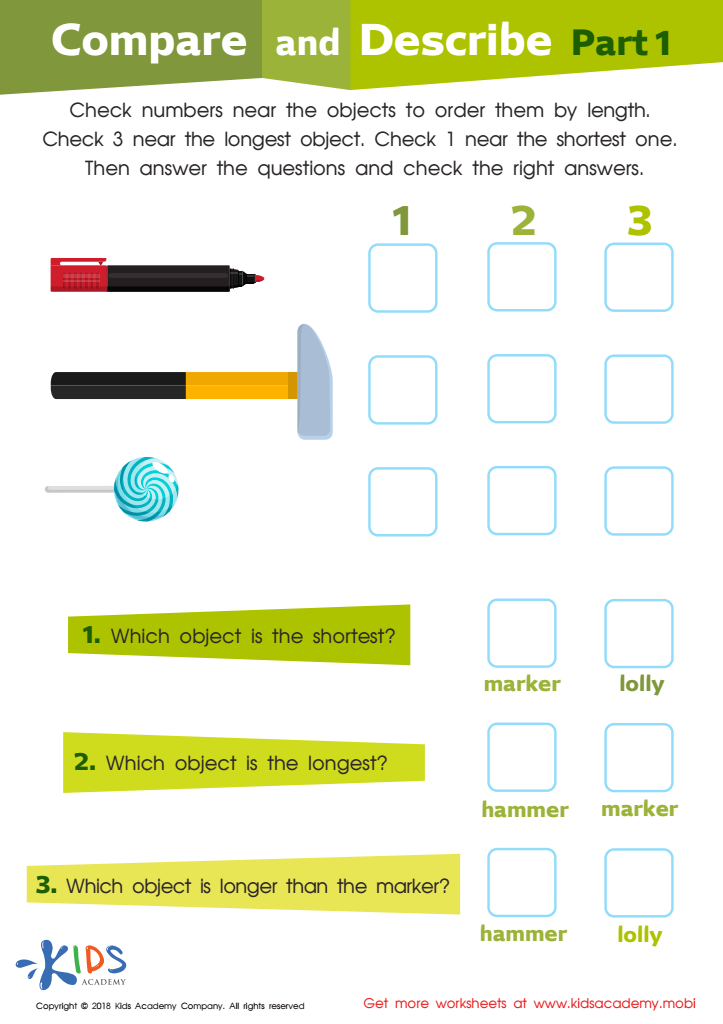
Compare and Describe: Part 1 Worksheet
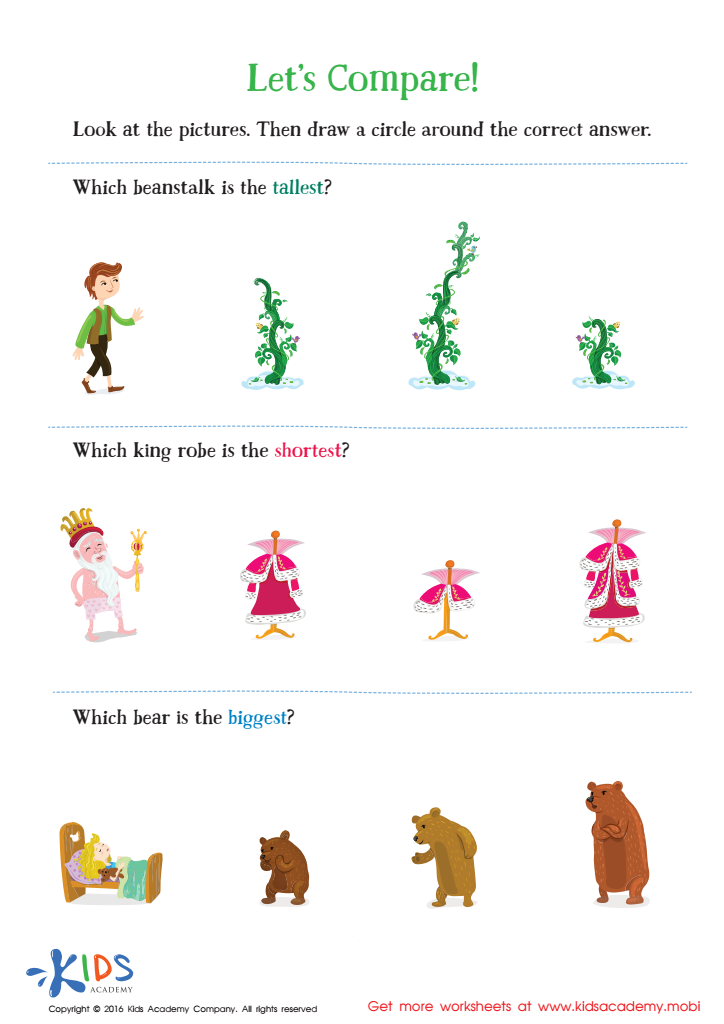
Fairy Tale Worksheet: Let's Compare








Vocabulary enhancement measurement for 6-year-olds is crucial because early language skills are foundational for later academic success and overall development. At this age, children's brains are extraordinarily receptive to learning new words, which directly influences their ability to understand and interact with the world around them.
First, a robust vocabulary directly correlates with better reading comprehension. When children understand more words, they can more easily grasp the meaning of new texts, boosting their confidence and fostering a love for reading. This early literacy is a strong predictor of future educational achievements.
Second, vocabulary is tied to cognitive development. Children with a broad vocabulary are better able to categorize and conceptualize their experiences, enhancing both their problem-solving skills and their creativity. It equips them to think more flexibly and make connections between different pieces of knowledge.
Third, vocabulary skills underpin social interactions and emotional development. Children who can express their feelings and thoughts clearly are more likely to form strong relationships and navigate social situations effectively. This leads to better emotional regulation and peer relationships.
By measuring and focusing on vocabulary enhancement, parents and teachers can identify areas needing support, enabling targeted interventions that foster comprehensive development, setting the foundation for lifelong learning and well-being.








