Filters

33 filtered results

Clear all filters
Favorites
With answer key
Interactive

33 filtered results

Difficulty Level

Grade


Check out this FREE Trial Lesson on Reading for age 6!

Compare and Contrast the Experiences of Characters in Familiar Stories

Favorites
With answer key
Interactive
  • 6
  • Critical Thinking
  • Reading
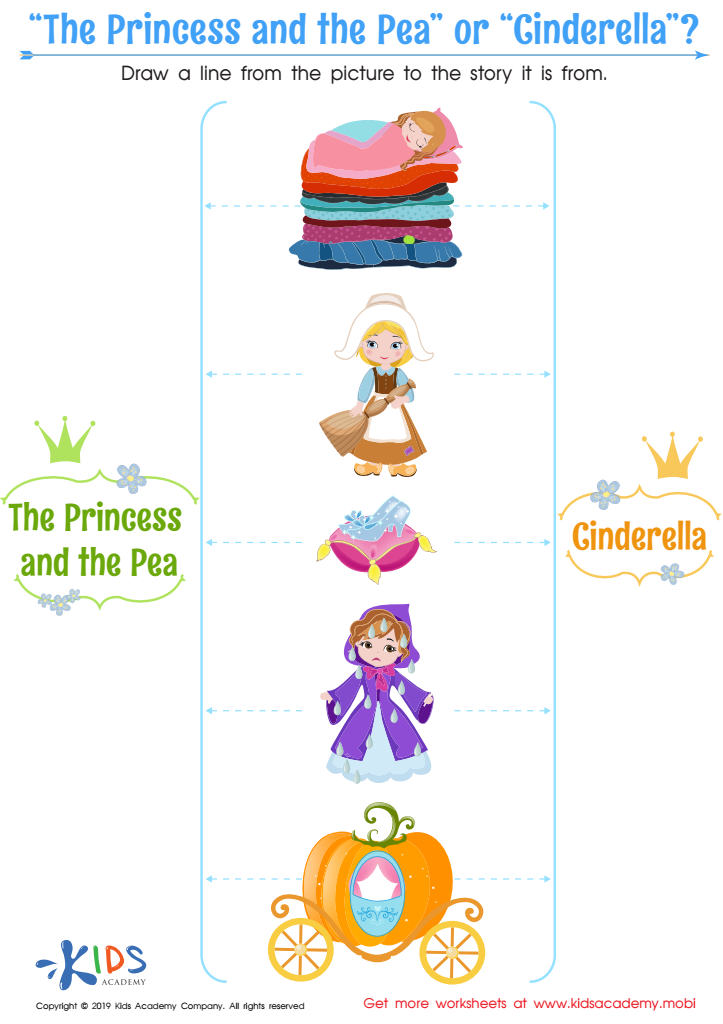
“The Princess and the Pea” or “Cinderella” Worksheet

“The Princess and the Pea” or “Cinderella” Worksheet

Help your child identify the characters and objects from both the Princess and the Pea and Cinderella. Ask them to draw a line from the pictures to the story it's from on the tracing sheet. Encourage them to tell you the similarities between the two stories. Enjoy the tale with your daughter and watch her be fascinated by these two classic children's stories.
“The Princess and the Pea” or “Cinderella” Worksheet
Worksheet
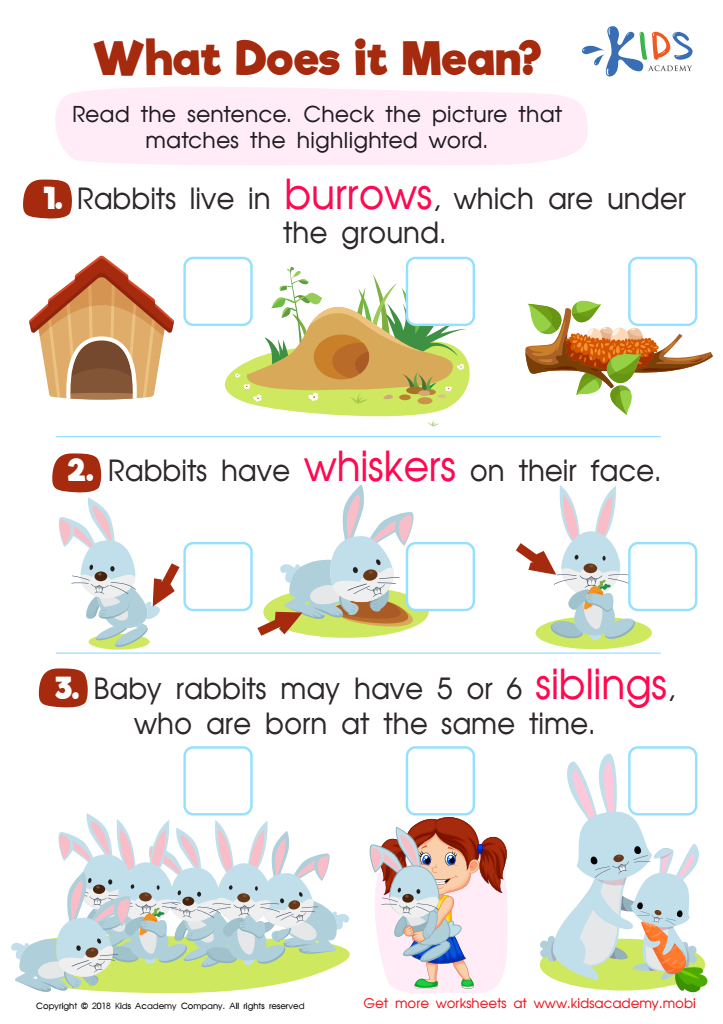
What Does It Mean? Worksheet

What Does It Mean? Worksheet

Teach your child to use context clues with this engaging Kids Academy worksheet. Read the sentences and find the pink-highlighted word. Use the other words in the sentence to figure out the meaning, then check the box next to the picture that represents it.
What Does It Mean? Worksheet
Worksheet
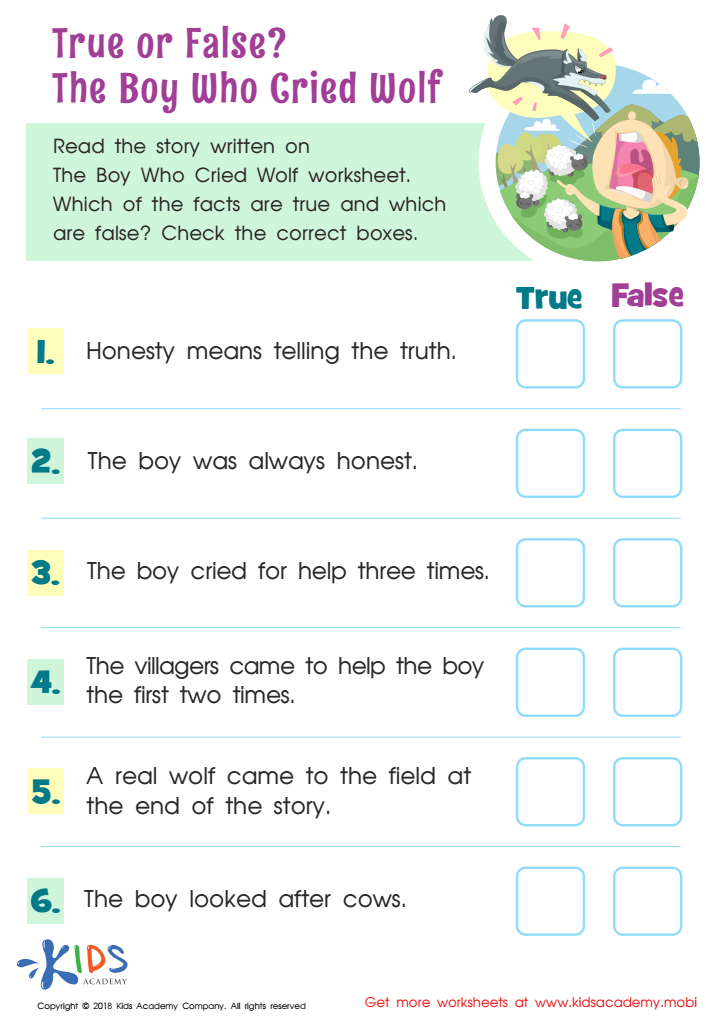
True or False? The Boy Who Cried Wolf Worksheet
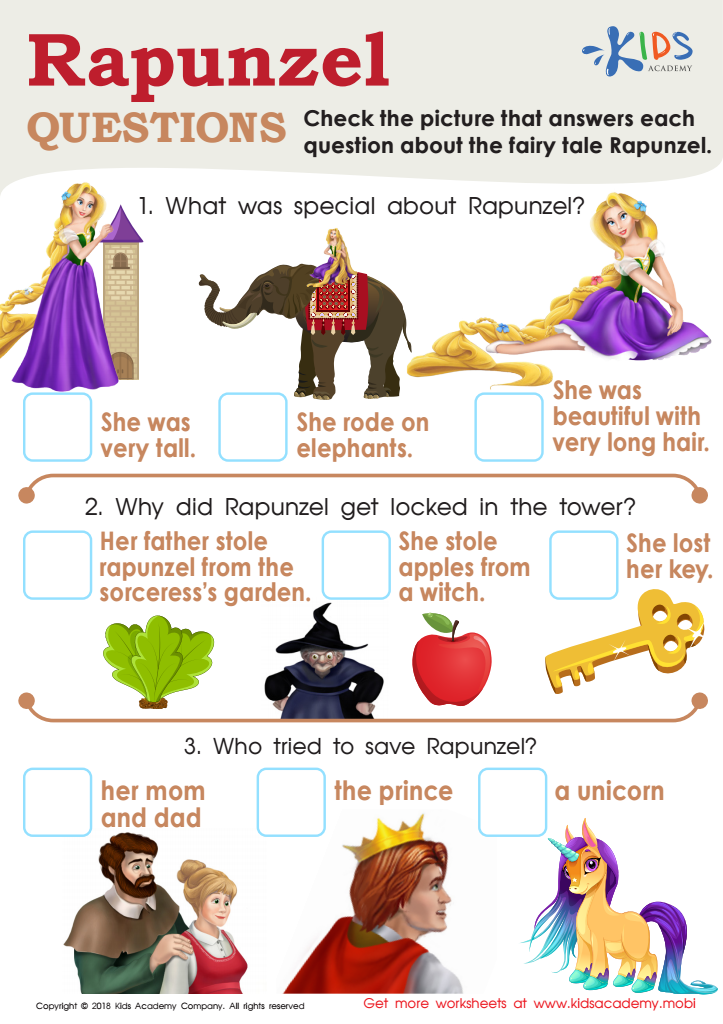

True or False? The Boy Who Cried Wolf Worksheet

Test students' understanding of The Boy Who Cried Wolf with this free downloadable worksheet. It contains true/false questions to assess comprehension of key events. Easy to complete, it checks students can recall facts from the story. Try it and see!
True or False? The Boy Who Cried Wolf Worksheet
Worksheet
Rapunzel Questions Worksheet
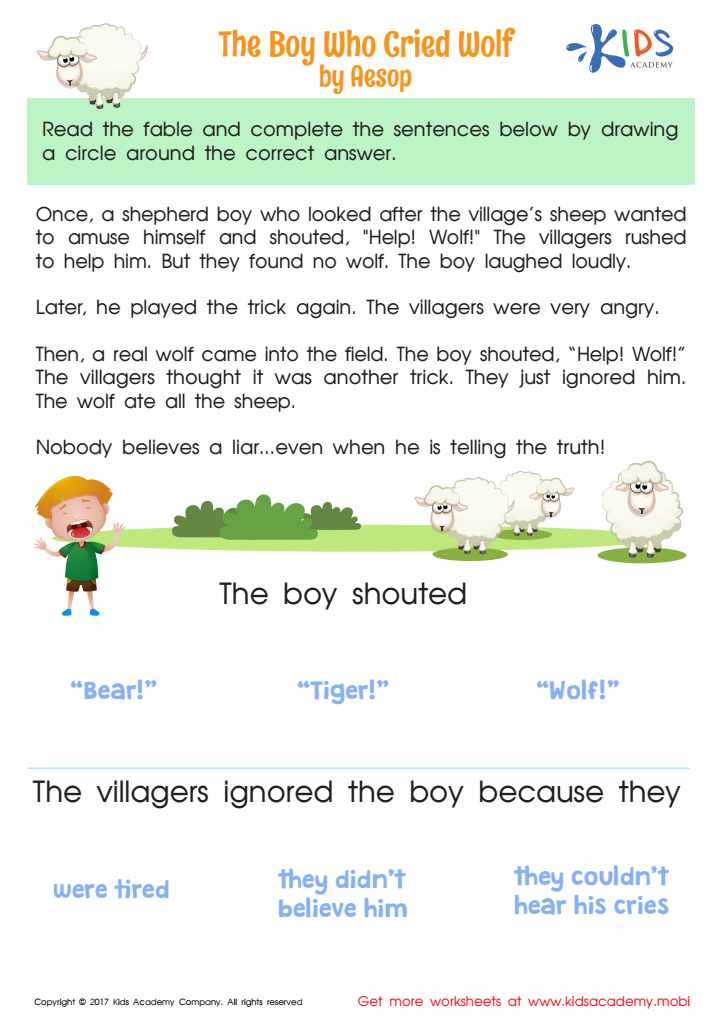

Rapunzel Questions Worksheet

Read the fairy tale 'Rapunzel' to your kids. For those who really enjoyed it, read it twice and ask questions to test their understanding. Then, get them to check the pictures related to the questions to test their comprehension of the story.
Rapunzel Questions Worksheet
Worksheet
Worksheet: The Boy Who Cried Wolf

The Boy Who Cried Wolf Worksheet

Test your child's reading comprehension with The Boy Who Cried Wolf worksheet. Read the fable, then answer the questions. Use the text to help your child check their answers are correct. Boost reading skills in a fun, interactive way!
The Boy Who Cried Wolf Worksheet
Worksheet
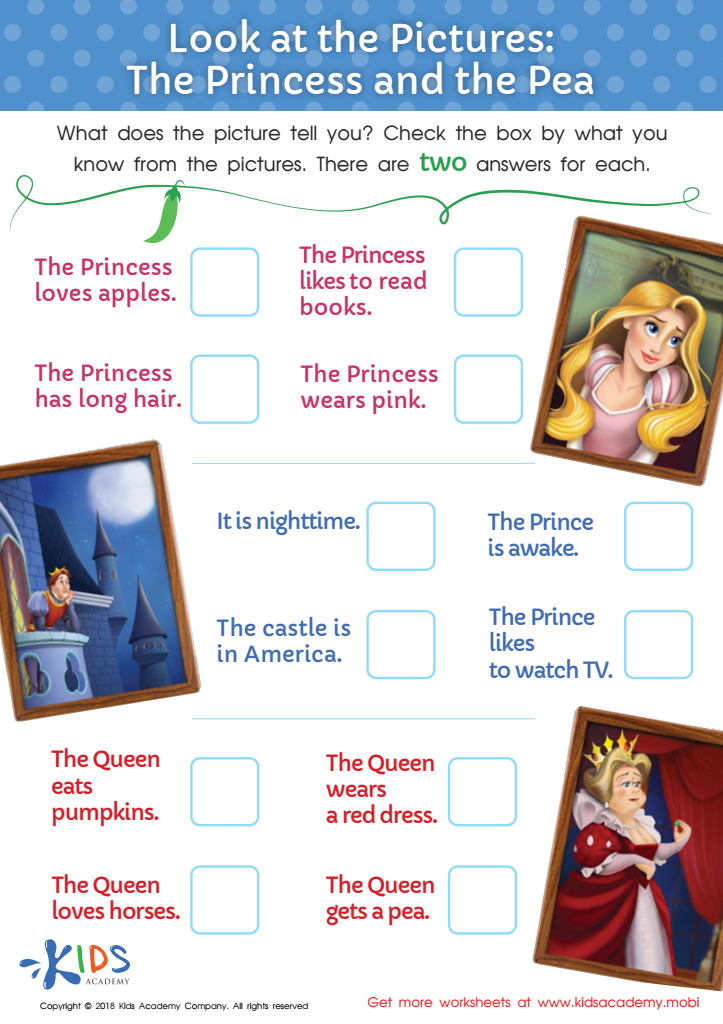
Look at the Pictures: The Princess and the Pea Worksheet
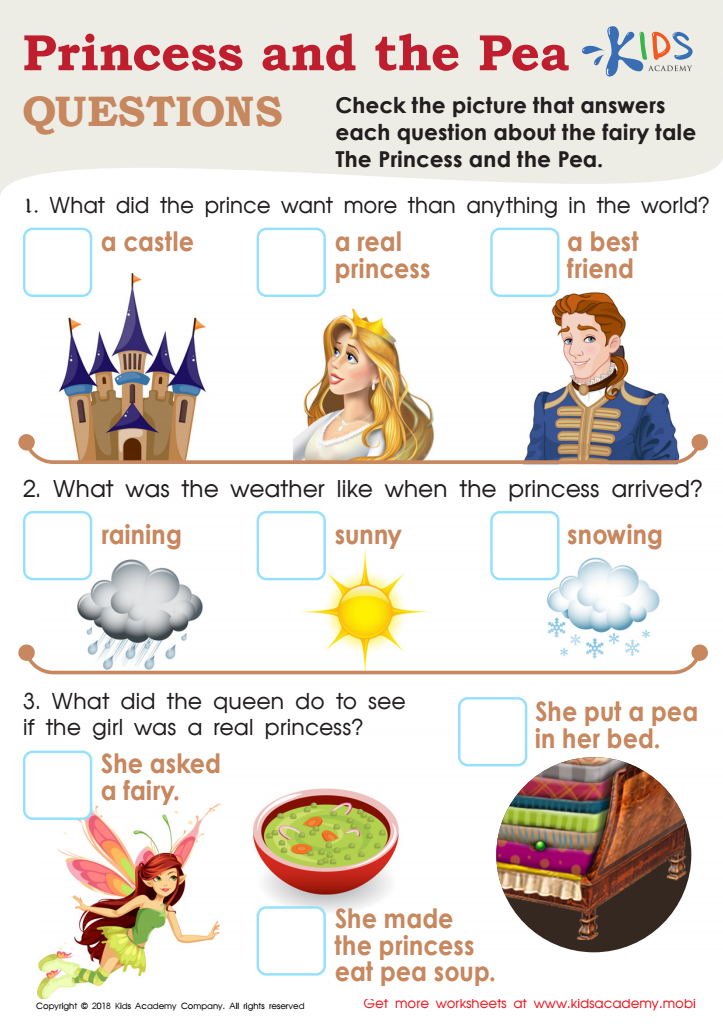

Look at the Pictures: The Princess and the Pea Worksheet

Early readers can benefit from picture clues to understand stories and text. Looking at images helps them learn the meaning of words and comprehend events. Use this worksheet on The Princess and the Pea to let students observe and learn from the pictures. It's a great way to help them comprehend early reading materials.
Look at the Pictures: The Princess and the Pea Worksheet
Worksheet
Princess and the Pea Questions Worksheet
Princess and the Pea Questions Worksheet

Your kid knows The Princess and the Pea inside-out? Test their knowledge with this worksheet. Ask your little one to read the questions and match each one to the picture. It's a fun way to see just how much attention they've paid to their bedtime story.
Princess and the Pea Questions Worksheet

Worksheet
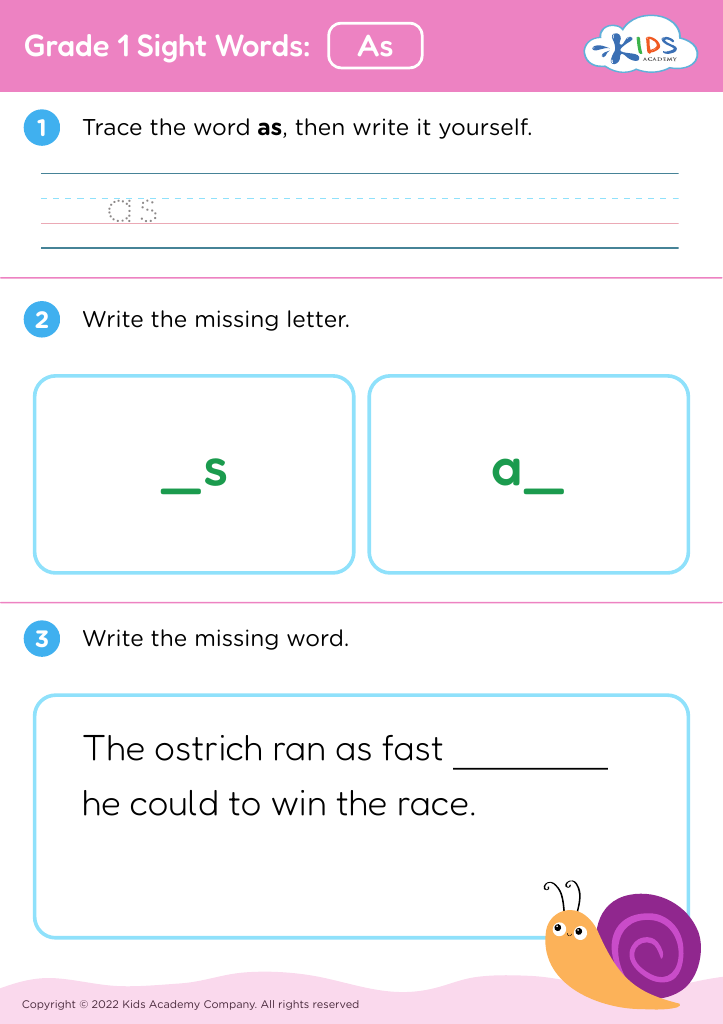
Grade 1 Sight Words: As

Grade 1 Sight Words: As

Grade 1 Sight Words: As
Worksheet
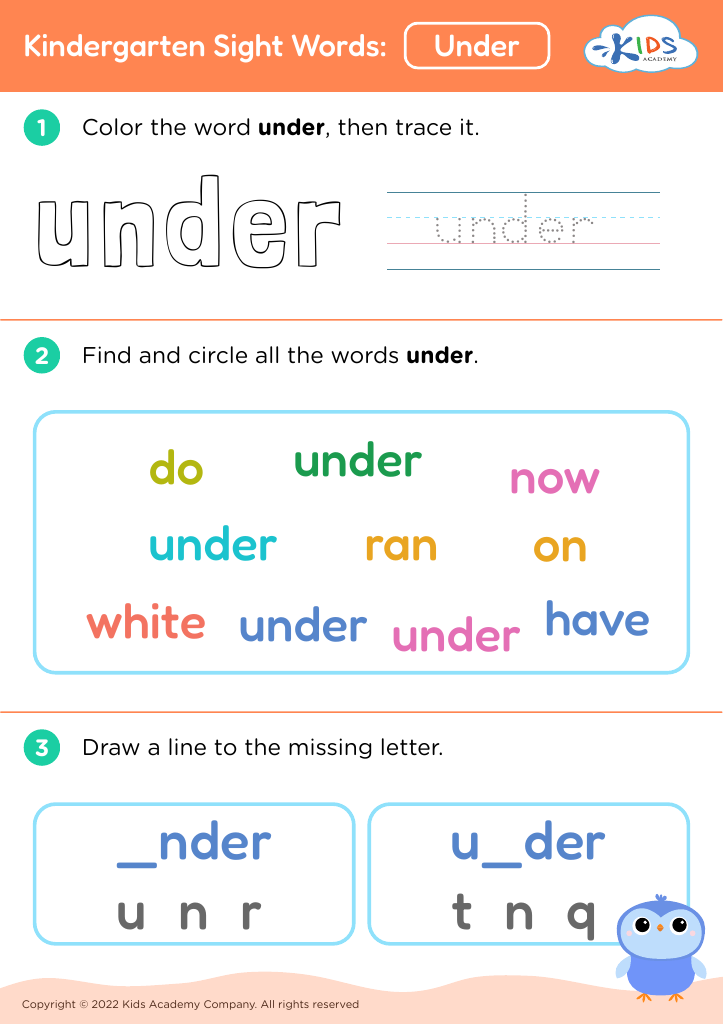
Kindergarten Sight Words: Under

Kindergarten Sight Words: Under

Kindergarten Sight Words: Under
Worksheet


Critical thinking is an essential skill that begins to develop in early childhood, making it crucial for parents and teachers to emphasize critical thinking reading for 6-year-olds. At this age, children are naturally curious and open to new ideas, and fostering their critical thinking skills through reading can enhance their comprehension, analysis, and reasoning abilities.

Engaging children in critical thinking reading helps them not only understand the text but also ask questions, make connections, and evaluate information critically. This skill set lays the foundation for academic success, promoting stronger problem-solving capabilities across all subjects. Additionally, as children learn to think critically about stories and characters, they become more empathetic and socially aware, understanding different perspectives and emotions.

Furthermore, in a world inundated with information, equipping young minds with the capacity to analyze and discern truth from misinformation will serve them well throughout their lives. This skill enhances their ability to engage thoughtfully with the evolving landscape of technology and media. Ultimately, parents and teachers play a pivotal role in nurturing these skills, ensuring that children not only become competent readers but also thoughtful, informed citizens. Supporting critical thinking in reading is an investment in a child's future.