
Improving vocabulary Reading Worksheets for 6-Year-Olds
4 filtered results
Difficulty Level
Grade
Age
-
From - To
Subject
Activity
Standards
Nurture your child's vocabulary skills with our engaging Improving Vocabulary Reading Worksheets for 6-Year-Olds. Designed to make learning enjoyable, these worksheets cover various age-appropriate topics that captivate young minds. With a mix of fun exercises, matching games, and simple definitions, kids can effortlessly expand their word knowledge and reading comprehension. Our colorful and interactive printables encourage consistent practice, boosting both confidence and proficiency in young readers. Suitable for at-home or classroom use, these worksheets are a fantastic resource for parents and teachers aiming to enhance children’s linguistic skills in an effective and entertaining way.
Favorites
With answer key
Interactive
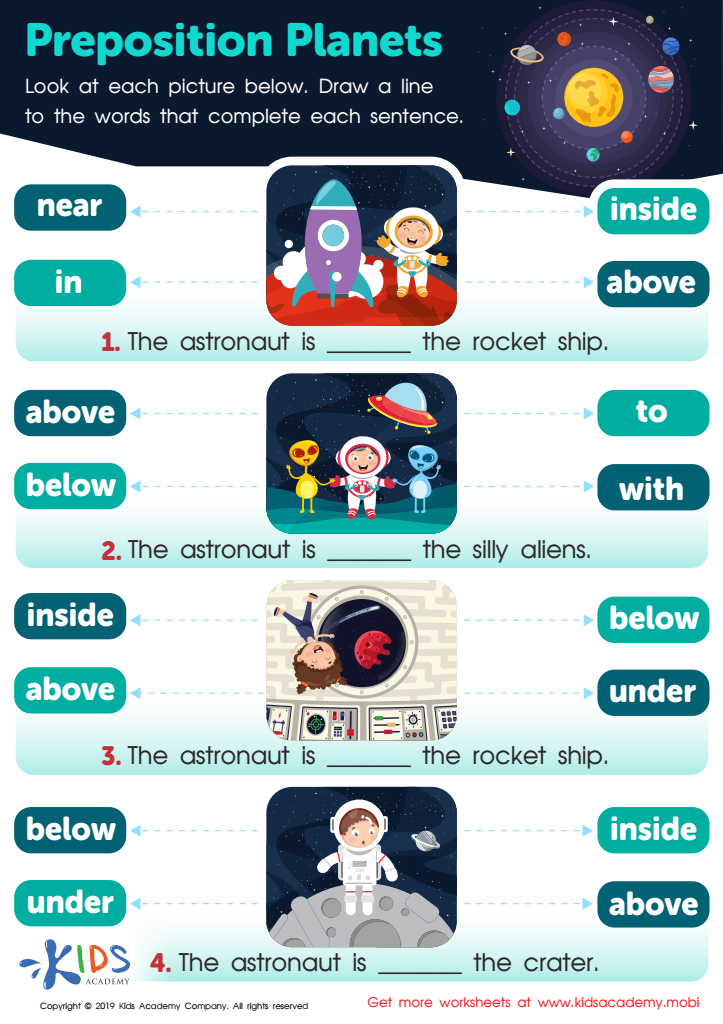
Preposition Planets Worksheet
Remind your child about outer space: which planet do we live on, and who travels there for research? Explain that prepositions show location, direction, and time. Look at the worksheet with colorful pictures of astronauts. Help your kids draw lines to the words that complete each sentence.
 Assign to My Students
Preposition Planets Worksheet
Worksheet
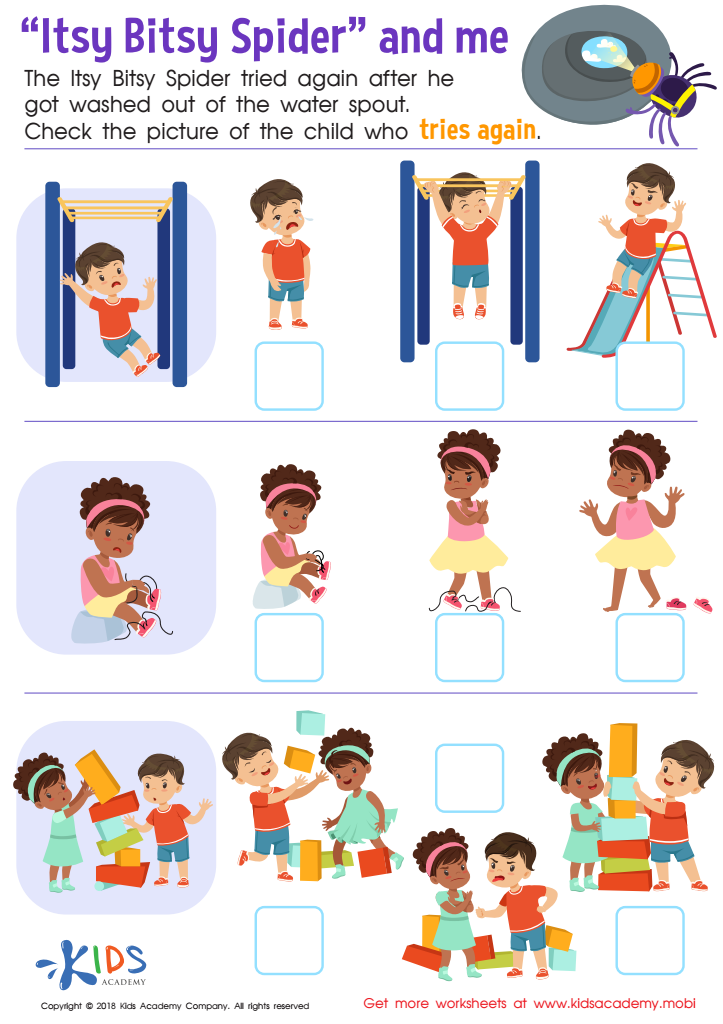
Itsy Bitsy Spider and Me Worksheet
Ensure your child's success - teach them determination and perseverance! Introduce them to the Itsy-Bitsy spider and this fun worksheet. It shows kids working hard and teaches them to 'try again.' Have them identify scenes and check the box for those who succeeded.
Itsy Bitsy Spider and Me Worksheet
Worksheet
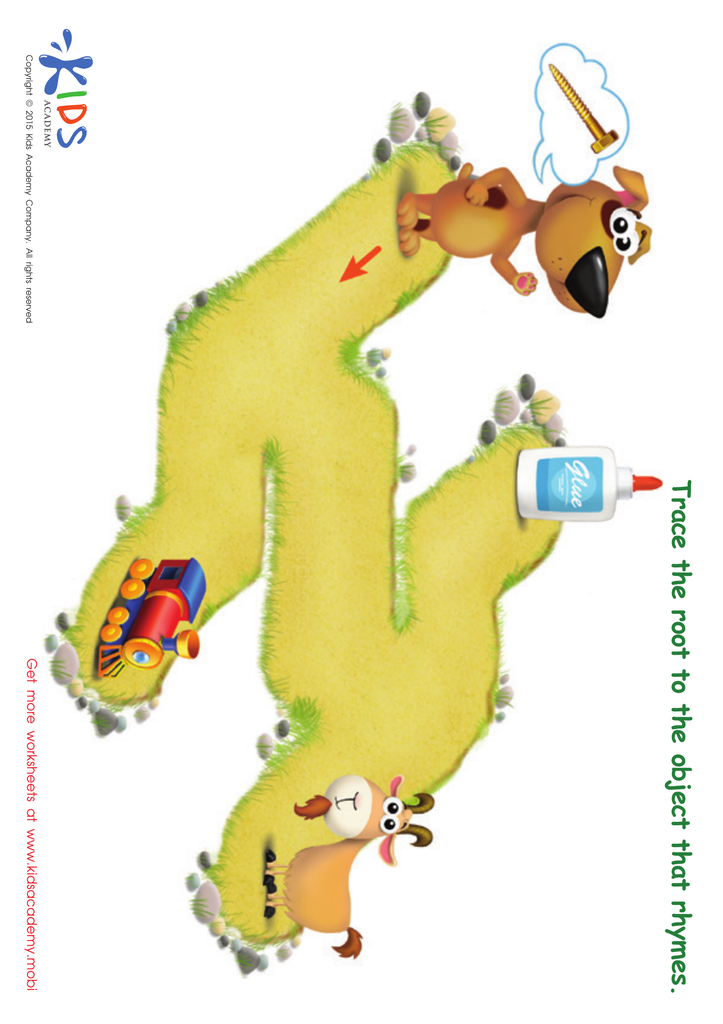
Screw Rhyming Words Worksheet
Worksheet
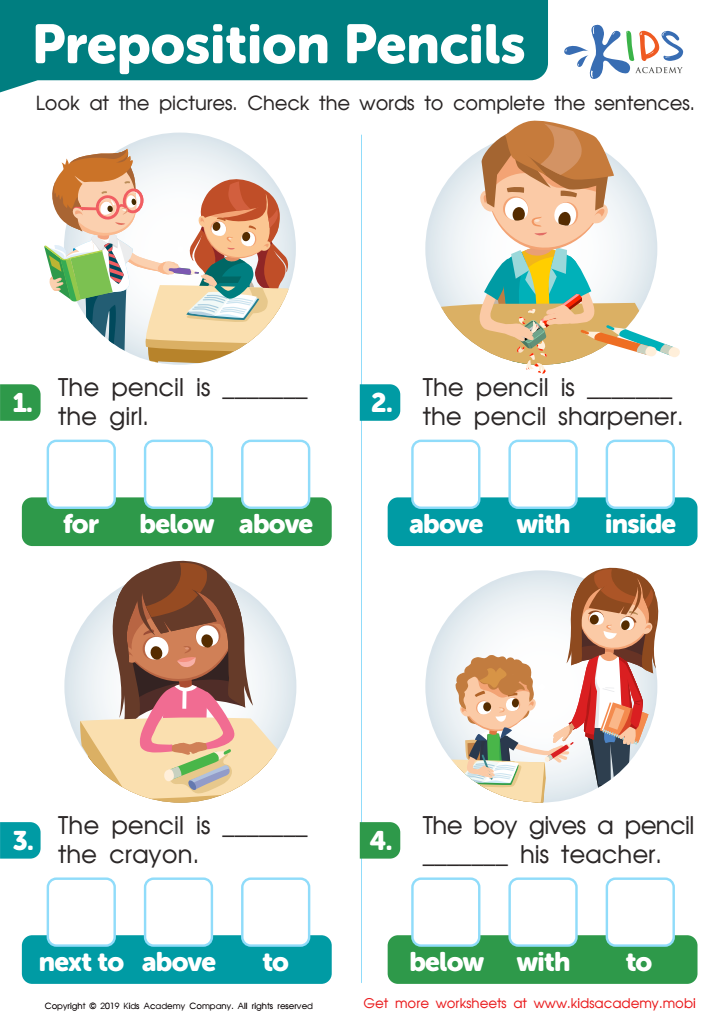
Preposition Pencils Worksheet
Constructing sentences follows rules. Parts of speech like nouns, verbs, adverbs, pronouns, and prepositions help. This worksheet focuses on prepositions. Explain prepositions to your child, then examine the pictures together and help them complete the sentences.
Preposition Pencils Worksheet
Worksheet
Join Kids Academy for Free
Who is primarily going to use this learning content?







Parents and teachers should prioritize improving vocabulary and reading skills for 6-year-olds because these foundational abilities are crucial for lifelong learning and success. At this tender age, children's brains are exceptionally receptive to new information, making it the perfect time to expand their linguistic prowess. Strong vocabulary supports better comprehension, enabling children to grasp more complex ideas and concepts as they grow. This, in turn, fosters confidence and a love for reading, encouraging independent learning and curiosity.
Moreover, a robust vocabulary enhances communication skills. Children can express their thoughts and feelings more accurately, leading to better social interactions and relationships. It also aids in cognitive development, as learning new words involves thinking and understanding different contexts and nuances.
Good reading skills are linked to academic achievement. A child who reads well is better prepared for school subjects that require reading comprehension, including math problems, science descriptions, and history texts. This initial advantage sets a positive trajectory for future educational endeavors.
Lastly, instilling vocabular and reading skills opens creative doors. Children learn storytelling, develop their imagination, and foster critical thinking. In this digital age, achieving literacy competence also prepares children to navigate information-rich environments effectively. Therefore, cultivating strong vocabulary and reading skills in young learners lays the foundation for their academic, social, and personal development.








