
Rhyming skills Reading Worksheets for 6-Year-Olds
3 filtered results
Difficulty Level
Grade
Age
-
From - To
Subject
Activity
Standards
Enhance your 6-year-old's reading abilities with our engaging Rhyming Skills Reading Worksheets! Designed specifically for early learners, these worksheets make the foundational skill of recognizing and producing rhymes fun and interactive. Each activity fosters creativity and reinforces phonemic awareness, allowing children to develop their vocabulary and comprehension skills effectively. With colorful visuals and engaging exercises, your child will enjoy mastering rhyming patterns. Perfect for classroom use or at-home learning, these worksheets provide a valuable resource to ensure your child builds confidence in reading. Explore our collection and witness your little ones flourish as they rhyme and read with ease!
Favorites
With answer key
Interactive
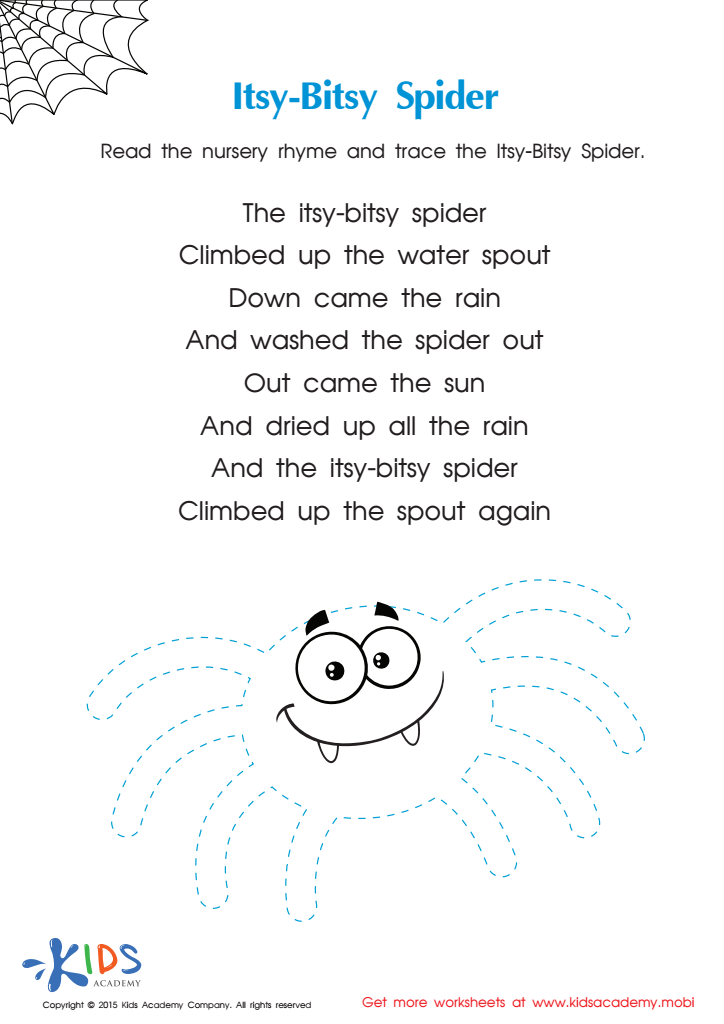
Itsy Bitsy Spider Nursery Rhyme PDF Worksheet
Introduce your child to the classic nursery rhyme with this worksheet. They'll learn the song, develop their motor skills, and find and count the letters 'A'. Pick up your crayons and add some color to the missing spider!
 Assign to My Students
Itsy Bitsy Spider Nursery Rhyme PDF Worksheet
Worksheet
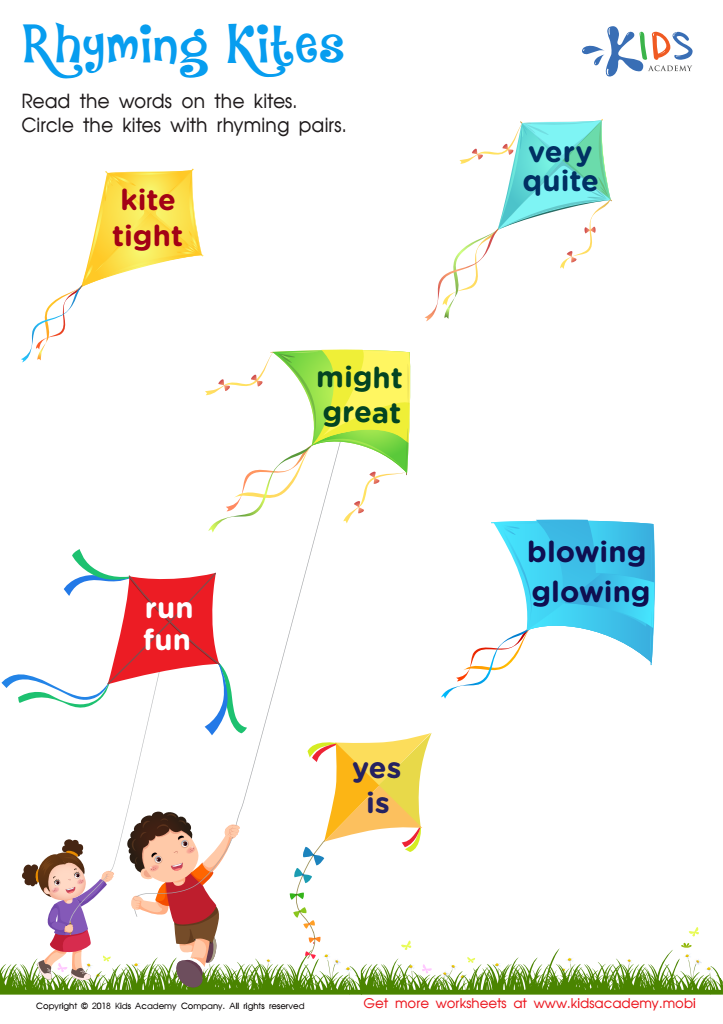
Rhyming Kites Worksheet
On a spring day, fly a kite! Kids Academy has a rhyming worksheet to boost your child's skills. Read the pairs of words aloud. Circle the kites if they rhyme, leave them blank if they don't. Listen carefully and find all the rhyming word pairs to complete this sheet!
Rhyming Kites Worksheet
Worksheet
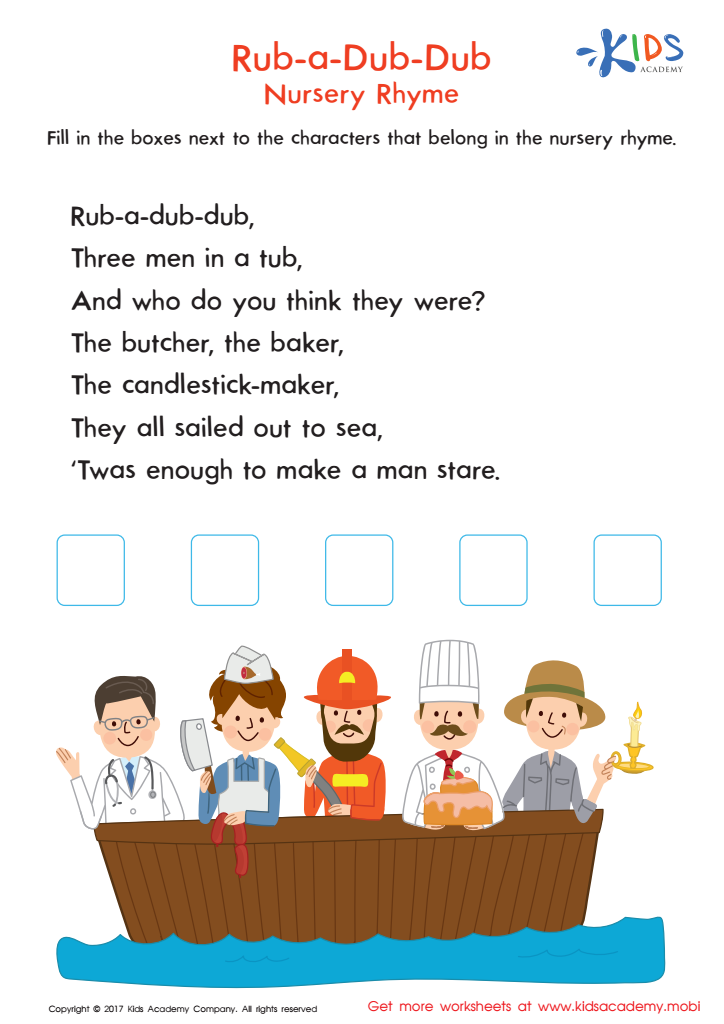
Rub a Dub Dub Printable
Delight your child and foster early reading skills with this printable nursery rhyme, Rub a Dub Dub! Let your little reader select the three men in the tub and practice important reading comprehension skills.
Rub a Dub Dub Printable
Worksheet
Join Kids Academy for Free
Who is primarily going to use this learning content?








Rhyming skills are essential for young children's reading development, particularly for 6-year-olds. At this age, children are honing their phonemic awareness, the ability to hear, identify, and manipulate sounds in spoken words. Engaging with rhymes nurtures this skill as it encourages children to listen closely to sounds and patterns in words, thus enhancing their ability to decode text when they start reading independently.
Parents and teachers should care about developing rhyming skills because these abilities lay the foundation for successful reading. When children can recognize and produce rhymes, they become more adept at understanding the structure of language, which includes grasping syllables, onset, and rime. This early exposure helps them tackle new words more confidently.
Moreover, rhyming activities can make reading fun and interactive, fostering a love for literacy. By incorporating rhymes into daily routines—such as through poems, songs, or interactive games—children are more likely to engage and develop a positive relationship with reading. Ultimately, supporting rhyming skills not only enhances literacy but also contributes significantly to a child's overall cognitive development and linguistic confidence as they grow.








