Sound recognition Reading Worksheets for 6-Year-Olds
3 filtered results
-
From - To
Enhance your child's reading skills with our Sound Recognition Reading Worksheets for 6-Year-Olds! Perfectly designed for early learners, these engaging worksheets help children identify and differentiate between various sounds, boosting their phonemic awareness. Through fun activities like matching pictures to sounds, and identifying initial, middle, and ending sounds in words, kids build a solid foundation for fluent reading. Our exercises incorporate vibrant visuals and interactive elements to keep young minds entertained and focused. Ideal for classroom use or at-home practice, these worksheets make learning to read fun and effective. Turn every lesson into an exciting learning adventure with Kids Academy!
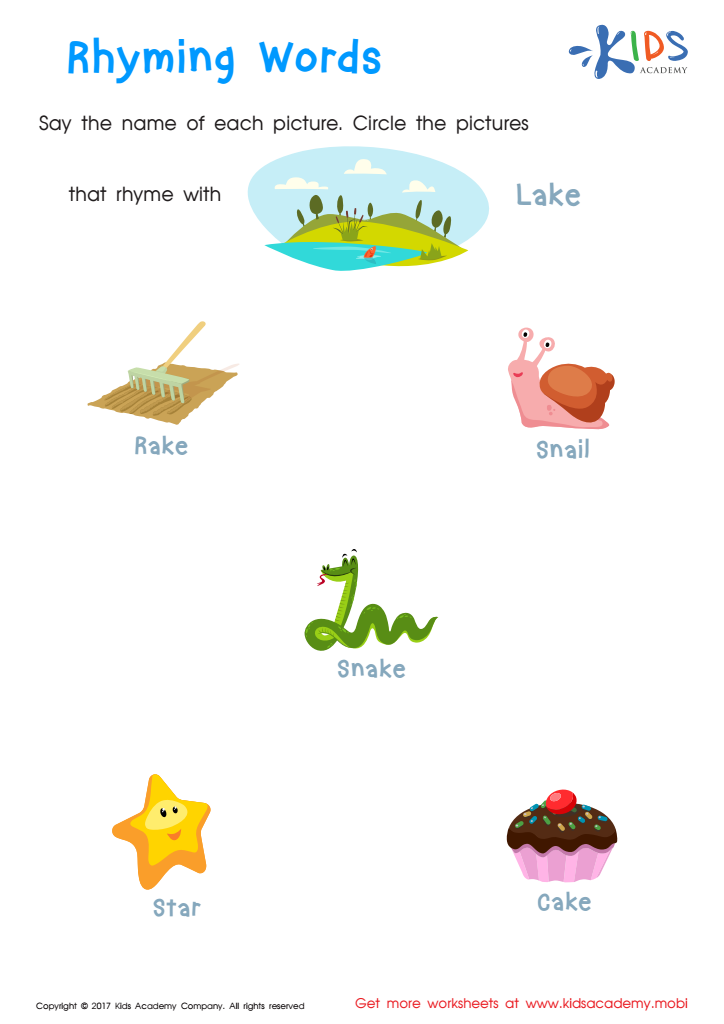
Rhyming Words Rhyming Worksheet
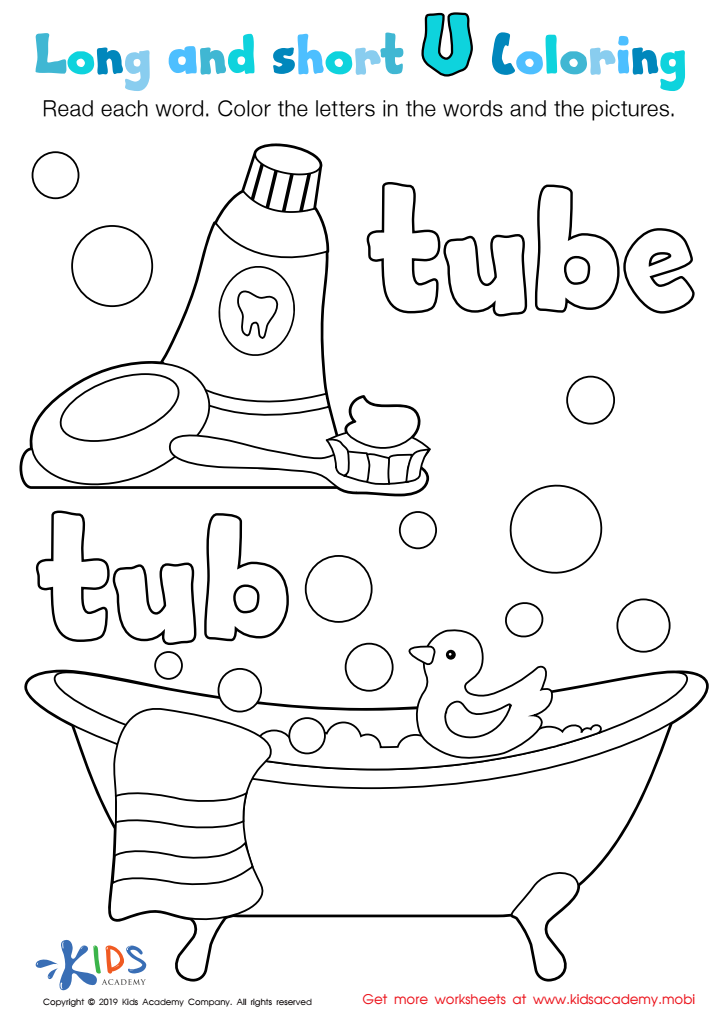
Long and Short U Worksheet
 Assign to My Students
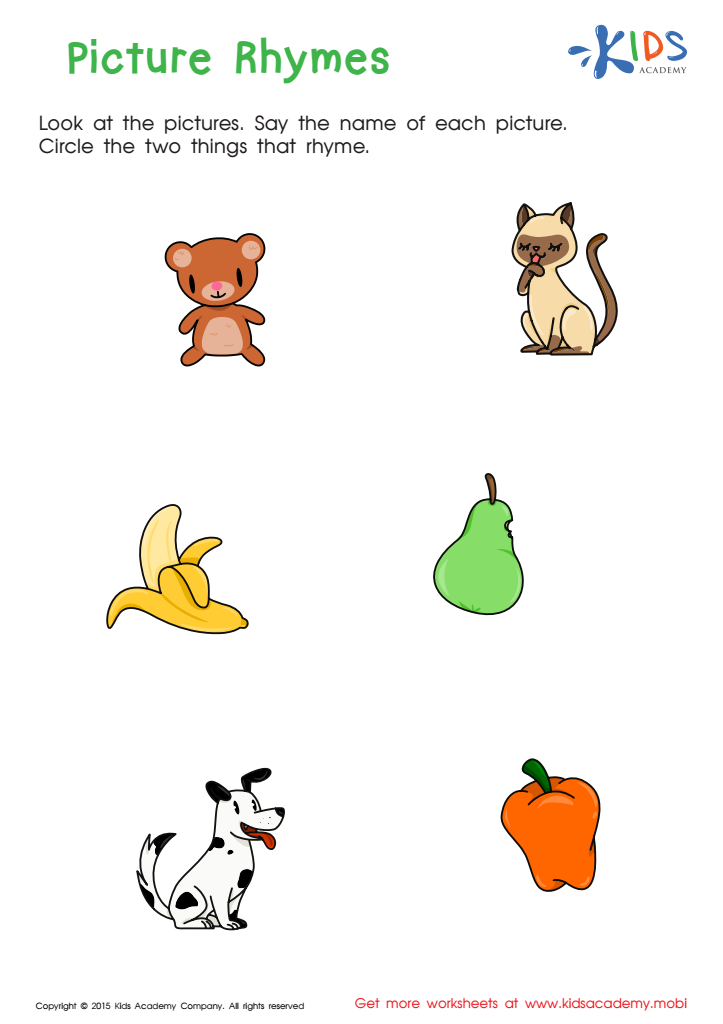
First Words: Picture Rhymes Worksheet








Sound recognition is a foundational skill for reading, making it crucial for parents and teachers to prioritize this for 6-year-old children. At this age, children are typically developing phonemic awareness—the ability to hear, identify, and manipulate individual sounds, or phonemes, in spoken words. This skill is essential for decoding, which is the process of translating written words into their spoken equivalents. Without strong sound recognition skills, children may struggle with reading fluency and comprehension later on.
Fostering sound recognition helps children learn the alphabetic principle, which is the understanding that letters represent sounds and that these can be blended together to form words. Activities such as rhyming games, alliteration practices, and initial sound identification can significantly enhance a child’s phonemic awareness. This, in turn, sets the stage for successful reading instruction.
Moreover, early sound recognition skills are linked to better outcomes in spelling, writing, and even overall academic achievement. Being proficient in these skills reduces frustration and builds confidence in young learners, encouraging a positive attitude toward reading. Consequently, parents and teachers play a critical role in incorporating sound recognition activities into daily routines to lay a strong foundation for future literacy skills.








