Subtraction practice Reading Worksheets for 6-Year-Olds
4 filtered results
-
From - To
Enhance your child’s math skills with our Subtraction Practice Reading Worksheets designed specifically for 6-year-olds. These engaging worksheets combine math and reading to make learning subtraction concepts fun and interactive. Each sheet includes simple subtraction problems paired with short, readable sentences to improve literacy while honing mathematical abilities. Perfect for early learners, our worksheets help children build confidence, develop problem-solving skills, and foster a love for learning. Ideal for both home and school use, these resources are great for reinforcing classroom concepts or providing extra practice. Enjoy a seamless blend of reading and arithmetic with our expertly crafted subtraction practice worksheets.
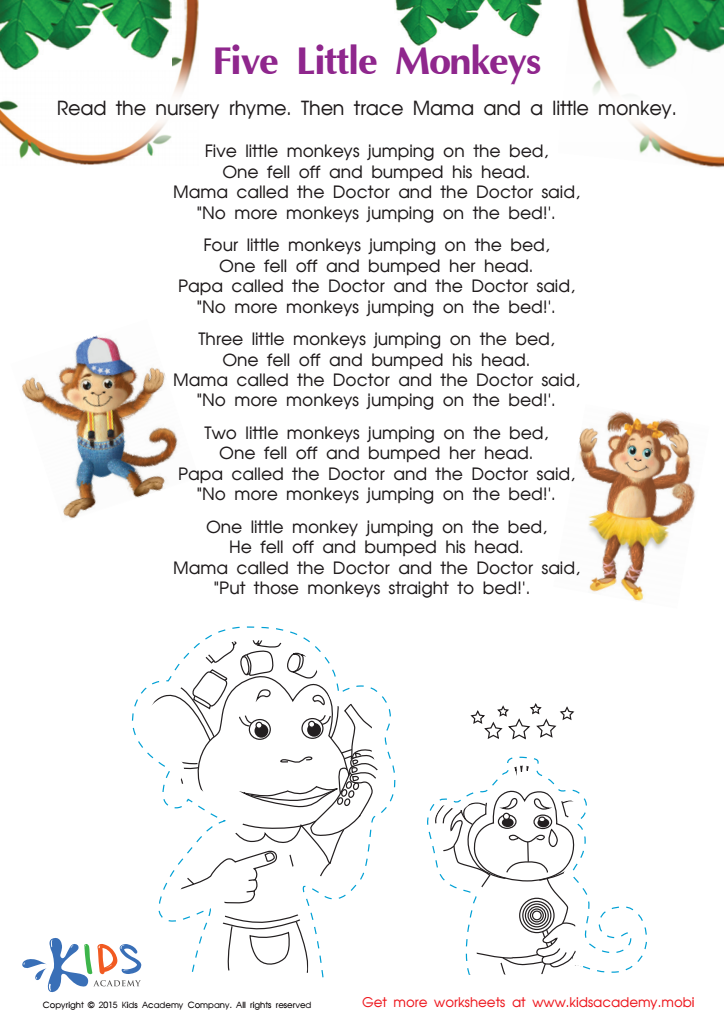
The Five Little Monkeys Nursery Rhyme Worksheet
 Assign to My Students







Subtraction practice and reading for 6-year-olds are foundational skills that significantly influence their academic success and overall cognitive development. Parents and teachers must prioritize these activities because they set the groundwork for future learning.
At age six, children are in a critical stage where their brains are rapidly developing. Subtraction practice enhances their problem-solving and critical thinking capacities. It introduces them to essential mathematical concepts they will build upon in subsequent years. By mastering subtraction, they develop computational fluency, which is crucial for tackling more complex mathematical problems later.
Simultaneously, reading is a vital skill that supports language acquisition, improves comprehension, and boosts vocabulary. Regular reading practices can instill a love for reading, improve focus, and foster imagination and creativity. Children who read frequently tend to perform better academically, not just in language arts but across all subjects, as reading proficiency supports the understanding of instructional materials.
Incorporating subtraction practice and reading into daily routines can also foster a positive attitude towards lifelong learning, showcasing the importance of both intellectual and character development. Therefore, these practices are not merely academic exercises but crucial steps in ensuring children develop holistically, balancing both their logical/mathematical and linguistic capabilities.








